Quick summary
- The average winter temperature hovers around -4°C[16], and the polar night lasts approximately 27 November to 15 January[17].
- Orcas and humpback whales gather in fjords north of Tromsø to feed on herring[18], following herring that migrate northeast in September and October[19].
- The northern lights may be visible from late August to early April, whenever the sky is dark and sufficiently clear[20].
- From US$209[21], this 9-hour hybrid-electric boat trip[21] has a live English-speaking guide[21] and is wheelchair accessible[21].
- Tromsø Airport to the city centre takes about 10-20 minutes[22].
- Top choice Hybrid-Electric Whale Tour from US$209 Duration9 hours[21]Rating4.48 from 6,644 reviews[21]AccessibilityWheelchair accessible[21]GuideLive English-speaking guide[21] Check availability
- Premium 24hr Cruise from US$681 Duration1 day[23]Rating4.90 from 47 reviews[23]AccessibilityNot stated in listingGuideLive English-speaking guide[23] See this tour
- Catamaran Whale Watching from US$209 Duration6 hours[24]Rating4.23 from 250 reviews[24]AccessibilityNot stated in listingGuideLive English-speaking guide[24] See this tour
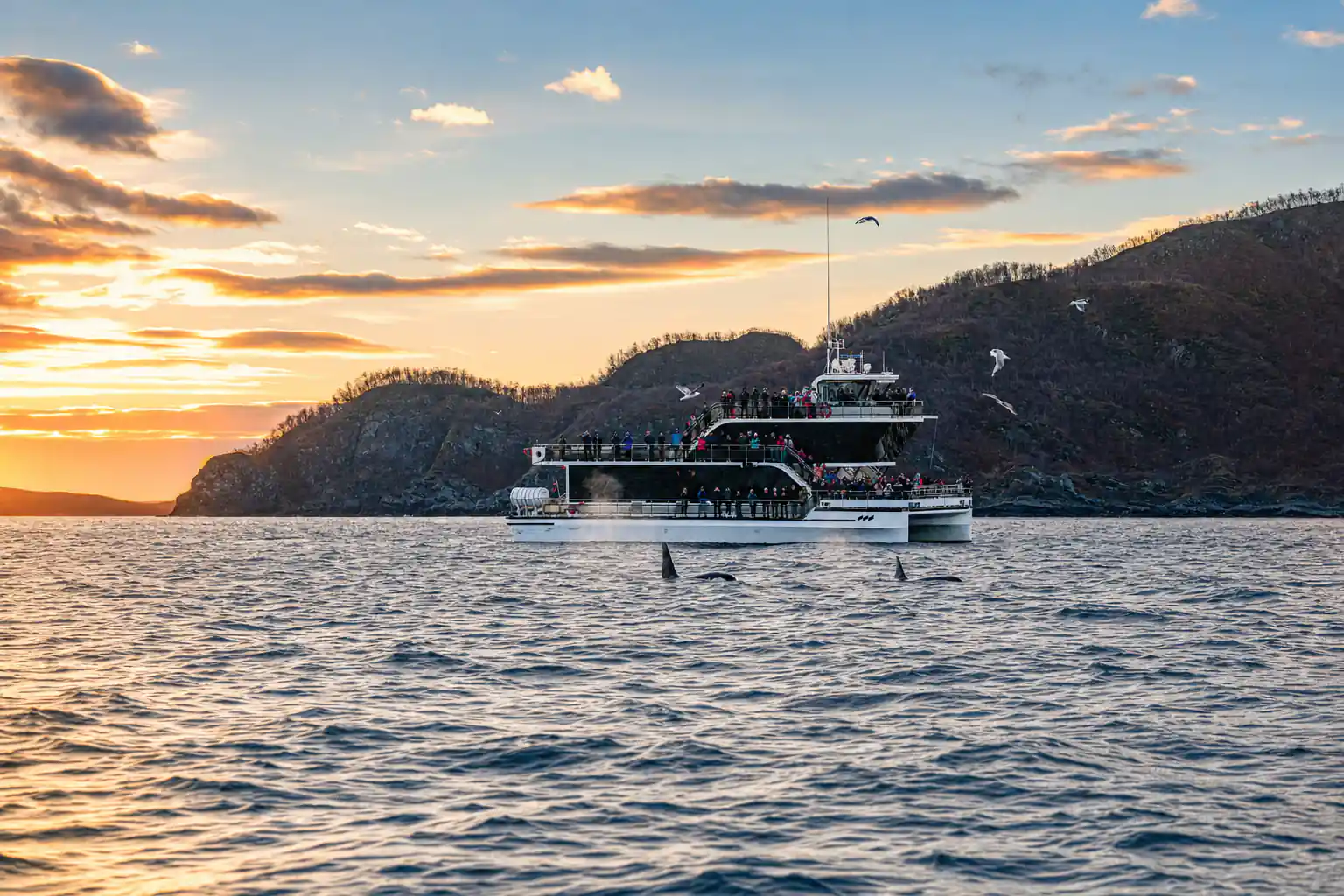
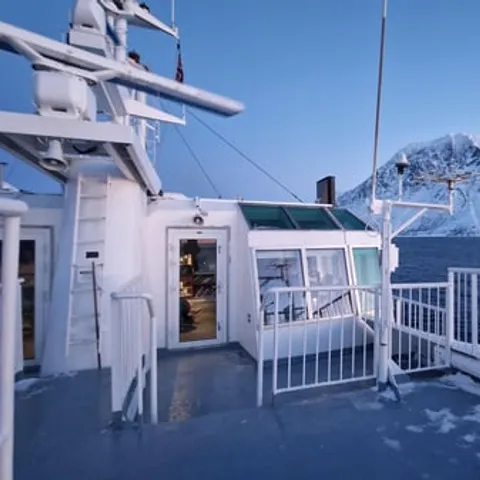
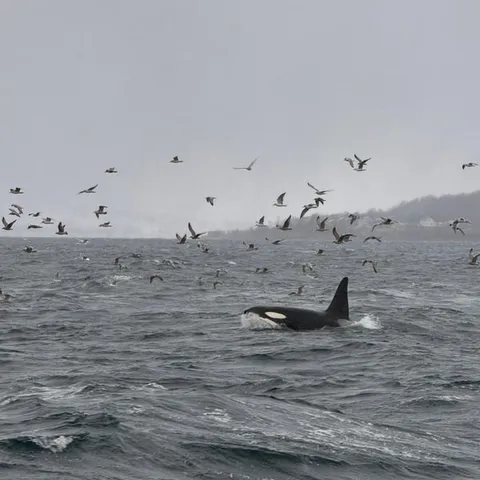
Midnight sun in Tromsø usually lasts from around 20 May to 22 July.
A harbour day that honours the expedition spirit
Pre-trip notes
- Dress in layers with a windproof outer layer
- Plan for short daylight and dark polar nights
- Book early and double-check the meeting point
- Travelling with children? Confirm age rules with the operator
On the day
- Allow time to reach the harbour from your hotel
- Use the quick airport transfer if you arrive the same day
- Listen to the safety briefing before going on deck
- Bring a camera with a strap and warm spare batteries
A harbour shaped by Arctic expeditions
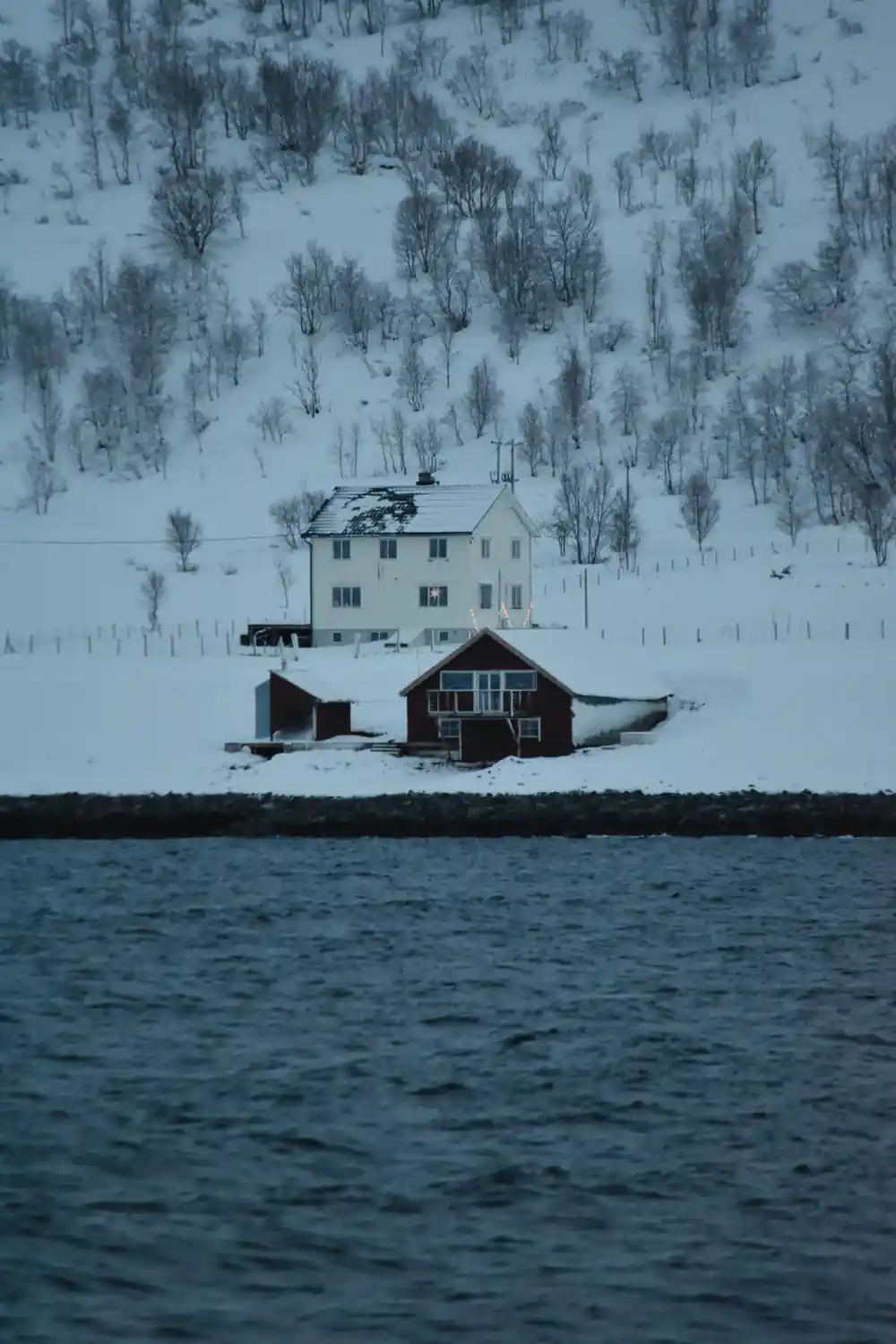
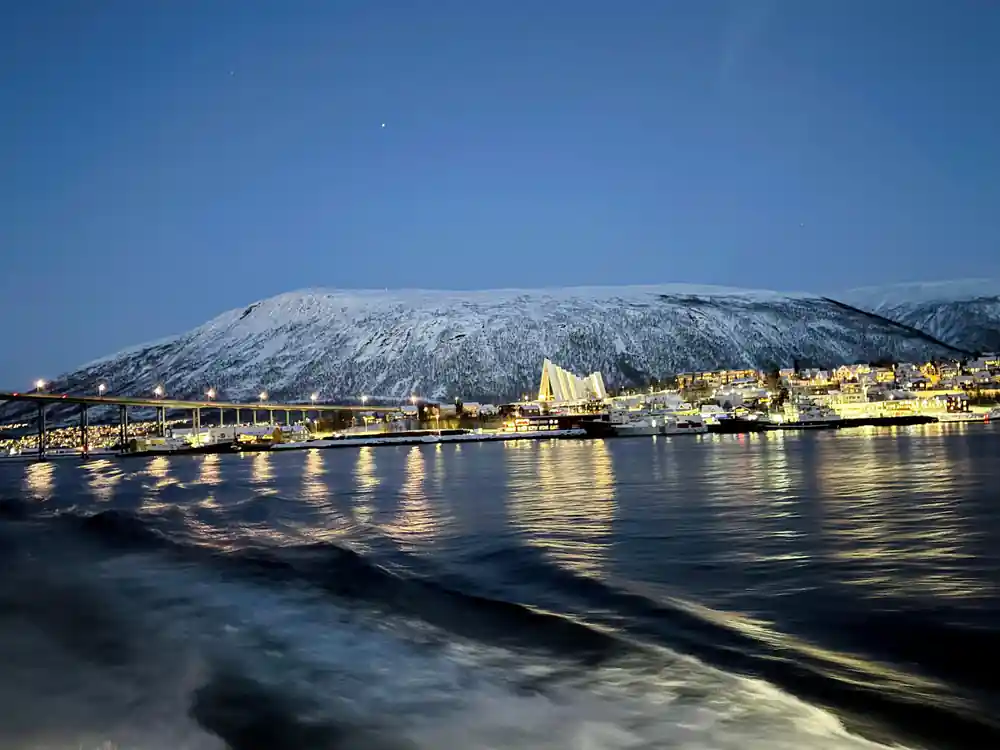
Tromsø sits on an island ringed by snowy peaks, about 350 km north of the Arctic Circle[25]. For generations, this was a natural assembly point for ships, sledges and crews before they pushed into the white unknown. The harbour still carries that atmosphere today, with working boats and sightseeing catamarans side by side. In winter the polar night lasts approximately from 27 November to 15 January[17], giving the waterfront a long blue twilight that feels dramatic and still.
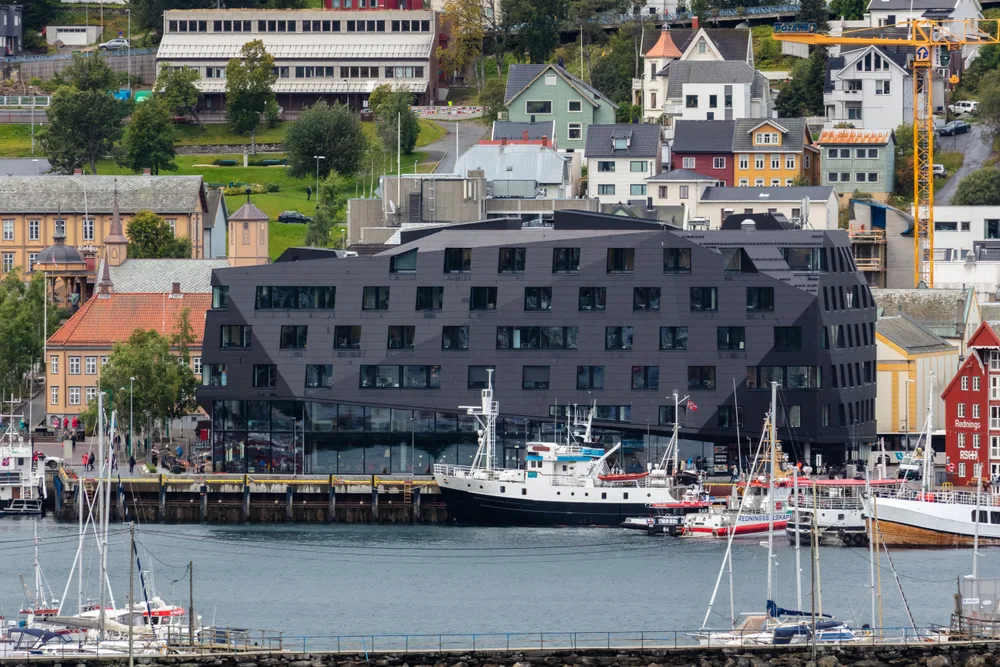
A walk along the quays is a lesson in Tromsø harbour history and a preview of what waits beyond the sound. Fishing boats unload, tour boats head out, and the mountains seem close enough to touch. This is also where the featured tour begins, leaving from Tromsø on a hybrid-electric boat[21]. You do not need to be an expedition historian to feel the charge of the old departure point.
Look for the small details along the waterfront: piles of coiled rope, fish crates, the smell of salt and diesel. Tromsø harbour stories are not only in museums. They are written in the names of streets, the bronze statues and the old warehouses that now hold cafés and galleries. A slow wander before boarding makes the tour part of a longer narrative, one that has been unfolding since the days when whalers and polar explorers used the same quays.
When the sun disappears and the lights appear
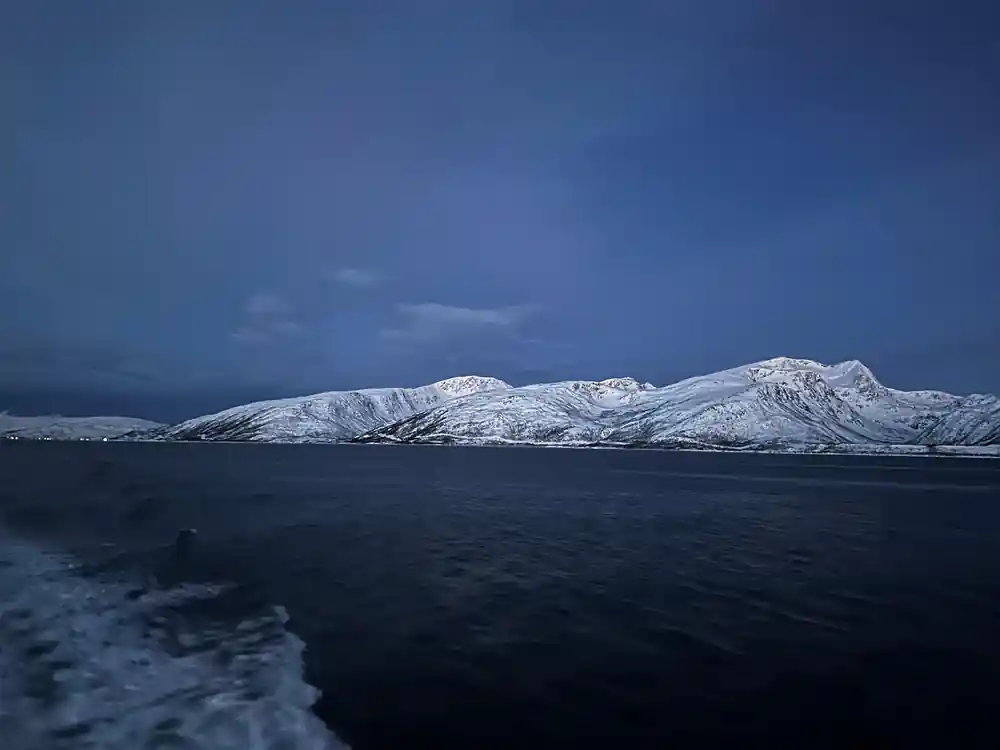
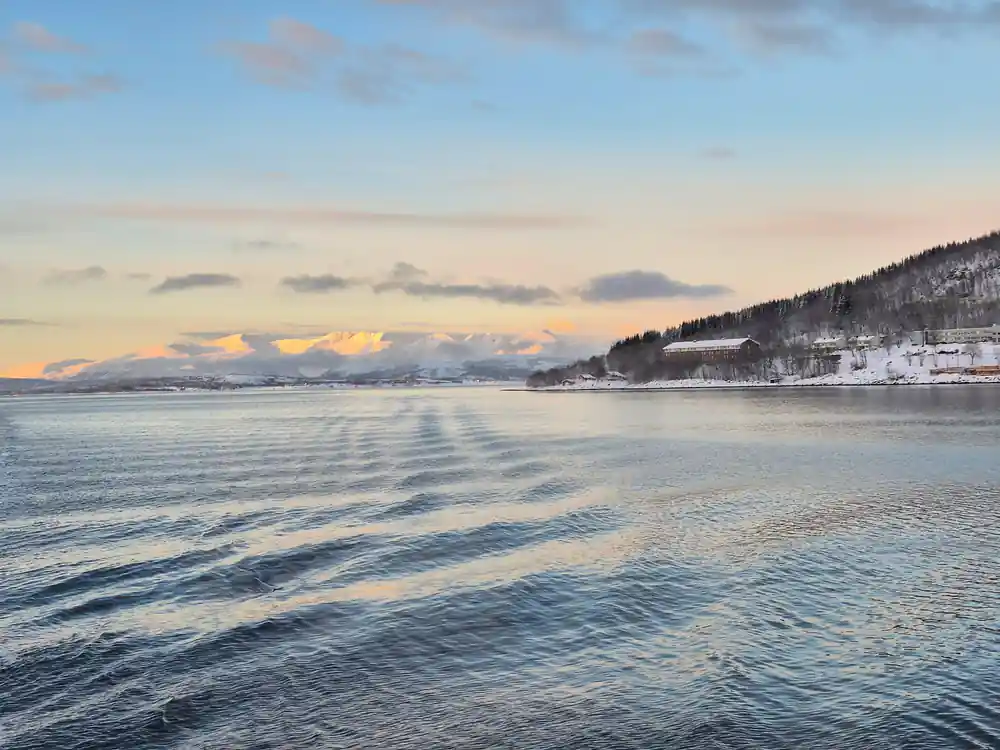
Winter in Tromsø is defined by cold and darkness. The average winter temperature is around -4°C[16], while the polar night runs approximately 27 November to 15 January[17]. During those weeks the sun stays below the horizon, and the city lives under a long afternoon-like dusk. Overhead, the northern lights may be visible from late August to early April whenever the sky is dark and sufficiently clear[20].
That same season made Tromsø a place of patient preparation. Expeditions waited for weather, checked the ice and studied the sky, and the modern traveller does something similar when planning a whale watching day. The midnight sun usually lasts from around 20 May to 22 July[26], a reminder that this harbour has two completely different faces across the year.
Travellers who come for the aurora often arrange their day around darkness. A long whale watching trip in winter needs a plan: a late breakfast, warm food before boarding, and a proper dinner after. The city is small enough to walk, and the walk to the harbour is part of the pleasure. Between the ferry terminal and the cathedral, you get a sense of how the town once marshalled expeditions, and still hosts them today.
A humpback tail rises close to a hybrid-electric boat in the Tromsø region.
The whales that follow the herring north
Whale watching here begins with a fish. Norwegian spring-spawning herring migrates northeastward in September/October to its main wintering areas off the coast and in fjords in northern Norway[19]. During the winter, orcas and humpback whales gather in the area to feed on herring[18]. From the deck you might see the result of that relationship in blows and tails.
The animals themselves are enormous. Male orcas can be 6 to 9 metres long and weigh about 6 tonnes, while females can be 5 to 7 metres long and weigh about 4 tonnes[27]. Humpback whales are 15 to 17 metres long, with females 1 to 1.5 metres longer than males[28]. No photograph prepares you for the scale of a whale surfacing beside a quiet boat.
At Skjervøy, one of the route's stops, the water is full of life and the mountains drop straight into the sea. The fishing town has long understood the rhythm of the herring, and seeing it from the water connects you to that working landscape in a way no museum display can.
Whale watching in winter also means accepting uncertainty. Animals move, weather changes and the sea keeps its own calendar. The guides follow the reports and read the water, and the route is chosen with the animals in mind. Part of the adventure is the search itself, and Tromsø's whale season is popular for that reason.
A quiet boat from the old harbour
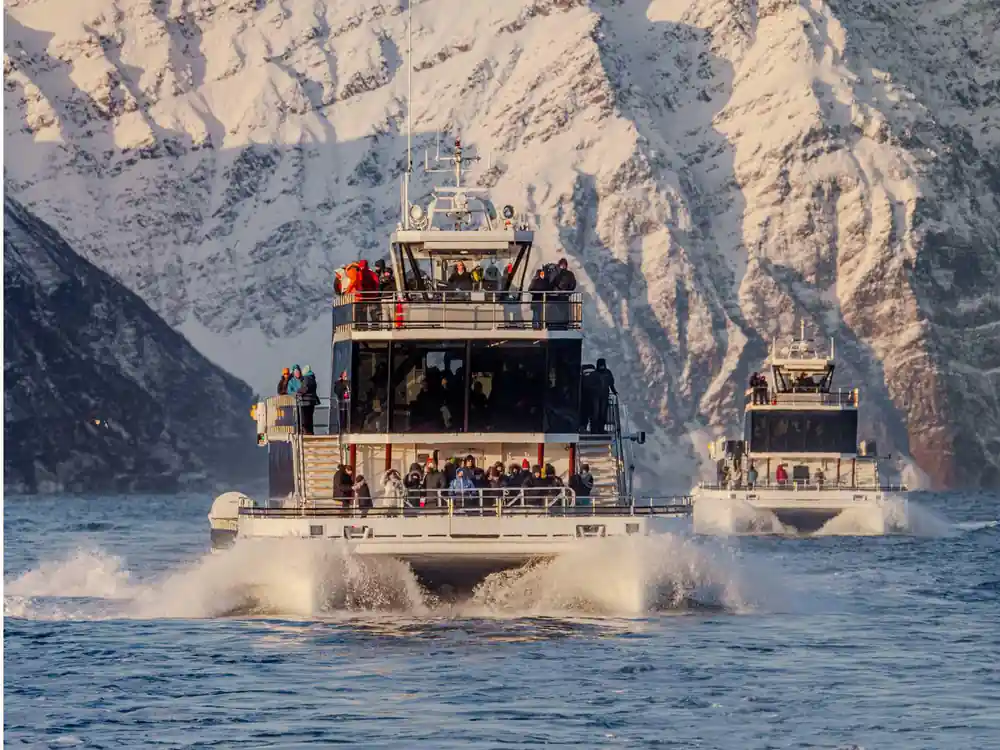
The tour booked through this site is the Tromsø whale watching tour by hybrid-electric boat. It costs from US$209[21], lasts 9 hours[21] and is wheelchair accessible[21]. A live English-speaking guide accompanies the trip[21], helping you track the whales and read the landscape. The hybrid-electric design means you can spend most of the day on the water without the noise and smell of an old ferry.
The route starts in Tromsø and takes in a wide slice of the region. It goes on to the Lyngen Alps, passes the lighthouse at Lyngstuva, moves through Kagsundet, reaches Skjervøy, and returns near the Arctic Cathedral[21]. That itinerary gives you fjord scenery, open water and a historic fishing town in one day. Check availability to see starting times[21].
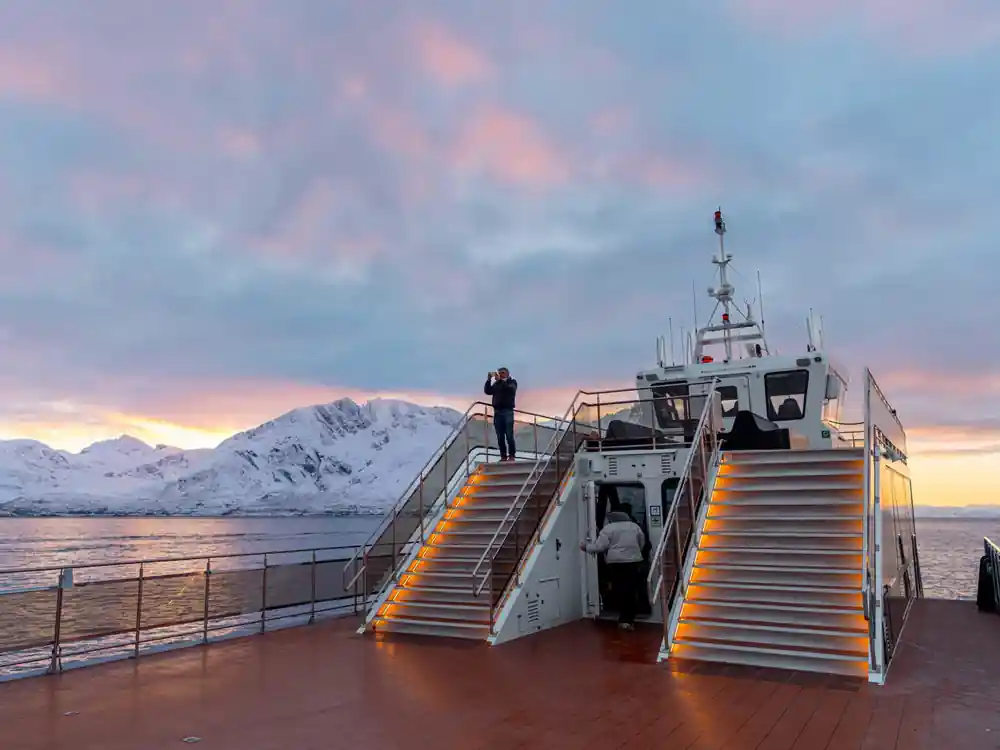
There is something quietly reassuring about boarding a sightseeing boat built for comfort. You can move between the indoor saloon and the open deck as the weather changes, warming up with a hot drink while the guide keeps an eye on the water. The pace feels measured, closer to an expedition day than a rushed sightseeing loop, and that suits the landscape.
from US$209
From the harbour that sent explorers north, a quiet day on the water looking for whales.
Observing whales on their own terms
Norwegian rules for whale safari boats are designed to protect working fishermen and fixed gear. Vessels must keep at least 0.2 nautical miles (370 m) away from fishing vessels, steng or fixed gear[29]. That distance keeps the tour clear of nets while still giving passengers a strong view of blows and breaches.
The guides keep commentary in English[21] and point out animal behaviour as it happens. A tail fluke, a line of blows, a group of orcas moving together: these are the moments that stay with you. The boat is wheelchair accessible[21], opening the deck experience to more travellers than expedition ships of the past.
Binoculars are worth borrowing if you have them. They make it easier to spot a spout before the guide calls it out, and they give you a closer view of distant peaks as the boat moves through the skerries. The guide will also explain what you are seeing and why the site matters; that local knowledge is part of the ticket. This is not a thrill ride, but an encounter paced by the sea.
Practical plans for a winter harbour day
Give yourself time to find the meeting point and get settled before departure. Tromsø Airport to the city centre takes about 10-20 minutes[22], and the tour itself runs for 9 hours[21]. That is a large part of a short winter day, especially when the polar night leaves little daylight; plan travel and meals around the schedule.
Average winter temperatures hover around -4°C[16]. Layers, a windproof shell and warm boots are the difference between distraction and comfort. Use reserve now and pay later[21], and keep the free cancellation option in mind up to 24 hours in advance[21]. Booking early also locks in the from price of US$209[21].
If you arrive the day before, use the extra hours to adjust to the cold and get your bearings. Tromsø's compact centre makes it easy to find the harbour without stress. Check the email from the operator for the exact meeting point, and be early rather than rushed. The 9-hour day[21] goes quickly once the boat is moving, so arrive rested and ready for wind on your face.
Why this tour carries the harbour story forward
Tromsø arctic expeditions of the past depended on local knowledge, patient crews and a good harbour. The modern version adds comfort and accessibility: a hybrid-electric boat, a live English-speaking guide and a full day that covers both wild fjords and coastal landmarks[21]. The search for whales still happens in the same waters that drew explorers north, just with better coffee and warmer decks.
This is not a trip for people who need non-stop activity; it is a day to slow down and watch. The route through the Lyngen Alps, Kagsundet and Skjervøy gives the landscape room to speak[21]. And when a humpback lifts its tail against the snowy mountains, you understand why Tromsø polar history remains so alive in the harbour today.
Back on shore, the harbour looks different. The boats that once carried explorers now carry travellers, but the sea is the same moving highway of weather and wildlife. It is that continuity, more than any monument, that makes Tromsø polar history feel present. You leave the deck tired, colder and quietly satisfied, with a story of your own to add to the port's long tradition.
Tour duration in hours
Duration values from GetYourGuide listings:[21],[24],[30],[31].
Compare whale watching from prices in US dollars
US Dollar from-prices from GetYourGuide listings:[21],[24],[32],[23].
Arctic seasons at a glance
How to plan your trip
Pick your date
The 9-hour whale watching tour runs from Tromsø and needs a full day[21].
Check the polar night
Tromsø's polar night lasts approximately 27 November to 15 January[17]. Choose dates with daylight if you prefer.
Dress for cold water
Average winter temperatures are around -4°C[16]. Wear layers, a warm hat and waterproof footwear.
Book with flexibility
The listing offers reserve now and pay later[21] and free cancellation up to 24 hours in advance[21].
Plan your transfer
Airport to city centre takes about 10-20 minutes[22]. Leave time to reach the harbour.
Ready to follow the whales from Tromsø's historic harbour?
from US$209Reserve now & pay later