Quick summary
- The polar night in Tromsø lasts approximately from 27 November to 15 January, when the sun stays below the horizon and daylight is a long twilight.[1]
- During the winter, orcas and humpback whales gather in the area to feed on herring.[2]
- The whale watching tour by hybrid-electric boat takes 9 hours, starts in Tromsø and is led by an English-speaking guide.[3]
- You can book from US$209 with a pay-later option; cancellations made at least 24 hours ahead get a full refund.[3]
- In the Tromsø region, the northern lights may be visible from late August to early April, whenever the sky is dark and sufficiently clear.[4]
- Top choice Hybrid-Electric Boat from US$209 Duration9 hours[3]Rating4.48 from 6,644 reviews[3]GuideLive guide in English[3]BoatHybrid-electric[3] Check availability
- RIB Whale Safari from US$257 Duration4 - 12 hours[5]Rating4.95 from 113 reviews[5]GuideLive guide in English[5]BoatRIB[5] See this tour
- Catamaran Whale Watch from US$209 Duration6 hours[6]Rating4.23 from 250 reviews[6]GuideLive guide in English[6]BoatCatamaran[6] See this tour
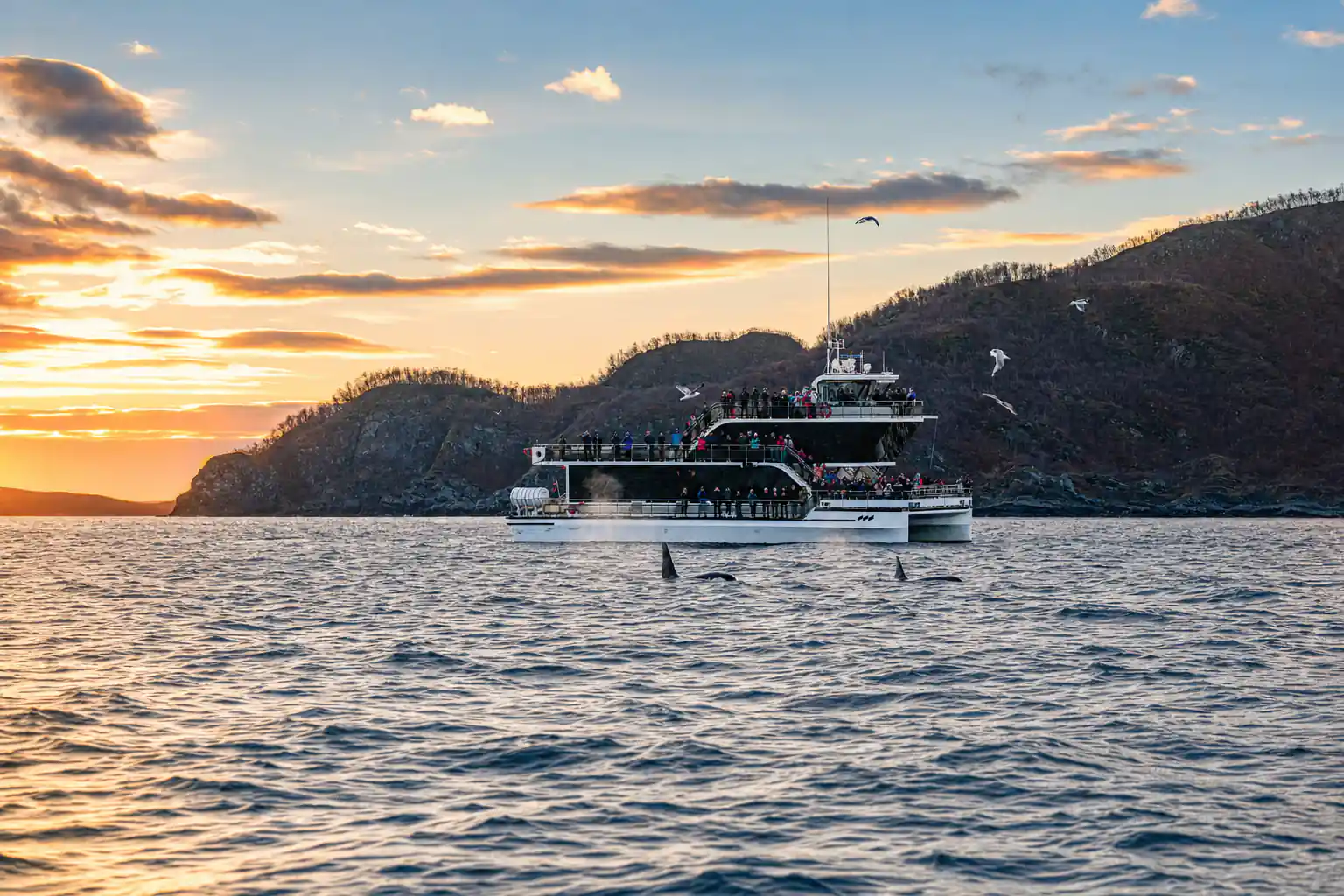
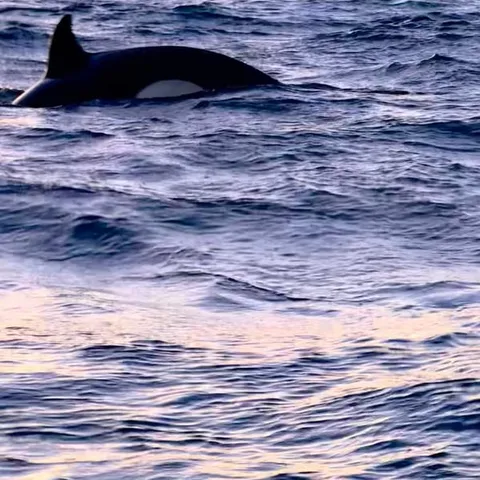
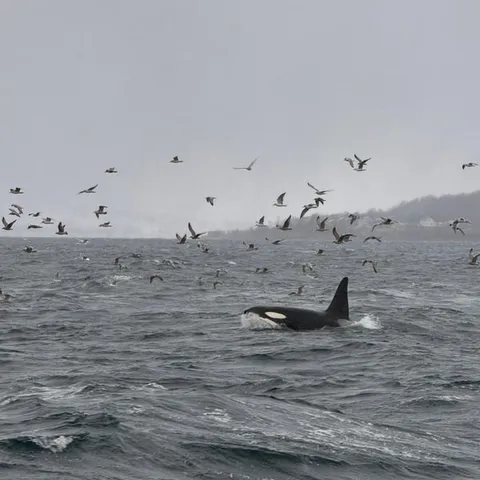
During the winter, orcas and humpback whales gather in the area to feed on herring.
A Polar Night Whale Watch Worth Planning Around
Trip essentials
The Blue Hour: Arctic Twilight at Midday
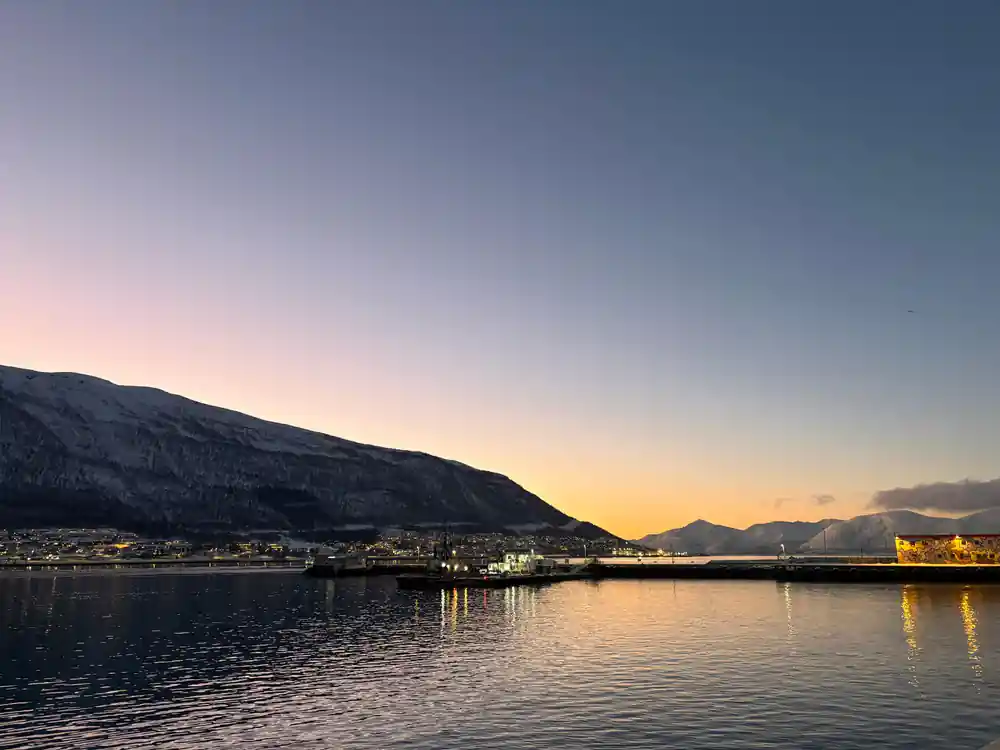
Whale watching at night in Tromsø sounds dramatic, but in the depths of winter the distinction between night and day blurs. The polar night in Tromsø lasts approximately from 27 November to 15 January, so if you travel in that window the sun stays below the horizon and the hours around midday feel like a long blue twilight.[1] The boat leaves in this soft light, and the snow-covered islands on the way north take on gentle shades of blue and grey rather than harsh white. This slow, muted light is one of the great pleasures of a winter voyage here: it softens the mountains, quiets the sea, and makes every snow-covered ridge look almost dreamlike.
The tour lasts 9 hours, so you will experience several shifts of light across the day.[3] What starts as deep blue can turn to pale gold near the horizon, then fade back to indigo. The hybrid-electric design means there is no constant diesel rumble, so it is easy to hear the guides and the sea around you. You can move around the boat without the noise of a large engine, and because the vessel is designed for sightseeing, windows and outdoor decks are placed where the views are best. For many travellers, this quiet is what makes whale watching at night feel magical rather than simply adventurous.
Snow-Covered Lyngen: Colour Palette at Midday
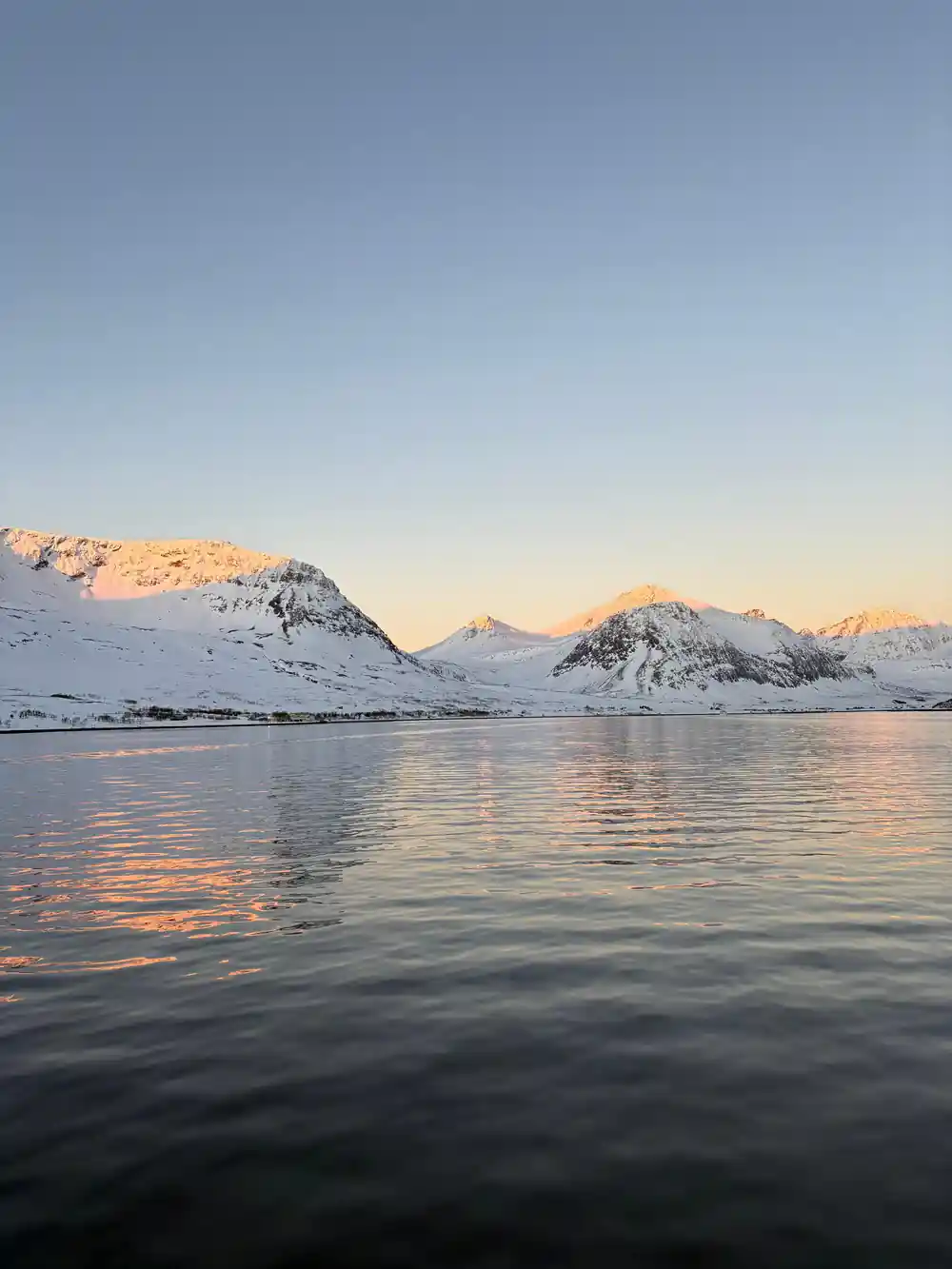
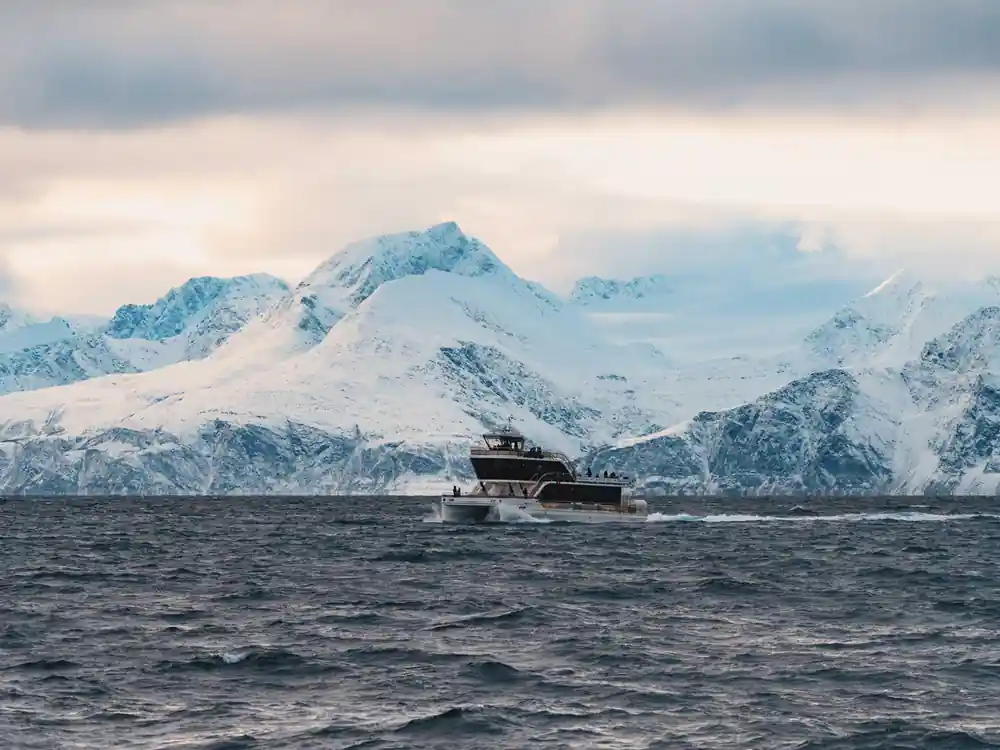
The route passes through the Lyngen Alps, one of the listed stops on this tour.[3] Even at midday in polar night, the peaks hold a surprising amount of colour: pale pinks, cold blues and the dark outline of ridges against a lighter sky. Snow clings to every slope, and at this latitude the low sun, when it does appear, rakes across the landscape instead of rising high. Ridges that face the open sea carry wind-blown snow, while sheltered fjord arms lie flat and mirror-like, doubling the peaks in the water.
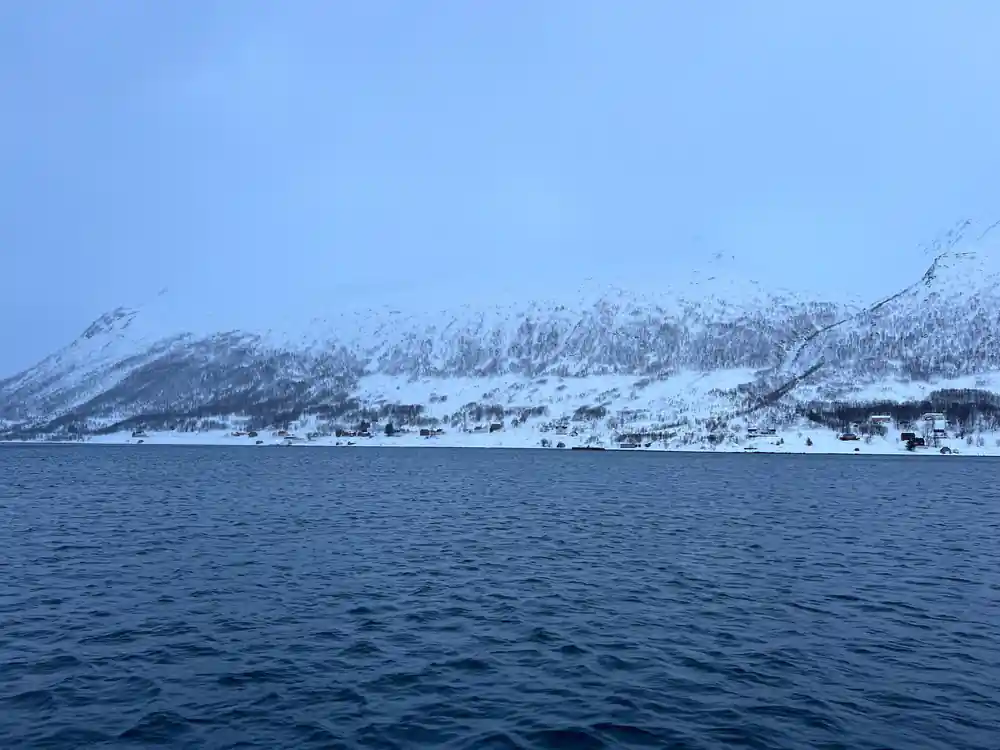
If you are wondering whether it is really polar night in Tromsø, the answer depends on your dates. Around the polar night period the sun never fully rises, but the middle of the day is not pitch black.[1] It is the best time to be on deck: the light is soft, the mountains have texture, and whales are easier to spot against calm, dark water. Bring binoculars if you have them; they help you scan the shoreline and the distant slicks where a whale may surface. Do not expect glaring sunshine: instead, expect layers of blue, silver and violet that change as clouds drift through the Lyngen peaks.
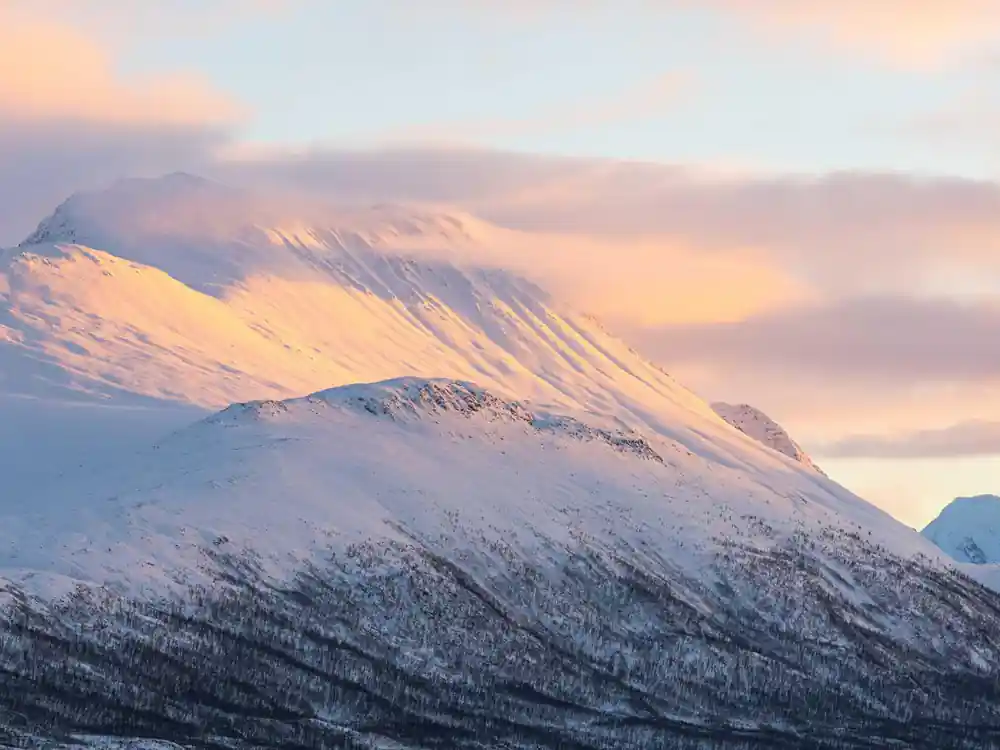
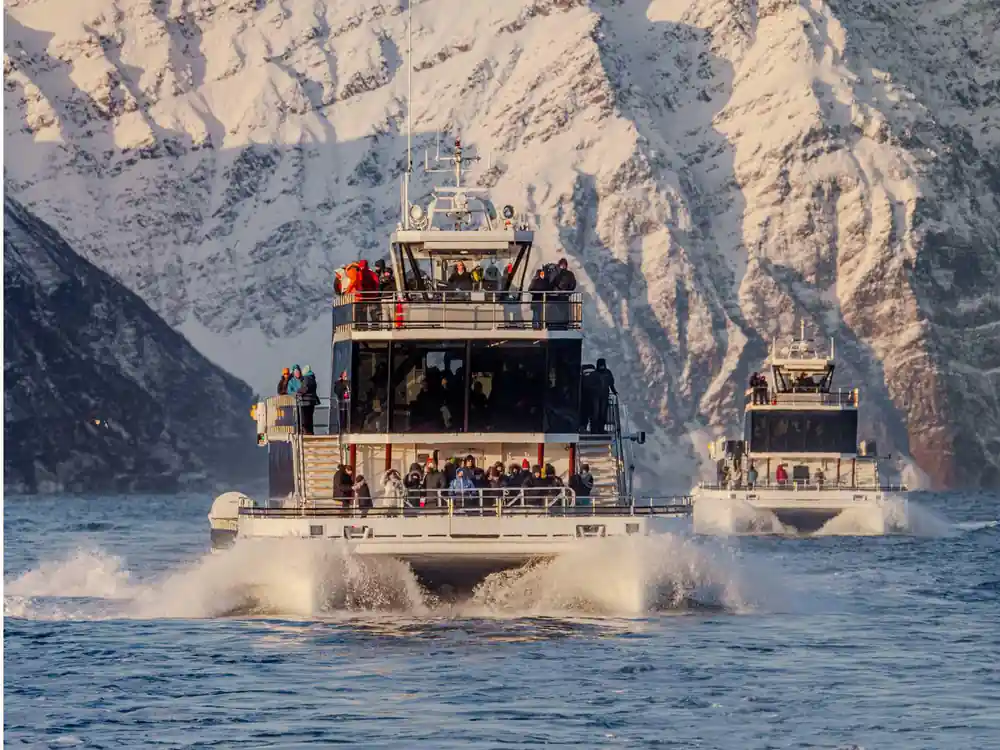
A hybrid-electric catamaran glides through snow-lined fjords under the low winter sun.
Arctic Sunsets That Last for Hours
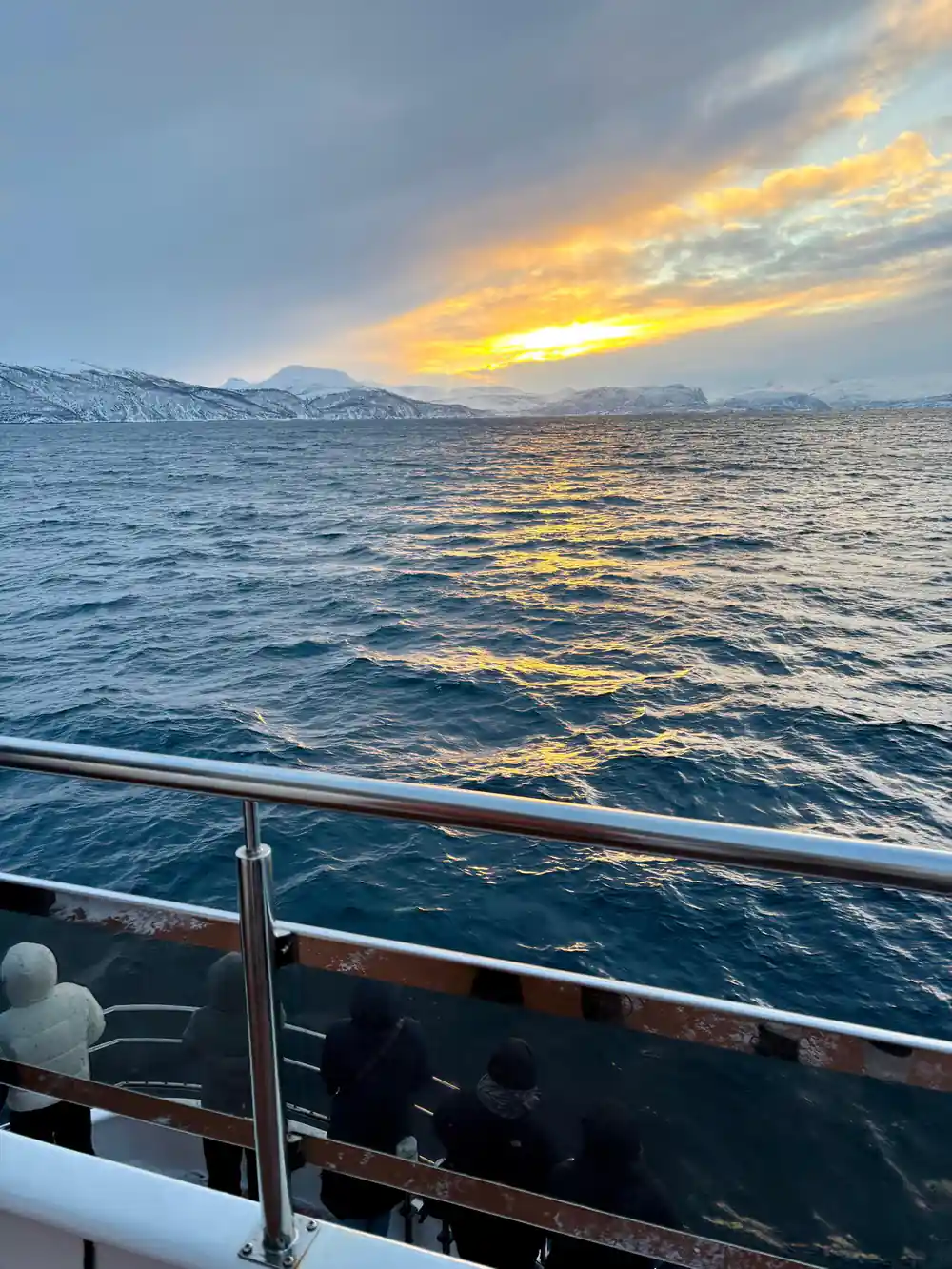
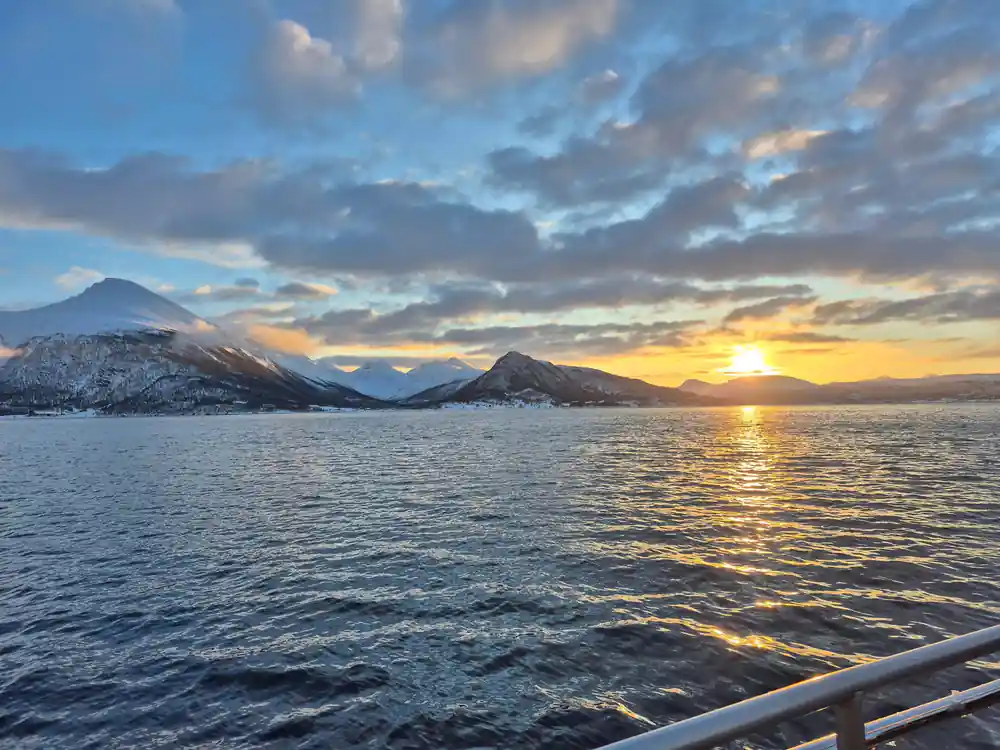
In winter, what looks like a sunset can last for hours. As the boat moves north through the fjords, the horizon glows even when the sun is below it. The effect is strongest in the short daylight window, and it changes constantly as clouds move through the Lyngen peaks and over the open stretches near Skjervøy. Sometimes the entire sky turns peach and rose for a short while, then settles back into deep indigo. These long, slow colour changes give the cruise an unhurried rhythm that is hard to find in ordinary travel.
This is also when the herring story comes alive. Norwegian spring-spawning herring migrate northeastward in September/October to their main wintering areas off the coast and in fjords in northern Norway.[7] During the winter, orcas and humpback whales gather in the area to feed on herring.[2] Watching for the dark shapes of whales among the fishing boats and the flocks of seabirds helps you understand why this remote stretch of coast draws so many animals each winter. The combination of long twilight and rich feeding grounds makes this a wonderfully atmospheric whale watching region.
Low Light and Reading Whale Behaviour
Whales are often visible in low light because their blows, fins and tail flukes break the surface and catch the eye. On this tour, the guide points out where to look, and the hybrid-electric boat allows the vessel to slow down without filling the air with engine noise. That makes it easier to watch orcas and humpbacks surface and dive around you. You soon learn to read the signs: a column of mist, a tall black fin, a broad tail rising briefly before a deep dive.
The size of these animals is hard to grasp until you see them. Male orcas can be 6 to 9 meters long and weigh about 6 tonnes, while females can be 5 to 7 meters long and weigh about 4 tonnes.[8] Humpback whales are 15 to 17 meters long, with females 1 to 1.5 meters longer than males.[9] In the twilight, a humpback's white pectoral fins can glow against the dark water, and the tall dorsal fin of an orca is surprisingly sleek and elegant. Keeping a respectful distance is normal; these are wild animals feeding, not performers. The joy is simply being there, sharing the dark water with them for a few quiet hours.
from US$209
A hybrid-electric winter whale watching voyage with a live English-speaking guide and wheelchair access, sailing through twilight fjords to see whales.
Northern Lights Visibility on the Return Journey
Can you see the northern lights on a Norway cruise? In the Tromsø region, the northern lights may be visible from late August to early April, whenever the sky is dark and sufficiently clear.[4] A 9-hour whale watching tour that stretches into the evening gives you a window for aurora after the whale-watching part of the day.[3] Out on the water, away from city lights, the sky can be remarkably dark even before full night settles in. That makes the return leg a natural time to look north for a green or violet arc.
The return toward Tromsø passes the Arctic Cathedral, the final stop on the itinerary.[3] As city lights approach, the sky can still be active overhead. Guides are focused on whales during the day, but on a clear winter evening the aurora is a bonus you might catch from the deck during the journey back. There is no guarantee, of course; the northern lights depend on solar activity, cloud cover and darkness. But being on the water, with a dark sky already around you, gives you a better chance than standing in a brightly lit city street.
When Tromsø's Sun Returns to the Sky
If you are planning around the light, the polar night ends when the sun begins to climb again. The polar night in Tromsø lasts approximately from 27 November to 15 January.[1] Even after the polar night, the middle of the day remains low and golden, perfect for a boat tour. As winter moves on, the returning sun throws long shadows across the snow and paints the fjords in warm light.
For those who prefer the opposite extreme, Tromsø's midnight sun typically runs from about 20 May to 22 July, while winter whale watching centers on herring-feeding action.[10] During the winter, orcas and humpback whales gather in the area to feed on herring.[2] Tromsø Norway at night is not a black void; it is a long blue dusk, sometimes lit by the aurora, sometimes simply quiet and cold. The light is part of the experience, and planning your trip around it can turn a simple boat ride into an unforgettable Arctic journey.
What to Expect Across the Stops
The itinerary follows a journey through the sounds and islands north of Tromsø. The listed stops are Tromsø, the Lyngen Alps, Lighthouse Lyngstuva, Kagsundet, Skjervøy, and the Arctic Cathedral.[3] That means time in open fjords, close to snow-covered peaks, and eventually back through the city's landmark cathedral on the return. Each stop offers a different view of the same dramatic landscape: narrow sounds, wide bays, a lighthouse standing alone against the snow, and finally the glow of Tromsø appearing across the water.
With a 9-hour duration, the tour is a full day at sea, so plan to spend most of the daylight hours on board.[3] The route is wheelchair accessible, and the live tour guide speaks English, which makes the journey easy to follow.[3] Whether you come for whales, twilight, or the chance of northern lights, the tour weaves them all into one Arctic day. Dress warmly, find a spot on deck that suits you, and let the rhythm of the boat carry you through the polar landscape.
Sizing up Arctic whales
Compare whale watching tours from Tromsø
USD from-prices from GetYourGuide listings:[3],[5],[6],[11].
When to go
Plan your Arctic night
Choose your dates
Polar night runs from 27 November to 15 January, but whales can be around through the winter.[1][2]
Book with flexibility
You can reserve immediately and pay later, with full refund for cancellations made at least 24 hours ahead.[3]
Dress for the deck
With Tromsø's winter average around −4°C, pack warm layers, a hat, and gloves.[12]
Board the boat
The hybrid-electric vessel is wheelchair accessible and has a live tour guide in English.[3]
Keep an eye on the sky
On the return, remember that the northern lights may be visible from late August to early April.[4]
Ready to watch whales under the polar night sky?
from US$209Reserve now & pay later