Schnellüberblick
- Die durchschnittliche Wintertemperatur liegt bei etwa -4°C[16], und die Polarnacht dauert ungefähr vom 27. November bis zum 15. Januar[17].
- Orcas und Buckelwale versammeln sich in den Fjorden nördlich von Tromsø, um Herings zu fressen[18], wenn der Hering im September und Oktober nordostwärts wandert[19].
- Die Nordlichter sind von Ende August bis Anfang April sichtbar, wann immer der Himmel dunkel und klar genug ist[20].
- Ab US$209[21] ist diese 9-stündige Hybrid-Elektro-Bootstour[21] mit einem deutschsprachigen Reiseleiter[21] und barrierefrei zugänglich[21].
- Der Flughafen Tromsø liegt etwa 10 - 20 Minuten[22] von der Innenstadt entfernt.
- Top-Auswahl Hybrid-Elektro-Walstour ab US$209 Dauer9 StundenBewertung4,48 von 6.644 Bewertungen[21]BarrierefreiheitBarrierefrei zugänglich[21]ReiseleiterReiseleiter mit Deutschkenntnissen vor Ort[21] Verfügbarkeit prüfen
- Premium-Kreuzfahrt 24 Std. ab US$681 Dauer1 Tag[23]Bewertung4,90 von 47 Bewertungen[23]BarrierefreiheitIn der Auflistung nicht angegebenReiseleiterReiseleiter mit Deutschkenntnissen vor Ort[23] Diese Tour ansehen
- Katamaran-Walbeobachtung ab US$209 Dauer6 StundenBewertung4,23 von 250 Bewertungen[24]BarrierefreiheitIn der Auflistung nicht angegebenReiseleiterReiseleiter mit Deutschkenntnissen vor Ort[24] Diese Tour ansehen
Die Mitternachtssonne in Tromsø dauert gewöhnlich von etwa Mitte Mai bis Ende Juli.
Ein Hafentag, der den Expeditionsgeist ehrt
Vorab-Hinweise
- Kleidung in Schichten mit einer winddichten outer Layer
- Planen Sie für kurze Tageslicht und dunkle Polar Nächte
- Frühzeitig buchen und den Treffpunkt noch einmal überprüfen
- Mit Kindern unterwegs? Bestätigen Sie die Altersregeln beim Veranstalter
Am Tag der Tour
- Zeit einplanen, um vom Hotel zum Hafen zu gelangen
- Nutzen Sie den schnellen Airport-Transfer, wenn Sie am selben Tag anreisen
- Hören Sie die Sicherheitseinweisung, bevor Sie an Deck gehen
- Bringen Sie eine Kamera mit Trager und warme Ersatzbatterien mit
Ein Hafen, geformt von arktischen Expeditionen
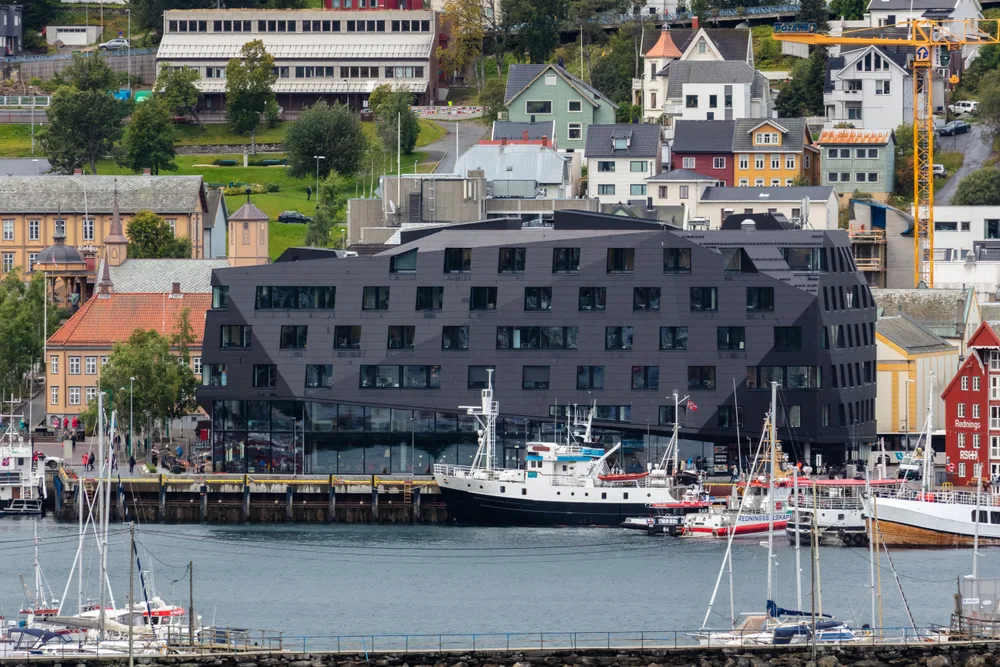
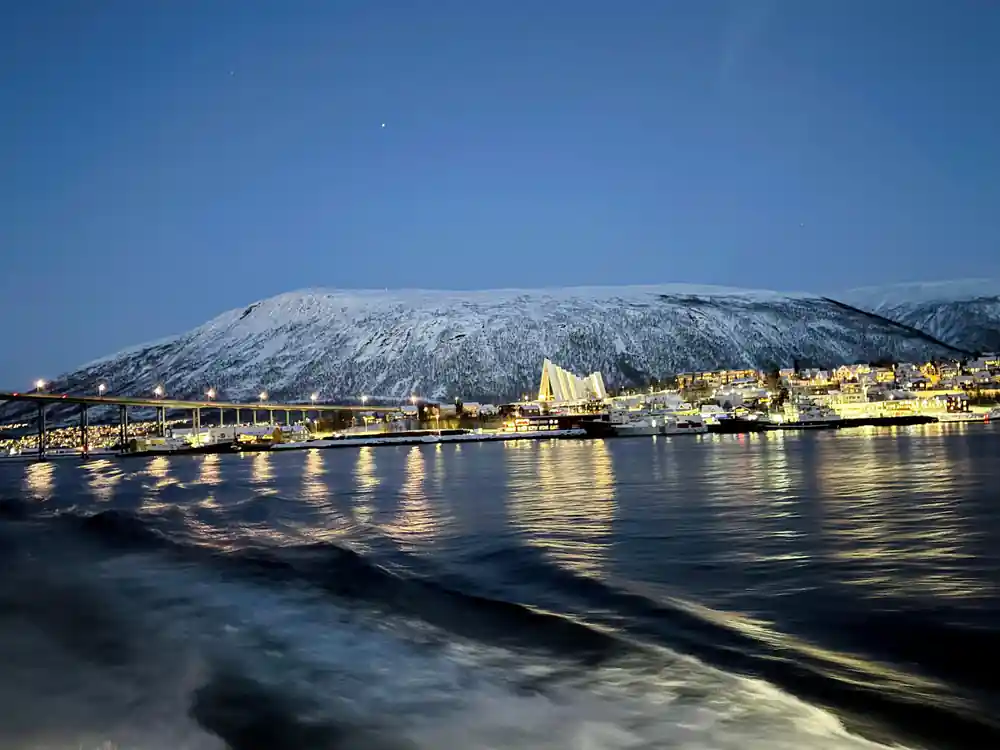
Tromsø liegt auf einer Insel, umgeben von schneebedeckten Gipfeln, etwa 350 km nördlich des Polarkreises [25]. Jahrhundertelang war dies ein natürlicher Sammelpunkt für Schiffe, Schlitten und Besatzungen, bevor sie sich ins weisse Unbekannte wagten. Der Hafen trägt noch heute diese Atmosphäre, mit Arbeitsschiffen und Ausflugskatamaranen, die Seite an Seite liegen. Im Winter dauert die Polarnacht ungefähr vom 27. November bis 15. Januar [17], was der Uferpromenade ein langes blaues Dämmerlicht verleiht, das gleichzeitig dramatisch und still wirkt.
Ein Spaziergang entlang der Kai ist eine Lektion in der Hafengeschichte von Tromsø und ein Vorgeschmack darauf, was jenseits des Sounds wartet. Fischerboote entladen, Ausflugsschiffe fahren hinaus, und die Berge scheinen nah genug zum Anfassen. Hier beginnt auch die featured Tour, die von Tromsø aus auf einem Hybrid-Elektrik-Boot [21] losfährt. Man muss kein Expeditionshistoriker sein, um die Spannung des alten Abfahrtsorts zu spüren.
Achten Sie auf die kleinen Details entlang der Uferpromenade: Haufen von koiliertem Seil, Fischkisten, der Geruch von Salz und Diesel. Die Hafengeschichten von Tromsø sind nicht nur in Museen zu finden. Sie sind in den Straßennamen, den Bronzestatuen und den alten Lagerhallen geschrieben, die heute Cafés und Galerien beherbergen. Ein langsames Herumspazieren vor dem Boarding macht die Tour zu einem Teil einer längeren Erzählung, die sich seit der Zeit der Walfänger und Polarforscher entfaltet, die dieselben Kai nutzten.
Wenn die Sonne verschwindet und die Lichter erscheinen
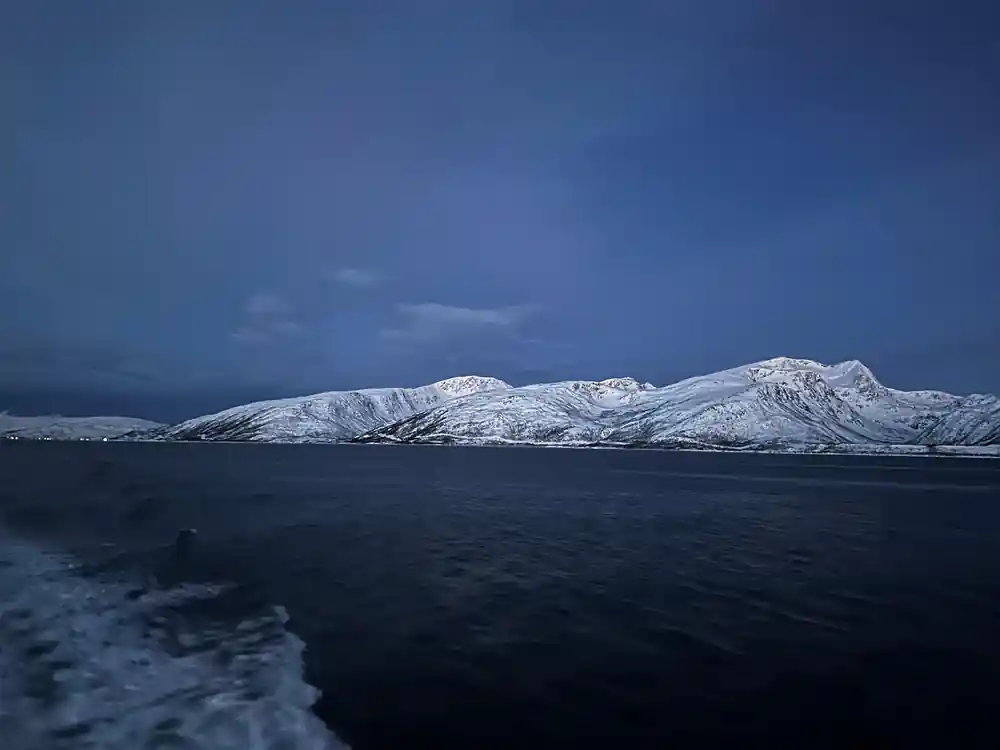
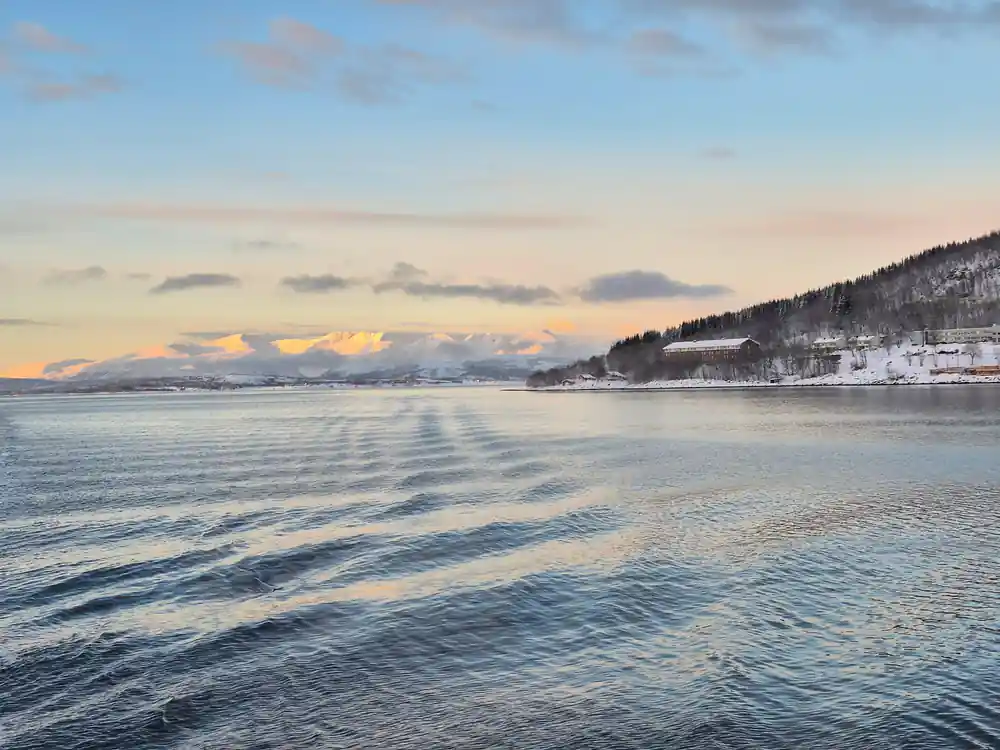
Der Winter in Tromsø ist von Kälte und Dunkelheit geprägt. Die durchschnittliche Wintertemperatur liegt bei etwa -4°C [16], während die Polarnacht ungefähr vom 27. November bis 15. Januar [17] dauert. In diesen Wochen bleibt die Sonne unter dem Horizont, und die Stadt lebt unter einem langen, nachmittagsähnlichen Dämmerlicht. Darüber hinaus können die Nordlichte von Ende August bis Anfang April sichtbar sein, wenn der Himmel dunkel und hinreichend klar ist [20].
Genau diese Jahreszeit machte Tromsø zu einem Ort geduldiger Vorbereitung. Expeditionen warteten auf das Wetter, überprüften das Eis und studierten den Himmel, und der moderne Reisende tut etwas Ähnliches, wenn er einen Walschau-Tag plant. Die Mitternachtssonne dauert normalerweise von etwa dem 20. Mai bis zum 22. Juli [26], eine Erinnerung daran, dass dieser Hafen im Laufe des Jahres zwei völlig verschiedene Gesichter hat.
Reisende, die wegen der Aurora anreisen, planen ihren Tag oft um die Dunkelheit herum. Eine lange Walbeobachtungstour im Winter braucht einen Plan: ein spätes Frühstück, warmes Essen vor dem Boarding und ein ordentliches Abendessen danach. Die Stadt ist klein genug zum Gehen, und der Spaziergang zum Hafen ist Teil der Freude. Zwischen dem Fährterminal und dem Cathedral bekommt man ein Gefühl dafür, wie die Stadt einst Expeditionen ausgerüstet hat - und heute noch beherbergt.
Ein Buckelwalschwanz steigt nah an ein Hybrid-Elektro-Schiff in der Region Tromsø.
Die Wale, die dem Hering nach Norden folgen
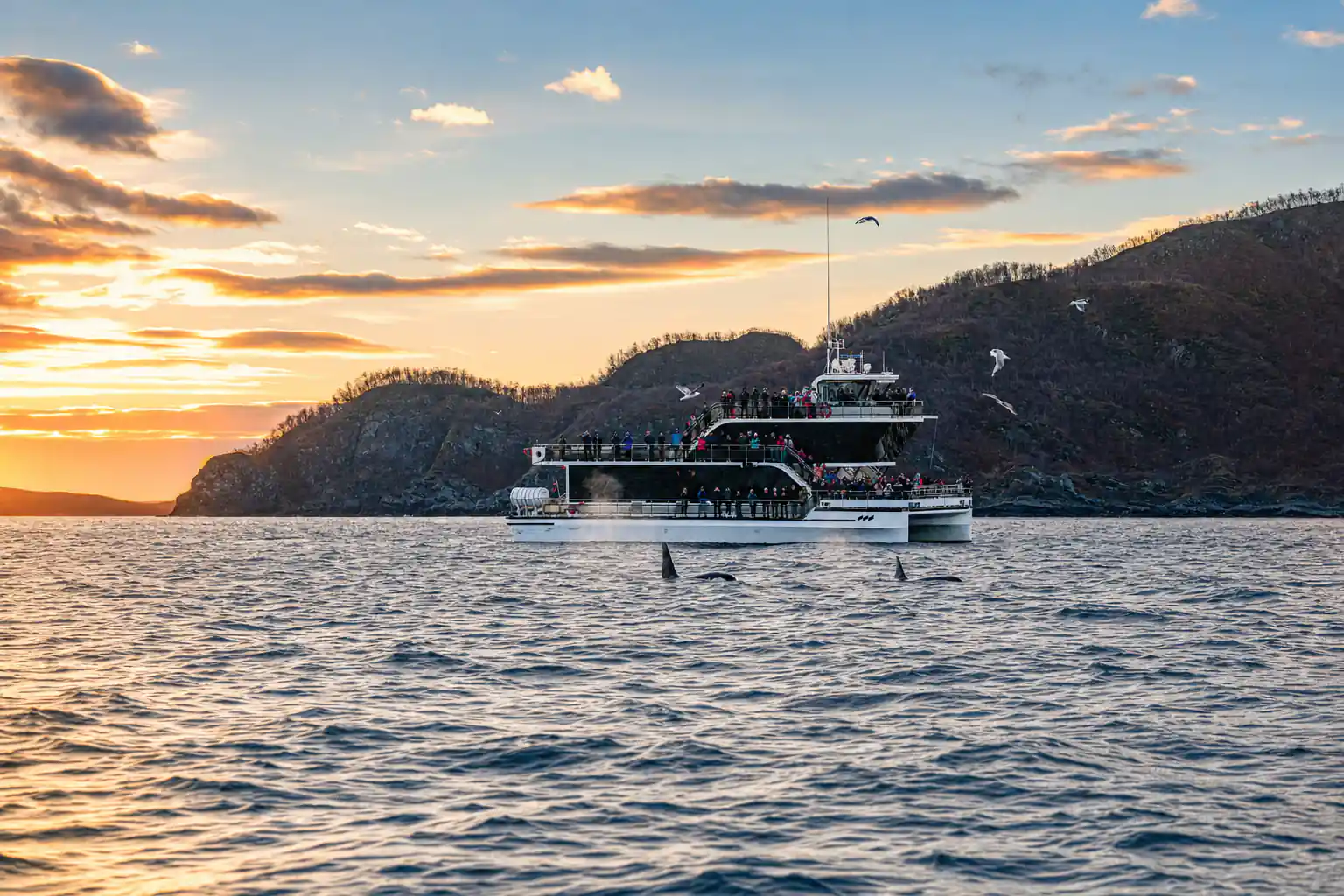
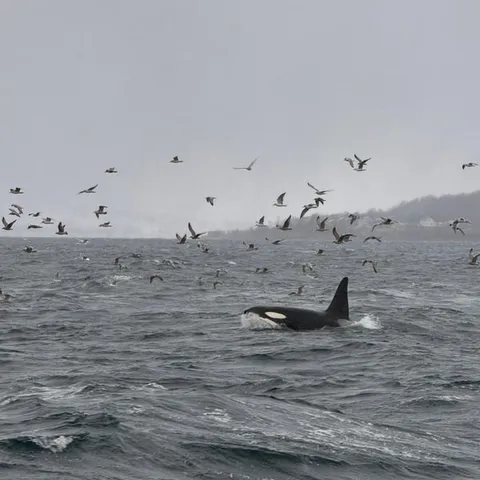
Die Walbeobachtung hier beginnt mit einem Fisch. Norwegischer Ostspawner-Hering wandert im September/Oktober nordostwärts in seine Hauptüberwinterungsgebiete vor der Küste und in Fjorden in Nordnorwegen[19]. Im Winter versammeln sich Orcas und Buckelwale in der Gegend, um Hering zu fressen[18]. Vom Deck aus können Sie das Ergebnis dieser Beziehung in Blasen und Schwanzflossen sehen.
Die Tiere selbst sind enorm. Männliche Orcas können 6 bis 9 Meter lang werden und etwa 6 Tonnen wiegen, während Weibchen 5 bis 7 Meter lang und etwa 4 Tonnen schwer sind[27]. Buckelwale sind 15 bis 17 Meter lang, wobei Weibchen 1 bis 1,5 Meter länger als Männchen sind[28]. Kein Foto bereitet Sie auf die Dimension eines Wals vor, der neben einem ruhigen Boot an die Oberfläche steigt.
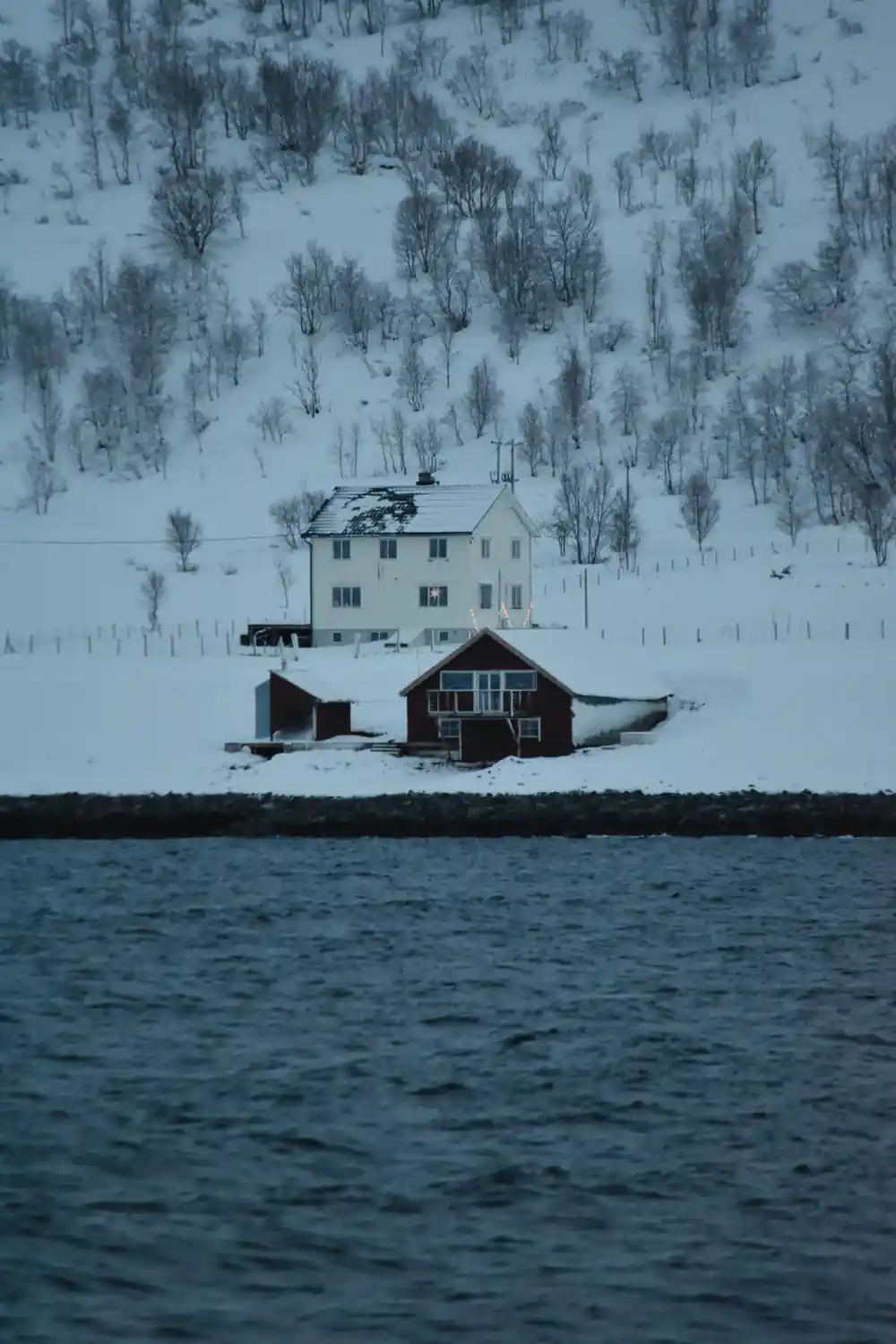
In Skjervøy, einer der Stationen der Route, ist das Wasser voller Leben und die Berge fallen direkt ins Meer. Die Fischerstadt hat das Rhythmus des Herings längst verstanden, und das Beobachten aus dem Wasser verbindet Sie mit dieser Arbeitslandschaft auf eine Weise, die kein Museumsdisplay vermitteln kann.
Walbeobachtung im Winter bedeutet auch, Unsicherheit zu akzeptieren. Tiere bewegen sich, das Wetter ändert sich, und die Meere haben ihren eigenen Kalender. Die Guides orientieren sich an den Berichten und lesen das Wasser, und die Route wird mit Blick auf die Tiere gewählt. Teil des Abenteuers ist die Suche selbst, und die Wal-Saison in Tromsø ist gerade deshalb beliebt.
Eine ruhige Bootsfahrt vom alten Hafen
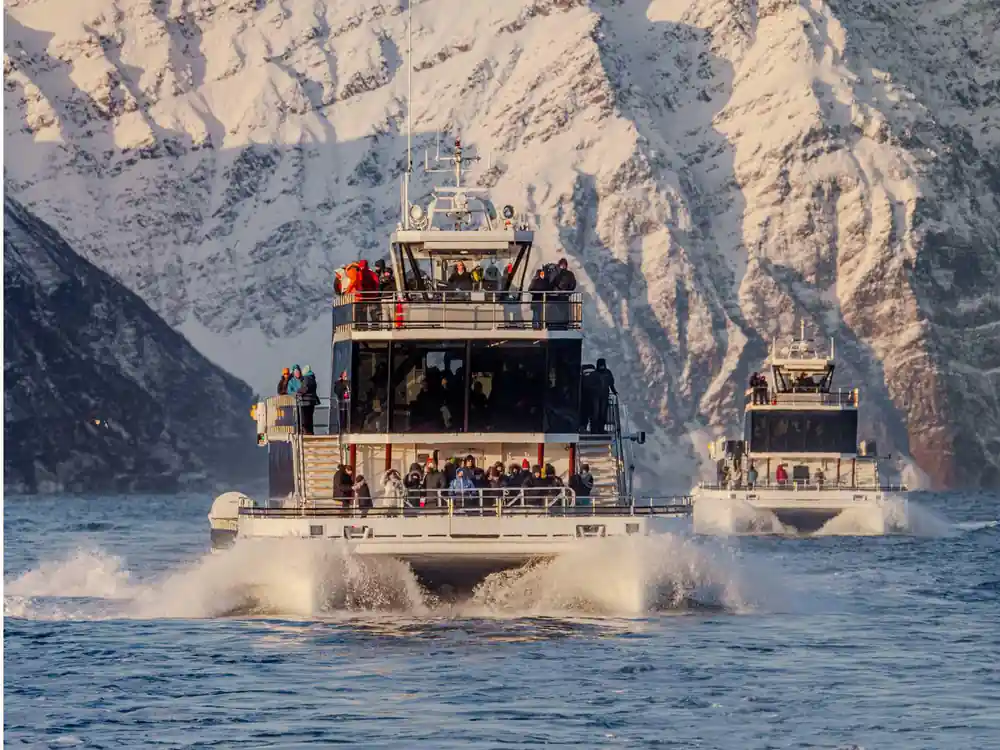
Die über diese Seite gebuchte Tour ist die Tromsø Walbeobachtungstour mit einem Hybrid-Elektro-Boot. Sie kostet ab US$209[21], dauert 9 Stunden[21] und ist rollstuhlgerecht[21]. Ein deutschsprachiger Live-Guide begleitet die Reise[21] und hilft Ihnen, die Wale zu finden und die Landschaft zu lesen. Das Hybrid-Elektro-Design bedeutet, dass Sie den Großteil des Tages auf dem Wasser verbringen können, ohne den Lärm und Geruch einer alten Fähre.
Die Route startet in Tromsø und führt durch ein weites Stück der Region. Sie geht weiter zu den Lyngen-Alpen, passiert den Leuchtturm bei Lyngstuva, führt durch Kagsundet, erreicht Skjervøy und kehrt in der Nähe der Arctic Cathedral zurück[21]. Dieser Tagesausflug bietet Ihnen Fjordlandschaft, offenes Wasser und eine historische Fischerstadt an einem einzigen Tag. Prüfen Sie die Verfügbarkeit für Abfahrtszeiten[21].
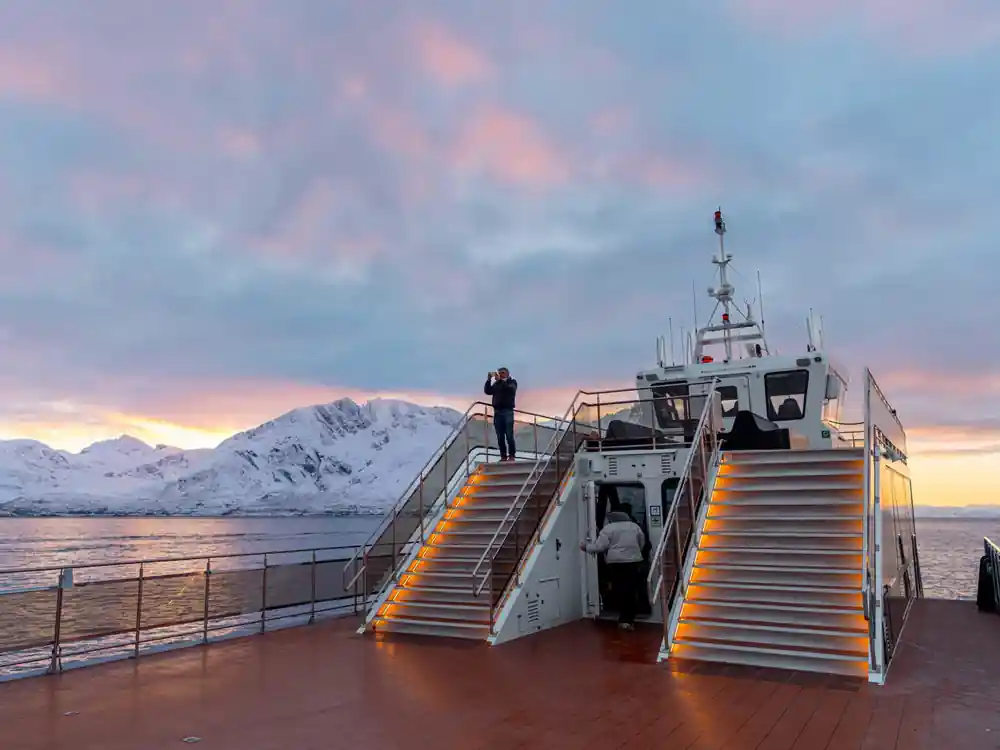
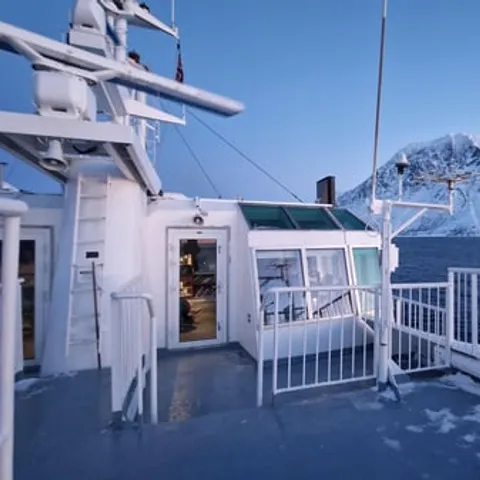
Etwas Beruhigendes hat es, an einem Sightseeing-Boot zu denken, das für Komfort gebaut ist. Sie können zwischen dem Innenbereich und dem offenen Deck wechseln, wenn sich das Wetter ändert, sich mit einem heißen Getränk wärmen, während der Guide einen Blick auf das Wasser wirft. Das Tempo wirkt bedacht, eher wie ein Expeditionstag als eine hektische Rundtour, und das passt zur Landschaft.
from US$209
Vom Hafen, der Entdecker nach Norden schickte, ein ruhiger Tag auf dem Wasser auf der Suche nach Walen.
Wale auf ihre eigene Art beobachten
Die norwegischen Vorschriften für Wal-Safari-Boote dienen dem Schutz der arbeitenden Fischer und ihrer festen Ausrüstung. Fahrzeuge müssen mindestens 0.2 Seemeilen (370 m) von Fischereifahrzeugen, Steng oder festen Geräten entfernt bleiben[29]. Dieser Abstand hält die Tour frei von Netzen, gibt den Passagieren aber trotzdem einen guten Blick auf Spucker und Aufsprünge.
Die Guides halten den Kommentar auf Englisch[21] und weisen auf das Verhalten der Tiere hin, sobald es passiert. Eine Schwanzflosse, eine Reihe von Spuckern, eine Gruppe Orcas, die sich gemeinsam bewegt: das sind die Momente, die in Erinnerung bleiben. Das Boot ist rollstuhlgängig[21], was die Deck-Erfahrung mehr Reisenden zugänglich macht als die Expeditionsschiffe der Vergangenheit.
Ferngläser sind es wert, ausgeliehen zu werden, falls Sie welche haben. Sie erleichtern es, einen Spucker zu erkennen, bevor der Guide darauf hinweist, und bieten einen näheren Blick auf die entfernten Gipfel, während das Boot durch die Schären fährt. Der Guide erklärt außerdem, was Sie sehen und warum der Ort bedeutsam ist; dieses lokale Wissen ist Teil des Tickets. Dies ist keine Fahrattraktion, sondern eine Begegnung im Rhythmus des Meeres.
Praktische Pläne für einen Wintertag im Hafen
Geben Sie sich genug Zeit, um den Treffpunkt zu finden und sich vor der Abfahrt einzurichten. Vom Flughafen Tromsø in die Innenstadt brauchen Sie etwa 10-20 Minuten[22], und die Tour selbst dauert 9 Stunden[21]. Das ist ein großer Teil eines kurzen Wintertages, besonders wenn die Polarnacht den Tag kaum Licht lässt; planen Sie Reise und Mahlzeiten um den Zeitplan herum.
Die durchschnittlichen Wintertemperaturen liegen bei etwa -4°C[16]. Schichten, eine winddichte Jacke und warme Stiefel machen den Unterschied zwischen Ablenkung und Komfort. Nutzen Sie jetzt buchen und später zahlen[21], und behalten Sie die kostenlose Stornierungsmöglichkeit bis zu 24 Stunden im Voraus[21] im Blick. Frühzeitiges Buchen sichert Ihnen auch den Preis ab US$209[21].
Wenn Sie einen Tag früher ankommen, nutzen Sie die zusätzlichen Stunden, um sich an die Kälte zu gewöhnen und sich zurechtzufinden. Das kompakte Zentrum von Tromsø macht es einfach, den Hafen ohne Stress zu finden. Prüfen Sie die E-Mail des Veranstalters nach dem genauen Treffpunkt, und kommen Sie eher früh als spät. Der 9-Stunden-Tag[21] vergeht schnell, sobald das Boot in Fahrt ist, also kommen Sie ausgeruht und bereit für den Wind im Gesicht.
Warum diese Tour die Hafengeschichte fortsetzt
Die arktischen Expeditionen von Tromsø in der Vergangenheit waren auf lokales Wissen, geduldige Crews und einen guten Hafen angewiesen. Die moderne Version bietet mehr Komfort und Barrierefreiheit: ein Hybrid-Elektro-Boot, einen deutschsprachigen Guide und einen ganzen Tag, der sowohl wilde Fjorde als auch Küstenlandmarks[21] abdeckt. Die Suche nach Walen findet in denselben Gewässern statt, die einst die Entdecker in den Norden zogen, nur mit besserem Kaffee und wärmeren Decks.
Diese Reise richtet sich nicht an Menschen, die einen Nonstop-Programm brauchen; es ist ein Tag, um sich zu verlangsamen und zuzusehen. Die Route durch die Lyngen-Alpen, Kagsundet und Skjervøy lässt die Landschaft selbst sprechen[21]. Und wenn ein Buckelwal seinen Schwanz gegen die verschneiten Berge hebt, versteht man, warum die Polarhistorie Tromsøs heute im Hafen so lebendig bleibt.
An Land wirkt der Hafen anders. Die Boote, einst Entdecker tragend, bringen nun Reisende, doch das Meer ist dieselbe bewegte Straße aus Wetter und Wildtierleben. Es ist diese Kontinuität, mehr als jedes Denkmal, die die Polarhistorie Tromsøs gegenwärtig fühlen lässt. Sie verlassen das Deck müde, kälter und still zufrieden, mit einer eigenen Geschichte, die der langen Tradition des Hafens hinzugefügt wird.
Tourdauer in Stunden
Dauerangaben aus GetYourGuide-Listungen:[21],[24],[30],[31].
Walfahrt beobachten - Preise vergleichen in US-Dollar
US-Dollar-Preise ab Preis aus GetYourGuide-Listungen:[21],[24],[32],[23].
Arktische Jahreszeiten auf einen Blick
Wie Sie Ihre Reise planen
Wählen Sie Ihr Datum
Die 9-stündige Walfahrtstour startet in Tromsø und erfordert einen ganzen Tag[21].
Die Polarnacht prüfen
Tromsøs Polarnacht dauert ungefähr 27. November bis 15. Januar[17]. Wählen Sie Daten mit Tageslicht, wenn Sie es bevorzugen.
Kleidung für kaltes Wasser
Durchschnittliche Wintertemperaturen liegen bei etwa -4°C[16]. Tragen Sie Schichten, eine warme Mütze und wasserdichtes Schuhwerk.
Flexibel buchen
Die Buchung beinhaltet jetzt buchen und später zahlen[21] sowie kostenlose Stornierung bis zu 24 Stunden im Voraus für eine vollständige Rückerstattung[21].
Ihren Transfer planen
Vom Flughafen ins Stadtzentrum dauert es etwa 10-20 Minuten[22]. Nehmen Sie sich Zeit, um zum Hafen zu gelangen.
Bereit, den Walen vom historischen Hafen Tromsøs zu folgen?
ab 209 US$Jetzt reservieren, später bezahlen