Resumo rápido
- A temperatura média do inverno ronda os -4°C[16], e a noite polar dura aproximadamente de 27 de novembro a 15 de janeiro[17].
- Orcas e baleias-jubarte reúnem-se nos fiordes a norte de Tromsø para se alimentar de arenque[18], seguindo o arenque que migra para nordeste em setembro e outubro[19].
- As auroras boreais podem ser visíveis desde finais de agosto até inícios de abril, sempre que o céu estiver escuro e suficientemente limpo[20].
- Desde 209 USD[21], este passeio de 9 horas de barco híbrido-elétrico[21] conta com um guia falante de inglês ao vivo[21] e é acessível para cadeiras de rodas[21].
- O aeroporto de Tromsø até ao centro da cidade demora cerca de 10-20 minutos[22].
- Escolha principal Tour de Baleias Híbrido-Elétrico desde 209 USD Duração9 horas[21]Avaliação4,48 de 6.644 avaliações[21]AcessibilidadeAcessível para cadeiras de rodas[21]GuiaGuia falante de inglês ao vivo[21] Ver disponibilidade
- Cruzeiro Premium de 24horas desde 681 USD Duração1 dia[23]Avaliação4,90 de 47 avaliações[23]AcessibilidadeNão indicado no anúncioGuiaGuia ao vivo que fala inglês[23] Ver este passeio
- Observação de Baleias em Catamarã desde 209 USD Duração6 horas[24]Avaliação4,23 de 250 avaliações[24]AcessibilidadeNão indicado no anúncioGuiaGuia ao vivo que fala inglês[24] Ver este passeio
O sol da meia-noite em Tromsø dura normalmente de cerca de 20 de maio a 22 de julho.
Um dia no porto que honra o espírito de expedição
Notas prévias
- Vista-se em camadas com uma camada externa corta-vento
- Prepare-se para os dias curtos e as noites polares escuras
- Reserve com antecedência e confirme o ponto de encontro
- Viaja com crianças? Confirme as regras de idade com o operador
No dia da atividade
- Reserve tempo para chegar ao porto desde o seu hotel
- Use o transfer rápido do aeroporto se chegar no mesmo dia
- Ouça o briefing de segurança antes de subir ao convés
- Leve uma câmara com corrente e pilhas quentes sobressalentes
Um porto moldado pelas expedições árticas
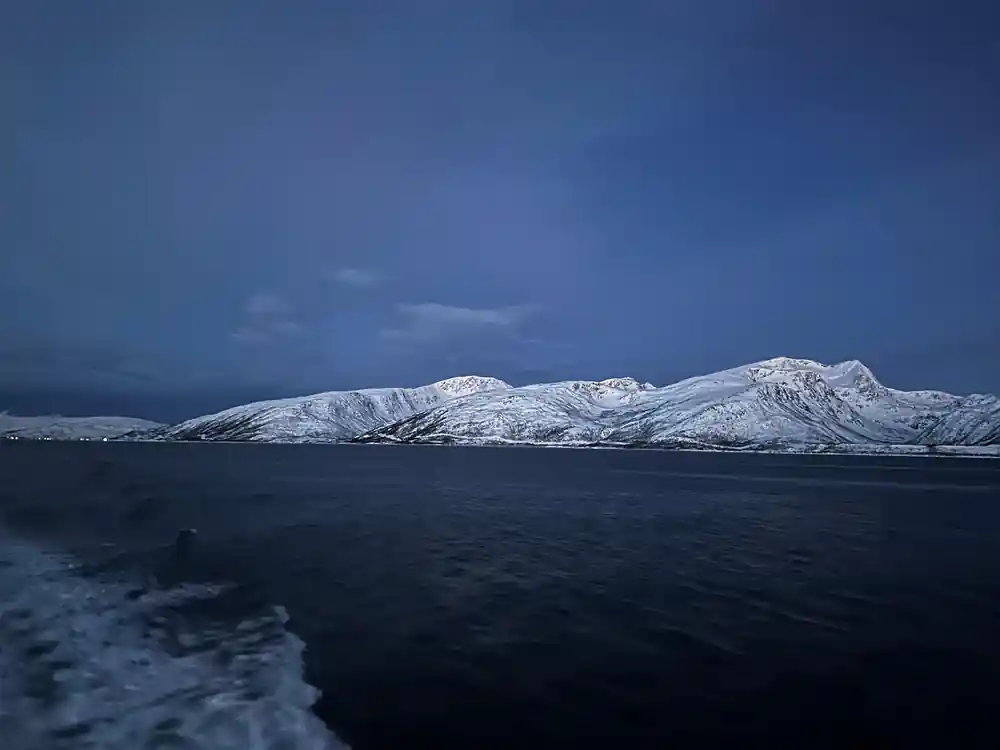
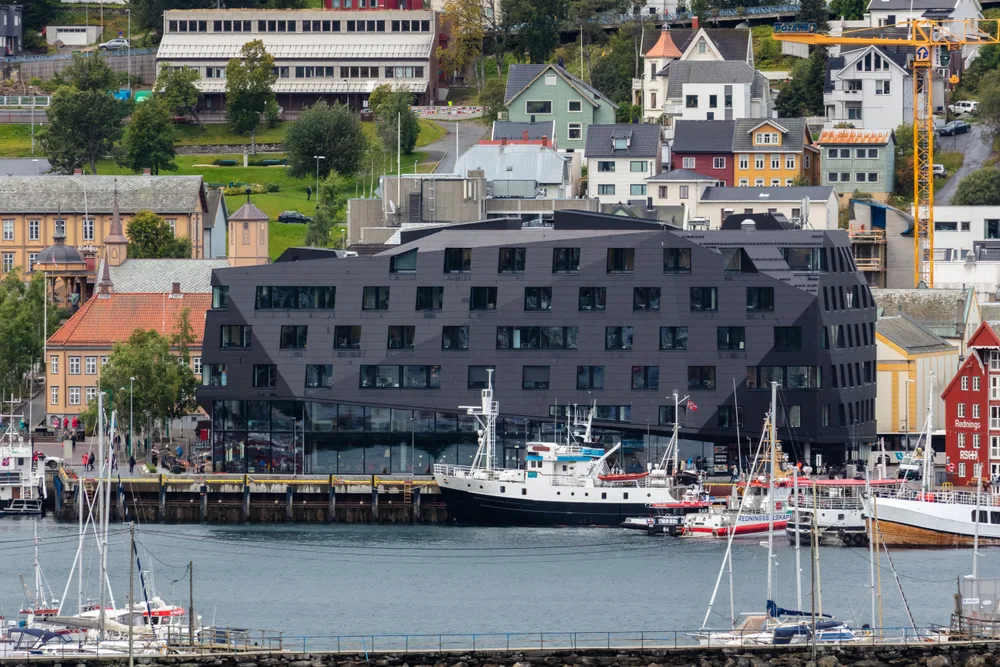
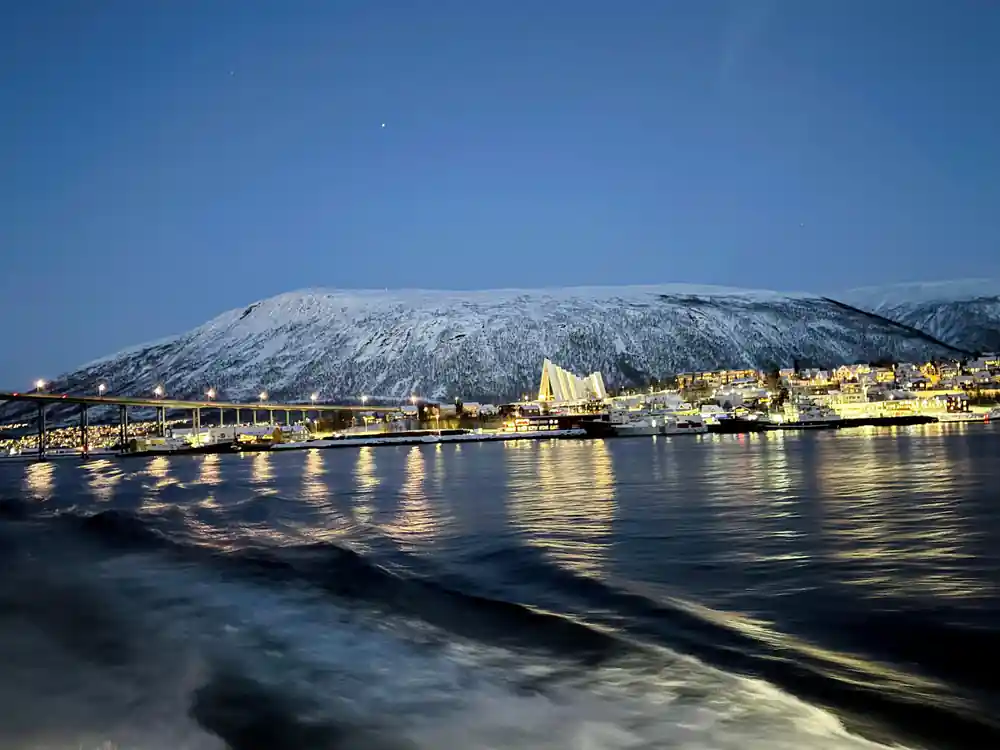
Tromsø está numa ilha rodeada por picos nevados, cerca de 350 km a norte do Círculo Polar Ártico[25]. Durante gerações, este foi um ponto de reunião natural para navios, trenós e tripulações antes de avançarem para o desconhecido branco. O porto ainda mantém essa atmosfera hoje, com barcos de trabalho e catamarãs de turismo lado a lado. No inverno a noite polar dura aproximadamente de 27 de novembro a 15 de janeiro[17], dando à orla uma longa twilight azul que parece dramática e silenciosa.
Um passeio pelos cais é uma lição sobre a história do porto de Tromsø e um vislumbre do que espera além do som. Barcos de pesca descarregam, barcos de turismo partem, e as montanhas parecem tão perto que é possível tocá-las. É também aqui que a excursão em destaque começa, saindo de Tromsø num barco híbrido-elétrico[21]. Não precisa de ser um historiador de expedições para sentir a carga do antigo ponto de partida.
Procure os pequenos detalhes ao longo da orla: montes de corda enrolada, caixas de peixe, o cheiro a sal e a gasóleo. As histórias do porto de Tromsø não estão apenas em museus. Estão escritas nos nomes das ruas, nas estátuas de bronze e nos antigos armazéns que agora abrigam cafés e galerias. Um passeio tranquilo antes de embarcar faz da excursão parte de uma narrativa mais longa, que se desenrola desde os tempos em que baleeiros e exploradores polares usavam os mesmos cais.
Quando o sol desaparece e as luzes aparecem
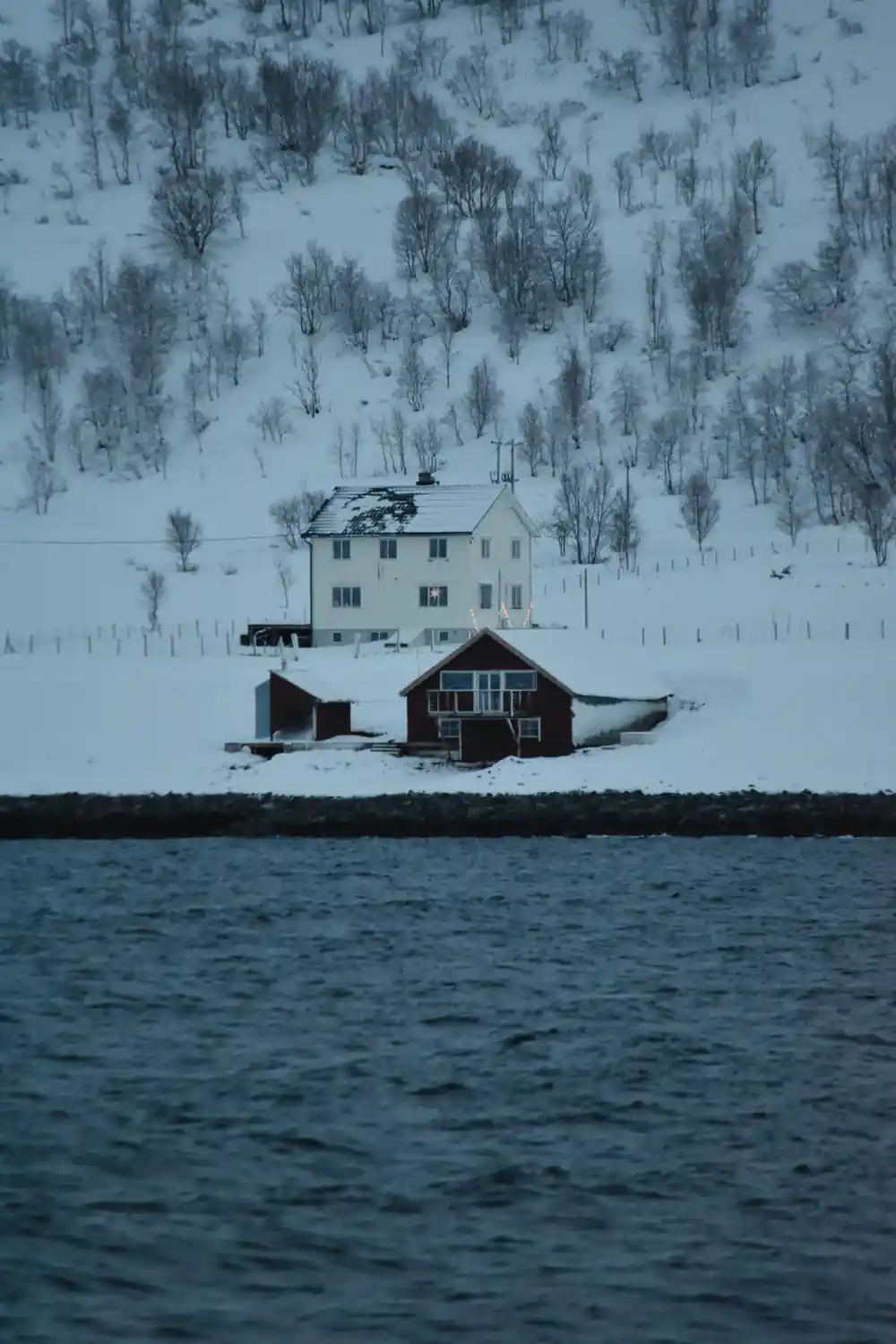
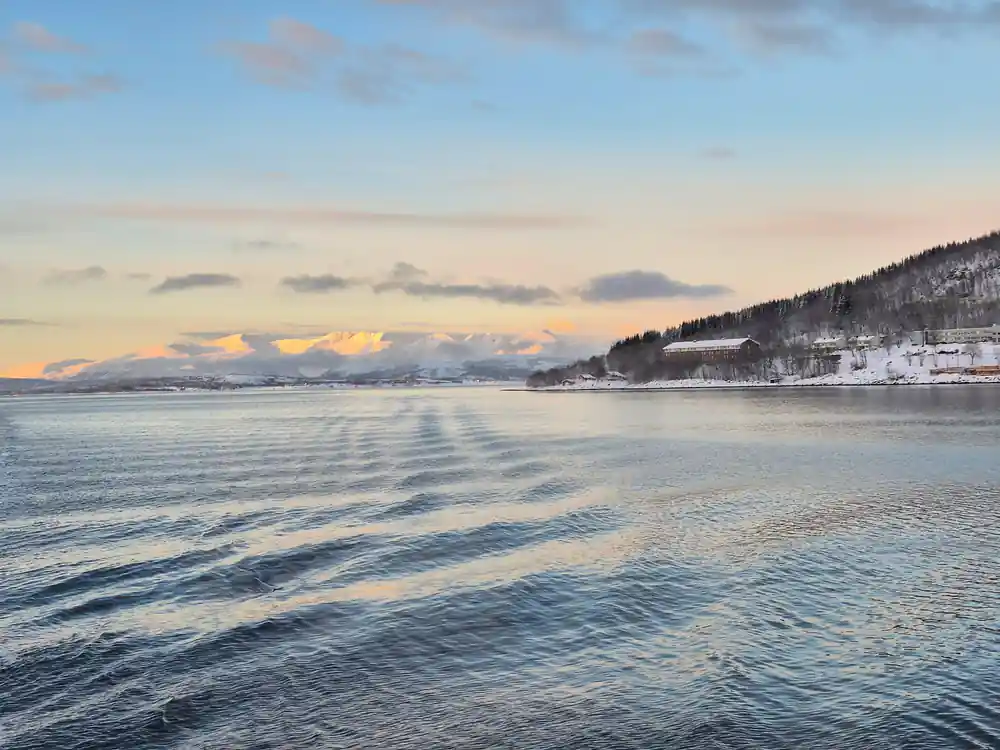
O inverno em Tromsø define-se pelo frio e pela escuridão. A temperatura média no inverno ronda os -4°C[16], enquanto a noite polar decorre aproximadamente de 27 de novembro a 15 de janeiro[17]. Durante essas semanas o sol permanece abaixo do horizonte, e a cidade vive sob um longo crepúsculo semelhante a uma tarde. Acima, as auroras boreais podem ser visíveis de finais de agosto a inícios de abril, sempre que o céu estiver escuro e suficientemente claro[20].
Essa mesma época tornou Tromsø um lugar de preparação paciente. As expedições esperavam pelo tempo, verificavam o gelo e estudavam o céu, e o viajante moderno faz algo semelhante ao planear um dia de observação de baleias. O sol da meia-noite normalmente dura desde cerca de 20 de maio até 22 de julho[26], lembrando que este porto tem duas faces completamente diferentes ao longo do ano.
Os viajantes que vêm para a aurora frequentemente organizam o seu dia em torno da escuridão. Uma longa excursão de observação de baleias no inverno precisa de um plano: um pequeno-almoço tardio, comida quente antes de embarcar e um jantar adequado depois. A cidade é pequena o suficiente para percorrer a pé, e a caminhada até ao porto faz parte do prazer. Entre o terminal de ferries e a catedral, dá-se por uma sensação de como a cidade já organizou expedições e ainda hoje as acolhe.
A cauda de uma baleia-jubarte ergue-se perto de um barco híbrido-elétrico na região de Tromsø.
As baleias que seguem o arenque para norte
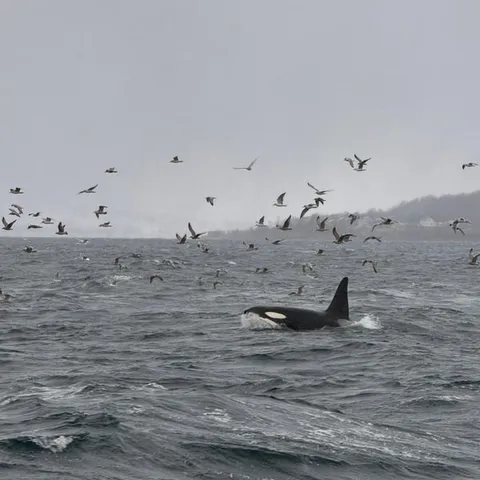
A observação de baleias aqui começa com um peixe. O arenque desova no inverno norueguês migra para nordeste em setembro/outubro para as suas principais áreas de inverno ao largo da costa e em fiordes no norte da Noruega[19]. Durante o inverno, orcas e baleias-jubartes reúnem-se na área para se alimentar de arenque[18]. Do convés pode ver o resultado dessa relação em bicos e caudas.
Os animais em si são enormes. Orcas machos podem ter 6 a 9 metros de comprimento e pesar cerca de 6 toneladas, enquanto as fêmeas podem ter 5 a 7 metros de comprimento e pesar cerca de 4 toneladas[27]. Baleias-jubartes têm 15 a 17 metros de comprimento, sendo as fêmeas 1 a 1,5 metros mais compridas que os machos[28]. Nenhuma fotografia o prepara para a dimensão de uma baleia a emergir ao lado de um barco silencioso.
Em Skjervøy, uma das paragens da rota, a água está repleta de vida e as montanhas caem diretamente ao mar. A cidade piscatória há muito que compreende o ritmo do arenque, e observá-lo a partir da água liga-o a essa paisagem trabalhada de uma forma que nenhuma exposição de museu consegue.
A observação de baleias no inverno também significa aceitar a incerteza. Os animais movem-se, o tempo muda e o mar mantém o seu próprio calendário. Os guias seguem os relatórios e leem a água, e a rota é escolhida tendo os animais em mente. Parte da aventura é a própria procura, e a época de baleias de Tromsø é popular por essa razão.
Um barco tranquilo do antigo porto
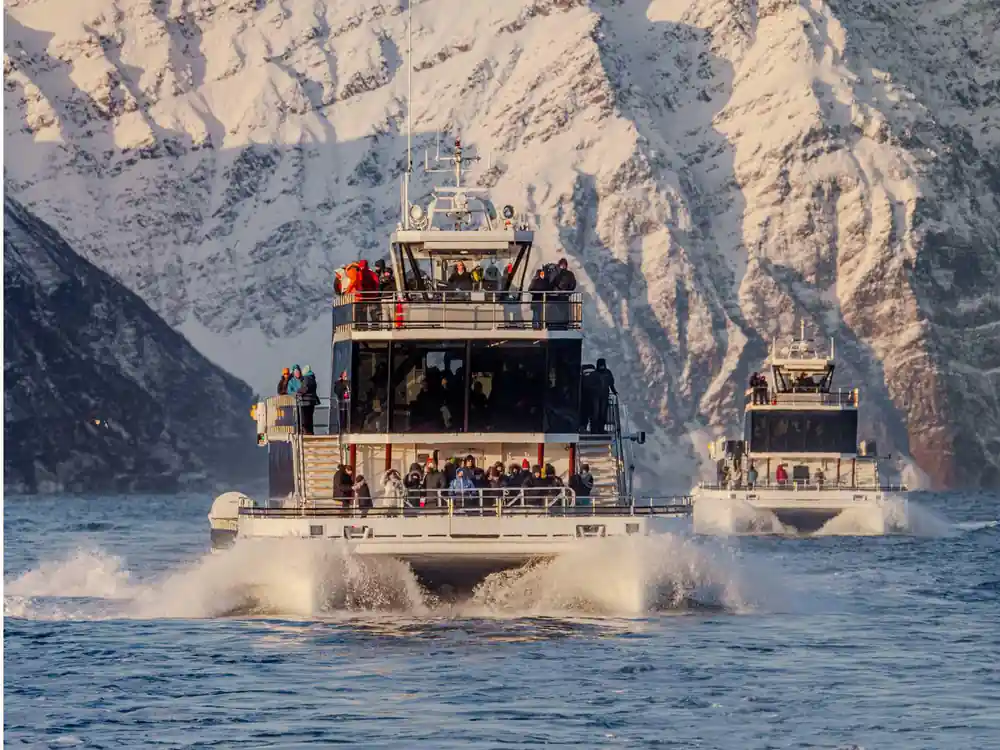
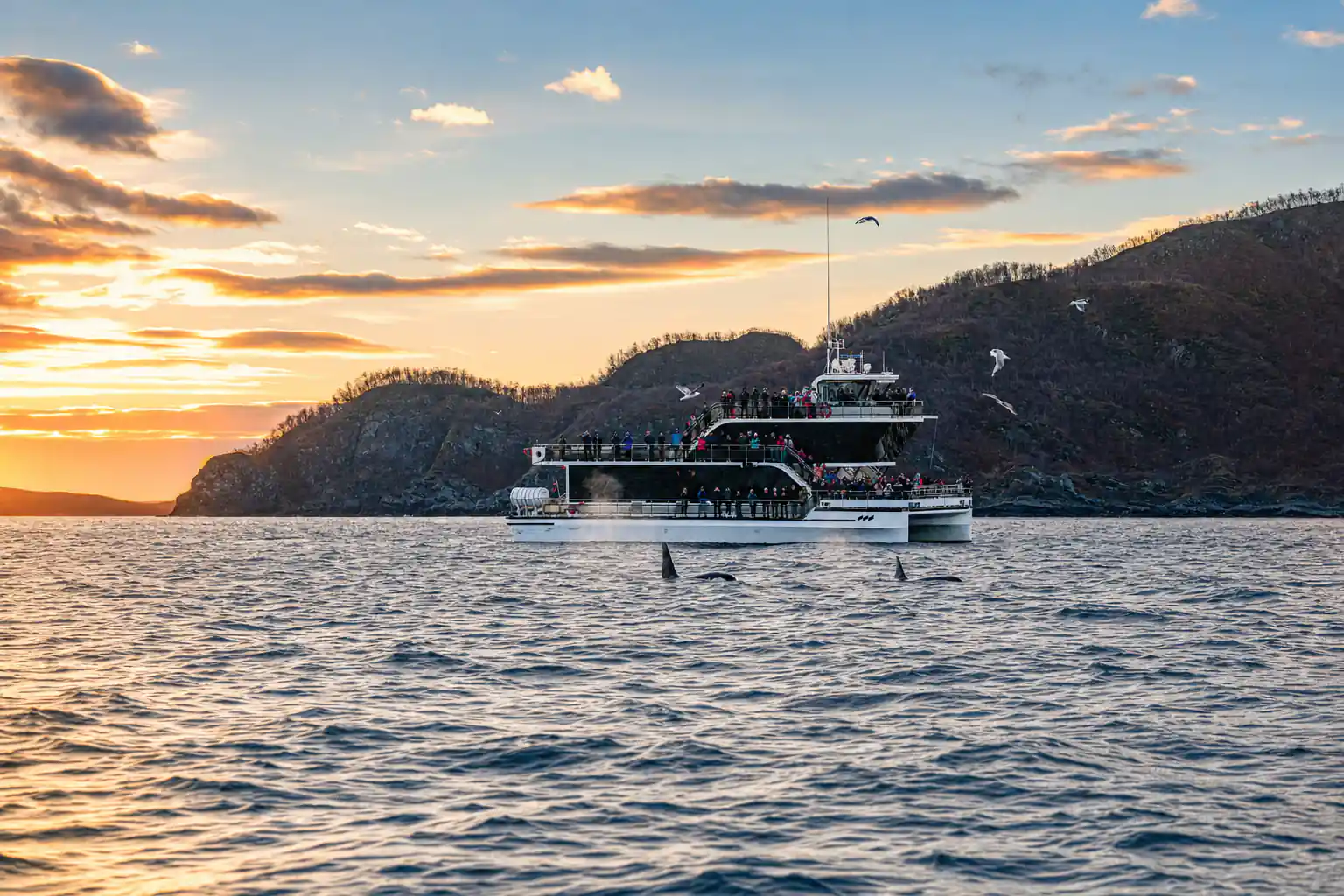
A excursão reservada através deste site é a excursão de observação de baleias de Tromsø em barco híbrido-elétrico. Custa a partir de 209 USD[21], dura 9 horas[21] e é acessível para cadeiras de rodas[21]. Um guia ao vivo que fala inglês acompanha a viagem[21], ajudando-o a seguir as baleias e a ler a paisagem. O design híbrido-elétrico significa que pode passar a maior parte do dia na água sem o ruído e o cheiro de um ferry antigo.
A rota começa em Tromsø e abrange uma ampla fatia da região. Segue para as montanhas Lyngen, passa pelo farol de Lyngstuva, atravessa Kagsundet, chega a Skjervøy e regressa perto da Catedral Ártica[21]. Esse itinerário dá-lhe paisagens de fiorde, água aberta e uma cidade piscatória histórica num só dia. Verifique a disponibilidade para conhecer os horários de início[21].
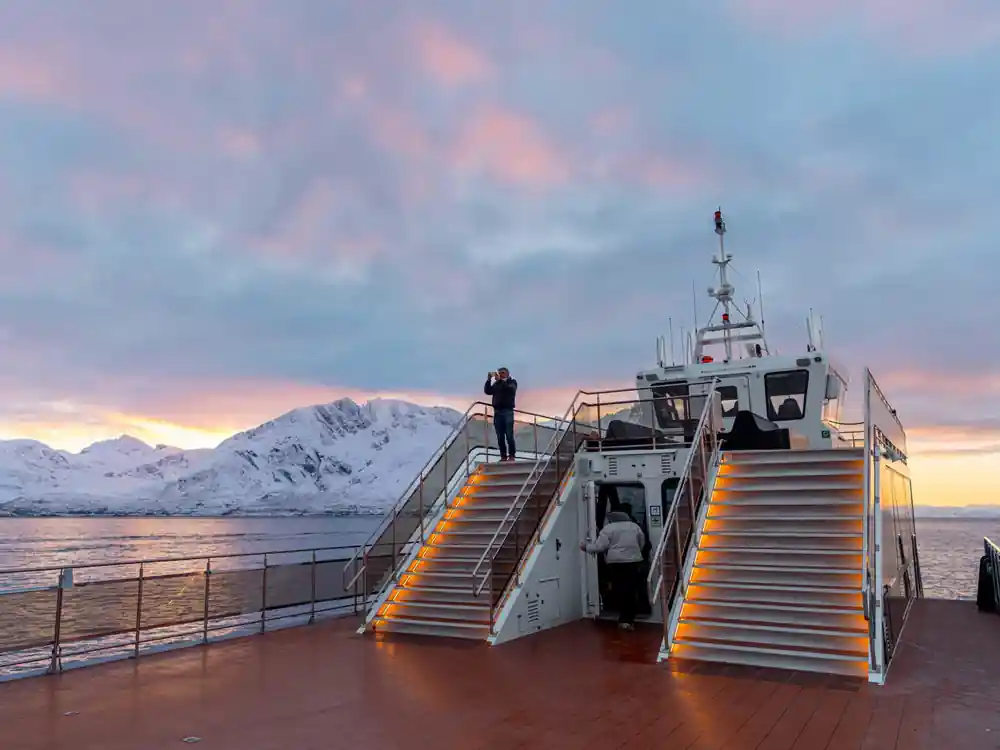
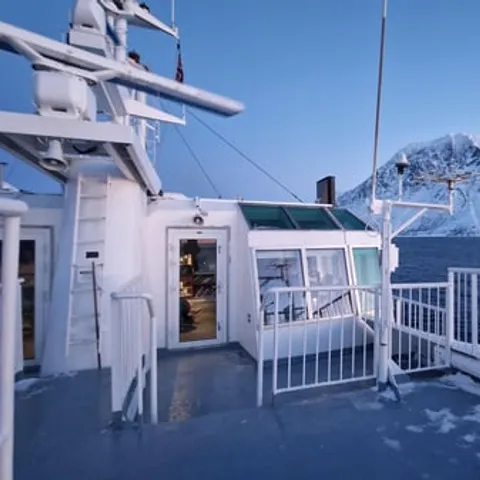
Há algo tranquilamente reconfortante em embarcar num barco de turismo construído para o conforto. Pode mover-se entre o salão interior e o convés aberto conforme o tempo muda, aquecendo-se com uma bebida quente enquanto o guia vigia a água. O ritmo parece mesurado, mais próximo de um dia de expedição do que um circuito turístico apressado, e isso convém à paisagem.
from US$209
Do porto que enviou exploradores para norte, um dia tranquilo na água à procura de baleias.
Observar baleias nos seus próprios termos
As regras norueguesas para barcos de safari de baleias são concebidas para proteger os pescadores que trabalham e as artes fixas. As embarcações devem manter pelo menos 0,2 milhas náuticas (370 m) de distância de barcos de pesca, redes ou artes fixas[29]. Essa distância mantém a excursão longe das redes enquanto ainda dá aos passageiros uma vista privilegiada de bicos e mergulhos.
Os guias mantêm os comentários em inglês[21] e indicam o comportamento dos animais à medida que acontece. Uma cauda a abrir, uma linha de bicos, um grupo de orcas a mover-se em conjunto: são esses os momentos que ficam com o visitante. O barco é acessível para cadeiras de rodas[21], abrindo a experiência no convés a mais viajantes do que os navios de expedição do passado.
As binóculos valem a pena emprestar se as tiver. Facilitam a deteção de um jato antes do o guia o anunciar, e oferecem uma vista mais próxima dos picos distantes à medida que o barco atravessa os escolhos. O guia também explicará o que está a ver e por que o local é importante; esse conhecimento local faz parte do bilhete. Não é uma excursão de adrenalina, mas um encontro ritmado pelo mar.
Planos práticos para um dia de porto no inverno
Dê-se tempo para encontrar o ponto de encontro e instalar-se antes da partida. O aeroporto de Tromsø até ao centro da cidade demora cerca de 10-20 minutos[22], e a própria excursão dura 9 horas[21]. Isso é uma grande parte de um curto dia de inverno, especialmente quando a noite polar deixa pouca luz diurna; planeie as deslocações e as refeições em torno do horário.
As temperaturas médias de inverno rondam os -4°C[16]. Camadas, um casaco corta-vento e botas quentes são a diferença entre a distração e o conforto. Use a opção reserve agora e pague depois[21], e tenha em mente a possibilidade de cancelamento gratuito até 24 horas antes[21]. Reservar cedo também garante o preço a partir de 209 USD[21].
Se chegar no dia anterior, aproveite as horas extra para se ambientar no frio e orientar-se. O centro compacto de Tromsø facilita encontrar o porto sem stress. Verifique o e-mail do operador para o ponto de encontro exato e chegue cedo em vez de correr. O dia de 9 horas[21] passa rapidamente quando o barco está em movimento, por isso chegue descansado e pronto para o vento no rosto.
Porque esta continuação da digressão leva a história do porto adiante
As expedições árticas de Tromsø do passado dependiam do conhecimento local, tripulações pacientes e um bom porto. A versão moderna acrescenta conforto e acessibilidade: um barco híbrido-elétrico, um guia ao vivo que fala inglês e um dia inteiro que abrange tanto fiordes selvagens como marcos costeiros[21]. A observação de baleias continua a acontecer nas mesmas águas que atraíram exploradores para norte, apenas com melhor café e convés mais quentes.
Esta não é uma digressão para quem precisa de atividade ininterrupta; é um dia para desacelerar e observar. A rota através dos Alpes Lyngen, Kagsundet e Skjervøy dá à paisagem espaço para falar[21]. E quando uma baleia-jubarte ergue a cauda contra as montanhas nevadas, compreende-se por que a história polar de Tromsø permanece tão viva no porto hoje.
De volta à terra, o porto parece diferente. Os barcos que outrora levavam exploradores agora levam viajantes, mas o mar é a mesma estrada em movimento de tempo e vida selvagem. É essa continuidade, mais do que qualquer monumento, que faz a história polar de Tromsø parecer presente. Sai do convés cansado, mais frio e silenciosamente satisfeito, com a sua própria história para acrescentar à longa tradição do porto.
Duração da excursão em horas
Valores de duração das listagens do GetYourGuide:[21],[24],[30],[31].
Comparar observação de baleias a partir de preços em dólares americanos
Dólares americanos, preços a partir das listagens do GetYourGuide:[21],[24],[32],[23].
Estações árticas de uma olhada
Como planear a sua viagem
Escolha o seu dia
A digressão de observação de baleias de 9 horas parte de Tromsø e requer um dia inteiro[21].
Verificar a noite polar
A noite polar de Tromsø dura aproximadamente de 27 de novembro a 15 de janeiro[17]. Escolha datas com luz do dia, se preferir.
Vista para a água fria
As temperaturas médias de inverno são em torno de -4°C[16]. Vista camadas, um boné quente e calçado impermeável.
Reservar com flexibilidade
A listagem oferece reserve agora e pague depois[21] e cancelamento gratuito até 24 horas de antecedência[21].
Organize o seu transfer
Do aeroporto para o centro da cidade demora cerca de 10-20 minutos[22]. Deixe tempo para chegar ao porto.
Pronto para seguir as baleias desde o porto histórico de Tromsø?
a partir de US$ 209Reserve agora e pague depois