Quick summary
- For the 9-hour tour, you'll stay comfortable with a wool base layer, a warm middle layer, and a windproof outer shell.[1]
- Take seasickness tablets before boarding, sit low and central, and keep your eyes on the horizon.
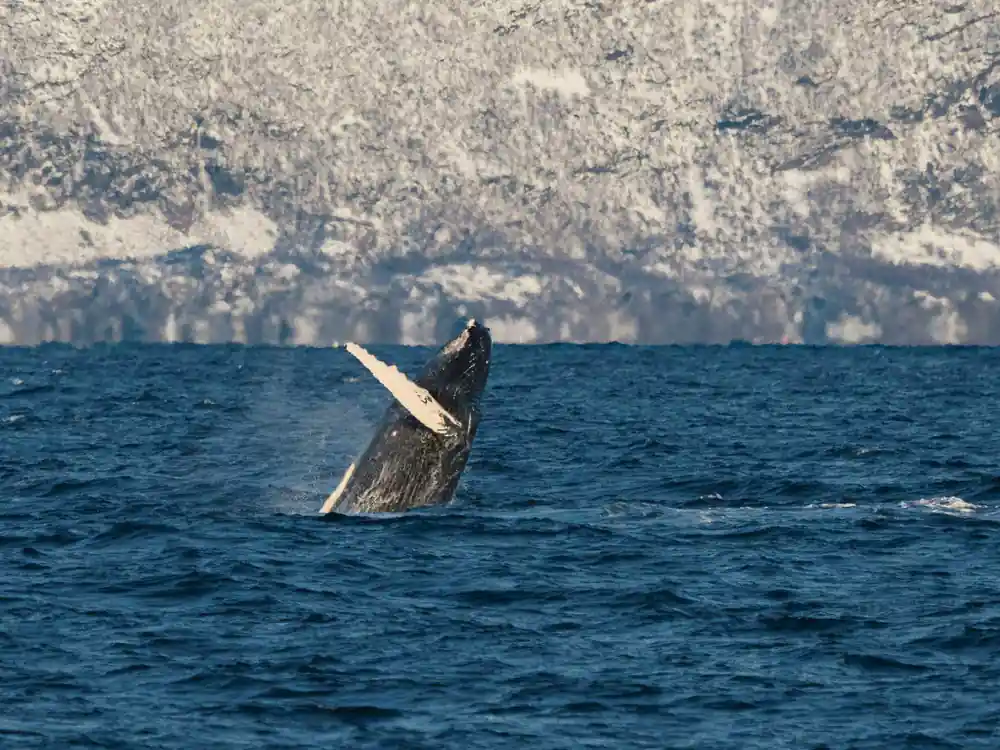
- During winter, orcas and humpback whales gather in the area to feed on herring.[2]
- Keep spare batteries in an inside pocket and let your camera acclimatise before you start shooting.
- Book now and pay later; no fee to cancel up to 24 hours before, and you get a full refund.[1]
- Top choice Hybrid-Electric Boat from US$209 Rating4.48 from 6,644 reviews[1]Duration9 hours[1]Tour guideEnglish[1] Check availability
- Catamaran Whale Watching from US$209 Rating4.23 from 250 reviews[3]Duration6 hours[3]Tour guideEnglish[3] See this tour
- RIB Whale Safari from US$257 Rating4.95 from 113 reviews[4]Duration4-12 hours[4]Tour guideEnglish[4] See this tour
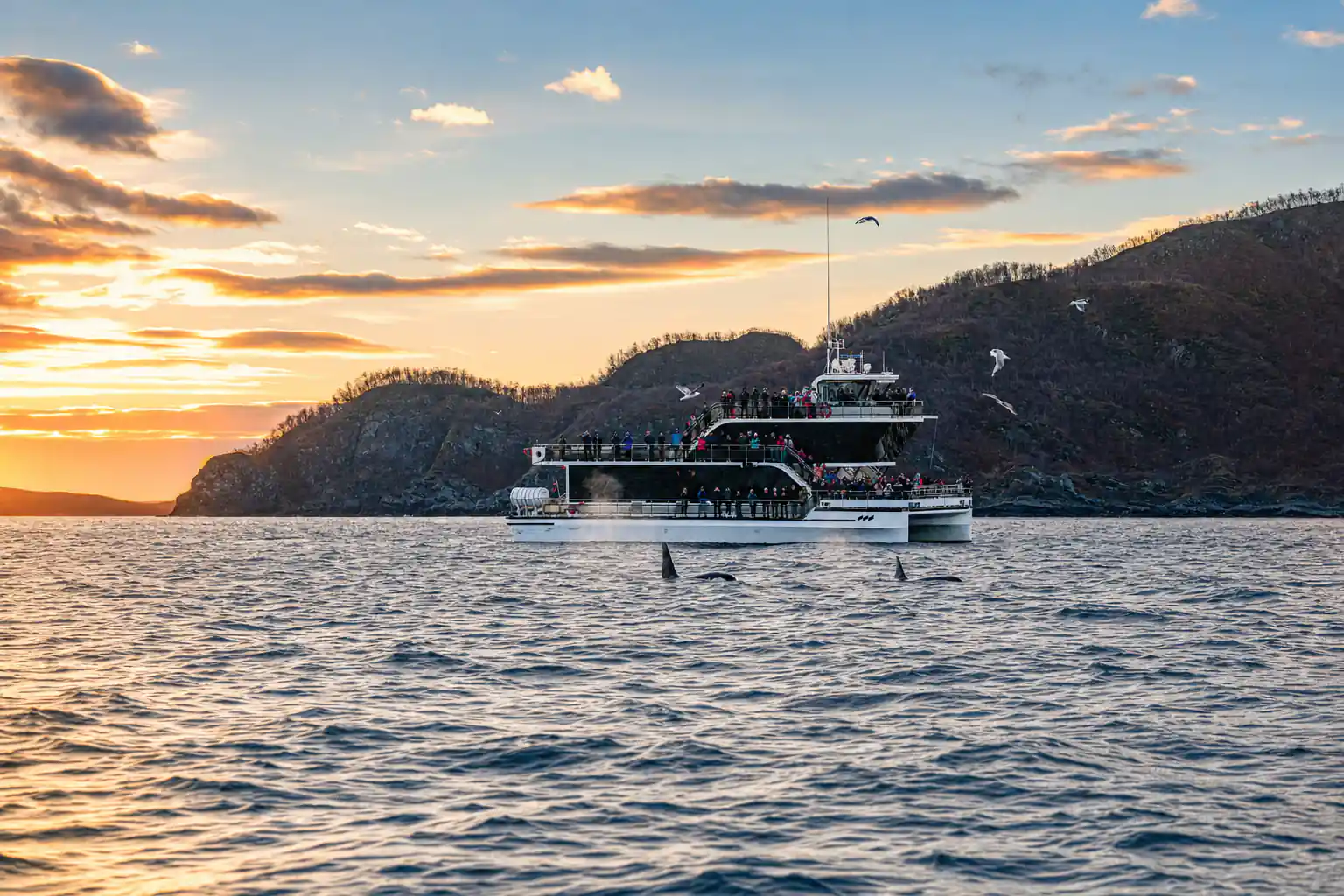
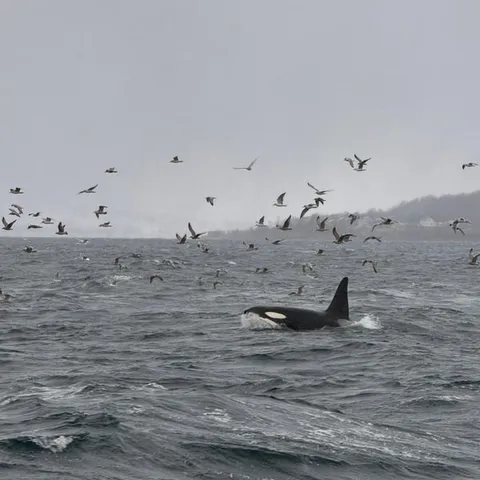
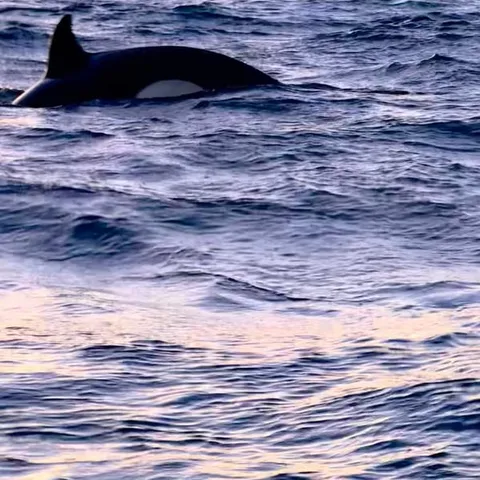
It takes about 10-20 minutes to travel to/from the airport and city centre.
The right layers, a calm stomach and warm batteries
On the boat
- Boarding pass and booking confirmation
- Insulated flotation suit or warm layers
- Sunglasses, lip balm and sunscreen
- Seasickness tablets, if you are prone
In your bag
- Layered clothing and a windproof shell
- Small backpack for the day
- Card for a coffee or snack
- Phone power bank and spare camera batteries
Why the Arctic Cruise Packing List Matters
The Arctic cruise packing list can be the difference between a brilliant day and a miserable one. The Tromsø Whale Watching Tour by Hybrid-Electric Boat lasts 9 hours[1], so you will be outside for a long stretch. You are not just standing on a pier; you are heading out into the fjords where winter weather is a real factor. Your clothes, your camera plan and even your breakfast all play a part in how much you enjoy the day. Start preparing the night before: charge your batteries, lay out your layers and check the forecast so the morning feels calm instead of rushed.
Tromsø lies roughly 350 km further north than the Arctic Circle[5], and Tromsø's average winter temperature is around −4°C[6]. That figure is an average, which means some days are colder, and the wind on deck can make it feel much colder. The goal of your packing list is to stay warm, dry and comfortable for the full 9 hours[1]. Think of the day as a slow outdoor adventure: there is waiting, watching and moving around, so flexibility in your clothing matters as much as warmth.
Deck Temperature and Wind Chill in Arctic Conditions
A boat moving through open water creates its own wind chill even on a calm day. Your face, hands, and ears react to the breeze well before your core senses it, even though Tromsø's average winter temperature is around −4°C[6]. A warm hat that covers your ears, insulated gloves and a neck gaiter are not optional extras. They are the difference between being able to stay on deck and being forced to duck inside at the wrong moment. Choose mittens over finger gloves if your hands get cold easily, and bring a thin liner pair if you still need to use your phone or camera.
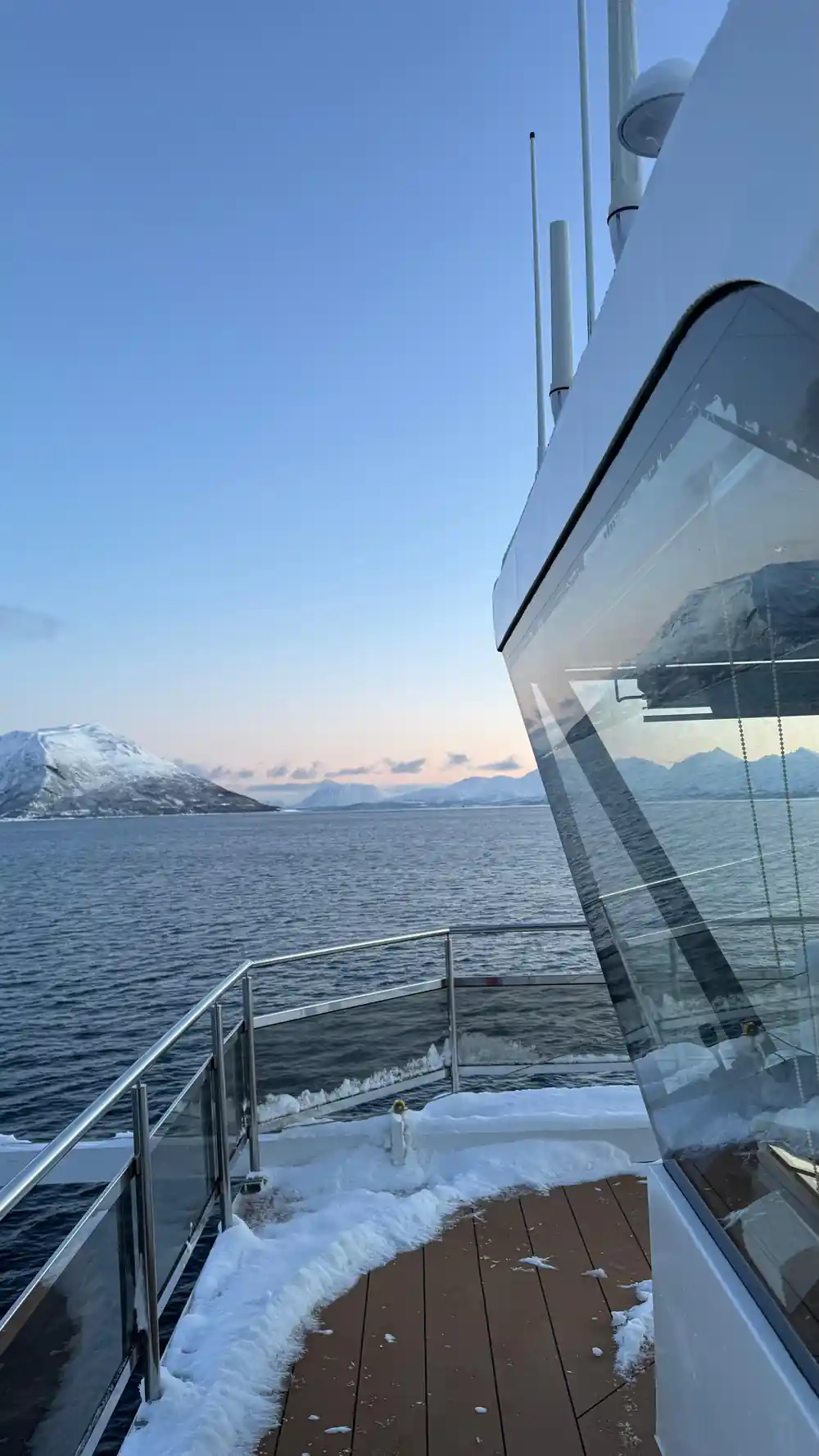
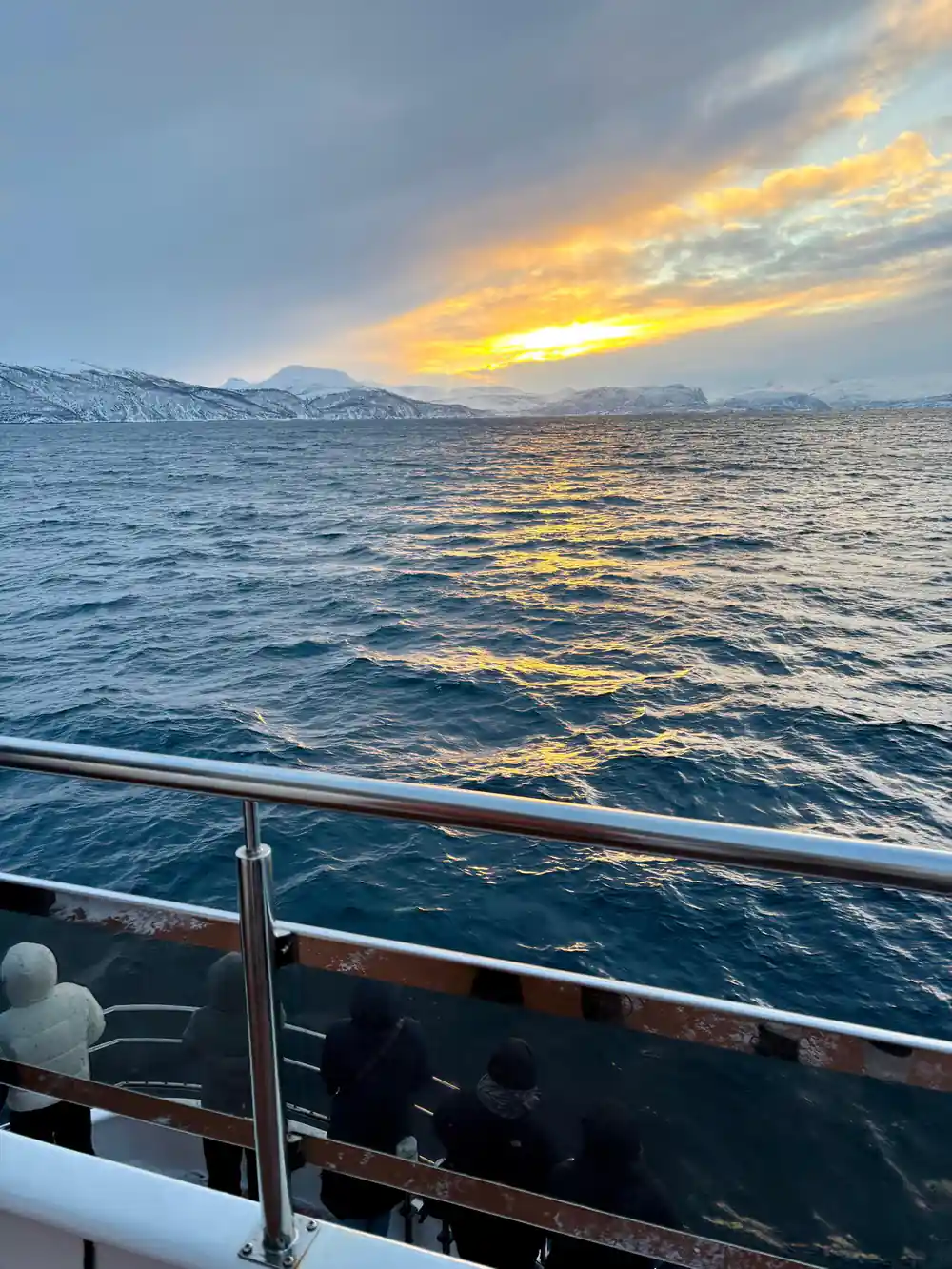
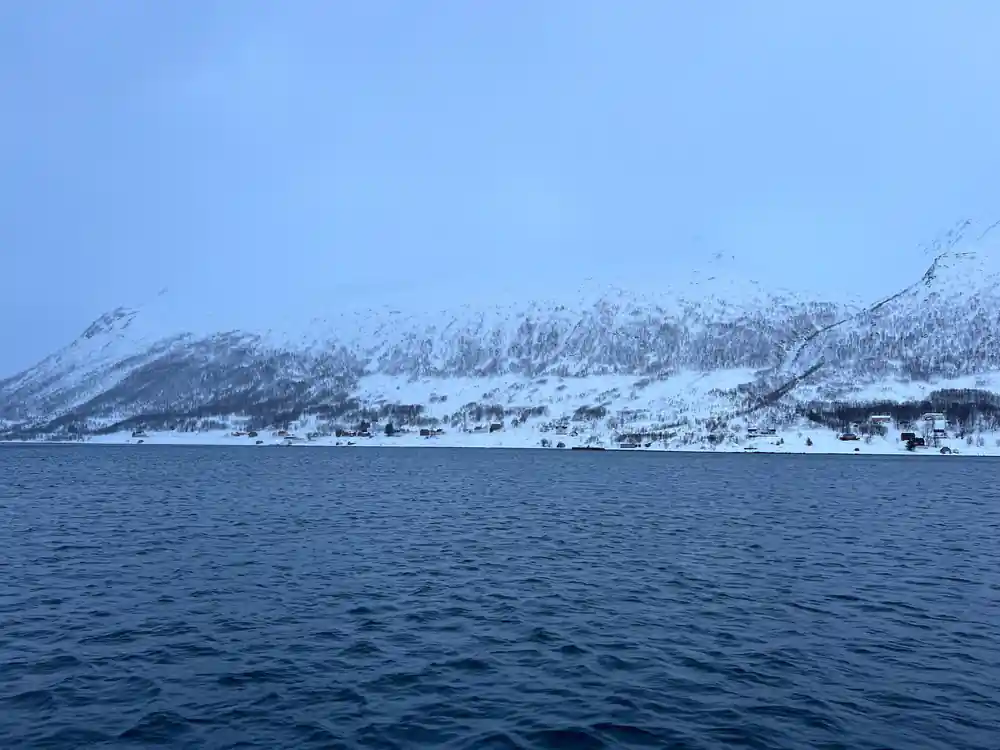
The route on this tour passes places such as the Lyngen Alps, Lyngstuva lighthouse, Kagsundet and Skjervøy before returning towards the Arctic Cathedral.[1] Some of that time is spent on open deck, watching for orcas and humpbacks. Wear a windproof outer layer and make sure your cuffs are snug so cold air cannot sneak in. A warm neck gaiter can be pulled up over your chin, and a hat with a brim helps keep spray and snow off your face. If the boat has heated indoor seating, use it to warm up between periods on deck, then go back out refreshed.
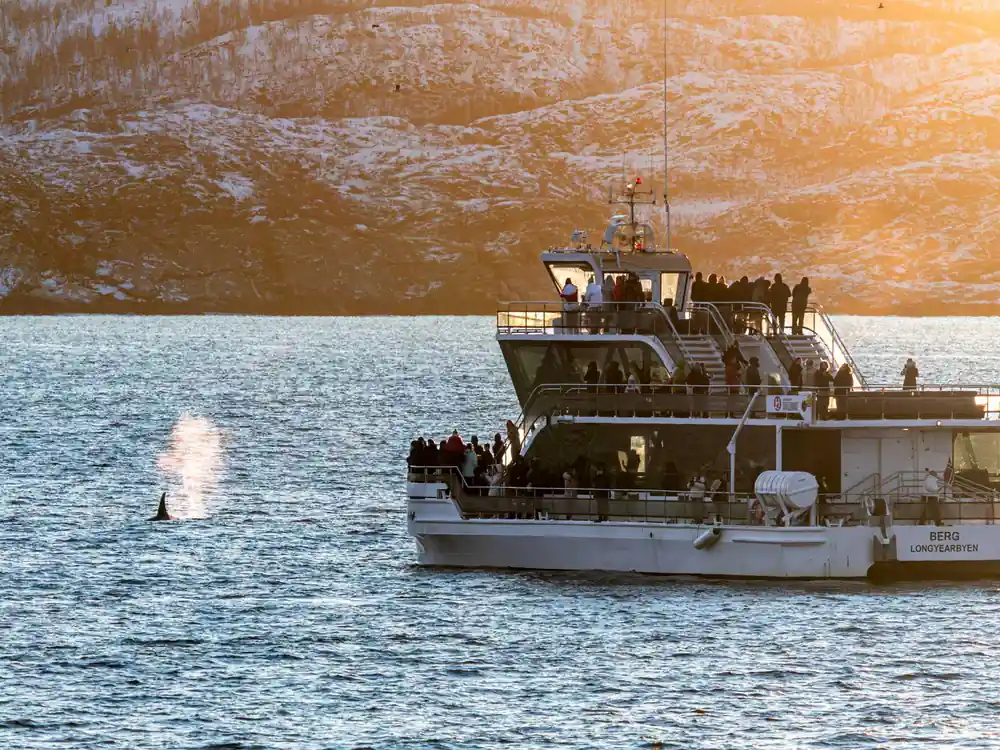
A small boat with passengers framed by snowy mountains, heading out to the whale grounds.
Layering Systems That Work Under a Flotation Suit
What do you wear to whale watching? Think in layers rather than one heavy coat. A thin wool base layer keeps heat next to your skin, a fleece or down mid layer traps warmth, and a waterproof or water-resistant shell breaks the wind and keeps off spray. If the operator provides a flotation suit, wear your layers underneath without making them so bulky that you cannot move. Wool is a good choice next to the skin because it still warms you even if you work up a sweat or catch a little spray. Avoid cotton, because it stays wet and cold once it is damp.
The tour runs in the winter, when orcas and humpback whales gather in the fjords north of Tromsø to feed on herring.[2] You will be standing, sitting and moving around the boat, so clothes need to be flexible, not stiff. Wool socks and insulated boots will keep your feet comfortable for the 9-hour day[1]. Add a dry pair of socks in a small bag; if spray soaks your feet, changing midway through the trip can completely change how you feel. A buff or lightweight scarf is also handy for protecting your neck when the wind picks up.
Seasickness Prevention and Positioning on the Boat
If you are prone to motion sickness, plan before you board. The tour lasts 9 hours[1], so it is worth taking seasickness tablets early enough for them to work. Pick a seat low down and near the middle of the boat, where movement is least noticeable, and keep your eyes on the horizon instead of your phone. Some people also find that staying on deck and watching the waves helps more than hiding below. Eat a light meal beforehand; an empty stomach can make nausea worse, but a heavy one is just as uncomfortable.
There are no guarantees about exactly where the whales will be, but the whales gather in the area during winter to feed on herring.[2] That means the boat may move between spots, and the sea state can change. Staying hydrated, eating lightly before the trip and breathing fresh air on deck all help you feel better. If you do start to feel unwell, tell a crew member and go outside; the fresh air and a fixed point on the horizon are usually the best remedies. Acupressure bands help some people, and it is fine to bring your own.
from US$209
Full-day whale watching from Tromsø on a hybrid-electric boat, with an English-speaking guide and wheelchair-accessible access.
Keeping Cameras and Lenses Functional in Extreme Cold
Cold air drains batteries surprisingly fast, and condensation is the enemy of camera gear. Put spare batteries in an inner pocket near your body, and change them only when you're about to shoot. Let your camera adjust to the cold gradually by leaving it in its bag for a few minutes on deck before opening the zipper. This small pause can prevent the lens from fogging up just when the action starts. If your camera has an electronic viewfinder, use it instead of the screen whenever you can, because it drains less power in the cold.
You are on the boat for 9 hours[1], so pack a dry cloth or small towel to wipe spray off the lens and housing. A simple lens cloth with a bit of moisture protection works well. If your camera stops working, do not panic; warm it slowly in an inside pocket rather than in front of a heater. The whales are not always close, so a zoom lens or a camera with a good optical zoom helps you make the most of the distance. Practise changing settings with gloves on before the trip, so you are not fumbling when the whales appear.
Phone Batteries and Electronic Gear in Polar Temperatures
Phones lose charge quickly in the cold, and you will want yours for photos, maps and booking details. Keep it in an inside pocket when you are not using it, and carry a power bank that is also kept warm. A short battery top-up in a warm cabin can make a real difference on a long day. Set your phone to low power mode before you leave the hotel and close apps that are always refreshing in the background. Download the offline map of the harbour area so you can find your way back without using data.
The tour is wheelchair accessible and led by an English-speaking guide[1], so you can ask the crew for help finding the best place on board. If you need to reach your booking details easily, download them to your phone before you set out. The journey from Tromsø Airport to the city centre takes about 10-20 minutes[7], so give yourself time to settle in before the departure. That extra calm is better spent checking your layers than rushing through security. Arriving at the meeting point a little early also gives you time to find a good spot on the boat.
Your Full-Day Bag Essentials
A small backpack is better than a tote bag because it leaves your hands free for railings and cameras. Along with your layers, pack a dry change of base layer in case of spray, a water bottle, and a few high-energy snacks. The tour lasts 9 hours[1], so pacing your food and drink is part of staying comfortable. Binoculars are worth their weight if you have them, but many people manage well with just a zoom lens and a patient eye. Store snacks in a pocket that you can reach without taking off your gloves.
If you have checked how cold a Tromsø winter can get, you already know to bring eye protection. Snow and water both reflect light, so sunglasses are useful even on cloudy days, and lip balm and sunscreen protect exposed skin. Pack a small dry bag for gloves, hats and scarves that get damp, and you will be ready to enjoy the trip. A few simple preparations allow you to focus on the real show: the whales breaking the surface against a backdrop of snowy peaks and Arctic light. By the time you are back on shore, you will be glad you packed thoughtfully.
Minimum whale lengths you might spot
Minimum lengths from the Institute of Marine Research facts; ranges shown in display.[8][9]
Whale trip prices from Tromsø
From-prices are from GetYourGuide listings for the hybrid-electric tour, catamaran tour and RIB safari.[1][3][4]
When to book your whale safari
Get Arctic-ready
Start with a wool base layer
Choose merino or another wool fabric that stays warm even when damp. Avoid cotton close to the skin.
Add a warm mid layer
A fleece or down jacket traps body heat. Make sure it is not so thick that your outer layer feels tight.
Finish with windproof outer layers
A waterproof or water-resistant shell keeps off spray and wind. Snug cuffs and a good hood make a big difference.
Pack for seasickness and motion
Take seasickness tablets before boarding, sit low and central, and keep your eyes on the horizon.
Keep electronics close to your body
Store spare batteries and your phone in inside pockets. A power bank can save the day.
Ready to pack for your Tromsø whale safari?
from US$209Reserve now & pay later