Quick summary
- The tour runs 9 hours[1], leaving room to search far beyond the city. It is a Tromsø whale watching day trip with a real expedition feel.
- During the winter, orcas and humpback whales gather in the area to feed on herring[2]. The boat follows that food source.
- Modern hybrid-electric ships are designed for sightseeing[3]. You get a smoother, less intrusive way to spend the day.
- A live English-speaking guide[1] keeps you informed as the crew searches for tails, blows and feeding birds.
- Reserve now, pay later[1], and cancel no later than 24 hours before for a full refund[1].
- Top choice Hybrid-Electric Whale Watching from US$209 Duration9 hours[1]Rating4.48[1]Reviews6,644[1]GuideEnglish[1]CancellationFree cancellation up to 24 hours[1] Check availability
- Premium 24hr Cruise from US$681 Duration1 day[4]Rating4.90[4]Reviews47[4]GuideEnglish[4]CancellationFree cancellation up to 24 hours[4] See this tour
- Catamaran Whale Watching from US$209 Duration6 hours[5]Rating4.23[5]Reviews250[5]GuideEnglish[5]CancellationFree cancellation up to 24 hours[5] See this tour
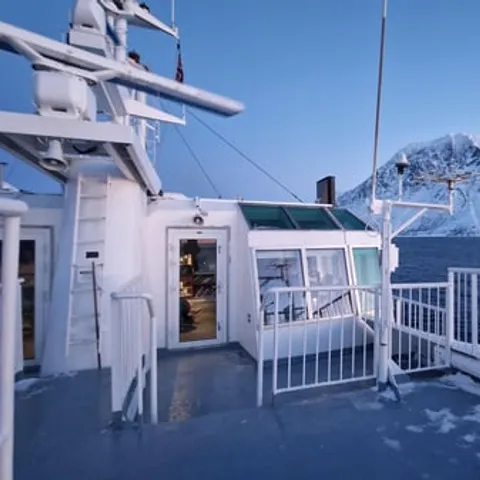
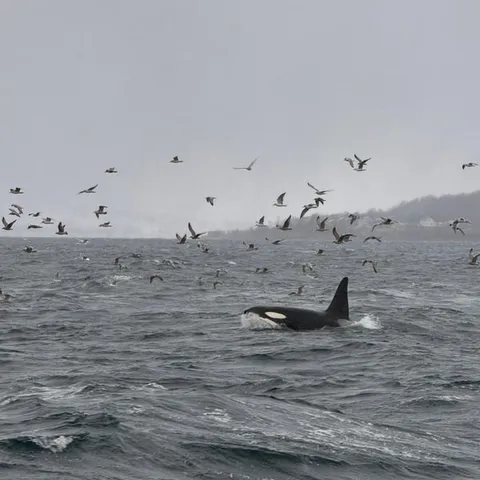
During the winter, orcas and humpback whales gather in the area to feed on herring.
A Long Day That Feels Worth It
On the day
Why Tromsø Cruises Run Seven to Nine Hours
A Tromsø cruise is not a quick harbour loop. The tour booked through this site is scheduled for 9 hours[1], and that length is rooted in the way winter works here. Whales are not kept in a pen or a bay; they gather where the food is, and the food is on the move. Norwegian spring-spawning herring migrates northeastward in September/October to its main wintering areas off the coast and in fjords in northern Norway[8]. During the winter, orcas and humpback whales gather in the area to feed on herring[2].
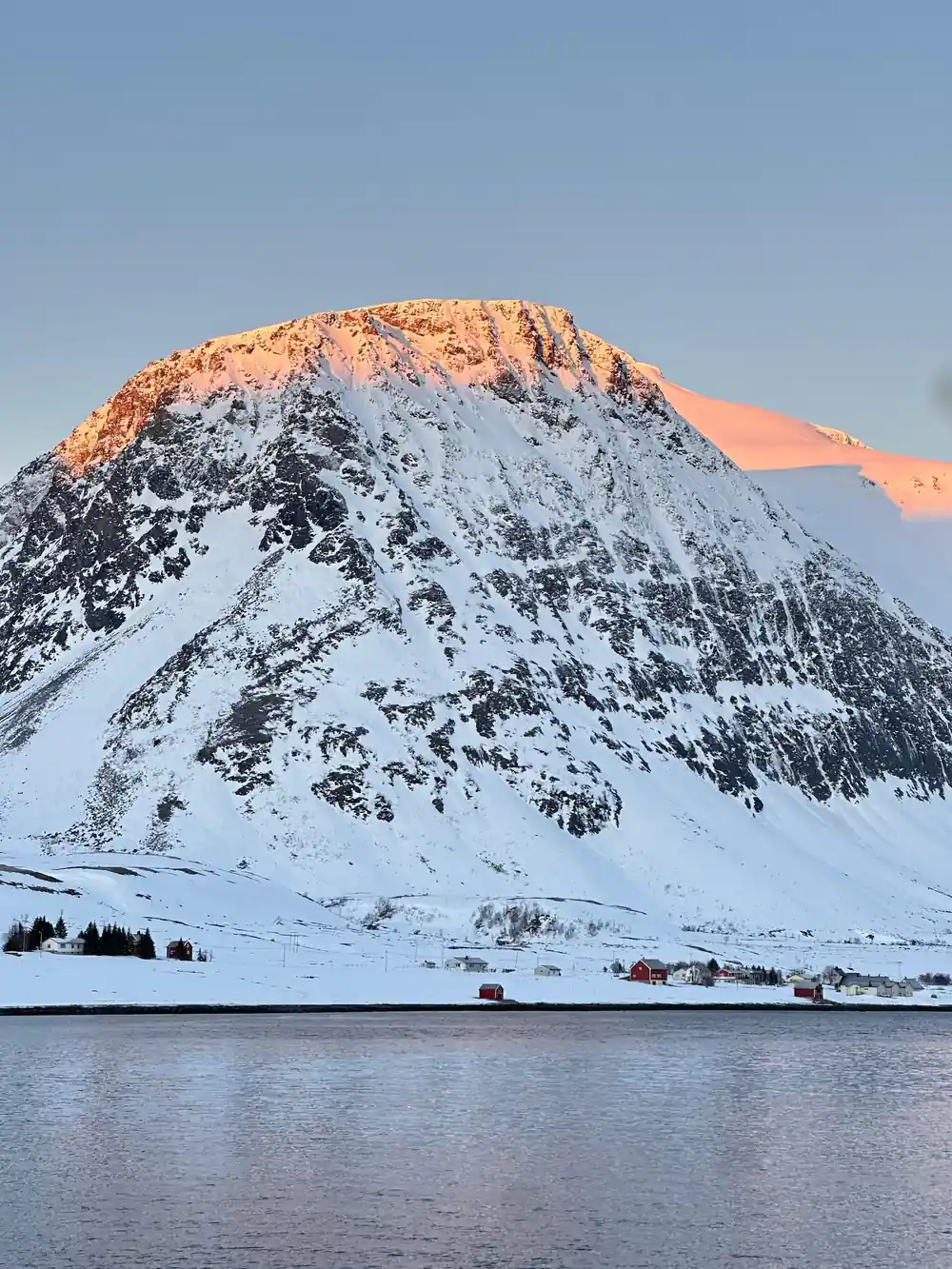
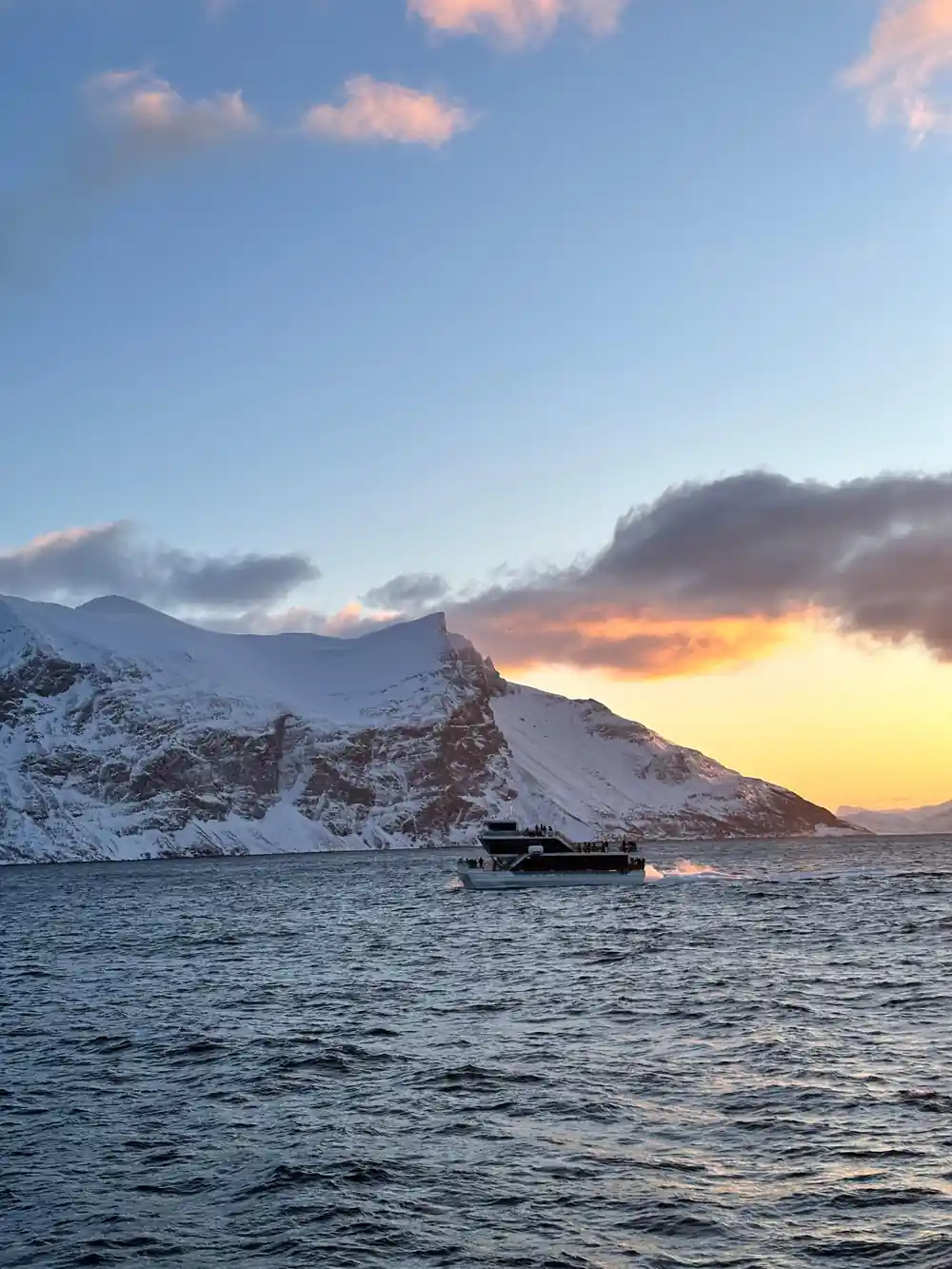
Getting to those feeding grounds means leaving the city behind. Tromsø sits about 350 km north of the Arctic Circle[9], and the whales are found in fjords north of town. Winter days are short: the polar night lasts approximately from 27 November to 15 January[10]. Tour operators build in enough daylight and enough buffer to find wildlife responsibly. The tour uses a modern hybrid-electric ship designed for sightseeing[3], which makes the long sail part of the pleasure rather than just a commute.
A shorter trip would stay close to Tromsø and miss the wider search zones. By giving yourself the full day, you also give the whales room to surface on their own terms, and you give the crew time to read the water, the birds and the weather.
The Morning Sail North from Tromsø
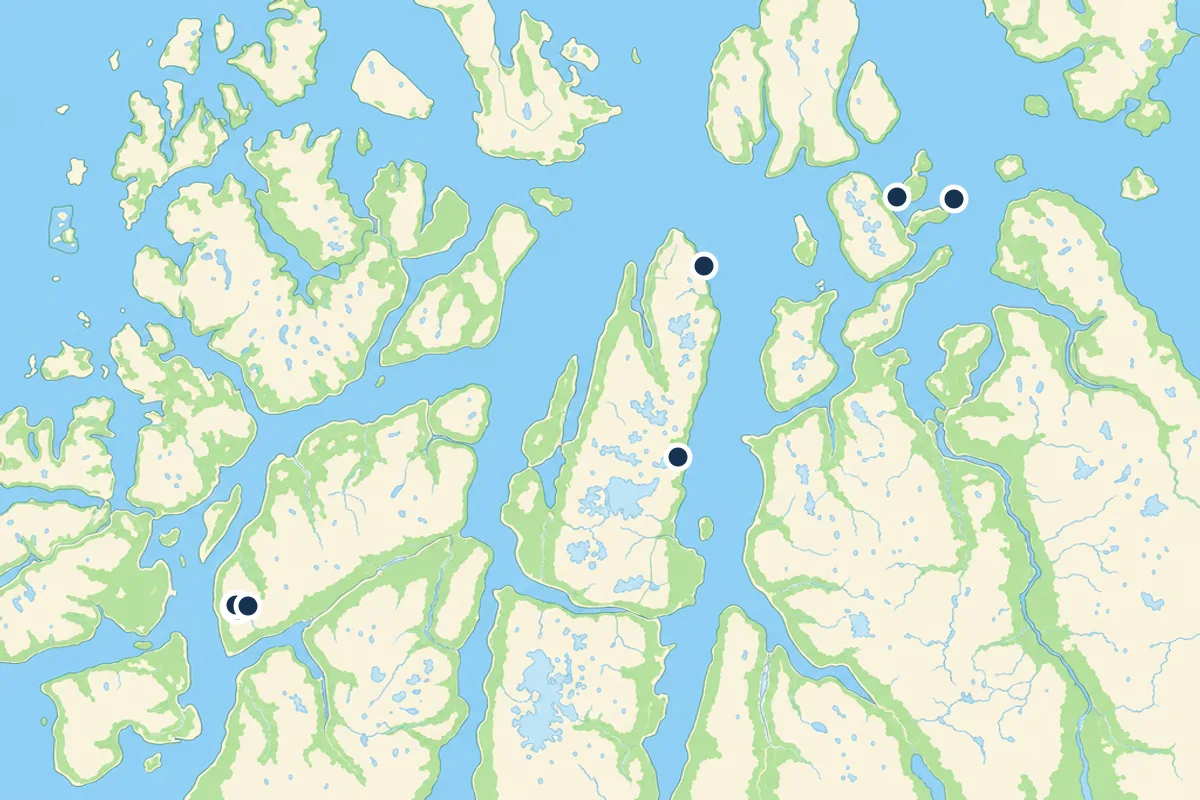
Departures are from the city harbour, and the route heads north toward the Lyngen Alps, then on to Lighthouse Lyngstuva, Kagsundet and Skjervøy, with the return passing the Arctic Cathedral in Tromso[1]. The first part of the day is about putting distance between the city and the open fjords. Bring a camera with a good zoom, but also spend time just watching the water for blows, splashes and birds working a bait ball.
This is a Tromsø whale watching day trip in the fullest sense: you are not circling a fixed spot, you are travelling to where the animals may be. The listed itinerary for this tour runs Tromsø, Lyngen Alps, Lighthouse Lyngstuva, Kagsundet, Skjervøy, Norway, Arctic Cathedral, Tromso[1]. It is a long sail, so dress for the wind on deck as much as for the cold in the air.
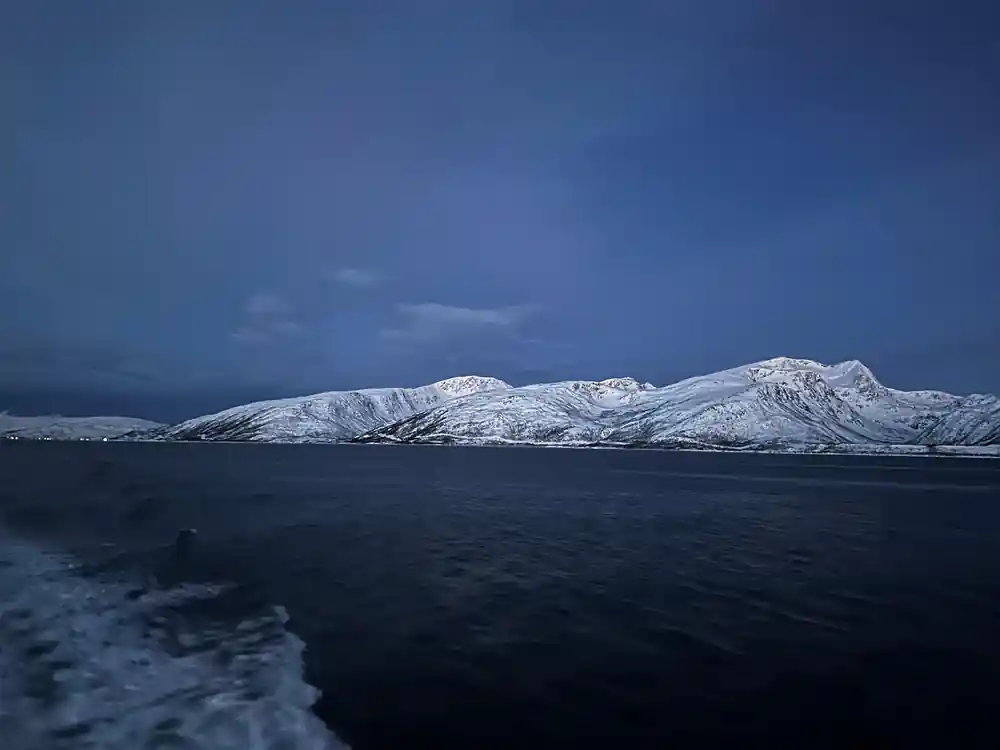
The morning light in winter is soft and blue, and the mountains come in and out of cloud. If you are prone to seasickness, this is the moment to take your medication before the boat reaches open water. The crew is used to all kinds of passengers, and there are places inside to warm up between visits to the deck.
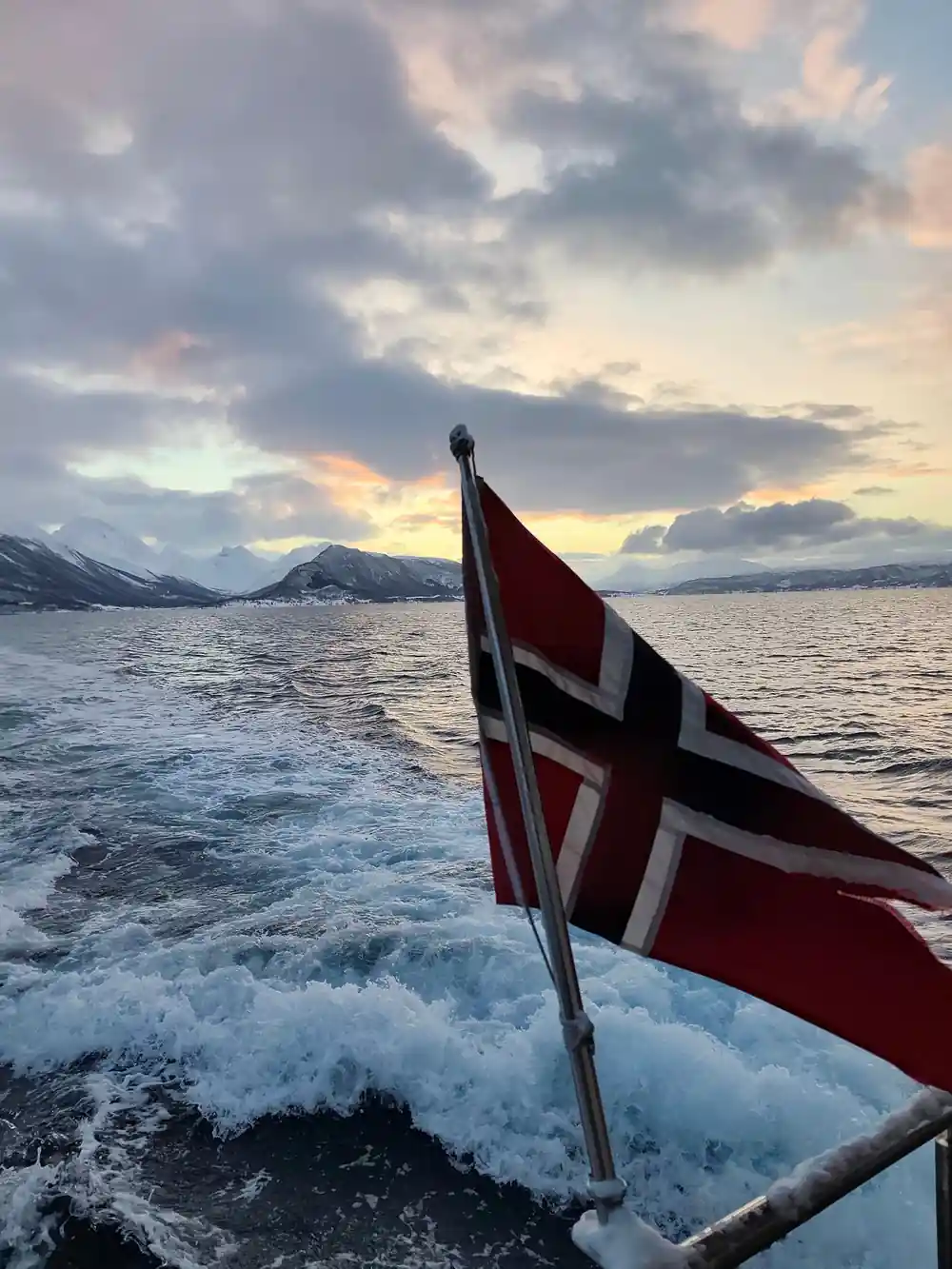
A humpback whale tail rises beside the snowy peaks of the Lyngen Alps.
Lighthouse Lyngstuva and the First Search Zone
Lighthouse Lyngstuva marks the northern tip of Kvaløya, where the open sea meets the fjord system. This is one of the first zones where the crew starts looking for whales. By the time the herring have settled into their wintering areas, the area is already busy; the migration happens in September/October, when the fish travel northeastward to wintering areas off the coast and in fjords in northern Norway[8].
Whale watching boats also work alongside fishing vessels, and there are rules to protect both. Boats must keep at least 0.2 nautical miles (370 m) away from fishing vessels, steng or fixed gear[11]. That means the boat may slow, circle or hang back rather than charging straight at a sighting. Patience is part of the experience, and the crew will use the pause to scan the horizon for the next blow.
The Mid-Day Search and Feeding Window
By midday the boat is usually in the main feeding grounds. When orcas and humpback whales gather in winter to feed on herring[2], the action can be intense but unpredictable. You may see a group of orcas working together. Adult males can be 6-9 meters long and weigh about 6 tonnes, while females can be 5-7 meters and about 4 tonnes[12]. Humpbacks are bigger: 15-17 meters long, with females 1-1.5 meters longer than males[13].
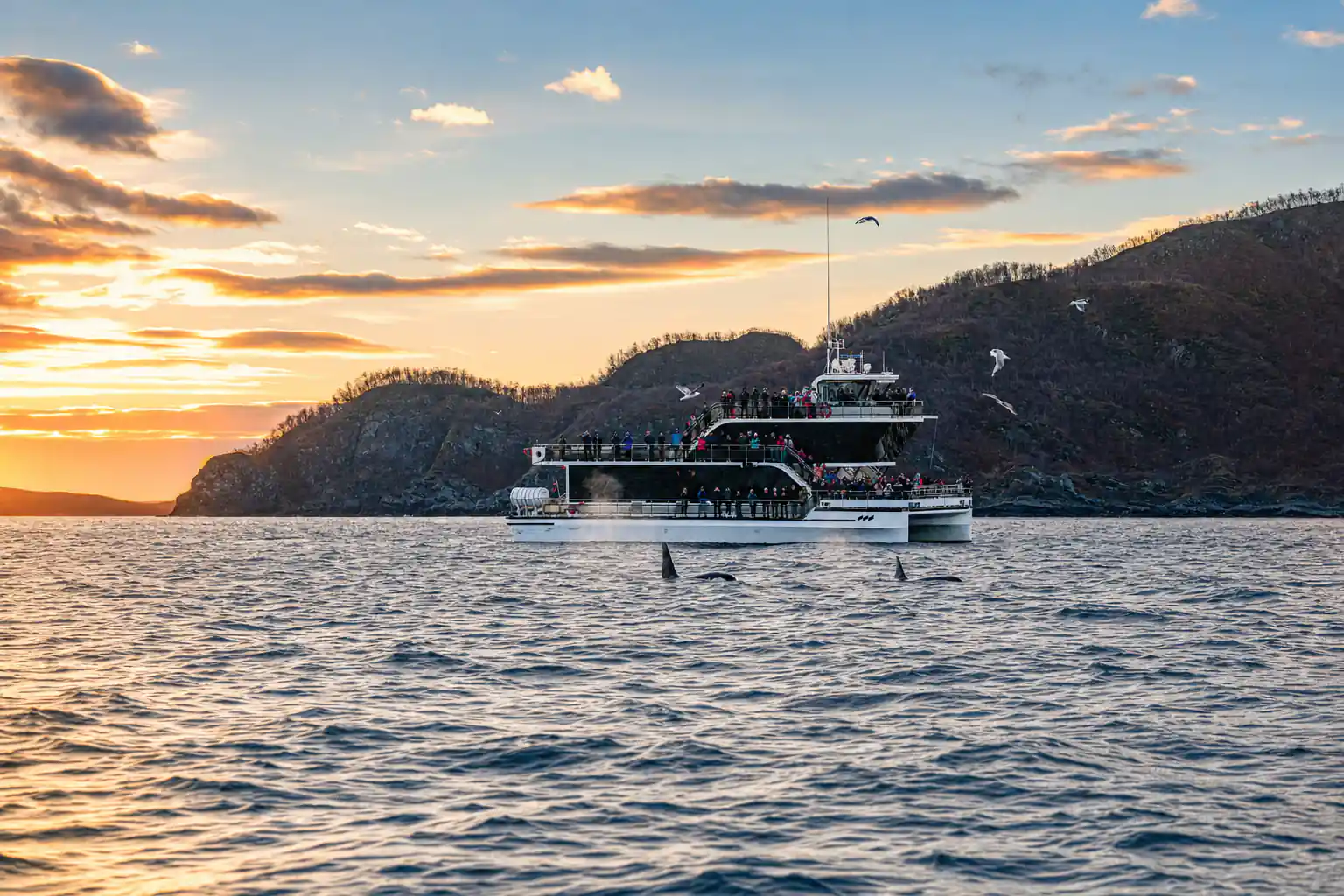
Watching a humpback lift its tail is one of those moments that makes the long morning worthwhile. A live English-speaking guide[1] will point out what is happening. The hybrid-electric ship[3] adds to the sense of calm as you drift near the action, and the lack of engine noise means you can hear the exhale of a whale before you see it.
The feeding window is not a show. Some days the whales are close to the boat for hours; other days they surface far away and then disappear. That is the nature of wild animals, and the tour has the time it does. Keep your eyes on the water, keep your camera ready, and enjoy the quiet gaps between sightings.
from US$209
Book the 9-hour[1] hybrid-electric whale watching cruise from Tromsø with live English guide[1] and free cancellation up to 24 hours[1].
Skjervøy and the Extended Search
The itinerary includes Skjervøy, Norway[1], a fishing village that has become a hub for winter whale watching. If the whales are further out, this is where the extended search can happen. The 9-hour schedule[1] gives the crew room to search while wildlife sets the pace.
Skjervøy sits in a region where the same winter herring feeding draws orcas and humpbacks north[2]. From the upper deck you can scan for blows; below, the water often churns with activity. Keep your phone ready but your eyes on the water: the first sign is often a flock of gulls hovering over a bait ball.
Return Timing and Evening Plans
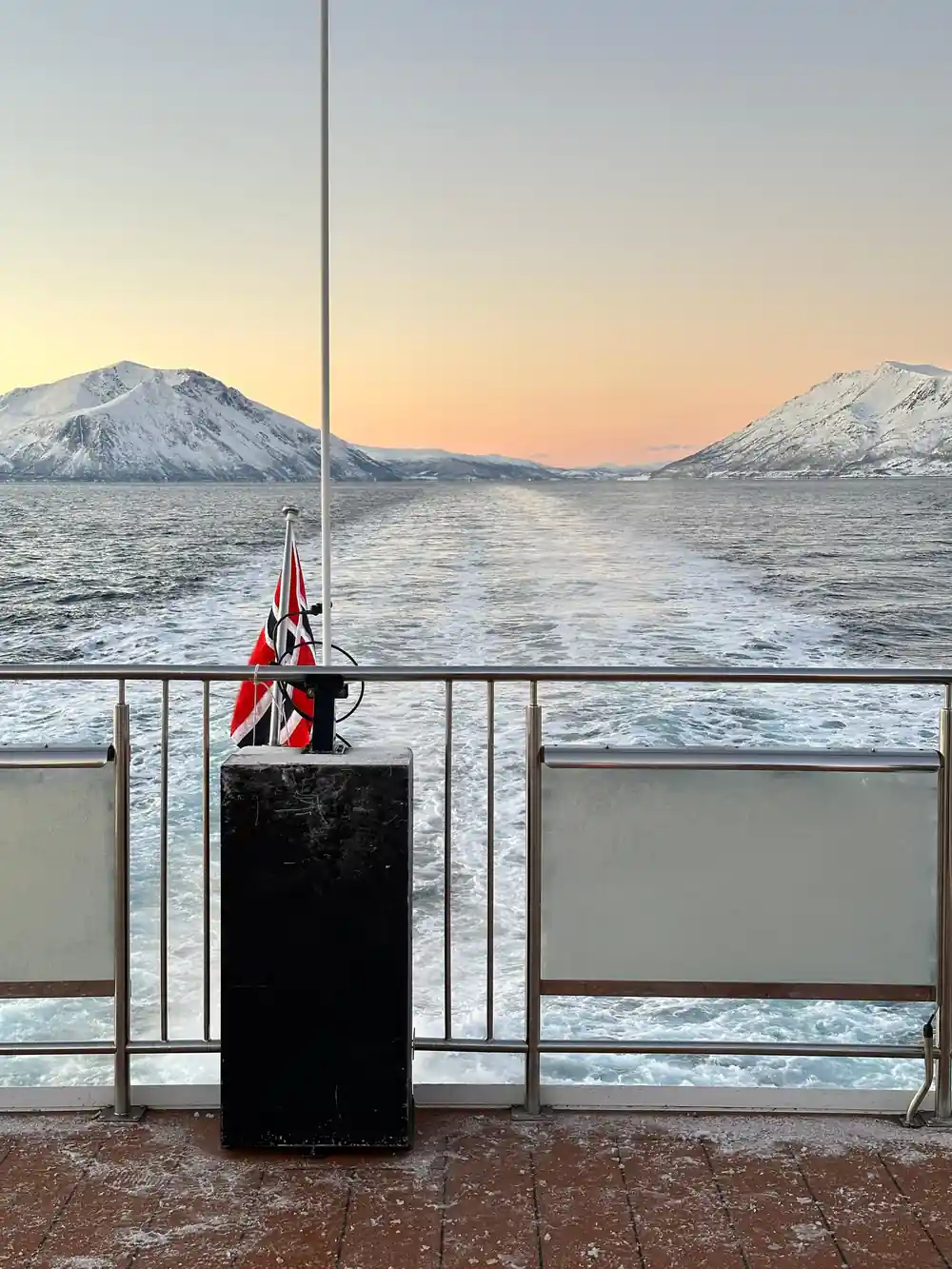
The return leg passes the Arctic Cathedral in Tromso[1] and brings you back to town after a long day. The tour runs 9 hours[1], leaving the evening free. If you are travelling between late August and early April, the northern lights may be visible whenever the sky is dark and sufficiently clear[14]. You might see them from the boat on the way back, or save the hunt for another night.
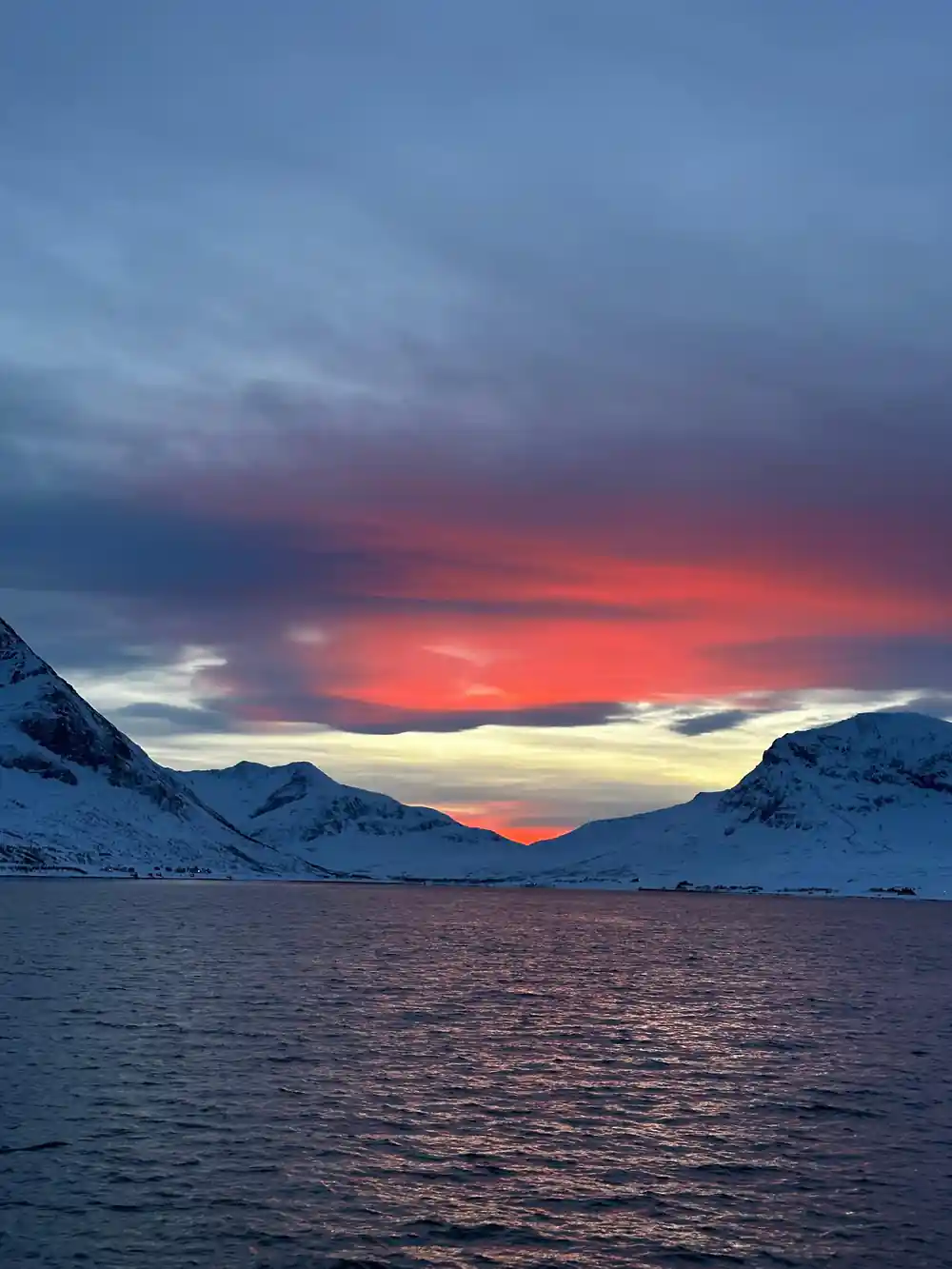
If you visit during the polar night, from 27 November to 15 January[10], the day will be a long twilight. The sun will not appear above the horizon, but the light at midday can still be beautiful. At the other extreme, the midnight sun typically shines from about 20 May to 22 July[15], while whale watching here mainly happens in winter.
Preparing for a Full Day at Sea
Pack for an average winter temperature of around −4°C[6] and add windproof layers. The boat is wheelchair accessible and has a live English guide[1]. Book now and pay later[1], and should your plans change, cancelling at least 24 hours ahead gives you a full refund[1]. Remember, this is the Arctic: Tromsø is about 350 km north of the Arctic Circle[9].
Getting to the boat is straightforward if you are staying in the city. Travel between Tromsø Airport and the city centre takes about 10-20 minutes[7]. Give yourself time to find the right pier, use the facilities before boarding, and settle into a seat with a view. The tour is from US$209[1], and the 9 hours[1] are best seen as a full day of Arctic watching rather than a quick tick-box trip.
For shorter Tromsø trips, you could pair this with a quiet evening, but this one deserves the whole day. A thermos, a spare battery and a dry pair of gloves will make the difference between a good day and a great one. The boat will do the searching; your job is simply to be warm, patient and ready.
From price by tour option
Compare tour from-prices
From-prices from GetYourGuide listings.[1][4][5][16]
When to Go
Planning Your Day
Book with flexibility
Reserve now and pay later, then keep your evening loose in case the tour runs late.
Dress in layers
Warm base layers, a windproof shell, gloves and a hat will make the deck time enjoyable.
Arrive early
Find the right pier, use the facilities and get settled before the scheduled departure.
Pick your spot
Choose a place with a good view, and move between decks as the boat changes course.
Stay patient
Whale watching is a search, not a show. Let the crew do their work and keep watching.
Ready to spend a full day on Arctic waters?
from US$209Reserve now & pay later