Quick summary
- A 9-hour hybrid-electric boat trip from Tromsø with a live English-speaking guide, from US$209.[1]
- The route includes the Arctic Cathedral, Tromso, so you will see the white church from the water.[1]
- Orcas and humpback whales gather in the fjords north of Tromsø during the winter to feed on herring.[2]
- Book now and pay later, with free cancellation until 24 hours before.[1]
- In Tromsø, the typical winter temperature is close to -4°C.[3] Layers matter.
- Top choice Hybrid-Electric Whale Watching from US$209 Duration9 hours[1]GuideLive guide in English[1]Rating4.48 from 6,644 reviews[1]AccessWheelchair accessible[1] Check availability
- Catamaran Whale Watching from US$209 Duration6 hours[4]GuideLive guide in English[4]Rating4.23 from 250 reviews[4]AccessNot stated See this tour
- RIB Whale Safari from US$257 Duration4 to 12 hours[5]GuideLive guide in English[5]Rating4.95 from 113 reviews[5]AccessNot stated See this tour
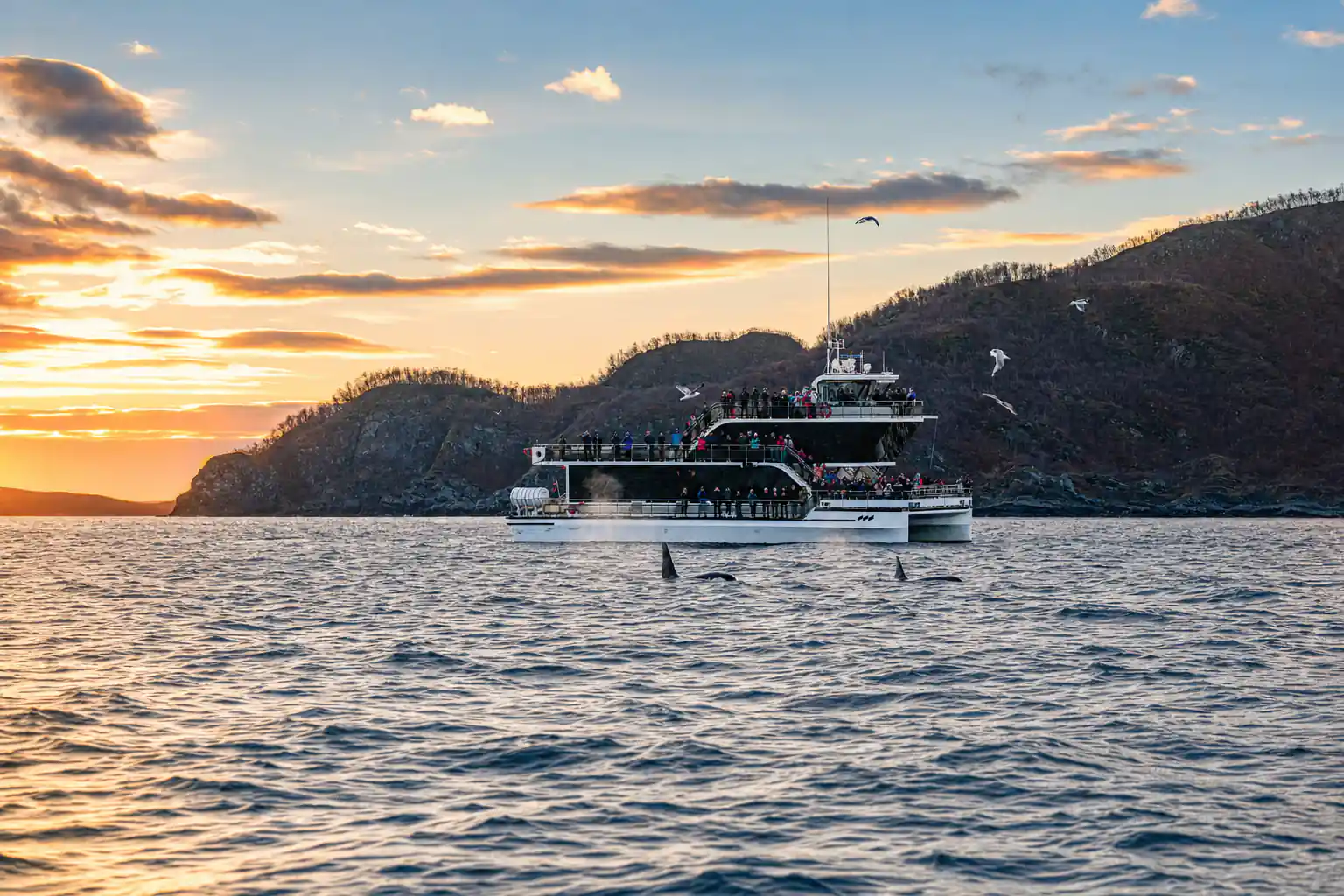
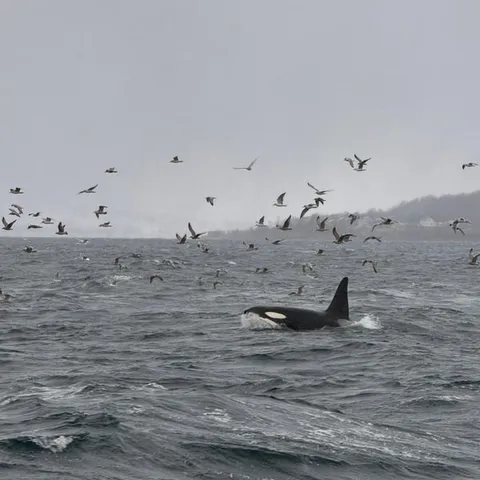
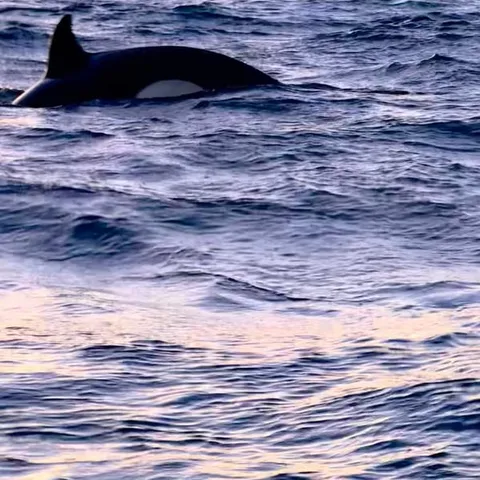
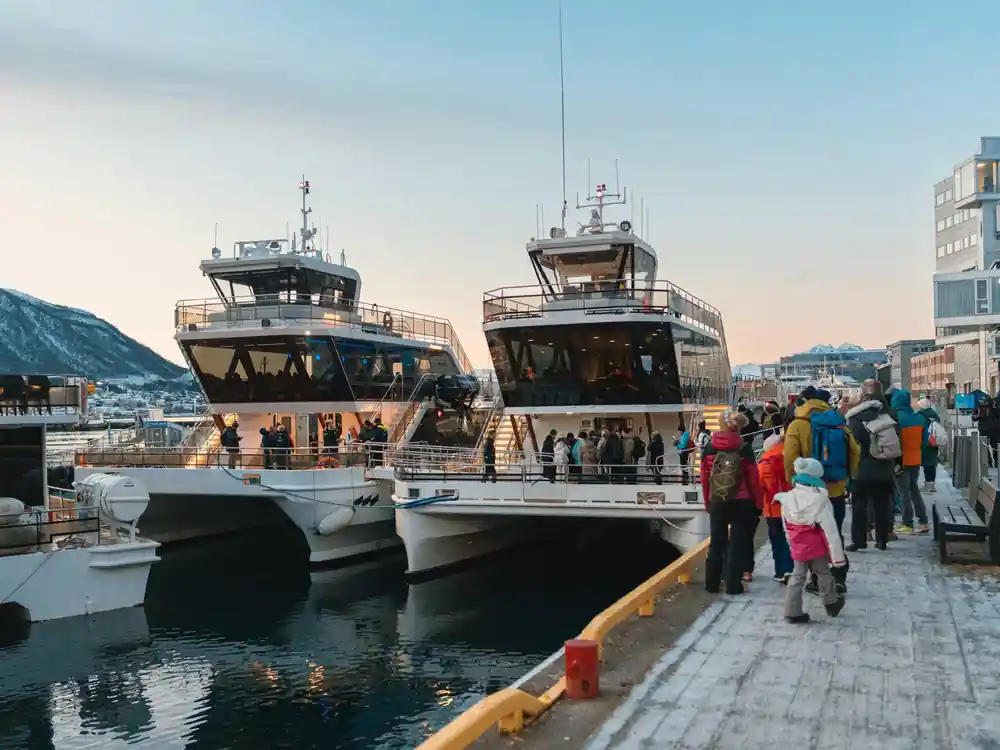
Our modern hybrid-electric ships are designed with the best sightseeing experience in mind.
A fjord day that starts with the cathedral
Tour facts
Getting ready
- Average winter temperature around -4°C.[3]
- Free cancellation up to 24 hours in advance.[1]
- Route includes Lyngen Alps, Skjervøy and the Arctic Cathedral.[1]
- Check availability for starting times.[1]
A Cathedral Born from Arctic Vision
Tromsdalen Church, the white landmark most travellers know as the Arctic Cathedral, stands on the eastern shore of the sound. Its concrete walls rise in sharp triangular planes, and the roofline reaches like a mountain ridge. The Polar Night in Tromsø lasts approximately from 27 November to 15 January.[6] During those weeks, the building sits in deep twilight and low artificial light. Snow often settles in the folds of the roof, and the white walls take on a blue tone as the afternoon fades.
From the city centre, the cathedral is visible across the water, and the crossing from the harbour side is a short bridge walk away. Tromsø lies about 350 km north of the Arctic Circle.[7] Winter sun angles are low and the light changes slowly, so the white facade seems to shift colour through the day. On cloudy days the building can look almost grey, while a clear sunset turns it warm pink for a few minutes.
For anyone boarding a whale watching boat, this first sighting sets the mood. The white church stands in contrast to the dark fjord and the snowy mountains behind it. It is a compact, elegant landmark that rewards a slow look. From the deck, the triangular profile lines up with the peaks behind it, which makes the cathedral feel like part of the landscape rather than a separate structure.
Stacked Triangles: The Geometry of Ice
The cathedral's stacked triangles are the whole story. From the side, the building looks like a tent of ice, each slope meeting a central ridge. Snow often collects in the folds, and the structure seems to disappear into whiteout conditions. The shape repeats in the gable, the windows and even the bell tower, so the eye never quite leaves the triangular motif.
In Tromsø, the typical winter temperature is close to -4°C.[3] That means the church is often framed by frost or snow, and the fjord in front of it may be dark even at midday. The geometry is at its most dramatic when the sky is overcast and the white building appears to glow against grey clouds. A dusting of snow on the ledges makes the clean lines read even more clearly.
Up close, the concrete has a smooth, almost ceramic finish. The east facade is a wall of glass and mosaic, which catches low light and throws colour onto the floor. It is a modern building, but one rooted in Arctic forms. Visitors who approach on foot can feel the scale of the planes, while those who stay on the water get the broader view of the silhouette against the mountain.
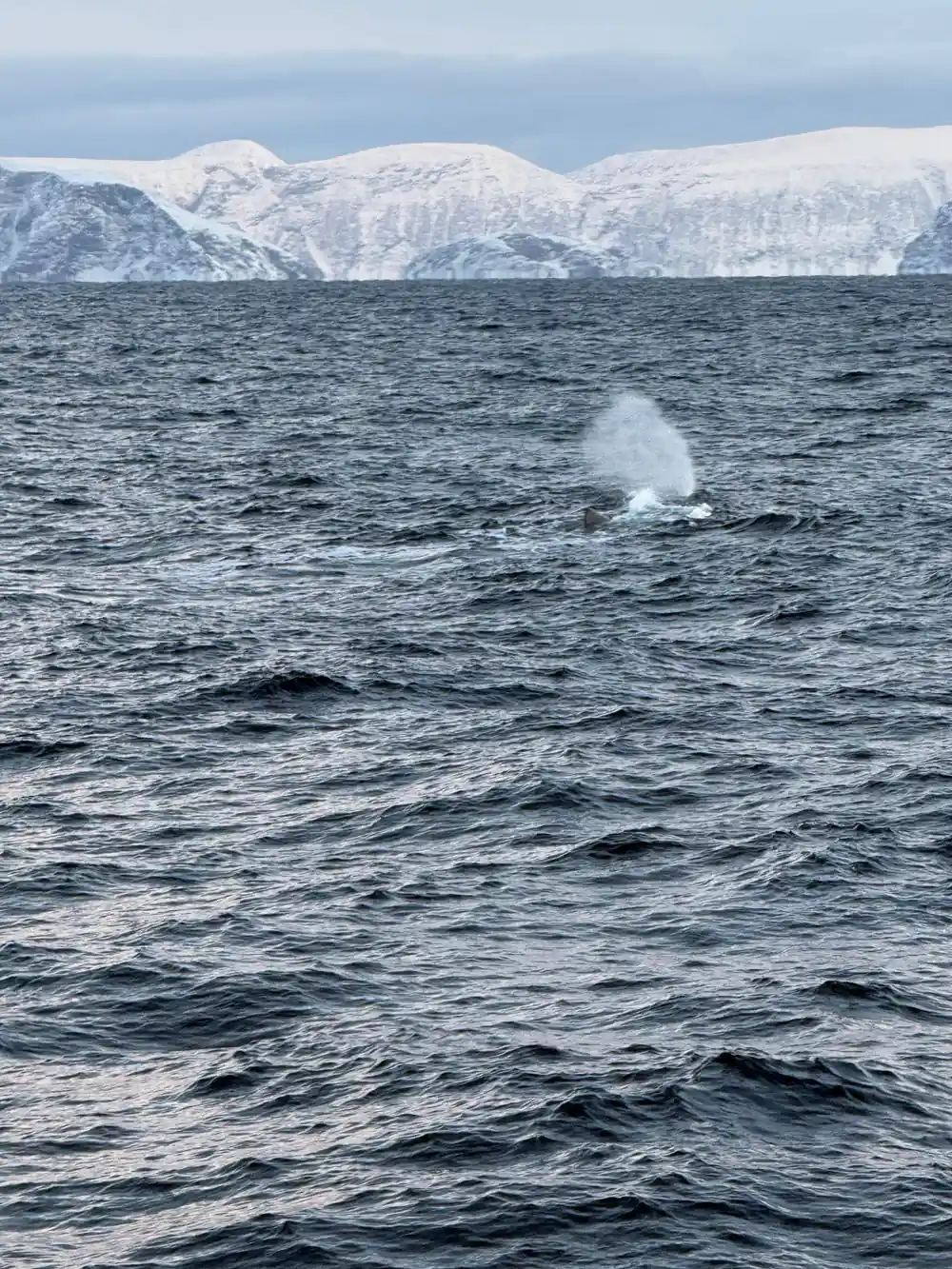
Humpback whale tail fluking in dark Arctic water near Tromsø.
The East-Facing Mosaic: Biblical Light Across Water
The east-facing mosaic is the heart of the artwork. It fills the large triangular window above the entrance, and from the water it looks like an abstract composition of light and colour. Inside, the mosaic tells a story in glass, but the exterior view is just as powerful. The colours are strongest on dark winter afternoons, when interior lights shine through the panels.
The northern lights may be visible in the Tromsø region from late August to early April, whenever the sky is dark and sufficiently clear.[8] On a dark winter evening, travellers can watch for the aurora and then turn toward the cathedral's lit eastern window. The two images belong together: a band of green light over the sound and a triangle of glowing colour in the church.
From the deck of a catamaran, the mosaic is too far away to read in detail, but its glow is unmistakable. It turns the eastern wall into a lantern. That is the image travellers carry home. As the boat pulls out of the harbour, the window becomes smaller but remains a clear point of light against the dark hillside.
The Pipe Organ: Arctic Resonance
Inside the cathedral, the pipe organ is the main event. It fills the tall volume with sound, and concerts are part of the church's rhythm. If you want to go inside, check current opening times and concert schedules before your visit. The interior is spare and open, with wood and concrete warmed by the organ's deep voice.
After time on the water, the quiet of the church is a good contrast. The fjord is a wide open space, and the cathedral offers a more enclosed kind of beauty. Sitting in a pew, you can look up through the tall nave and see the same triangular pitch that defines the exterior carried into the ceiling.
If you arrive early for your whale watch, you can step inside and hear a rehearsal, then walk to the harbour as the boat prepares to leave. The acoustics are part of the draw, and the silence between notes feels deliberate. Warm, calm and still, the space is a useful pause before the wind and movement of a day on the fjord.
from US$209
A 9-hour hybrid-electric whale watching tour from Tromsø with a live English guide, wheelchair access and the Arctic Cathedral on the route.[1]
Reading the Silhouette from the Catamaran Deck
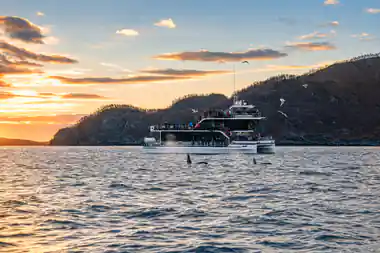
The whale watching tour by hybrid-electric boat leaves from Tromsø and follows a route that includes the Arctic Cathedral, Tromso, the Lyngen Alps, Lighthouse Lyngstuva, Kagsundet and Skjervøy.[1] The cathedral is a natural part of the journey, seen from the water as the boat makes its way out of the sound. These ships are modern hybrid-electric vessels designed with sightseeing in mind.[9]
Orcas and humpback whales gather in the fjords north of Tromsø during the winter to feed on herring.[2] Norwegian spring-spawning herring migrates northeastward in September/October to its main wintering areas off the coast and in fjords in northern Norway.[10] The boat heads toward open water where these animals may appear. Norwegian rules require whale safari boats to keep at least 0.2 nautical miles (370 m) from fishing vessels and fixed gear.[11]
The 9-hour experience is a full day, with a live English-speaking guide on board.[1] You will have time to watch the cathedral shrink behind you, and later see it again on the return approach. The boat is wheelchair accessible, so the view is open to almost everyone.[1] On a good day, the journey turns into a slow scan of dark water, snowy islands and moving silhouettes.
Tromsdalen Church: The Local Name and Its Context
Locally, the building is Tromsdalen Church. Its popular name, Arctic Cathedral, is used by guides and travellers, but the official name remains the local one. The church sits on the east side of the sound, below the mountain. This makes the cathedral easy to find from the city and easy to identify from the water.
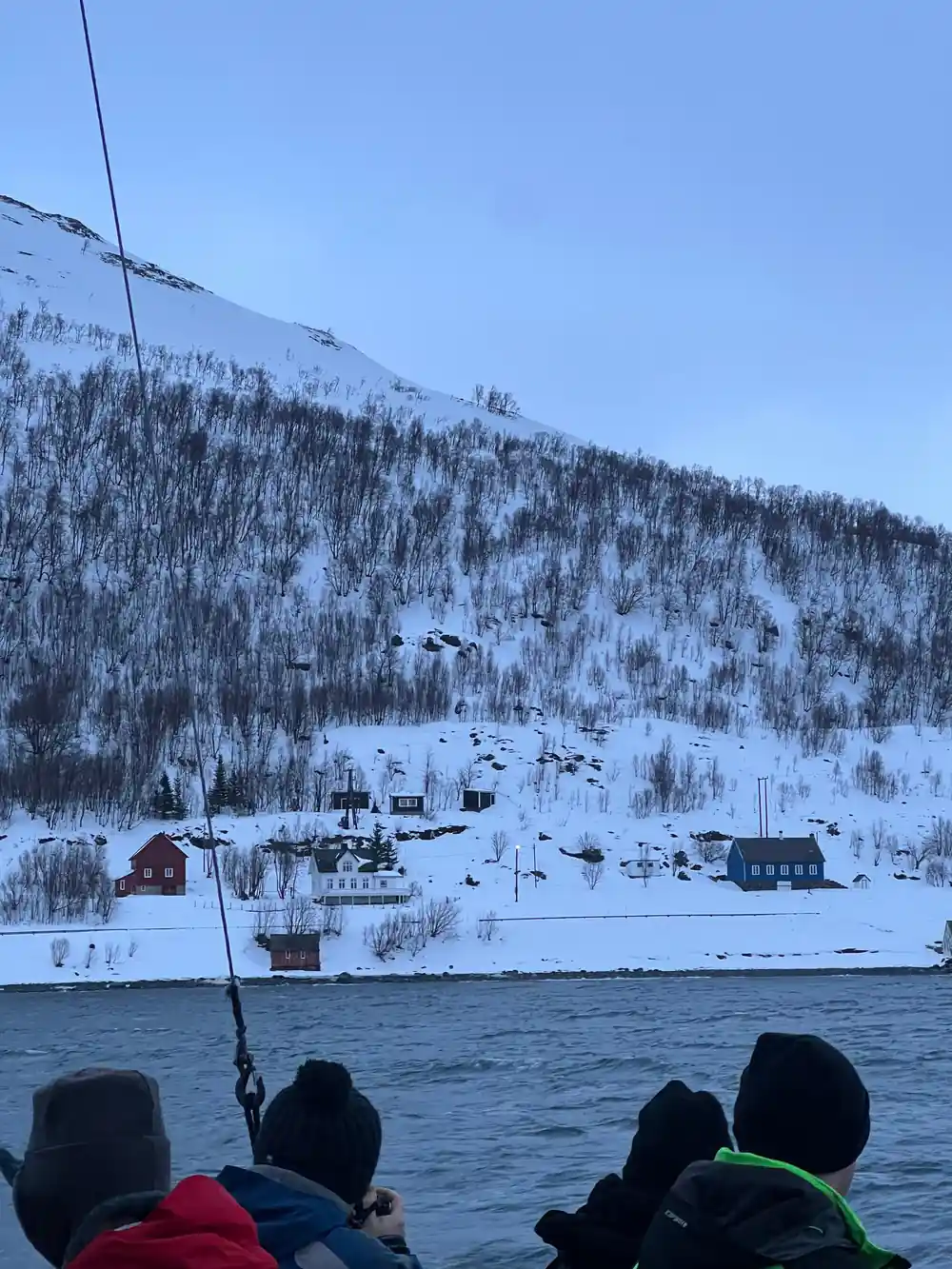
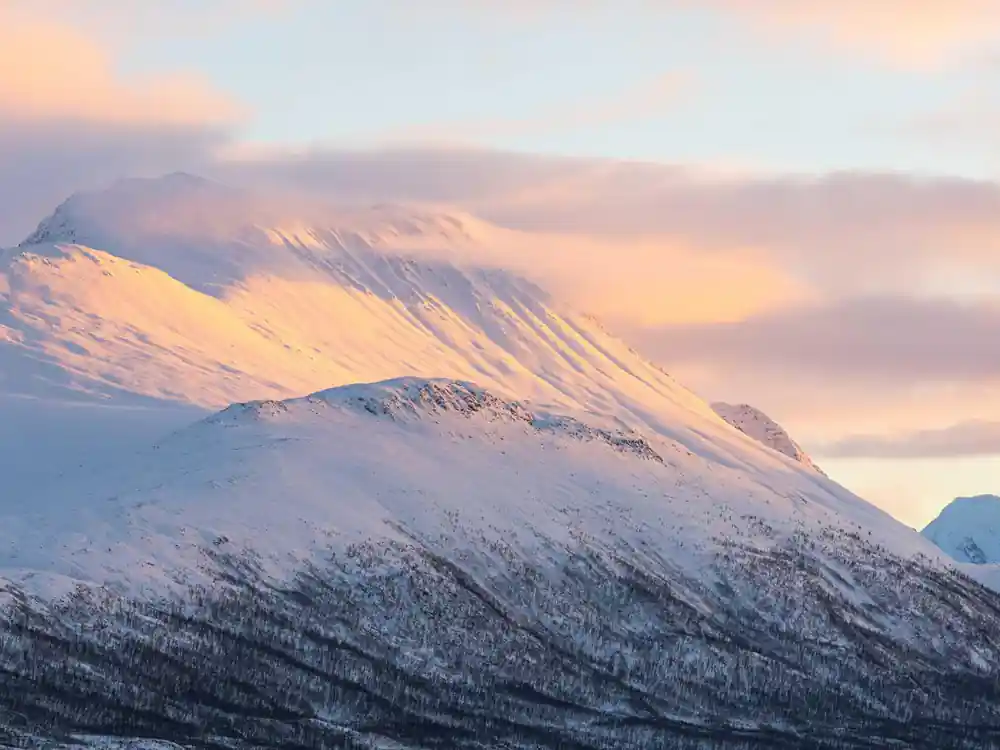
The setting matters. Behind the church, the Lyngen Alps rise in snow-covered ranks, and the fjord in front is dark, cold water. The building was designed to be seen in this landscape, with forms that repeat the mountains and the ice. The church does not compete with its surroundings; it borrows their shapes.
Travellers often ask whether the cathedral is a cathedral. Guide books still use the popular name, and the white church has become an emblem of Tromsø. The position on the water is what makes it so memorable. From almost any winter viewpoint, it connects the town, the sound and the mountains in one composed scene.
Visiting Before or After Your Whale Watching Tour
A 9-hour whale watching tour from Tromsø leaves room for a cathedral visit either before you sail or after you return.[1] The tour includes the Arctic Cathedral in its route.[1] You will see it from the water even if you do not go inside. Adding a short stop inside is easy if the church is open.
Booking is simple. You can reserve immediately and pay later, with full refund for cancellations made at least 24 hours ahead.[1] The from-price is US$209, which puts the cathedral view, the fjord crossing and the whale search in one day.[1] The full-day format suits travellers who prefer a slower pace and time to enjoy the passing landscape.
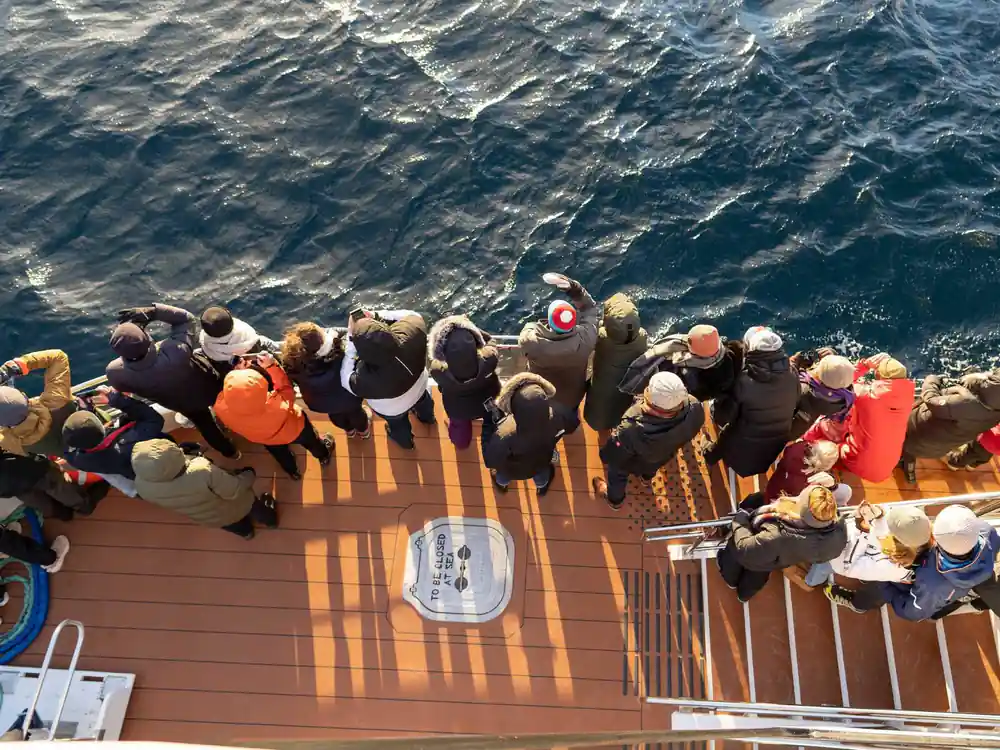
Dress for the deck. Tromsø's mean winter temperature is roughly -4°C, and over open water the wind feels bracing.[3] Warm boots, a hat, gloves and a good jacket make the 9 hours far more comfortable.[1] A flask of hot drink and a camera with a spare battery can make the day enjoyable, so take time to think through the details before you board.
Whale sizes in the fjords
Whale watching options in US dollars
From-prices from GetYourGuide listings[1],[4] and[5].
When to book
How to plan your day
Pick a winter date
The tour runs for 9 hours from Tromsø.[1] Plan a full day.
Book with free cancellation
You can reserve immediately and pay later, with full refund for cancellations made at least 24 hours ahead.[1]
Dress for the deck
Average winter temperature in Tromsø is around -4°C.[3]
Watch for the cathedral
The route includes the Arctic Cathedral, Tromso.[1]
Scan the fjords
Orcas and humpback whales gather in the area to feed on herring.[2]
Ready to see whales and the cathedral from the water?
from US$209Reserve now & pay later