Quick summary
- Orcas and humpback whales gather in the fjords north of Tromsø during the winter to feed on herring.[1]
- Herring moves northeastward in September/October to wintering areas off the coast and in fjords in northern Norway.[2]
- Polar night lasts approximately 27 November to 15 January.[3]
- Northern lights may be visible from late August to early April.[4]
- The hybrid-electric tour costs from US$209 and lasts 9 hours.[5]
- Top choice Hybrid-Electric Boat from US$209 Duration9 hours[5]GuideLive English guide[5]CancellationCancel up to 24 hours in advance[5] Check availability
- Catamaran Whale Watching from US$209 Duration6 hours[6]GuideLive English guide[6]CancellationCancel up to 24 hours in advance[6] See this tour
- RIB Safari from US$257 Duration4-12 hours[7]GuideLive English guide[7]CancellationCancel up to 24 hours in advance[7] See this tour
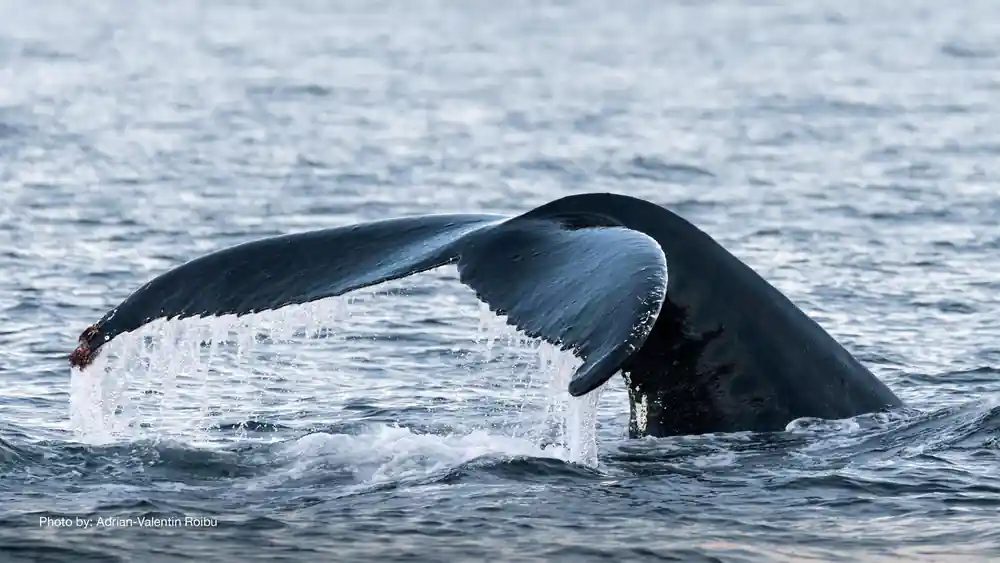
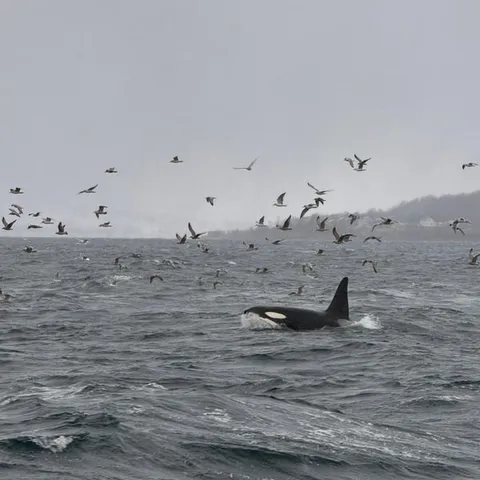
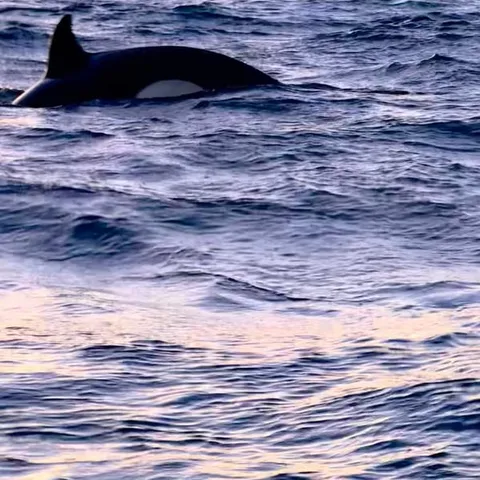
Midnight sun in Tromsø usually lasts from around 20 May to 22 July.
Book the hybrid-electric tour for your Tromsø whale watching date
Getting to the boat
When whales arrive in Tromsø fjords
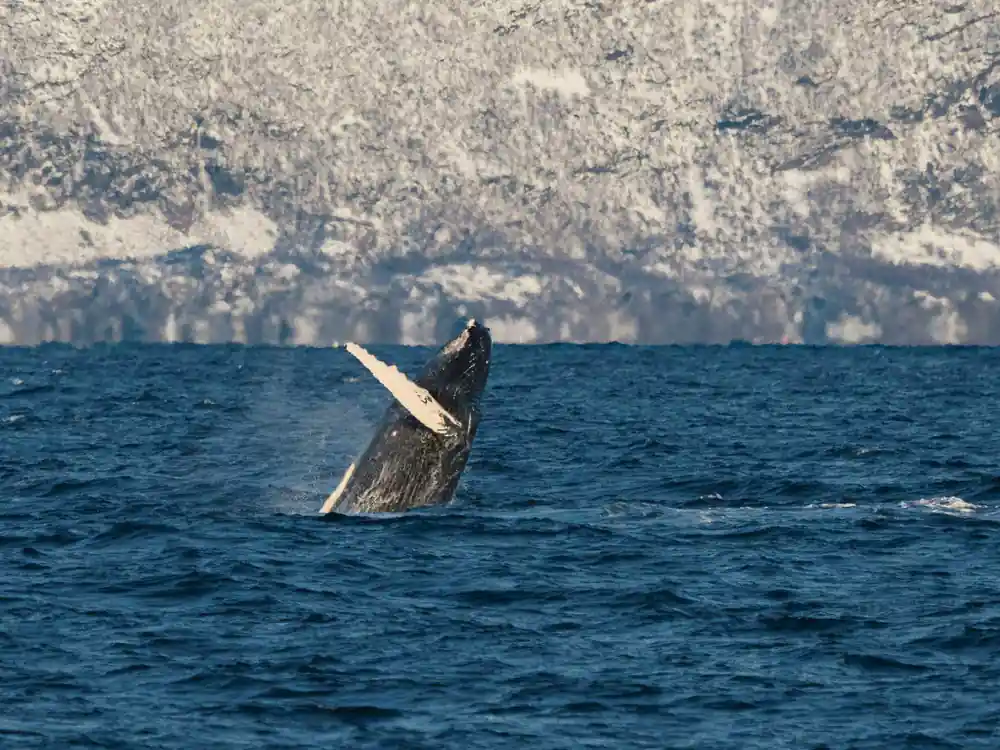
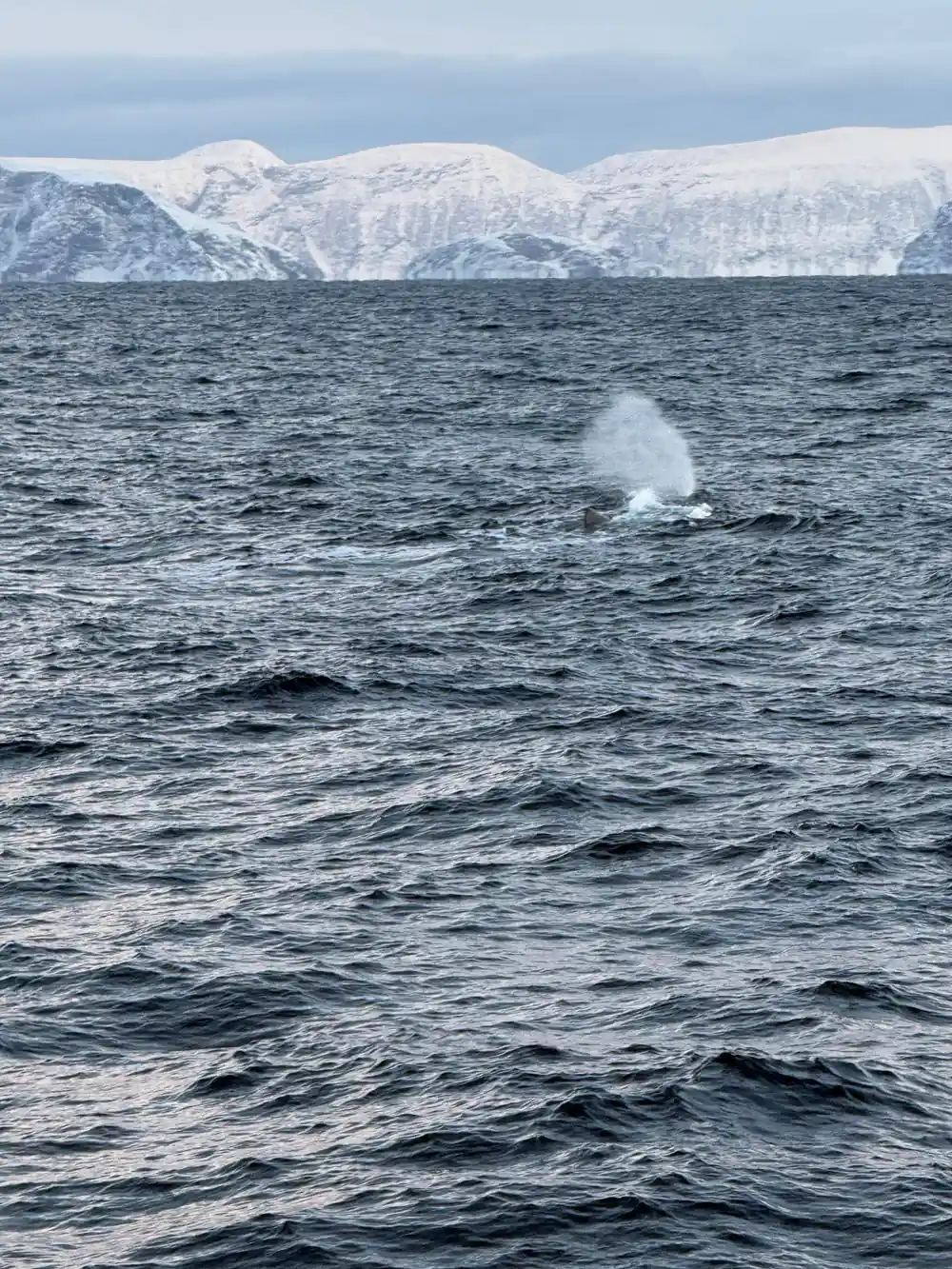
The Tromsø whale watching season sits inside the darker half of the year. Orcas and humpback whales gather in the fjords north of Tromsø during the winter, where they feed on herring.[1] If you are asking when to see whales Tromsø, the short answer is winter: the season is built around this gathering rather than a single calendar month. The tour calendars fill up once the cold settles in, and a winter visit can feel like stepping into a wildlife documentary. The city sits among fjords that cut deep into the landscape, so the water is close at hand and the whales are not a distant rumour. On a clear winter afternoon, the light over the sea changes by the minute, and a whale blow can appear without warning. That is the rhythm of a season that rewards patience and sharp eyes.
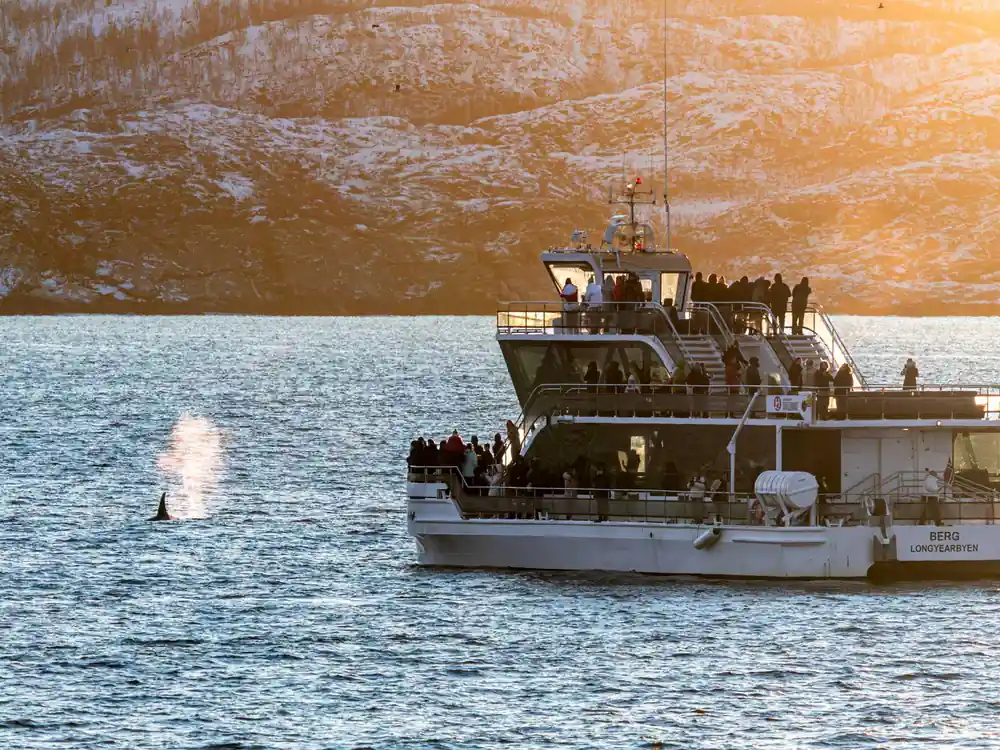
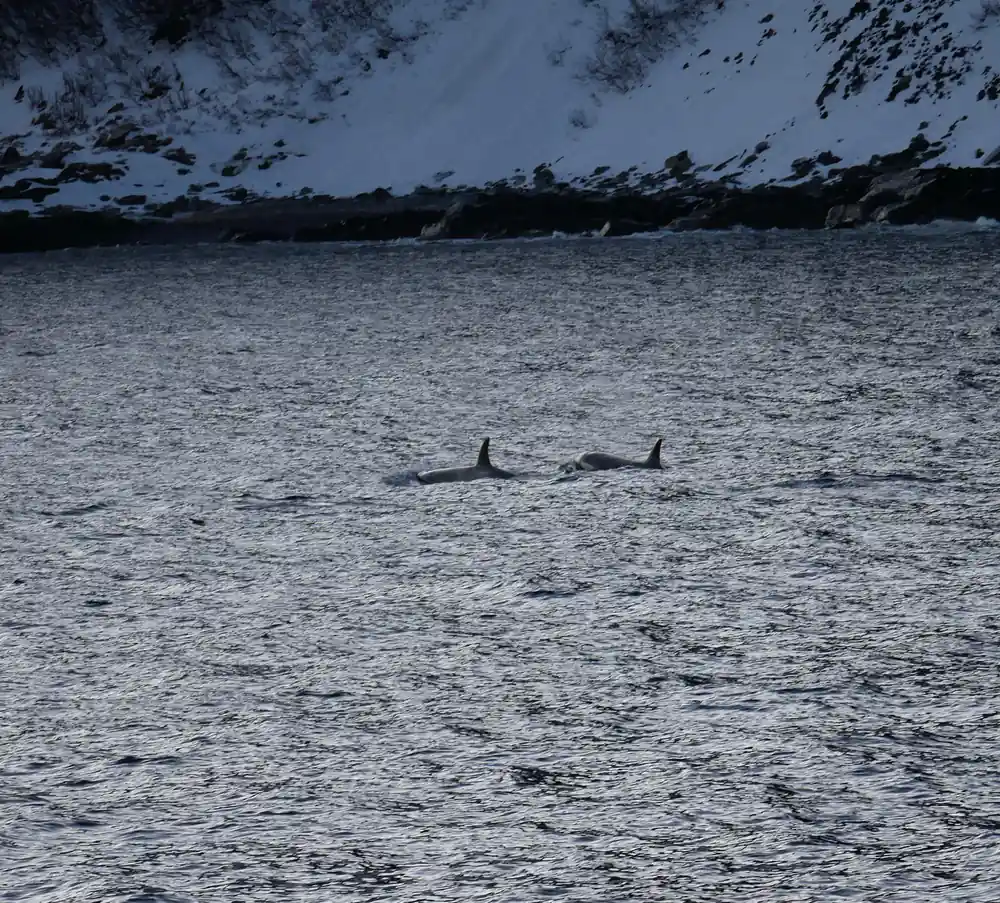
In practical terms, when can you see whales in Tromsø? The answer is winter, when orcas and humpback whales gather to feed on herring.[1] Some travellers come looking for the Tromsø killer whale season; in this region it is the same winter window, and orcas are part of the gathering.[1] The fjord scenery adds to the drama: snow-covered peaks, dark water, and whale blows catching the low light. A winter boat trip is cold, but it is also the most alive the northern sea gets. Expect to hear the water before you see the whales, and let the guide point out the first dark shapes near the surface. Keep your camera close, but take a moment just to watch. The memory of a whale rising beside a snowy fjord is worth more than a perfect photo.
Why departures sometimes sail toward Skjervøy
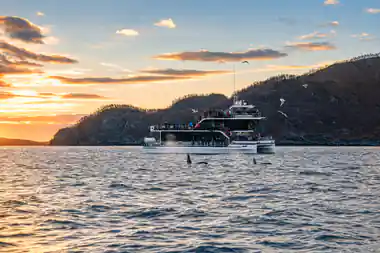
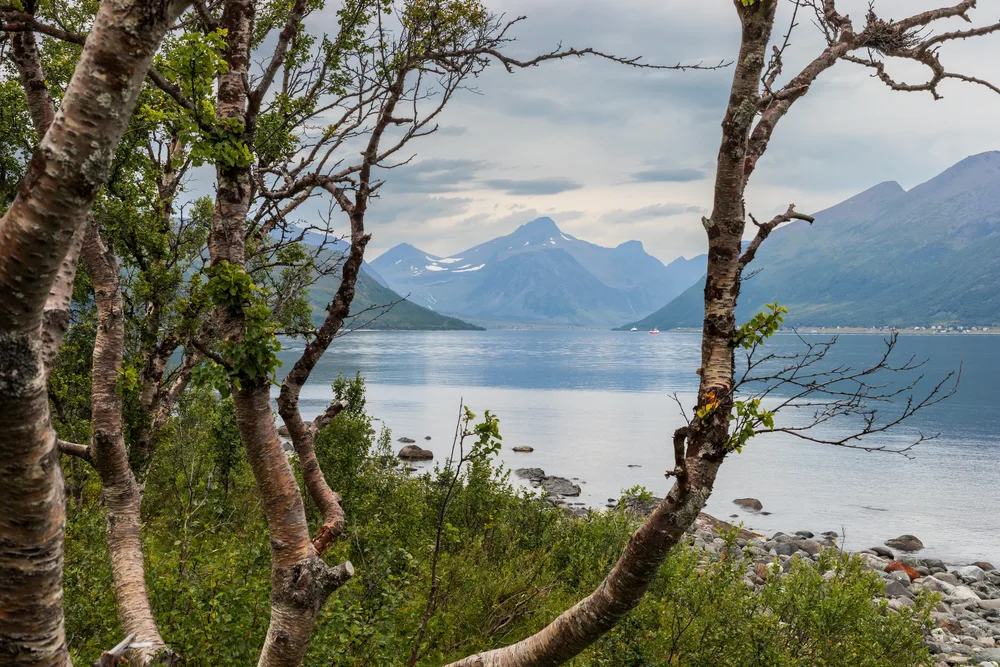
Why do departures sometimes point toward Skjervøy? The whales are documented in the fjords north of Tromsø, and Skjervøy sits in that fjord country.[1] The route on the hybrid-electric tour can include the Lyngen Alps, Lighthouse Lyngstuva, Kagsundet and Skjervøy, Norway.[5] A flexible route lets the boat head toward the waters where the winter gatherings are known to happen, rather than committing to one spot weeks ahead. A whale watching day in the north is a search, not a simple ferry crossing, and the crew can read the sea as they go. Snowy peaks, narrow sounds and scattered islands make the journey itself part of the experience, even before the first blow appears.
The tour also lists the Arctic Cathedral as a stop.[5] That means the same day can begin with Tromsø landmarks and end after a long push into the whale grounds. If conditions look better farther north, the route can stretch that way. For a traveller, the important thing is that the captain and guide are free to follow the herring and the whales, not just a fixed itinerary. There is comfort in knowing the plan is live and the crew is watching the same weather and wildlife signs you are. You can settle into the day, trust the route, and spend your energy looking outward instead of wondering where the boat is headed.
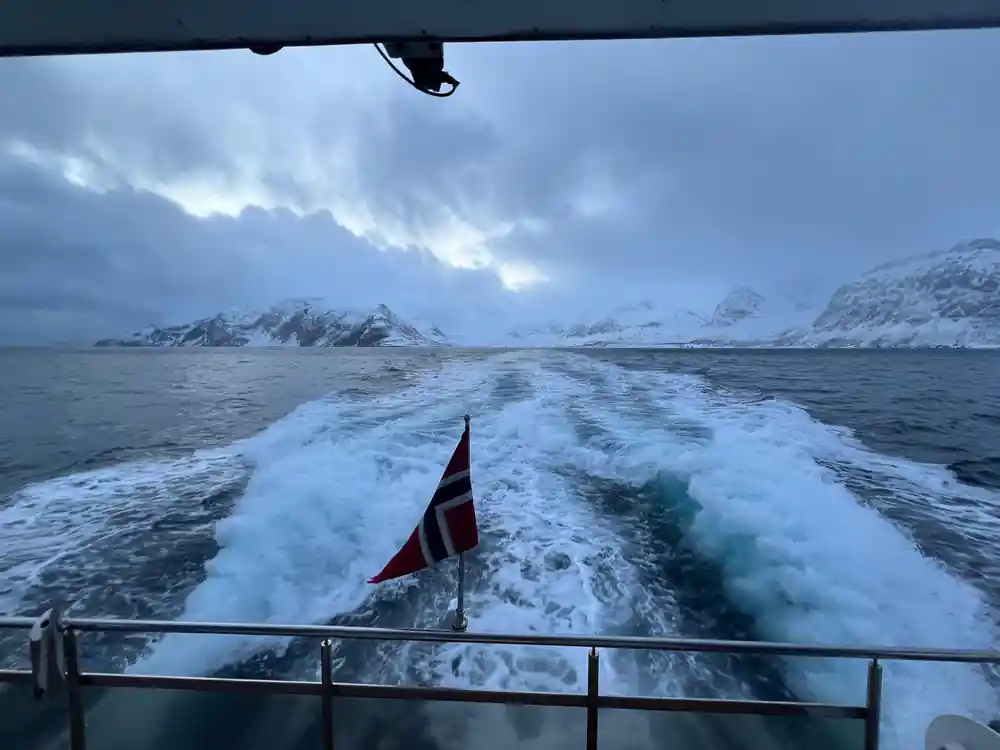
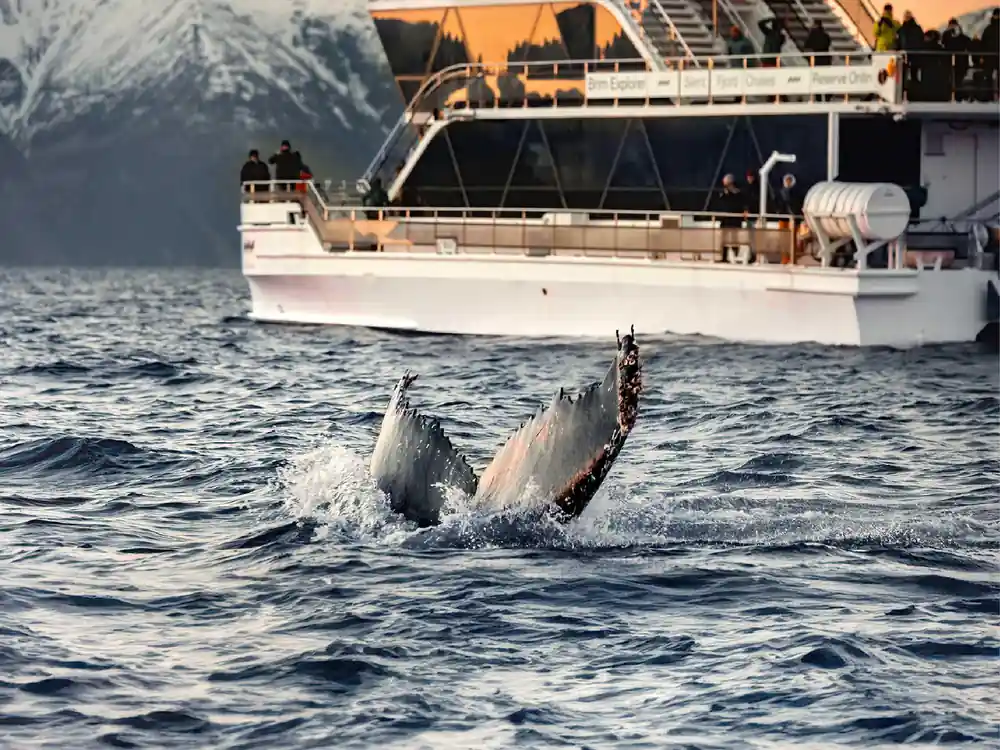
A humpback tail rises above the dark winter water near Tromsø.
Tromsø in the Darkest Whale-Watching Months
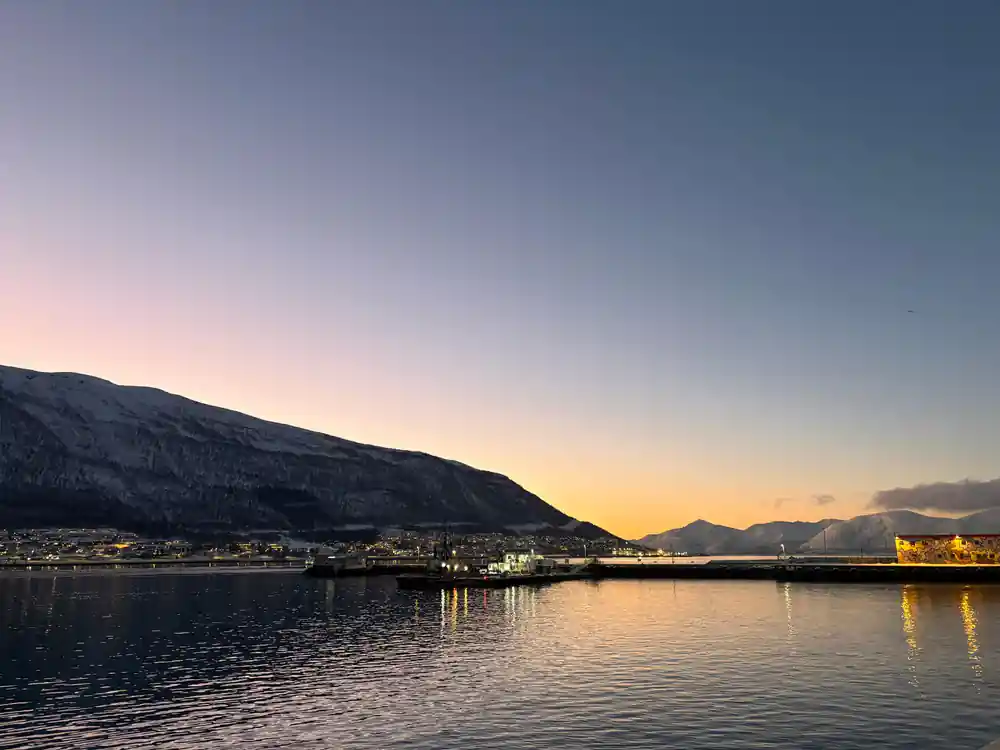
The darkest stretch of the season is polar night, which lasts approximately 27 November to 15 January.[3] After that, daylight returns. In Tromsø, winter temperatures average roughly −4°C.[9] In the darkest months, the sun never fully rises, and the sea takes on a steel-blue glow at midday. It is a strange and beautiful time to be on a boat, especially when a humpback surfaces only a short distance away. The low light softens the mountains and gives the water a metallic shine, so every sighting feels like a quiet event. Even the air feels different, still and cold, with the sound of the boat carrying clearly across the fjord.
A long winter day on the water needs comfort. The hybrid-electric tour lasts 9 hours, has a live English guide and is wheelchair accessible.[5] That makes it a practical choice for the dark months, when you want warmth, shelter and clear guidance. Dress in layers, add a windproof outer shell, and keep a hat and gloves close. The boat does the hard work; you just need to watch and listen. There is usually a heated indoor space to warm up between sightings, so you can step outside for the action and retreat when the cold bites. Take a thermos, keep your phone charged, and give yourself time to simply stand at the rail and scan the water.
Outside the Winter Whale Gathering Window
Outside the winter months, the wildlife calendar has moved on. The documented window is winter, when orcas and humpback whales gather to feed on herring.[1] If you book beyond that documented gathering period, keep expectations flexible. The landscape is still dramatic, but the whales may be elsewhere. Early autumn can have changeable weather and the herring may not yet be settled in their wintering fjords, while spring brings longer days and a different kind of coastal energy. You may still enjoy a beautiful cruise, with snow on the peaks and the first returning light, but the whale sightings are less certain outside the winter window.
This tour's booking allows you to cancel free of charge up to 24 hours prior and get a full refund.[5] That is useful in the shoulder season, when conditions change quickly. Reserve now and pay later if you want to lock in a date without committing too early. If the forecast shifts, you have a clear way out and can aim for a better slot later in the week. That flexibility matters when every day looks different on the water. A little patience with the calendar, and a little trust in the cancellation terms, keeps the trip easy to adjust at the last minute.
from US$209
Book the 9-hour hybrid-electric whale tour from Tromsø with live English guide, wheelchair access, and free cancellation up to 24 hours.[5]
How the herring migration drives whale movements each year
Norwegian spring-spawning herring migrates northeastward in September/October to its main wintering areas off the coast and in fjords in northern Norway.[2] That autumn movement and the winter gathering line up neatly. During winter, orcas and humpback whales gather in the area to feed on herring.[1] The herring are the invisible engine of the season, moving in huge schools that attract the whales into the same fjords year after year. It is not a random meeting: the whales are following a reliable food source, and the herring are following a route that ends in sheltered northern waters.
For travellers, the herring calendar is a useful clue. The whale watching season makes sense after the herring have moved into their wintering areas.[2] The hybrid-electric tour is a 9-hour day that can reach those northern waters.[5] If you can, leave a few days in your itinerary around the booked date, so a change in the weather or the whales does not wipe out your only chance to see them. Watch the fjord forecast, keep your plans loose, and let the migration calendar shape your dates. The more you understand about herring and wintering areas, the easier it is to see why the whales keep returning to the same stretch of coast.
What late-season bookings really mean for whale sightings
Late-season bookings still fall inside the winter gathering window, but the exact day-to-day movements of the whales are not fixed. What is documented is that orcas and humpback whales gather during winter to feed on herring.[1] A late booking can work well, especially in a quiet week before the season winds down. The fjords are less crowded, and the low sun makes for memorable light. By late winter, the animals have been feeding in the area for weeks, so there is a good chance of encounters if the weather behaves. The snow is deeper, the days are slowly lengthening, and the whole landscape carries a settled winter calm.
If you book late, rely on the tour's flexible terms. Pay later by reserving now, and you're entitled to a full refund if you cancel at least 24 hours ahead.[5] That gives you room to watch the forecast and decide closer to the date. It also removes the stress of committing to a specific day weeks ahead, which matters when you are travelling to see wild animals in a winter environment. Keep one or two alternate dates in mind, watch the sky, and let the crew handle the search. A late booking can feel like the right gamble when the conditions line up.
Choosing your booking date for the best experience
For the most reliable experience, choose a date in the winter months, when the gathering is documented north of Tromsø.[1] The tour from this site costs from US$209 and lasts 9 hours.[5] It is wheelchair accessible and led by a live English guide.[5] In practical terms, that gives you a full day of fjord travel, whale watching time, and a guide who can explain what you are seeing. A long day also means the crew has time to keep looking, to adjust the route, and to wait for whales to surface. Choose a date when you are well rested and flexible, because the best sightings often come to people who are ready to stay out and watch.
The route can include the Lyngen Alps, Lighthouse Lyngstuva, Kagsundet, Skjervøy and the Arctic Cathedral.[5] Use reserve now and pay later to book; if the forecast changes, cancel up to 24 hours ahead for a full refund.[5] That makes a winter booking practical. Pick a date inside the documented winter season, pack warmly, and let the boat and crew handle the rest. A little planning goes a long way: book with enough room in your schedule, keep your layers simple and warm, and treat the fjord itself as part of the show. Whether you see a dozen whales or just one, the winter sea around Tromsø leaves a lasting impression.
Tour duration by boat type
Whale watching options in USD
From-prices in USD from cited listings:[5][6][7]
When to plan your whale watching trip
Planning your trip
Pick a winter date
Whales gather in winter to feed on herring, so choose those months.[1]
Watch the herring calendar
Herring moves northeast in September/October to wintering fjords.[2]
Expect a long day
The hybrid-electric tour lasts 9 hours.[5]
Book flexibly
Book now and pay later, with free cancellation until 24 hours before.[5]
Dress for the cold
Average winter temperature in Tromsø is around −4°C.[9]
Ready to chase the winter whales from Tromsø?
from US$209Reserve now & pay later