Quick summary
- 9 hours from Tromsø to the Lyngen Alps, Kagsundet and Skjervøy.[16]
- Winter orcas and humpbacks gather to feed on herring in the fjords north of Tromsø.[17]
- Modern hybrid-electric ship designed for sightseeing, wheelchair accessible.[16][18]
- Learn the story of the strait and the whales with a live English guide.[16]
- Reserve now and pay later, with free cancellation up to 24 hours in advance.[16]
- Top choice Hybrid-Electric Boat from US$209 Duration9 hours[16]Rating4.48[16]Reviews6,644[16]GuideLive English[16]CancellationFree up to 24 hours[16] Check availability
- Premium Combo Cruise from US$681 Duration1 day[19]Rating4.90[19]Reviews47[19]GuideLive English[19]CancellationFree up to 24 hours[19] See this tour
- RIB Whale Safari from US$257 Duration4 - 12 hours[20]Rating4.95[20]Reviews113[20]GuideLive English[20]CancellationFree up to 24 hours[20] See this tour
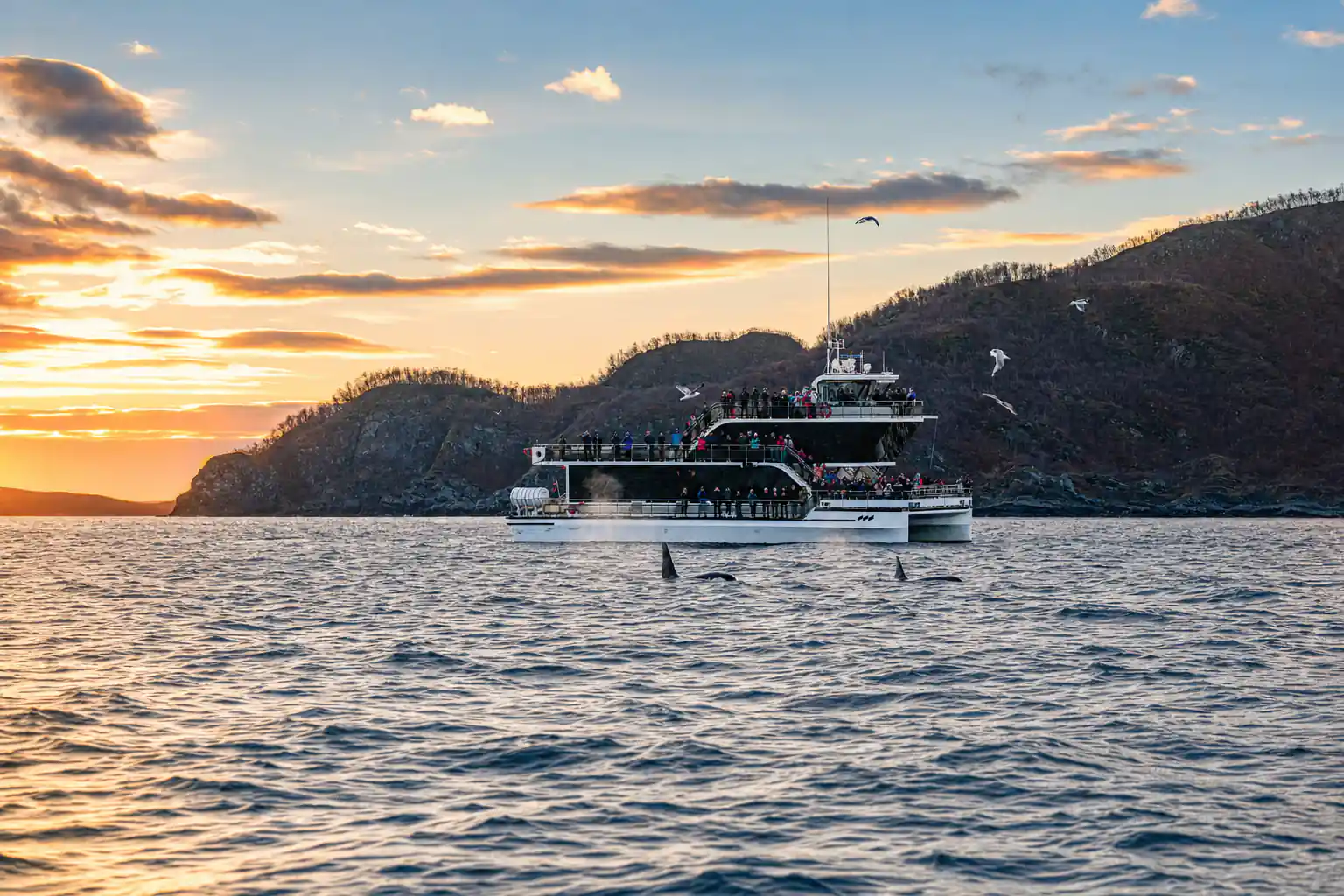
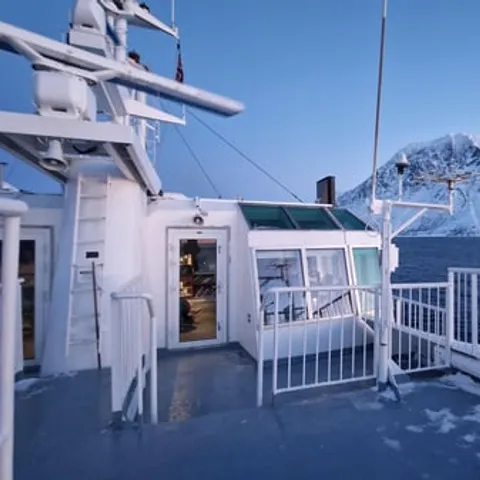
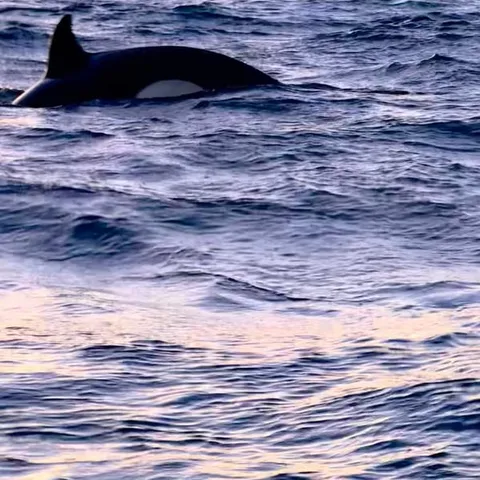
The average winter temperature in Tromsø is around −4°C.
Why this tour works
On the boat
Kagsundet: a sheltered strait on the whale route
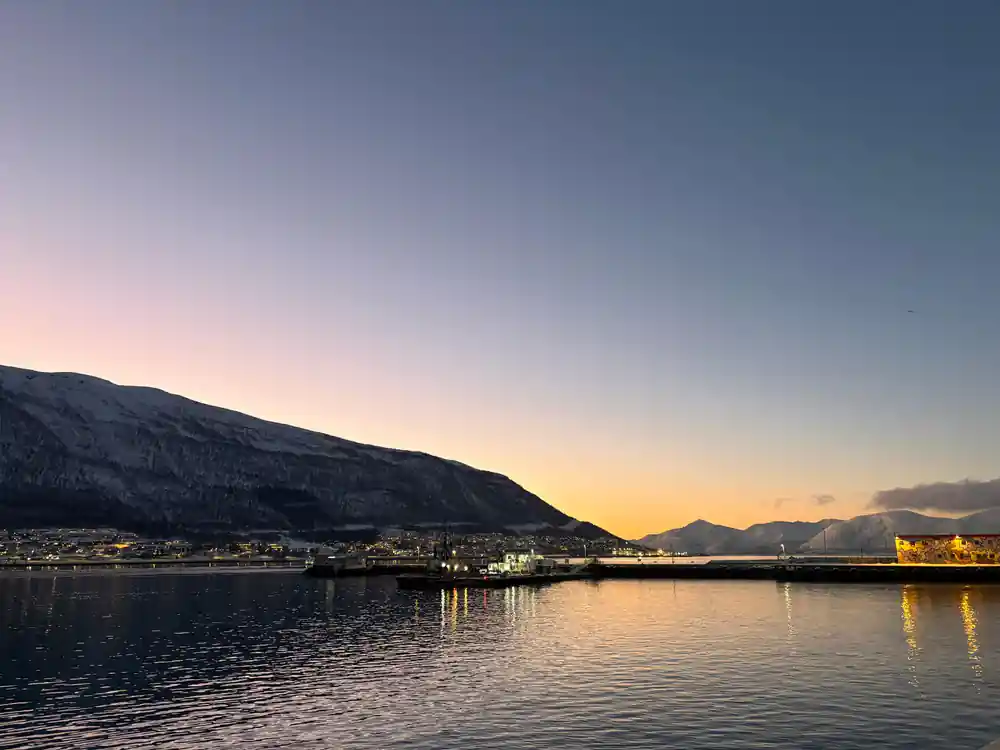
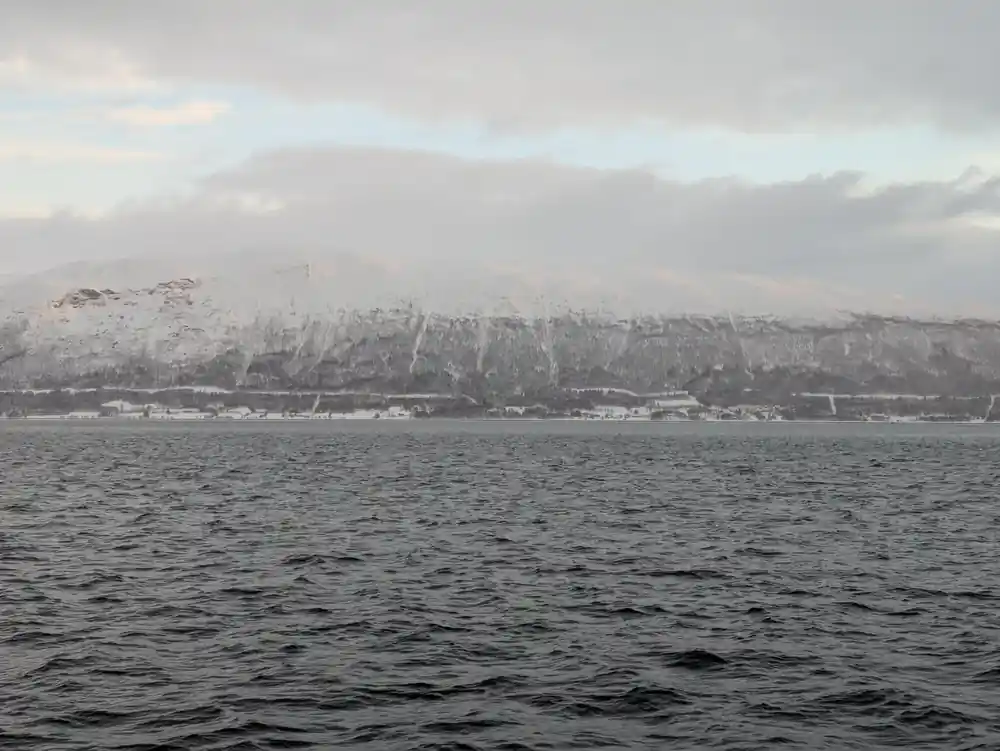
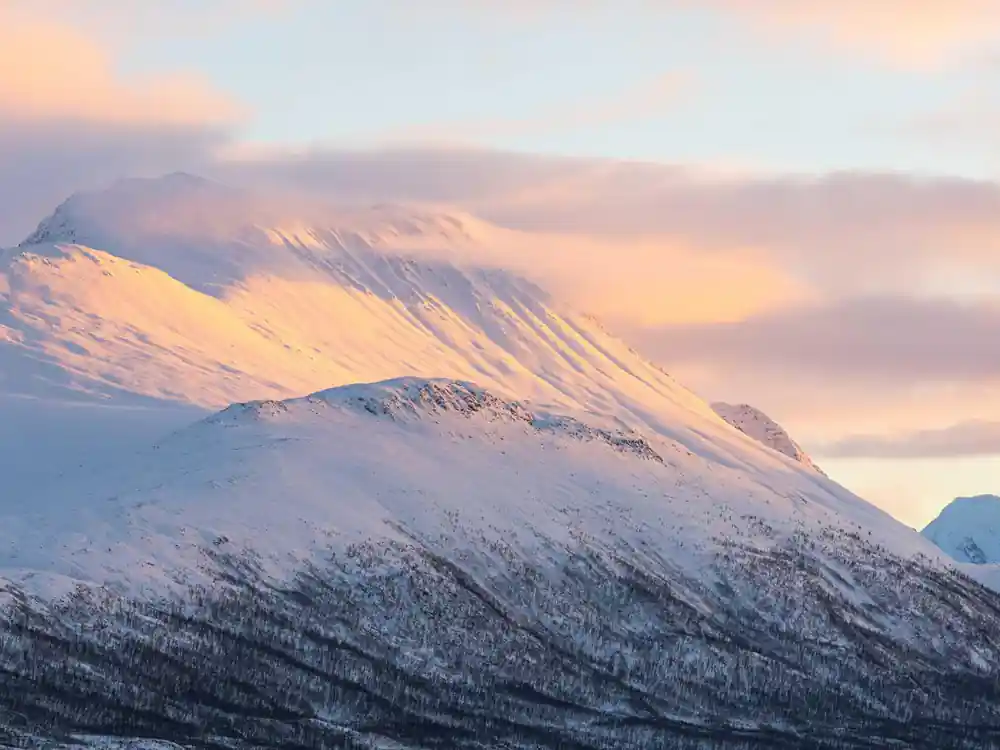
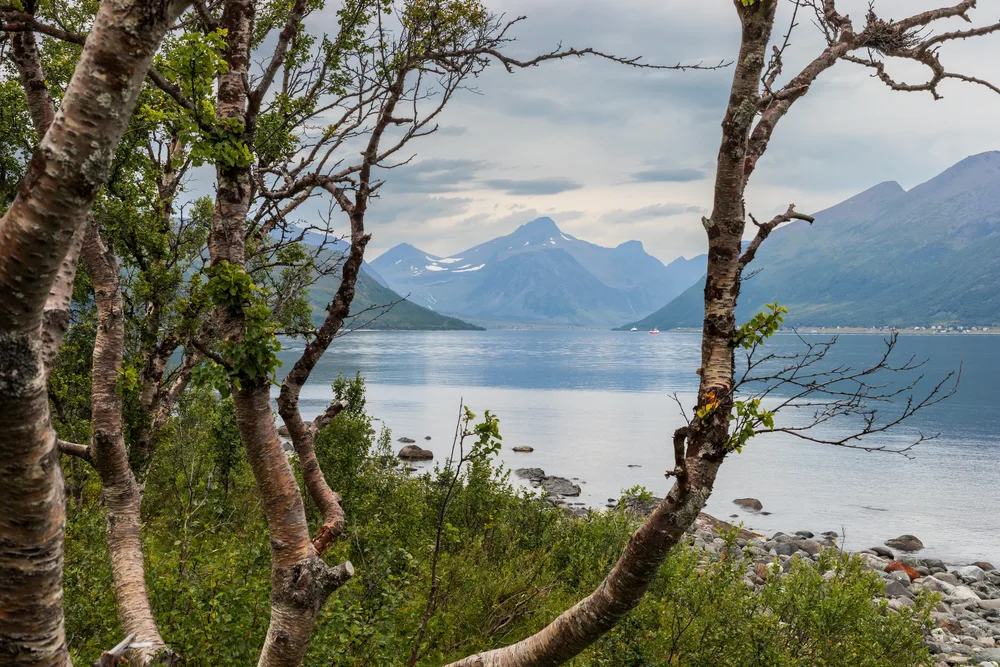
Kagsundet is a narrow stretch of water between the islands and skerries north of Tromsø, part of the approach to Skjervøy. This Skjervøy strait near Tromsø gives boats a natural shelter from the open sea, and it is one of the listed stops on the full-day whale watching tour.[16] The mountains rise straight from the water, snow often dusts the slopes, and the horizon opens into the wide fjord system that leads toward Skjervøy. On a clear winter morning the light turns the snow pale blue, and the sheltered water can be as still as a lake.
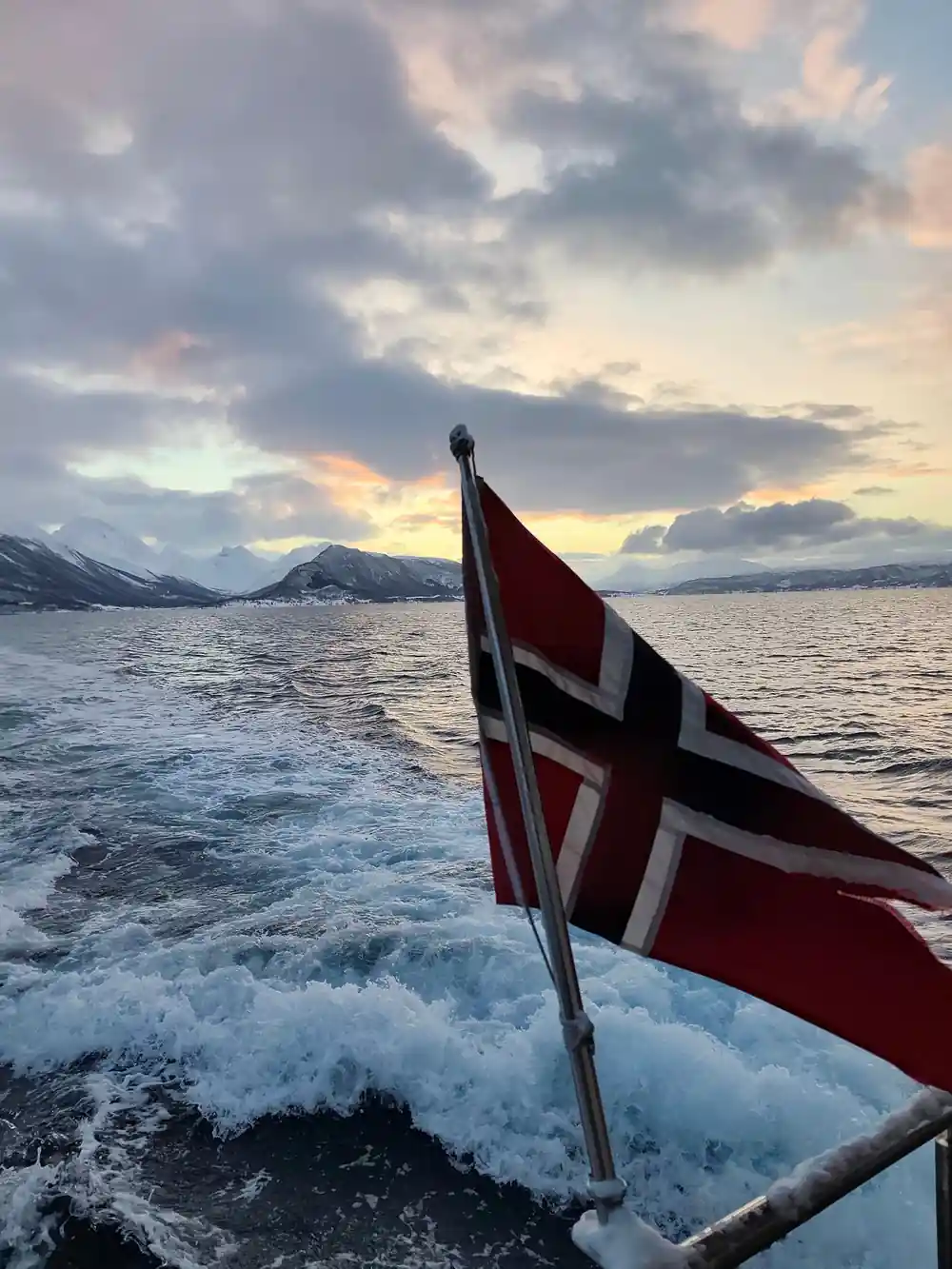
For sailors, the strait has always been a place to pause. The name Kagsundet shipwrecks sometimes appears in old stories, but today the focus is on shelter and wildlife. On the tour, the boat passes the Lyngen Alps and the lighthouse at Lyngstuva before reaching Kagsundet.[16] This is a good moment to be on deck, where the wind is often blocked and the water can be calm enough to reflect the peaks. It also gives you a sense of the old sailing routes, where crews waited for the weather to lift before continuing.
The route continues to Skjervøy and returns past the Arctic Cathedral in Tromsø.[16] To understand why whales pass this way, it helps to know where the herring are. Keeping an eye on the strait as the boat slows gives you a real sense of how the landscape funnels the sea. If you have time before departure, walk along the Tromsø waterfront and study the mountains you will cross later; the tour makes them look close, but the scale is huge.
The hybrid-electric whale watching tour from Tromsø
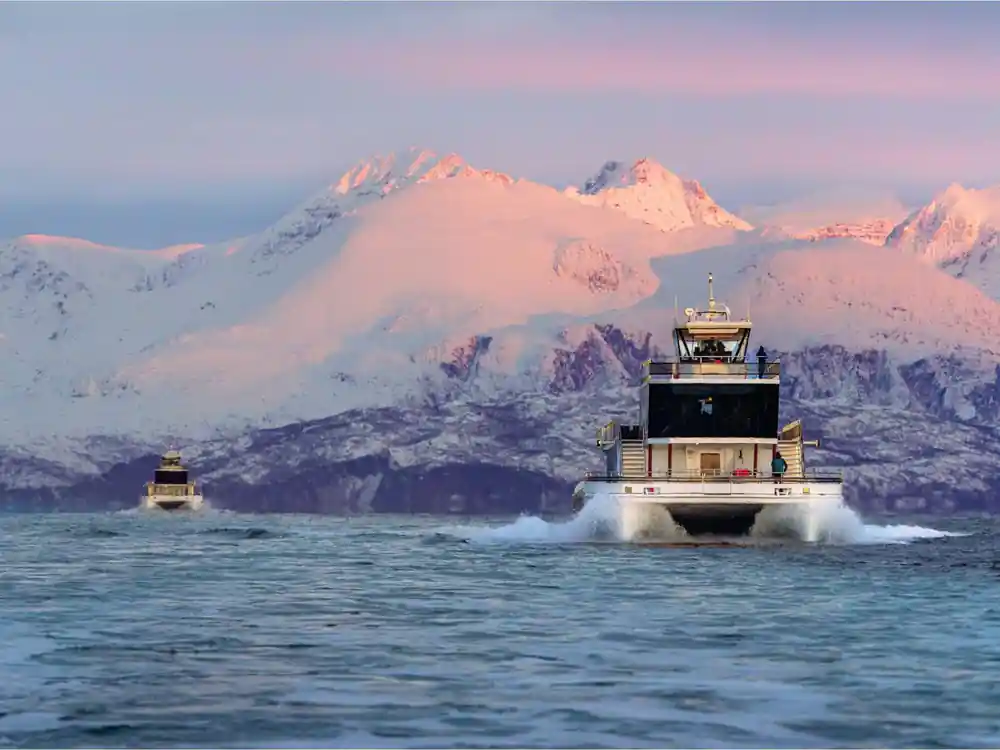
This is a 9-hour tour from Tromsø with a live English guide.[16] The boat is a modern hybrid-electric ship designed for sightseeing, and it moves quietly through the feeding grounds.[18] That quiet makes a real difference when whales are at the surface; you hear the water before you see the blow. Inside, large windows keep the view close even when you want to warm up.
The tour is wheelchair accessible, and you can reserve now and pay later.[16] Free cancellation is available up to 24 hours in advance for a full refund.[16] That flexibility is useful in the Arctic, where weather can change your plans, and it lets you book with confidence before a long journey. If a storm rolls in, you are not locked in. Still, a winter tour runs in most weather, so be ready for wind and snow on deck.
The departure area is easy to reach. Travel between Tromsø Airport and the city centre takes about 10-20 minutes.[22] If you are staying in town, you can join the tour even if you arrive that morning, then use the ride home to warm up and replay the day's sightings. The meeting point is close to the waterfront, where the boat schedule is announced on the day. Get there a little early to find a good window seat for the first stretch.
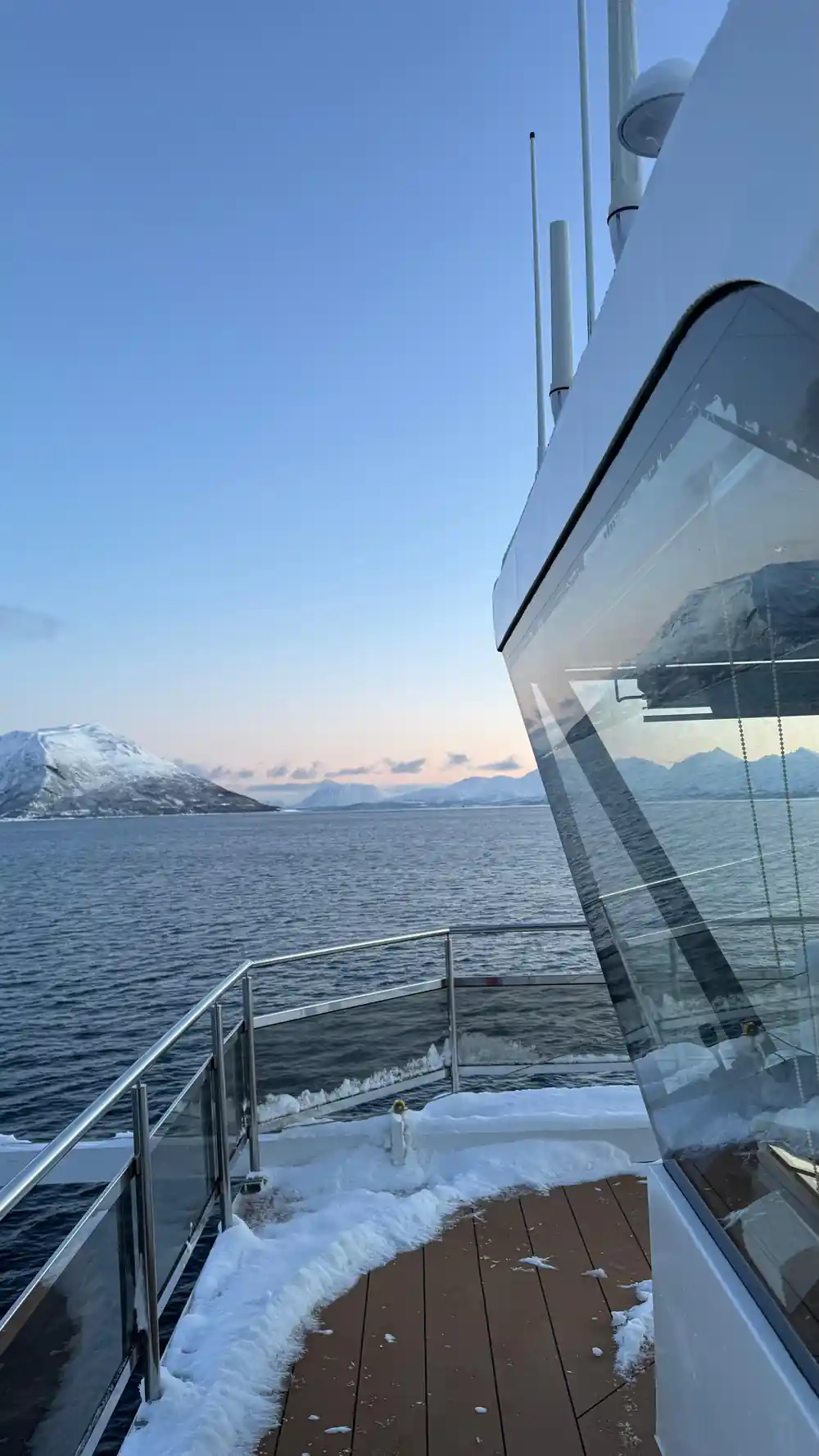
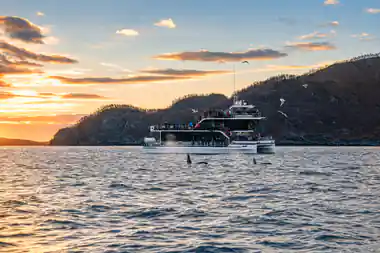
A hybrid-electric catamaran glides through the snow-lined fjords near Kagsundet.
Whales, herring and the winter feeding grounds
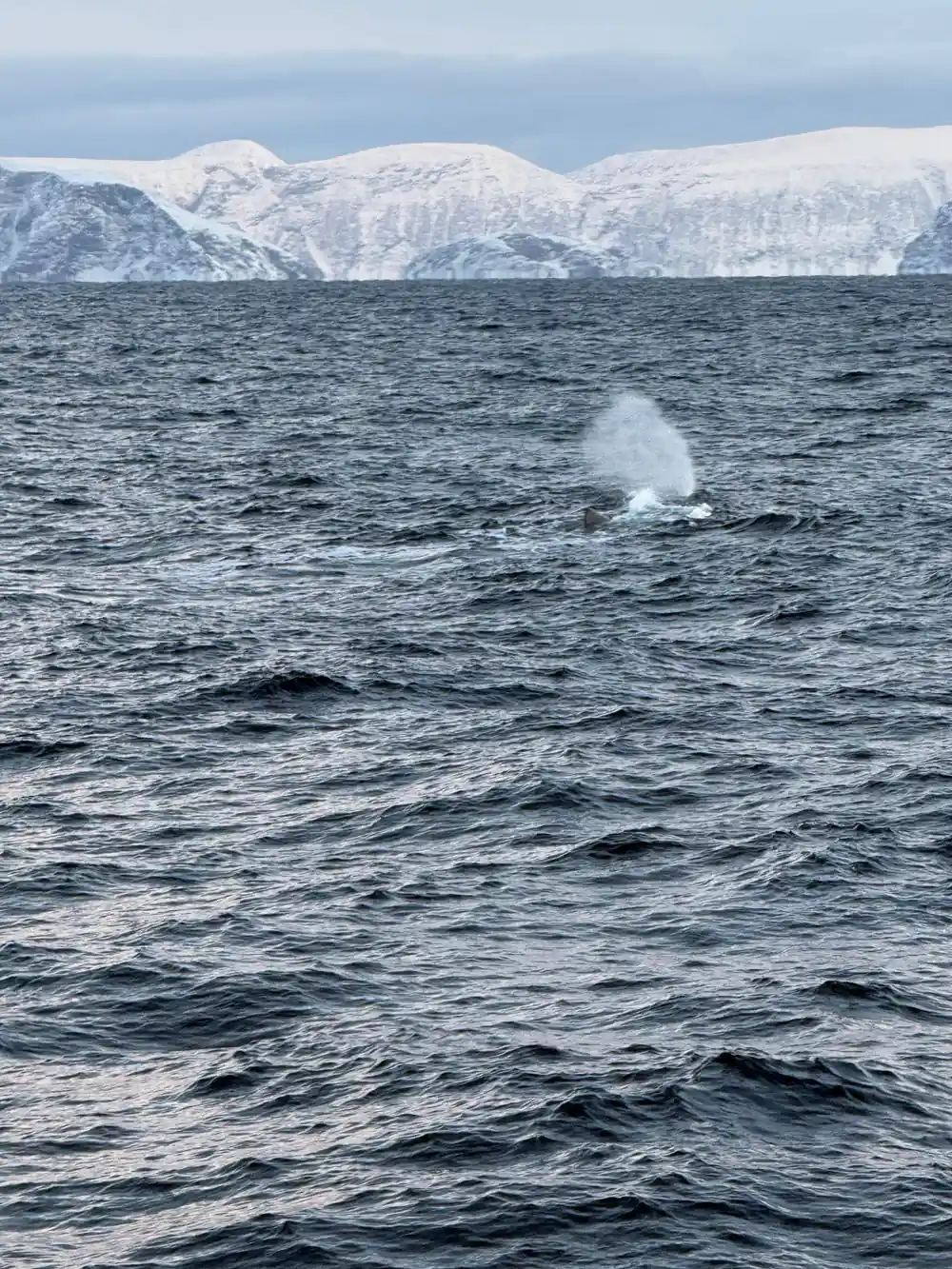
In September/October, Norwegian spring-spawning herring migrates northeastward to its main wintering areas off the coast and in fjords in northern Norway.[24] During the winter, orcas and humpback whales gather in the area to feed on herring.[17] These are the two pieces of the puzzle that make Kagsundet and the waters around Skjervøy so rewarding. The annual rhythm of the fjord is tied to the fish, and the whales are part of that rhythm.
Humpback whales are 15-17 meters long, with females 1-1.5 meters longer than males.[25] Male orcas can be 6-9 meters long and weigh about 6 tonnes, while females can be 5-7 meters and weigh about 4 tonnes.[26] When a whale surfaces beside the boat, those numbers stop being abstract. You understand why the crew asks everyone to stay seated and keep voices low.
Kagsundet offers a sheltered viewing point within the larger fjord system. The route's stop at Kagsundet lets you watch the strait at a slower pace.[16] It is also a chance to see how the landscape works: steep slopes, narrow water, and a channel that draws fish and the animals that chase them. Even when the whales are further out, the scenery keeps your attention. Bring binoculars if you have them; they help you scan the strait for blows and splashes.
What the day looks like
The tour starts in Tromsø and follows a route that includes the Lyngen Alps, Lighthouse Lyngstuva, Kagsundet, Skjervøy and the Arctic Cathedral.[16] That is a full day on the water, so dress for changing conditions. The boat's large windows and open decks give you different ways to watch, and the crew usually makes announcements when something appears ahead. Plan to spend most of the day on deck, but know that you can step inside to warm up.
Bring layers, a warm hat and gloves. The average winter temperature in Tromsø is around −4°C.[21] Add a windproof outer layer, and keep a spare pair of gloves in your bag for when the first pair gets damp. A neck gaiter and warm socks also go a long way on a long winter cruise.
Keep your camera ready near Kagsundet. Whales can surface close to the strait, and the quiet boat gives you time to find your framing. A telephoto lens helps, but even a phone can catch a humpback tail if you are patient. Watch the gulls and the ripples; they often mark where the whales are about to appear. Have your camera set on a fast shutter speed before you go out.
from US$209
9-hour hybrid-electric boat trip with live English guide, wheelchair access and free cancellation up to 24 hours.[16]
Practical tips for your Arctic day
Start with the booking details. Reserve now and pay later, and cancel up to 24 hours in advance for a full refund if plans change.[16] This is especially helpful if you are building a wider Arctic itinerary and need to keep your options open. It is worth locking in your date as soon as you know your travel plans, and the free cancellation window gives you room to adjust.
The tour is wheelchair accessible, and the live guide speaks English.[16] Let the crew know if you need a little more time getting on and off the boat. The boarding area in Tromsø is compact, and the team is used to helping guests of all abilities. If you have specific mobility questions, contact the operator before booking.
Respect the rules of the water: whale watching boats in Norway must keep at least 0.2 nautical miles (370 m) away from fishing vessels, steng or fixed gear.[27] This is part of responsible whale watching, and it keeps the feeding grounds safe for both whales and local fishermen.
When to go for whales and northern lights
The polar night in Tromsø lasts approximately from 27 November to 15 January.[28] Daylight is limited, but the whale route still takes you through the fjords. The average winter temperature is around −4°C.[21] In the middle of the polar night, the midday light is more like a long twilight, which can make the snow and sea glow in soft blues and pinks.
Northern lights may be visible in the Tromsø region from late August to early April, whenever the sky is dark and sufficiently clear.[23] A winter whale day can be paired with an aurora evening if conditions allow, giving you two very different Arctic experiences in one trip. After a day on the boat, an evening chase is a natural double bill.
Tromsø lies about 350 km north of the Arctic Circle.[29] The midnight sun usually lasts from around 20 May to 22 July.[30] That is a reminder that this region swings between dark winters and bright summers, and each season has its own rhythm. For whale watching, winter is the season, but the rest of the year has its own appeal.
Understanding the whale watching rules
Responsible whale watching is built into the day. The crew keeps a safe distance from fishing vessels, steng and fixed gear as required: at least 0.2 nautical miles (370 m).[27] That distance rule is part of the wider respect for the working fjord. It also means the boat sometimes slows or changes course, so you will see why the tour is a full day rather than a quick loop.
The hybrid-electric design helps reduce noise and emissions, which matters in a place where animals are feeding.[18] A quieter approach also gives you a better chance of seeing wildlife behave naturally rather than simply reacting to the boat. You may notice the engine drops away as the captain lines up on a whale.
With a live English guide on board, you will leave with a clearer sense of the strait, the herring and the whales that come to feed.[16][17] You may also gain a new appreciation for how a sheltered channel can shape an entire Arctic day. That is the kind of knowledge that stays with you after the boat is back in port.
Whale lengths in the feeding grounds
Compare whale tour prices
USD from-prices for tour ids.[16][19][20]
When to book Kagsundet whale watching
Plan your trip
Choose your date
Check availability for starting times on the 9-hour tour.[16]
Reserve now, pay later
Book with reserve now and pay later, and cancel free up to 24 hours in advance.[16]
Dress for the Arctic
Average winter temperature is around −4°C, so layers, warm boots and a hat are essential.[21]
Meet the boat
The tour departs from Tromsø and heads toward the Lyngen Alps and Kagsundet.[16]
Spot the whales
Watch for orcas and humpbacks feeding on herring in sheltered fjords.[17][24]
Book your Kagsundet whale watching day from Tromsø
from US$209Reserve now & pay later