Quick summary
- During the winter, orcas and humpback whales gather in the fjords north of Tromsø to feed on herring.[6]
- Herring migrate northeastward in September/October to wintering areas off the coast and in fjords in northern Norway.[7]
- A 9-hour hybrid-electric whale watching tour from Tromsø, with a live English-speaking guide and wheelchair access.[8]
- Prices from US$209, and you can reserve now, pay later, plus cancel for free up to 24 hours before.[8]
- Average winter temperatures in Tromsø are around -4°C, so dress in warm layers.[9]
- Top choice Hybrid-Electric Boat from US$209 Duration9 hours[8]Rating4.48 (6,644 reviews)[8]GuideLive tour guide: English[8]CancellationFree up to 24 hours[8] Check availability
- 24hr Cruise from US$681 Duration1 day[10]Rating4.90 (47 reviews)[10]GuideLive tour guide: English[10]CancellationFree up to 24 hours[10] See this tour
- RIB Safari from US$257 Duration4-12 hours[11]Rating4.95 (113 reviews)[11]GuideLive tour guide: English[11]CancellationFree up to 24 hours[11] See this tour
The northern lights may be visible in the Tromsø region from late August to early April, whenever the sky is dark and sufficiently clear.
A quiet, stable way to meet Arctic whales
Read before booking
Why Herring Shoals Draw Orcas into Arctic Fjords
Winter in the Tromsø region is a season of long darkness and quiet water. The polar night lasts approximately from 27 November to 15 January[13], and the average winter temperature sits around -4°C[9]. Yet this is also the time when the sea comes alive. Norwegian spring-spawning herring migrates northeastward in September/October to its main wintering areas off the coast and in fjords in northern Norway.[7] That silent silver movement below the surface is what starts the whole Arctic food chain moving.
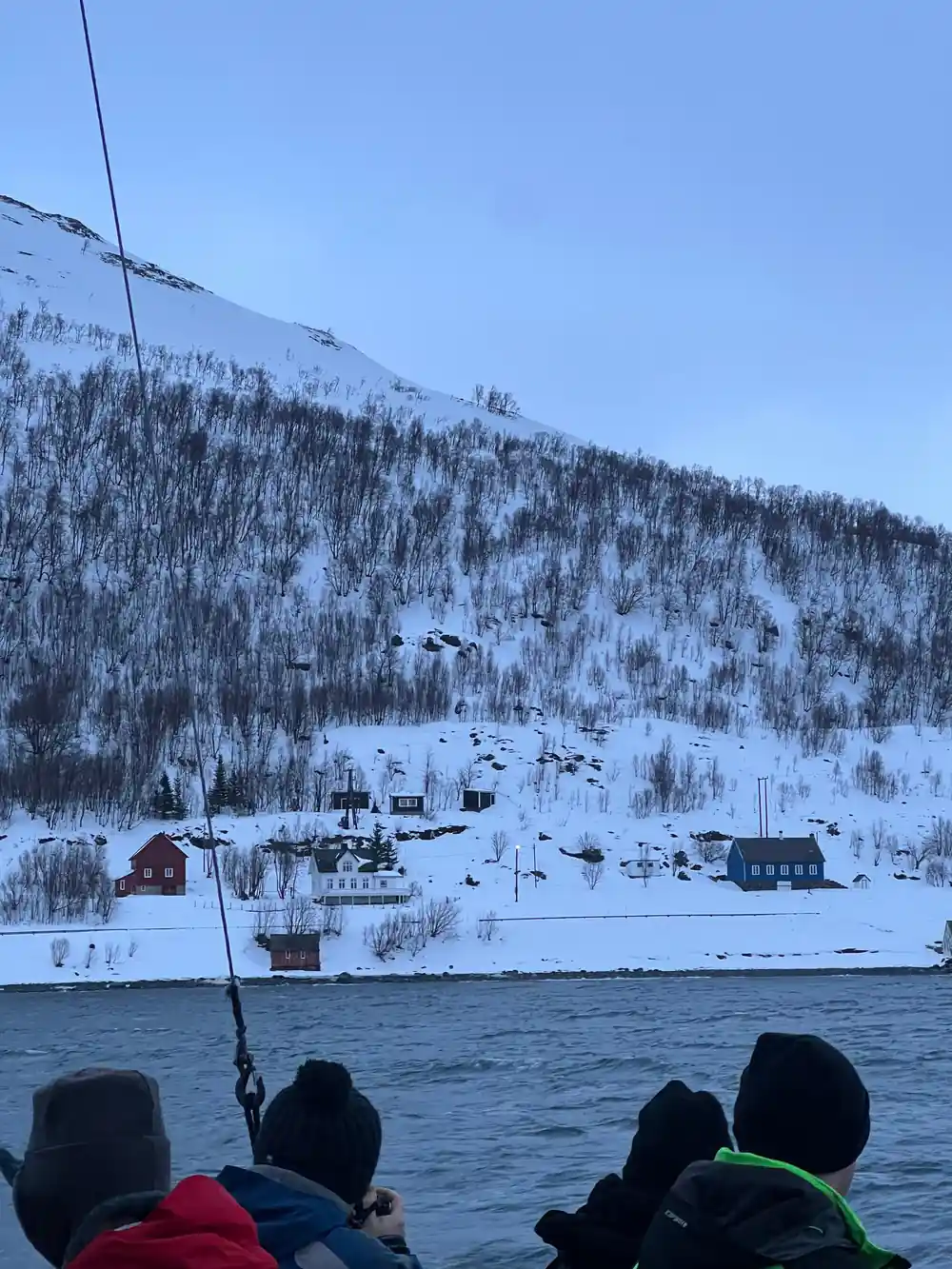
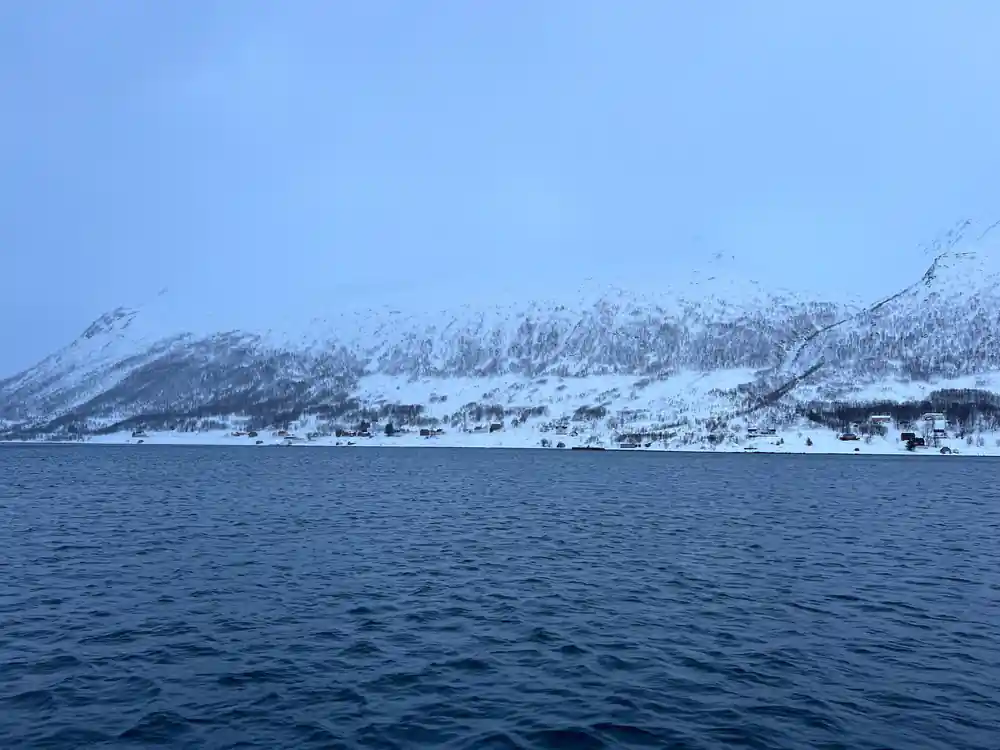
That migration is the pull for whales. During the winter, orcas and humpback whales gather in the area to feed on herring.[6] A cruise from Tromsø puts you within viewing range of these feeding grounds. The whale watching tour by hybrid-electric boat lasts 9 hours, giving you a full day to reach the fjords where the action tends to concentrate.[8] You will pass through a landscape of snow-covered peaks and dark water, and every stretch of open sea can offer something unexpected.
For a first trip to see tromso norway orcas, Tromsø is the natural starting point. The city is easy to reach, and the fjords are full of wildlife in the colder months. A winter trip here is cold, but it is also one of the most rewarding times to be on the water. The combination of herring, whales and long Arctic twilight creates a short but intense season that draws travellers from all over the world.
Carousel Feeding: The Spinning Wheel Hunt
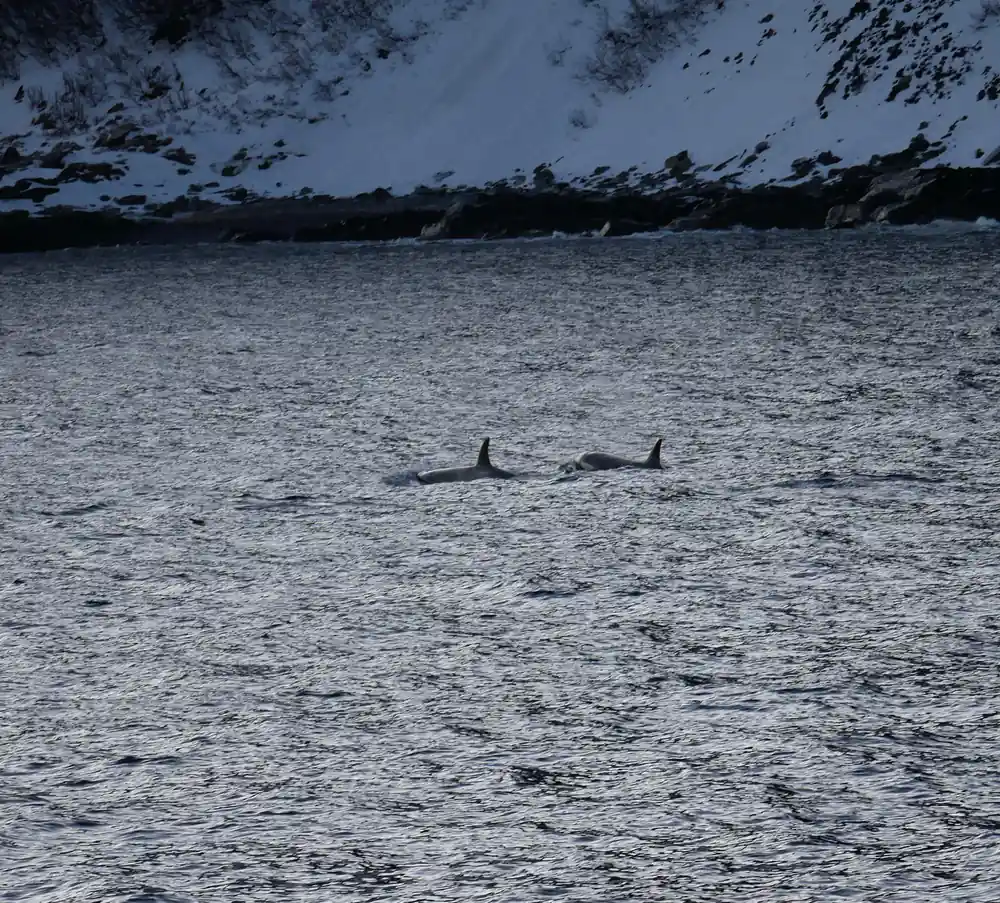
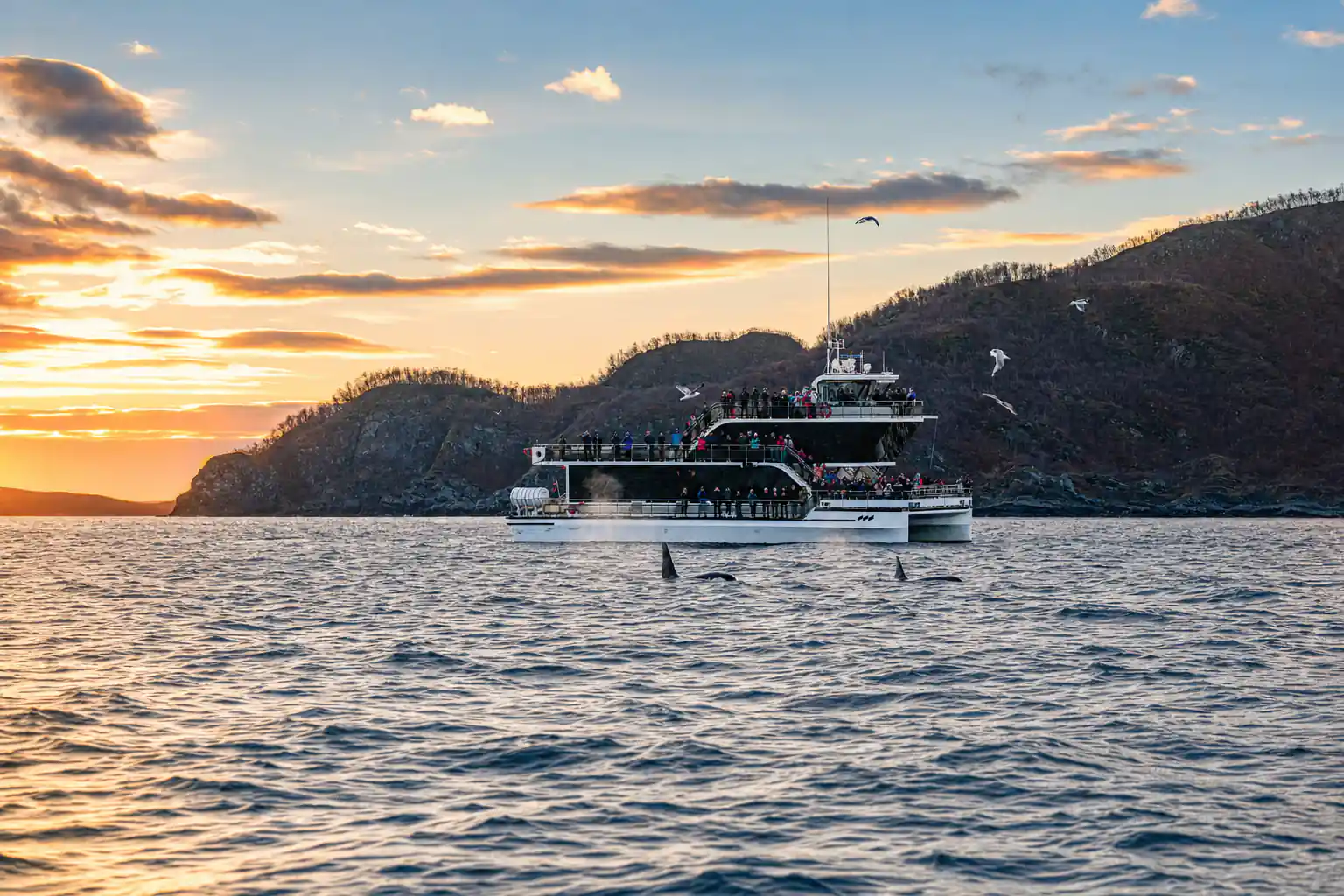
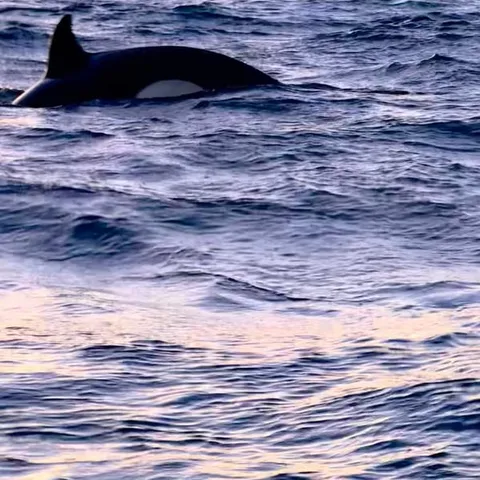
Once a shoal of herring is found, orcas often work as a team. In carousel feeding, the pod surrounds the fish and takes turns swimming through the edge of the shoal, using bubbles, tail slaps and quick dashes to compress the herring into a tighter ball. The whales then feed in a rotating sequence, which is where the name comes from. On a good day you can see black fins cutting the surface in a slow, purposeful circle, with gulls following the disturbance.
From the boat, you may see the water ripple and darken as the shoal reacts. An English-speaking guide on the tour helps point out what is happening and can explain the behaviour as it unfolds.[8] The boat's hybrid-electric design[8] keeps the experience calm, which suits a day spent waiting patiently on the water. With less noise and vibration, there is more room to focus on the details of the hunt.
Patience matters. Whales do not perform on schedule, and the nine-hour window[8] is what gives the crew time to search and reposition. Dress warmly, keep your camera close, and treat whatever appears as a gift of the day. This is whale watching orcas at its most patient, and the reward is a sight of wild animals doing exactly what they would be doing in an undisturbed Arctic winter.
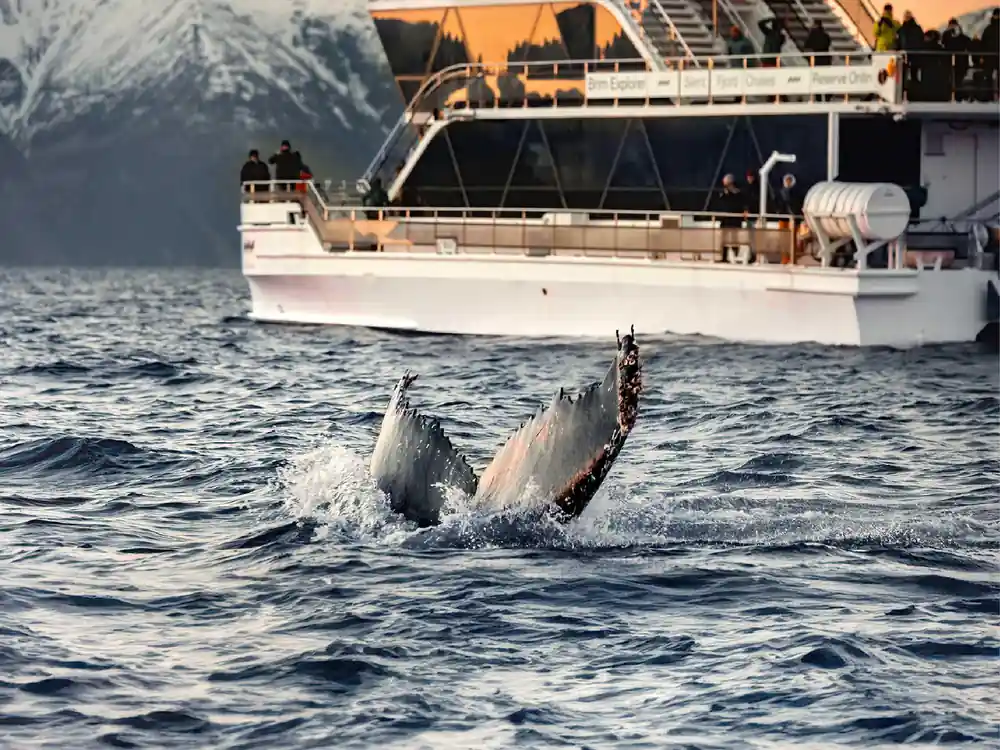
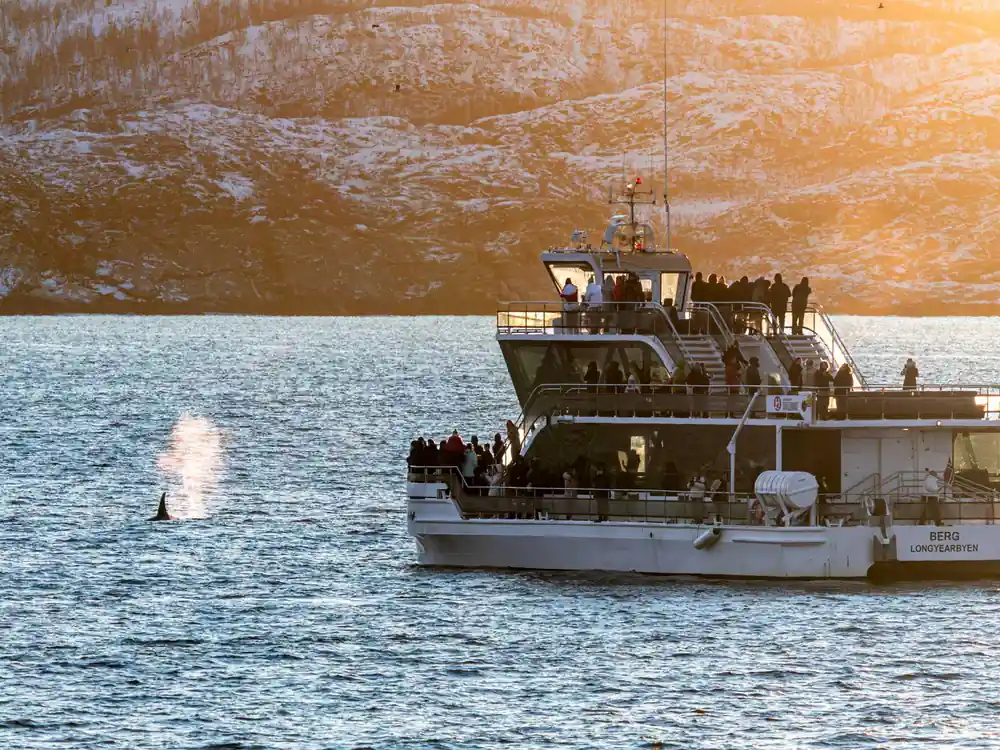
A humpback whale tail rises against the dark winter ocean as passengers watch from the boat.
Bubble-Net Feeding: Humpbacks' Collaborative Strategy
Humpbacks bring a different kind of teamwork. They dive beneath a shoal and release a curtain of bubbles in a rising spiral, herding the fish upward before lunging through the middle with open mouths. It is a slow, deliberate hunt that can be read from the surface as a growing ring of white water. When a humpback surfaces after a bubble-net pass, the blow hangs in the cold air for a long moment before the whale rolls back under.
The scale of the hunters adds to the spectacle. Humpback whales are 15-17 meters long, with females 1-1.5 meters longer than males.[14] When a whale that size breaks the surface near the boat, the moment stays in your memory. It is not just the size, though; it is the way the whole body moves through the water, almost lazily, until the tail rises and disappears.
The winter feeding grounds north of Tromsø are where such gatherings happen reliably.[6] The live English-speaking guide on the tour can help you make sense of the surface signs.[8] The more you understand the hunt, the richer the experience becomes. By the end of the day, you may find yourself reading the water with new eyes, noticing the differences between a feeding swirl, a travelling pod and a resting whale.
Giants That Join the Winter Feeding Frenzy
The whales you are most likely to see are orcas and humpbacks. Orcas are powerfully built; adult males can be 6-9 meters long and weigh about 6 tonnes, while females can be 5-7 meters and weigh about 4 tonnes.[15] Humpbacks are longer, reaching 15-17 meters overall.[14] Both species are regular visitors to the same herring-rich waters, which makes the Arctic fjords a rare place to watch them side by side.
These are not shy animals, but they are wild. Watching them feed on herring is a reminder that the Arctic ecosystem is organised around food. The herring migration in September/October sets the table for the winter gathering.[7] The whales are not performing for passengers; they are simply following a reliable source of food, and the tour is there to observe that spectacle without getting in the way.
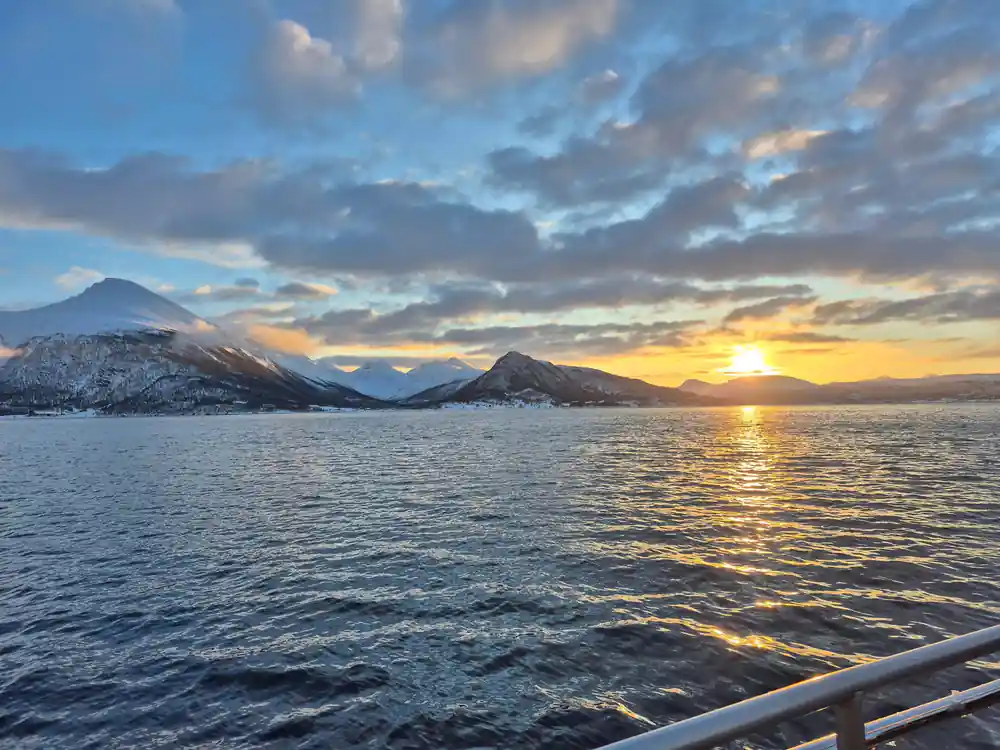
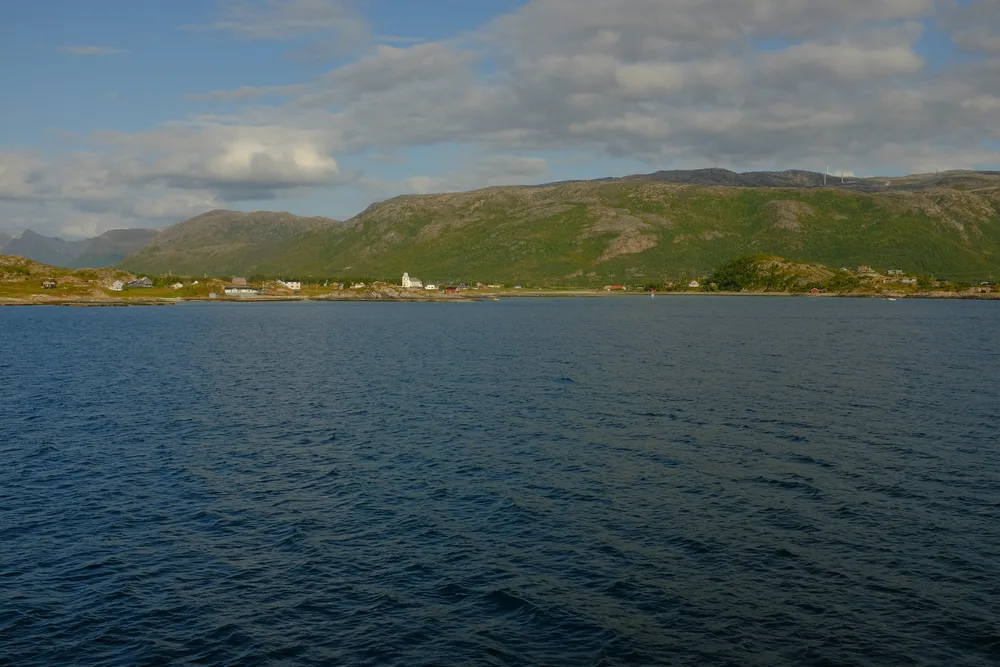
The tour itinerary touches places such as Lyngen Alps, Lighthouse Lyngstuva, Kagsundet, Skjervøy and the Arctic Cathedral.[8] The landscape alone is worth the day: dark peaks, snow-covered islands and long Arctic light. Even when the whales are far off, the scenery keeps your attention, and the changing light over the water gives photographers plenty to work with.
from US$209
Book the 9-hour hybrid-electric boat tour from Tromsø with a live English-speaking guide and free cancellation up to 24 hours in advance.[8]
Identifying Individual Orcas by Fin Markings
Orcas are recognisable as individuals. The dorsal fin shape, scars and the grey saddle patch behind the fin are unique to each animal, which is how researchers and guides tell one orca from another. Over a long sighting, these details become a kind of field guide in your memory. You may start to look for the fin that leans left or the notch in the trailing edge, and suddenly the pod feels less like a group and more like a collection of personalities.
On a tour, the live English-speaking guide may point out a nick in a fin or a particular saddle pattern.[8] These details turn a generic sighting into a story about a known individual. It is one of the small pleasures of a long day on the water. Once you have noticed one distinguishing mark, you will probably want to keep watching to see if the whale does something that matches the story.
You can also watch for differences in behaviour. Some orcas lead the hunt, others stay at the edges with calves. The longer you watch, the more the pod's personality comes through. No two encounters look the same.
How Whales Behave Around a Quiet Boat
Norwegian rules keep whale watching boats at a safe distance from fishing vessels, steng and fixed gear: at least 0.2 nautical miles (370 m).[16] It is a reminder that the ocean is a working place, not just a stage. Respecting that space also means the whales are not crowded, and the viewing stays comfortable for everyone on board.
Whales are curious and often approach vessels on their own terms. The hybrid-electric tour boat[8] is wheelchair accessible[8], which means a wider range of travellers can enjoy the deck. The crew's job is to find whales, not to chase them. They use weather, depth and local knowledge to decide where to look, and they are used to waiting for the first blow or tail that signals a whale is nearby.
When a whale dives, wait. The pattern of blows, tails and finally the back can tell you where it will resurface. The tour's 9-hour format[8] gives you the time to settle into that rhythm. If tromso killer whale diving is on your wishlist, this boat trip is a realistic way to spend a day in the same waters, watching the animals from the surface and learning about their world from a knowledgeable guide.
Underwater Sounds: The Acoustic Landscape Beneath the Hull
Sound travels well in cold water. Beneath the hull, the Arctic ocean carries the calls of orcas and the long, low songs of humpbacks. Researchers listen for these sounds to track whales, but you do not need hydrophones to feel the presence of animals below. Every blow, every swirl and every ripple is a clue about what is happening under the surface.
The acoustic world is part of the experience. When the engines are reduced, the surface noise fades and you hear the wind, the water and the distant blow of a whale. A 9-hour tour[8] gives you long stretches of listening as well as watching. It is a chance to slow down and let the Arctic set its own pace, rather than rushing from one photo opportunity to the next.
If you want to bring the memory home, keep your camera ready and your voice low. The quieter you are, the easier it is to stay in the moment with the whales. For many travellers, this silent closeness is the real reward of a winter day on the fjord, and it is what makes hybrid-electric whale watching in Tromsø worth the trip.
Whale watching tour review counts
Compare whale watching from-prices
Adult from-prices; child fares are not stated in the cited listings.[8][11][17]
When to book your Tromsø orca tour
Plan your Tromsø orca trip
Book your spot
Reserve the 9-hour hybrid-electric whale watching tour from US$209, with free cancellation up to 24 hours in advance.[8]
Pack for winter
Expect average temperatures around -4°C and wear warm layers, a hat, gloves and a windproof outer shell.[9]
Get to Tromsø
Allow about 10-20 minutes between Tromsø Airport and the city centre.[12]
Board the boat
The tour is wheelchair accessible, with a live English-speaking guide.[8]
Settle in
Set your expectations around the whales, not the clock. The tour lasts 9 hours.[8]
Book your Tromsø orca adventure with free cancellation
from US$209Reserve now & pay later