Quick summary
- The 9-hour whale watching tour by hybrid-electric boat is priced from US$209[12], with free cancellation up to 24 hours in advance.[12]
- You travel on a modern hybrid-electric ship designed for sightseeing[13], with a live English-speaking guide on board.[12]
- In winter, orcas and humpback whales gather in the fjords north of Tromsø to feed on herring.[14]
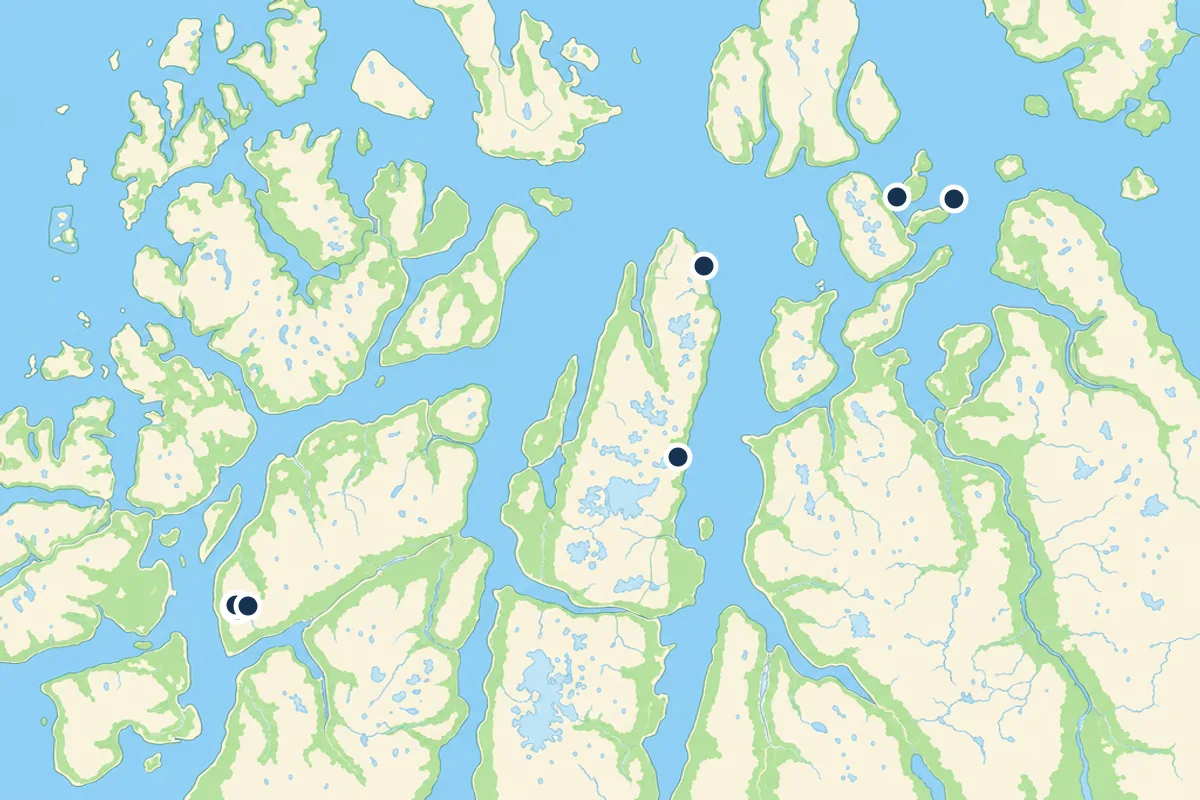
- The itinerary passes the Lyngen Alps, Lyngstuva Lighthouse, Kagsundet Strait and the fishing village of Skjervøy, then returns past the Arctic Cathedral.[12]
- This tour is wheelchair accessible[12], so the Arctic whale watching experience can be enjoyed by more travellers.
- Top choice Hybrid-Electric Whale Watching from US$209 Duration9 hours[12]Live guideEnglish[12]Wheelchair accessibleYes[12]CancellationFree up to 24 hours[12] Check availability
- Premium 24hr Lights & Whales from US$681 Duration1 day[15]Live guideEnglish[15]Wheelchair accessibleNo factCancellationFree up to 24 hours[15] See this tour
- Whale Safari by RIB from US$257 Duration4 to 12 hours[16]Live guideEnglish[16]Wheelchair accessibleNo factCancellationFree up to 24 hours[16] See this tour
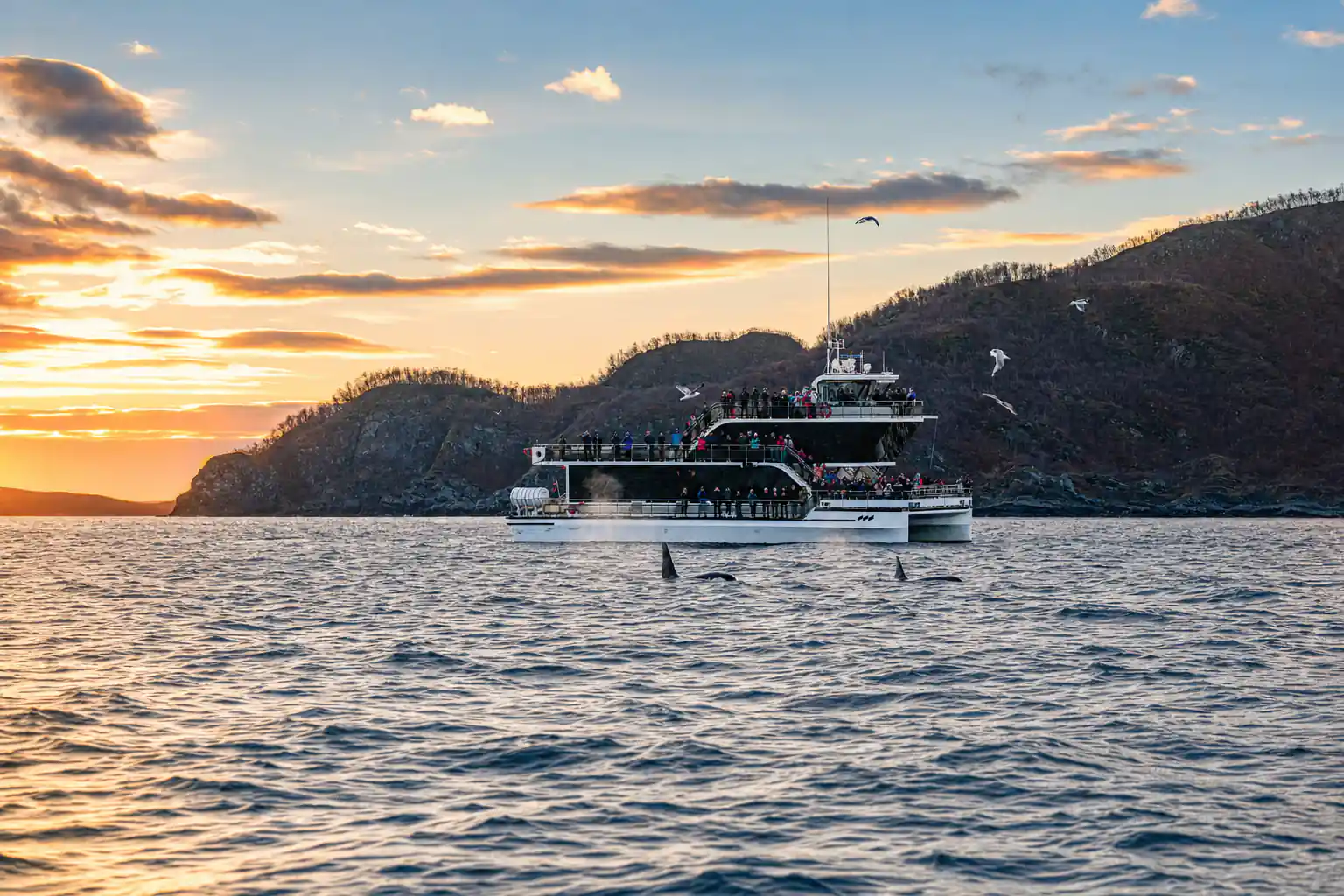
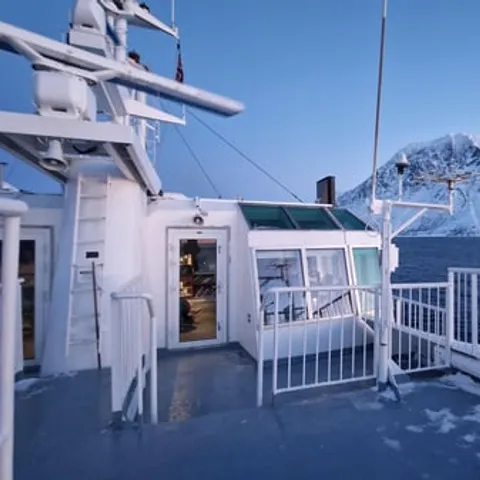
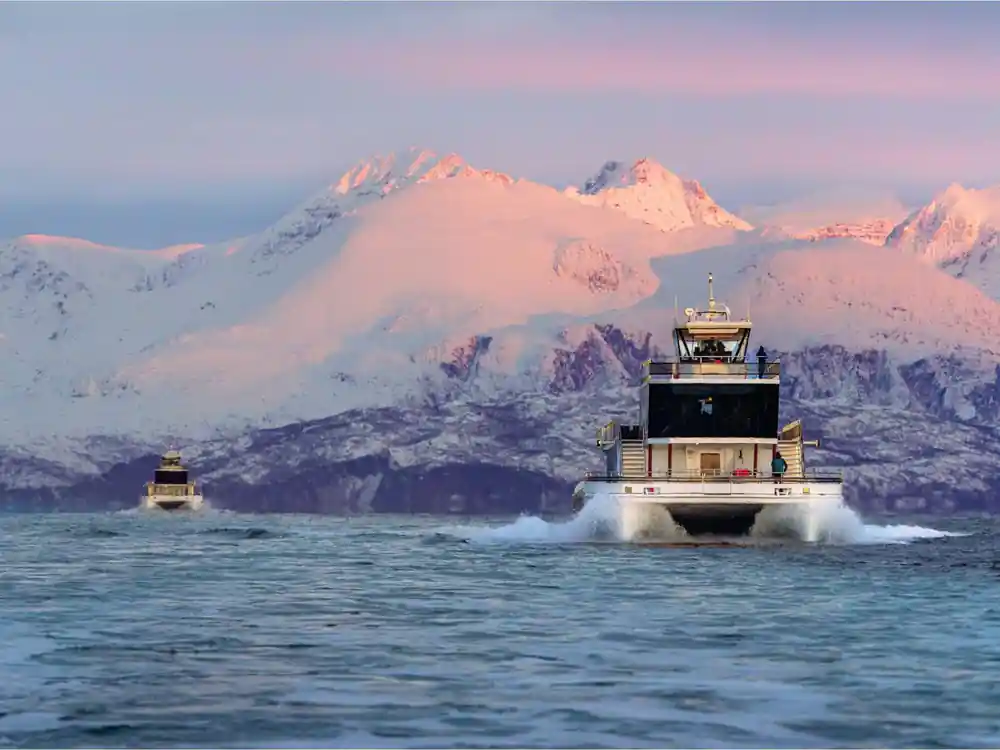
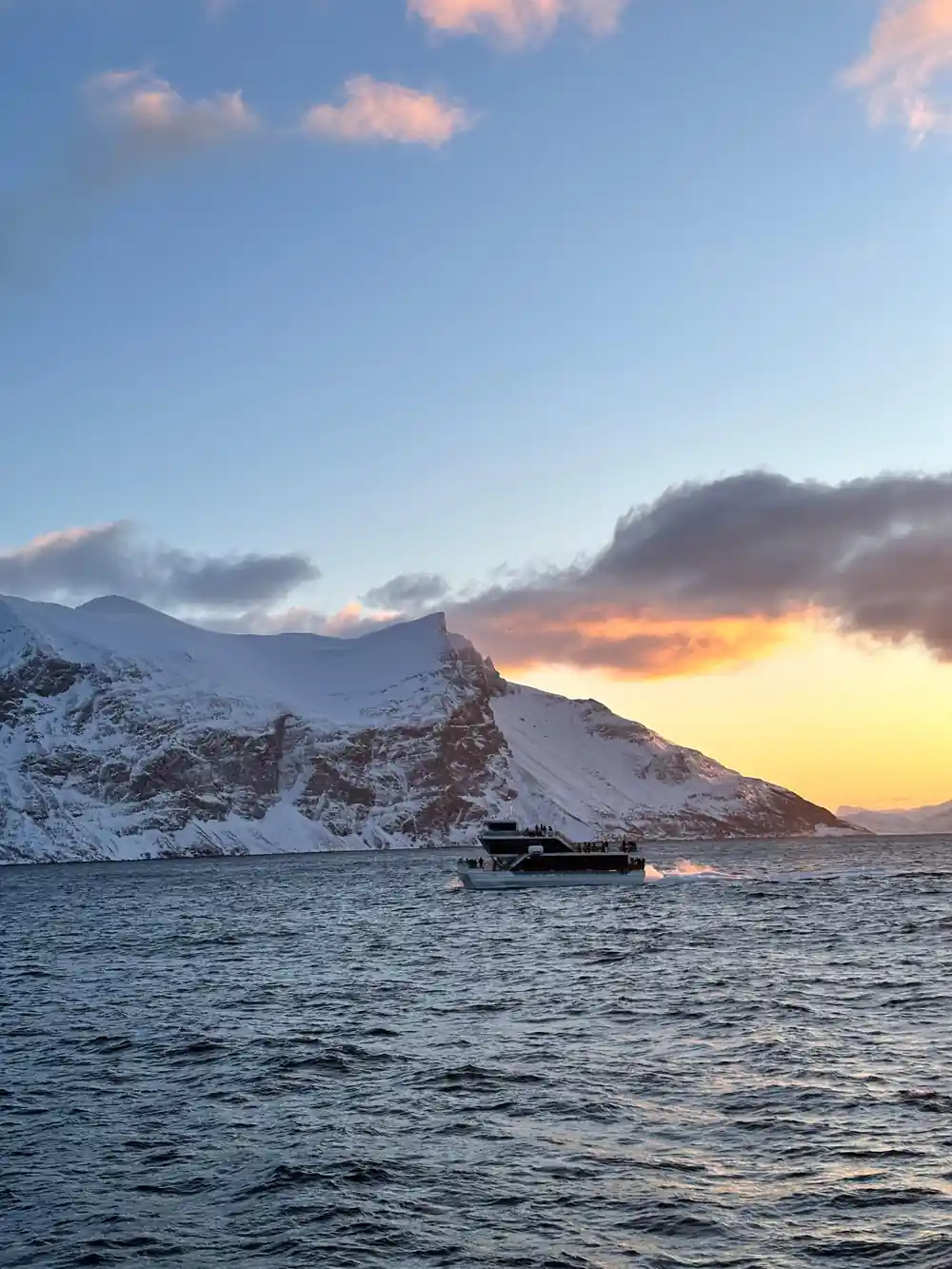
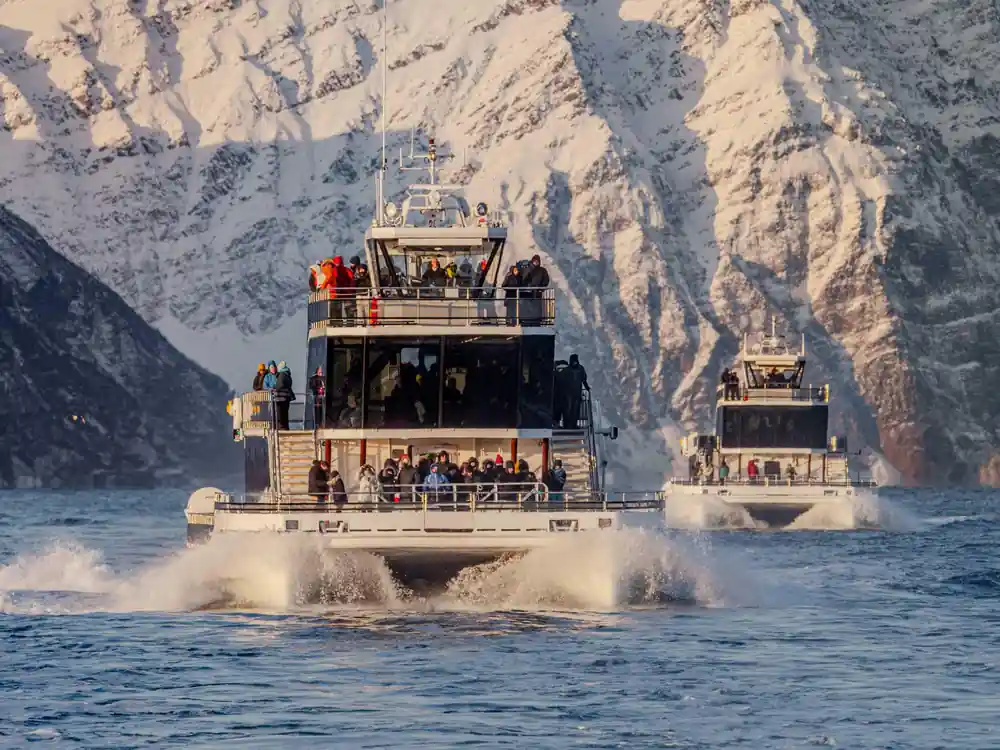
Our modern hybrid-electric ships are designed with the best sightseeing experience in mind.
A relaxed and responsible way to meet Arctic wildlife
Pre-trip notes
- Dress for around -4°C, Tromsø's average winter temperature, with warm layers and a windproof outer shell.[17]
- Expect a 9-hour day, so build in time before and after the tour.[12]
- Book with reserve now and pay later, and cancel free up to 24 hours in advance if plans change.[12]
- The tour is wheelchair accessible; contact the operator for any specific assistance needs.[12]
On the water
- The route leaves from Tromsø and heads toward the Lyngen Alps, Lyngstuva, Kagsundet and Skjervøy.[12]
- An English-speaking live tour guide is on board to help you read the fjord and spot wildlife.[12]
- Norwegian rules require whale watching boats to stay at least 0.2 nautical miles (370 m) from fishing vessels and fixed gear.[18]
- In the polar night, from late November to mid-January, the tour runs under a dark Arctic sky.[19]
Lyngen Alps: Peaks That Frame the Arctic Hunt
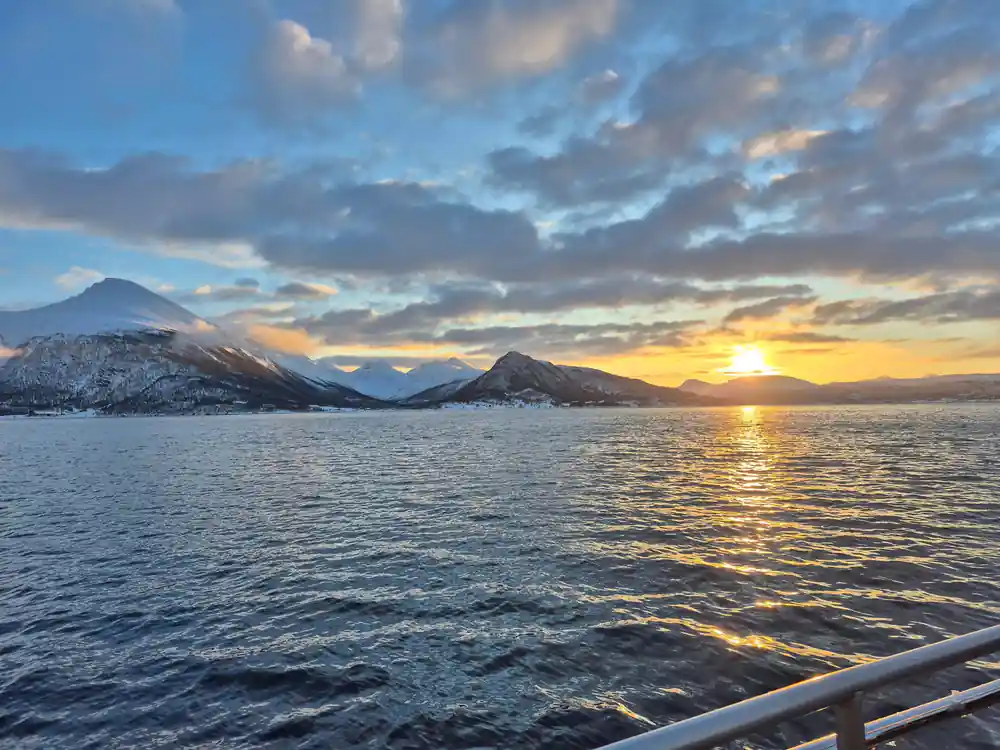
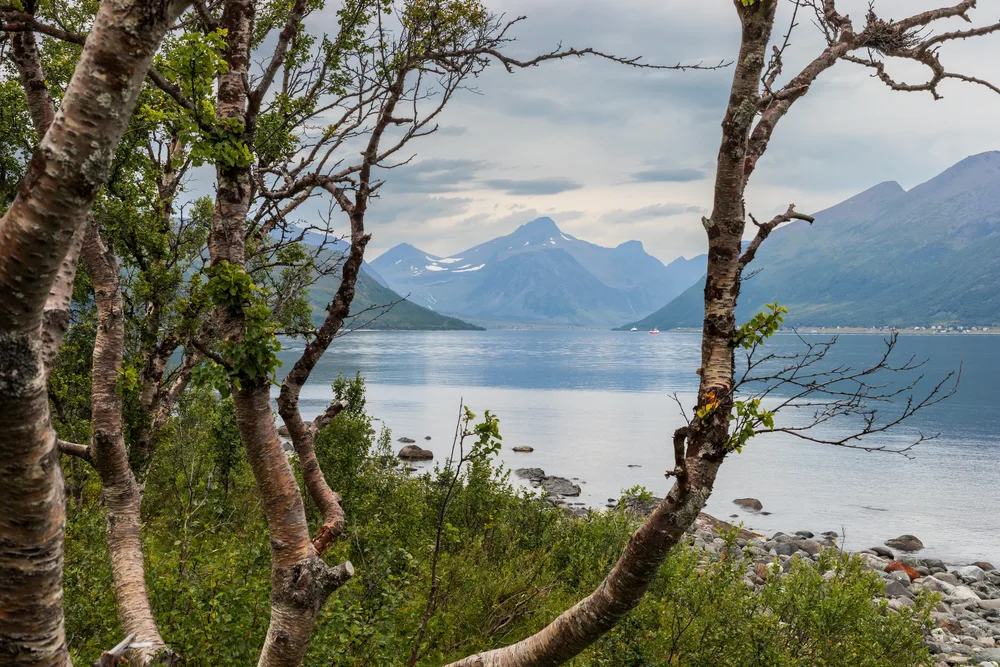
The whale watching route from Tromsø begins in a city set roughly 350 km north of the Arctic Circle.[20] The first part of the day has the feel of any port departure, with travellers finding their spots, checking camera batteries and pulling on gloves. Then the boat turns toward the Lyngen Alps, a towering chain of peaks that frames the water with snow, ice and steep valleys. On a clear winter day, the mountains seem to rise straight from the fjord, turning every scan for a whale into a view of sharp ridgelines and frozen waterfalls. The departure itself is straightforward, and the crew make an effort to point out sights as the boat leaves the harbour.
The journey from Tromsø north is long enough to let you settle into the rhythm of the Arctic. The hybrid-electric boat is designed for sightseeing, with large windows and a comfortable interior that make it easy to watch the landscape slide past.[13] There is no need to crowd at one rail, because the layout gives you room to move between sides of the boat as the scenery changes. As the boat moves through the Tromsø fjords, the light changes quickly, especially around the middle of the day when the sun barely clears the peaks. Although the boat is efficient, the day never feels rushed, and there are quiet stretches when all you hear is the water and the wind.
Lyngstuva Lighthouse: A Beacon at the Whale Watching Threshold
Lyngstuva Lighthouse marks the outer edge of the route, a lonely point where the sea opens wider and the wind has more room to work.[12] It is a natural threshold in the whale watching day, a place where the boat turns toward the open feeding grounds. The lighthouse itself is a reminder of how much shipping and fishing have relied on these waters for generations. Even in daylight, the exposed, wind-scoured point feels wild. You may want to have your camera ready long before the lighthouse appears, because the approach is part of the spectacle.
Whales gather here because the fjords north of Tromsø hold herring in winter. Norwegian spring-spawning herring migrates northeastward in September and October to wintering areas off the coast and in fjords in northern Norway.[21] Orcas and humpback whales follow that food supply, arriving to feed on the herring.[14] Seeing the lighthouse from the water helps you understand how far the journey has taken you, and it is a good moment to check the horizon for blows, fins and dark shapes moving just below the surface. When the whales do appear, the whole deck seems to hold its breath together before the cameras start clicking.
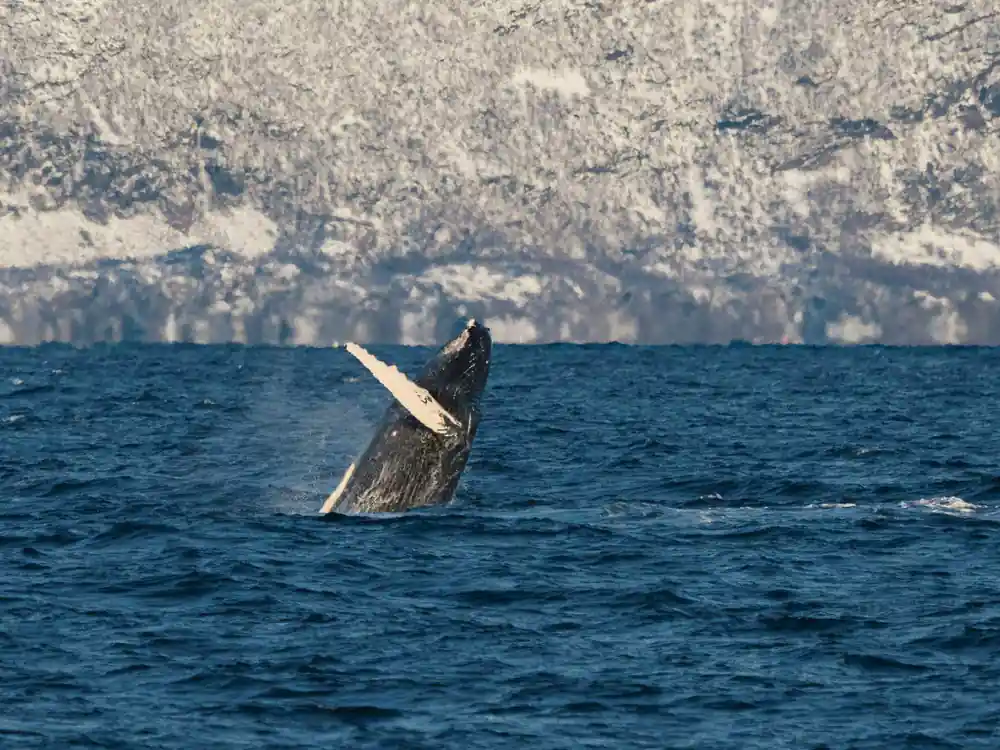
A humpback whale tail rises beside snowy Arctic mountains.
Kagsundet Strait: Navigating the Arctic Narrows
Kagsundet is a strait where the boat threads between islands and skerries on its way toward Skjervøy.[12] The water here is more sheltered than the open sea, which can make wildlife easier to spot. The route through the narrows gives the guide a chance to study the surface for blows, fins and tails. If you have binoculars, keep them close; if not, watch the boat's direction and the guide's eyes for clues. It is worth staying outside for a while; the air is cold, but the reward is a front-row view of the Arctic passing by.
Whale watching boats in Norway are required to keep at least 0.2 nautical miles (370 m) from fishing vessels, steng or fixed gear.[18] That distance is part of how these waters stay safe for both professional fishers and wildlife tours. From the deck, you may notice fishing boats working the same rich water that draws the whales. Their presence is a good sign, because the same herring that interests them interests the whales. The steady movement of the boat, the cold air and the ever-changing shoreline all combine to make this stretch of the trip feel adventurous without ever feeling demanding.
Skjervøy: An Arctic Fishing Village's Maritime Legacy
Skjervøy is the main destination stop, an Arctic fishing village with a long relationship to the sea.[12] By the time you arrive, you have crossed from the more urban energy of Tromsø into a place shaped by boats, nets and winter weather. The village sits at the heart of the winter herring grounds, which is why whale watching tours make the journey here. Wooden houses, working piers and the quiet rhythm of a fishing port all give Skjervøy a grounded, lived-in feel. The smell of salt and diesel, the creak of mooring lines and the calls of gulls all combine to create a lingering sense of the working north.
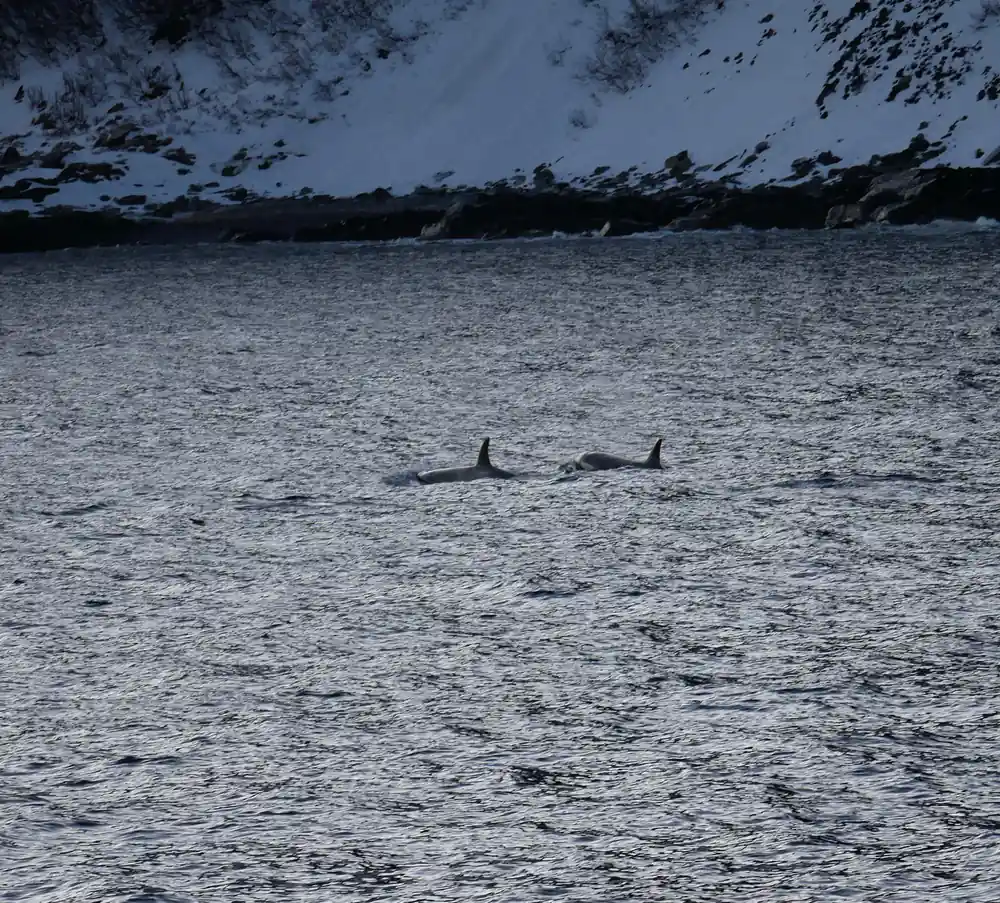
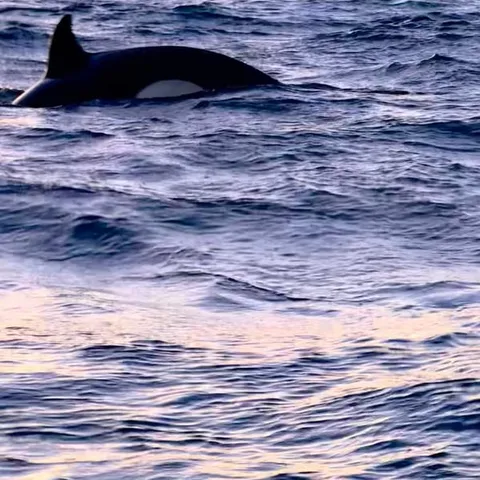
The whales you are most likely to see are orcas and humpbacks. Male orcas can be 6 to 9 meters long and weigh about 6 tonnes, while females can be 5 to 7 meters long and weigh about 4 tonnes.[22] Humpback whales are 15 to 17 meters long, with females 1 to 1.5 meters longer than males.[23] Watching animals of that size against snowy mountains is an unforgettable scale check. The guide will often call out where to look, and there is a shared excitement on deck when a blow or tail is spotted, especially when the whales are moving steadily and the water erupts with spray.
from US$209
Take the 9-hour hybrid-electric whale watching tour through Tromsø's fjords, with free cancellation up to 24 hours in advance.[12]
White-Tailed Sea Eagles: Apex Predators of the Fjords
The fjords along the route are also home to white-tailed sea eagles, huge raptors that nest on cliffs and patrol the water for fish. They are a regular companion for whale watchers, often circling above the boat or perching on rocky islets. Their broad wings and white tails make them easy to pick out against the dark winter water. For photographers, an eagle in flight can be just as memorable as a whale's tail. Eagles often appear in pairs, and watching one peel off a cliff makes the journey feel alive.
The same rich marine environment that supports whales and herring also supports these birds. While the guide's main focus is on the whales, the eagles add another layer to the wildlife experience. Keep your eyes on the shore as well as the sea, because an eagle can appear suddenly above a snowy ridge. A long lens or a pair of binoculars will help you catch the detail of that massive wingspan and the bright white tail feathers. Even without a camera, there is a pure pleasure in watching a raptor rise on the wind and glide along the edge of the ice.
Sámi Heritage and the Living Arctic
The Arctic is not only a wilderness of ice and wildlife. The Sámi are the Indigenous people of the region, and their culture is woven into northern Norway's story. Around Tromsø and Skjervøy, Sámi heritage is visible in place names, reindeer herding traditions, and the seasonal knowledge that still guides life here. Taking a moment to learn a little about that culture can deepen your appreciation of the landscape you are passing through. A small amount of cultural awareness goes a long way, and your guide may share local stories if you ask.
Respect for the land and sea is part of travelling well in the Arctic. On the boat, that means following the guide's instructions, staying alert to wildlife, and understanding that the tour is entering a place where people live and work. The fishing villages along the route are still active, not museum pieces. The same fjords that provide an unforgettable day out are home to communities whose livelihoods are tied to the water, and responsible wildlife tourism keeps that relationship in balance. It is a gentle reminder that the Arctic is a living region, not just a backdrop for adventure.
Polar Night Light and the Arctic Cathedral's Water Reflection
If you travel in deep winter, you will experience the polar night, which in Tromsø lasts approximately from 27 November to 15 January.[19] The tour still runs in that compressed daylight, and the low light can make the whales and mountains look especially dramatic. There is a particular stillness to the Arctic in this season, with the snow absorbing sound and the sea reflecting a cold, blue glow. The northern lights may also be visible in the Tromsø region from late August to early April, whenever the sky is dark and sufficiently clear.[24] Bring extra memory cards and a fully charged power bank, because the Arctic light keeps asking for just one more photo.
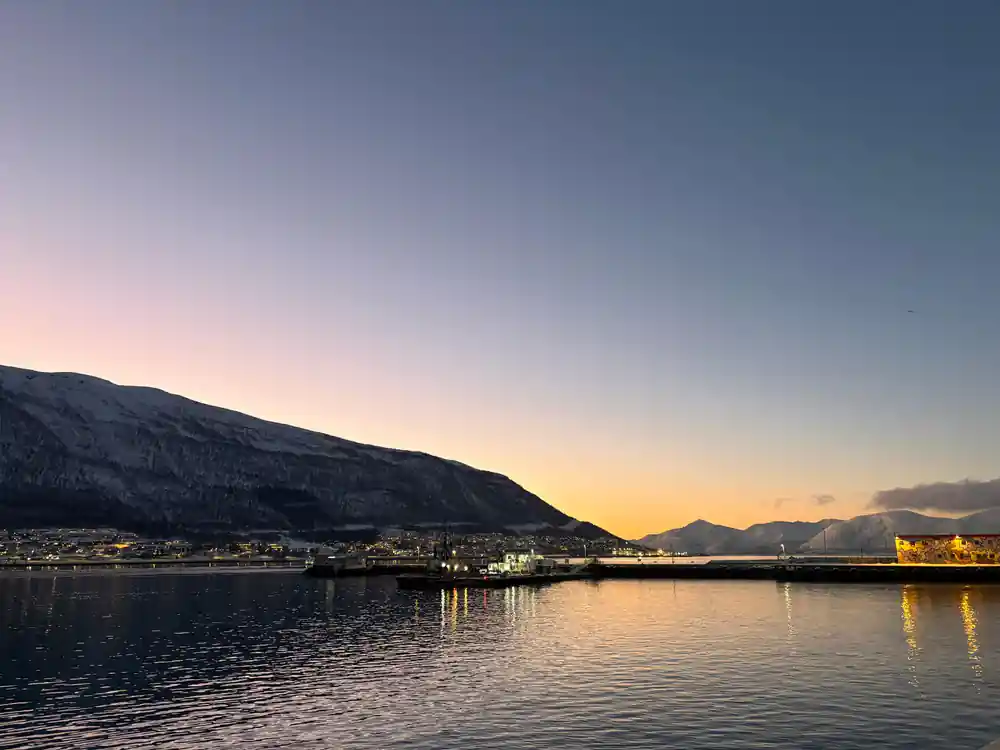
On the return toward Tromsø, the route passes the Arctic Cathedral, whose distinctive triangular form is mirrored in the water.[12] It is a graceful end to a long day on the fjords. Whether you came for whales, scenery or the romance of the Arctic night, that final view from the water helps the whole journey feel complete. As the harbour lights come into view, you can start planning how to warm up ashore, perhaps with a hot drink and a quiet review of the photos on your camera. The tour has a way of turning strangers into fellow travellers, and the conversation on the return leg is often full of the day's best sightings.
Whale watching tour from-prices
From prices in USD from GetYourGuide listings:[12][15][16][25]
Compare whale watching tour prices
From prices in USD from GetYourGuide listings:[12][16][25]
How to plan your day
Choose your date
Check availability for starting times, and remember that winter is the main whale season in the fjords north of Tromsø.[12][14]
Dress for the Arctic
In Tromsø, average winter temperatures hover around -4°C; gloves, a hat, and warm layers are essential[17].
Get to the harbour
Tromsø Airport to the city centre takes about 10-20 minutes, leaving plenty of time to reach the departure point.[26]
Board the boat
The hybrid-electric boat is designed for sightseeing, with large windows and a comfortable way to watch the fjords.[13]
Follow the route
The itinerary takes in Lyngen Alps, Lyngstuva Lighthouse, Kagsundet and Skjervøy before returning past the Arctic Cathedral.[12]
End with flexibility
Free cancellation up to 24 hours in advance means you can book with confidence.[12]
Reserve your Arctic whale watching seat from Tromsø
from US$209Reserve now & pay later