Quick summary
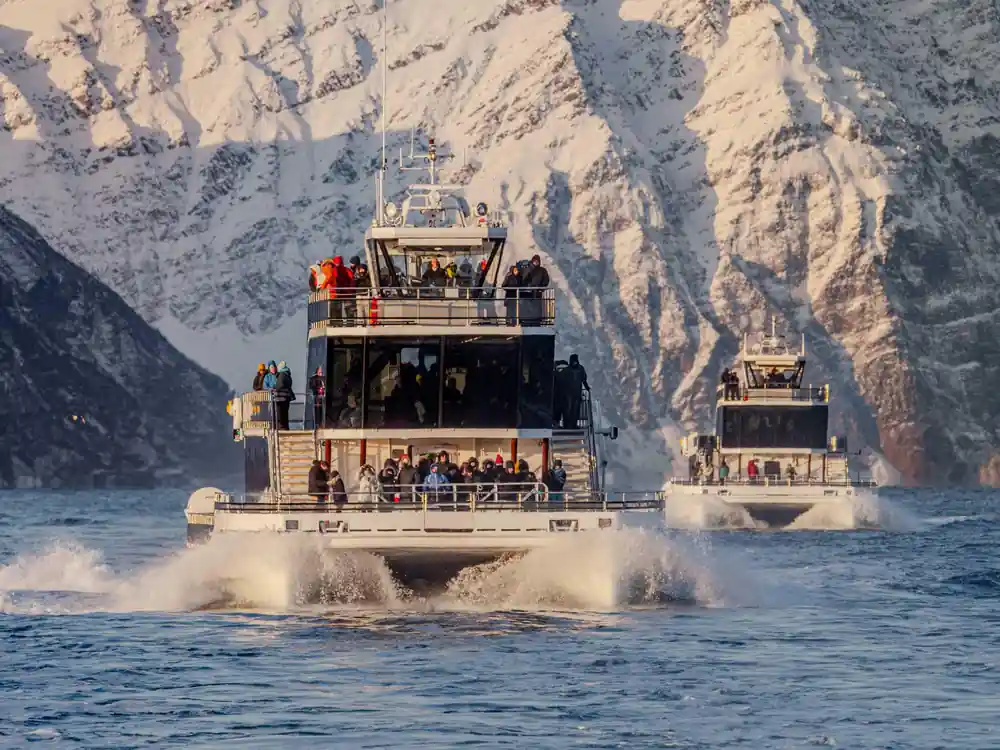
- Board a hybrid-electric boat in Tromsø for a 9-hour whale watching day with a live English-speaking guide.[3][4]
- During winter, orcas and humpback whales gather in fjords north of Tromsø to feed on herring.[5] The tour heads toward Skjervøy and the Lyngen Alps.[3]
- Sea eagles hunt along the Lyngen coast, seals haul out near fjord mouths, and seabirds follow the same shoals.[3]
- Norwegian rules require whale-watching boats to keep at least 0.2 nautical miles (370 m) from fishing vessels and fixed gear.[6]
- From 27 November to 15 January the polar night settles over Tromsø; northern lights may appear from late August to early April.[7][8]
| What to look for | Trip notes | |
|---|---|---|
| Winter | Orcas and humpbacks on herring.[5] | 9h tour from US$209[3] |
| September/October | Herring move to winter fjords.[9] | Whale season builds. |
| Late Aug-early Apr | Auroras in dark skies.[8] | Book a separate night chase. |
| Polar night | 27 Nov-15 Jan darkness.[7] | Twilight lasts longer. |
In September/October, the herring migrates northeastward to the main wintering areas off the coast and in fjords in northern Norway.
A calm, wildlife-rich day on the water
Before you board
White-Tailed Eagles Hunting the Lyngen Coastline
The Lyngen Alps drop straight into cold water, and along those cliffs the white-tailed eagle is the undisputed hunter. From the deck of the hybrid-electric boat, you may spot one perched on a rocky ledge, or circling low over the surface with that deep, unhurried wingbeat. These are big birds, broad-winged and pale-tailed, and they know exactly where the next meal is coming from.
The tour passes the Lyngen Alps and continues toward the lighthouse at Lyngstuva before entering Kagsundet and Skjervøy.[3] Watch the shoreline rather than only the open water. Eagles often sit motionless in the lee of a headland, then drop suddenly as a fish or offal slick appears. A pair will sometimes hunt together, one flushing the prey while the other makes the strike.
White-tailed eagles are patient hunters. They circle on thermals, read the water, and fold their wings the moment a fish breaks the surface. If you see gulls scatter, look up: an eagle is often the reason. On the return toward Tromsø, the Arctic Cathedral marks the end of the day's route.[3]
Seals Hauled Out Near the Fjord Mouths
Seals are easier to miss because they lie low against wet rock, their dark backs blending with kelp and shadow. Near the mouths of the fjords, where currents meet and fish gather, you may see a hauled-out harbour seal or a grey seal slipping into the water. The boat's quiet hybrid-electric drive helps you approach without a noisy engine, and that matters when the animals are wary.
Keep binoculars ready when the boat slows. Seals often appear in small groups on skerries, and a sudden splash can be the only clue. In winter they share these waters with whales, though the whales are following herring rather than the seals.[5] Look for a round head and whiskers, then a dark comma-shaped body as the animal dives.
The captain often slows near known haul-outs, and the hybrid-electric engine makes the approach particularly quiet. Stay low behind the rail, speak softly, and you may watch a seal roll and dive without ever knowing you were there. It is one of the small moments that make the long trip worthwhile.
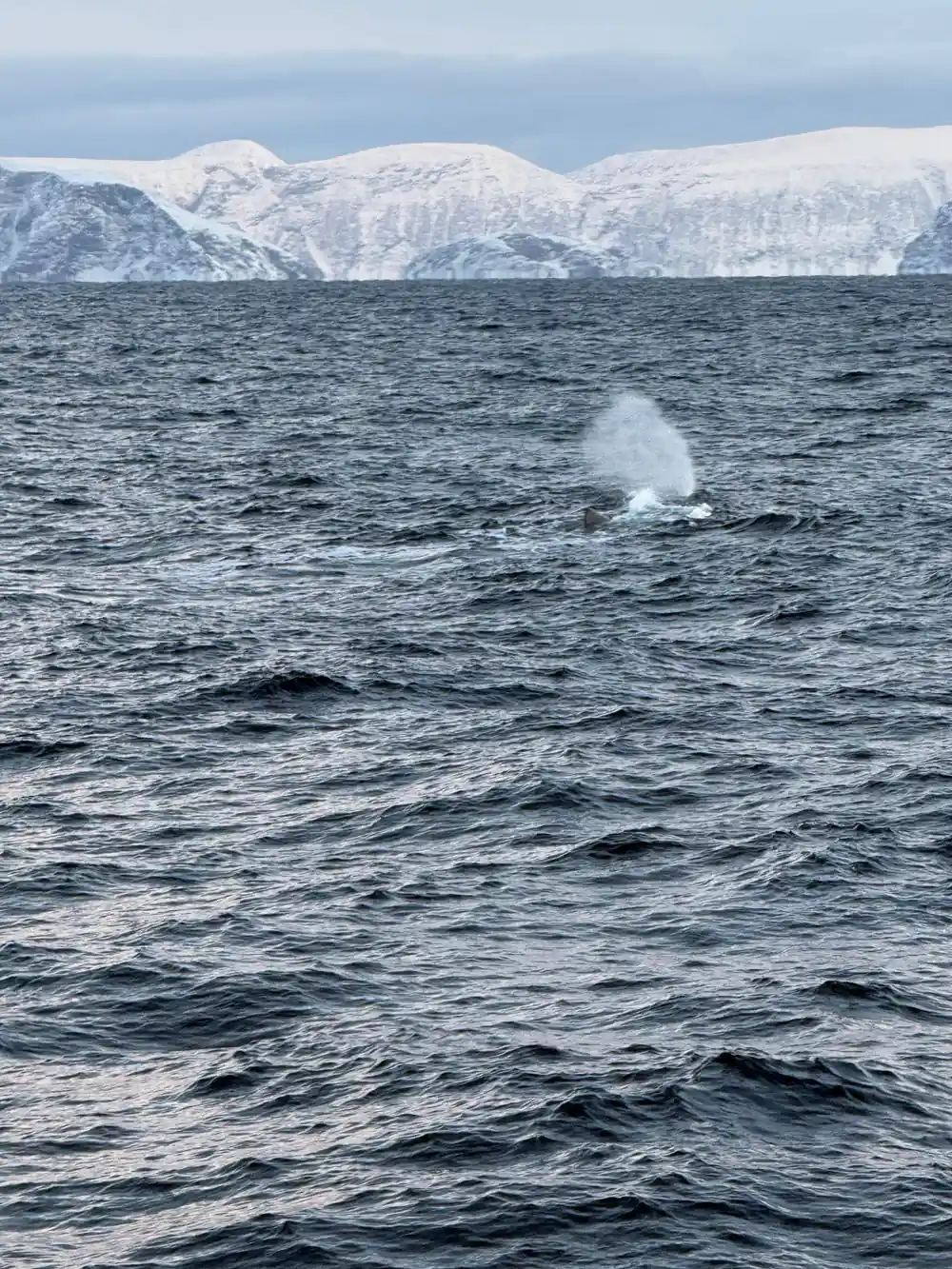
A humpback tail lifts against snow-covered peaks while the hybrid-electric boat keeps its distance.
Seabirds Following the Herring Shoals
Where herring gather, the surface comes alive with birds. Gulls, fulmars, kittiwakes and skuas all work the same shoals, and a feeding flock can mark the exact spot where whales will soon surface. The herring arrive on a predictable schedule: Norwegian spring-spawning herring migrates northeastward in September/October to wintering areas off the coast and in fjords in northern Norway.[9]
Arctic tern migration brings these small travellers through northern waters, and a lone arctic tern can be seen weaving between waves on its long journey. While terns are more a symbol of the midnight-sun season, the winter flocks are dominated by gulls and auks. Each species has its own feeding style, from surface snatching to deep plunges.
For a birder, the 9-hour tour is a mobile hide. You can watch the interaction between seabirds, herring and whales from the deck, and the guide can point out which species are working the same patch of water.[3] Binoculars stay useful all day, because the bird action shifts as quickly as the shoals move.
Fin Whales and Other Cetaceans in the Straits
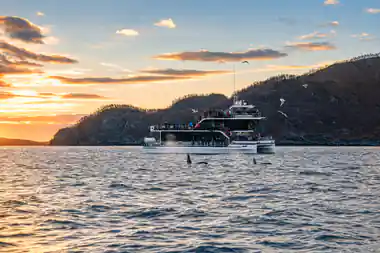
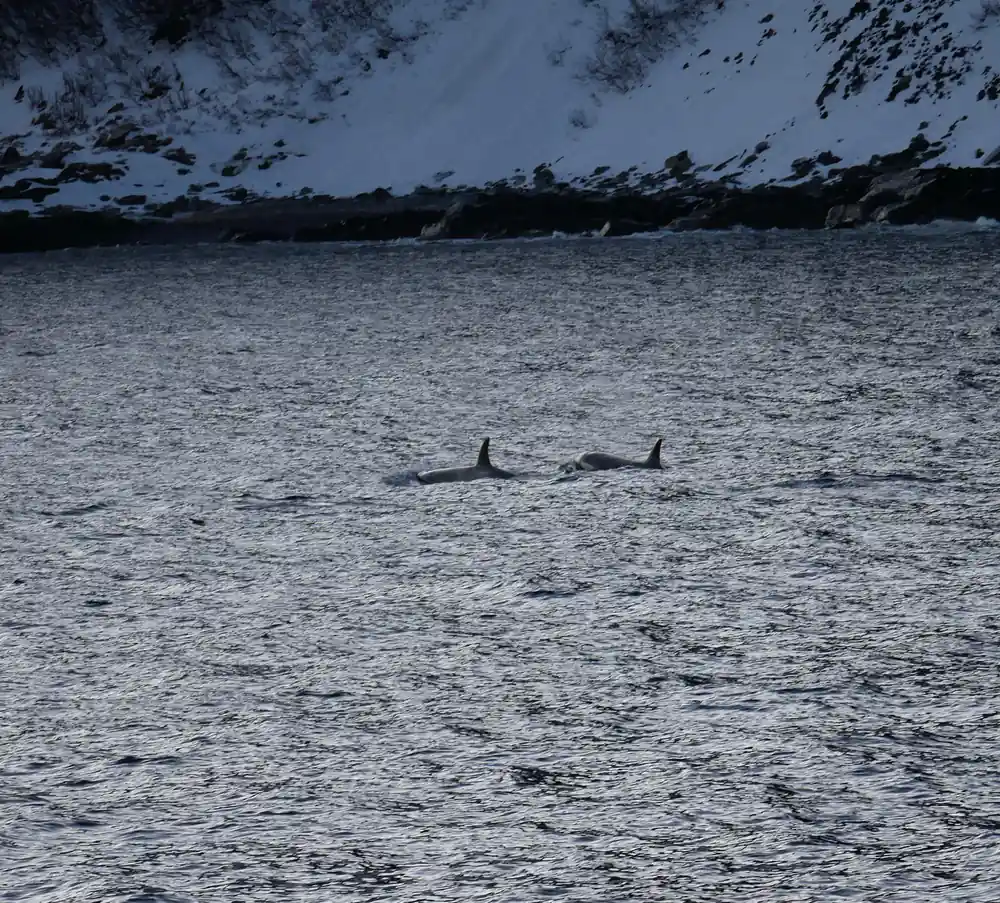
Orcas and humpback whales are the stars of winter whale watching in Tromsø. During the winter, orcas and humpback whales gather in the area to feed on herring.[5] They push the shoals into tight balls near the surface, then lunge through them with spectacular effect. You may see a blow first, then a dark back, then the huge tail on the way down.
Size helps you tell them apart. Humpbacks reach 15-17 meters, with females 1-1.5 meters longer than males.[12] Male orcas can be 6-9 meters long and weigh about 6 tonnes, while females can be 5-7 meters and weigh about 4 tonnes.[13] A tall blow and a huge tail belong to a humpback; a tall black dorsal fin marks an orca.
Other cetaceans visit the straits too, but the reliable winter visitors are the ones following herring. The tour route to Skjervøy passes through feeding grounds, and the guide is there to interpret each blow and breach.[3] Staying patient pays: whales can be absent for long stretches, then suddenly surface all around the boat.
from US$209
9 hours, English-speaking guide, wheelchair-accessible, with stops at Lyngen Alps, Lighthouse Lyngstuva, Kagsundet and Skjervøy.[3]
How Herring Fishing Boats Draw Whales to Surface
Herring fishing and whale watching are closely linked in northern Norway. When fishing boats work a shoal, they can push herring toward the surface, and whales learn to follow the same activity. Norwegian rules keep whale-watching boats at least 0.2 nautical miles (370 m) away from fishing vessels, steng or fixed gear.[6]
From the deck you may see a fishing vessel surrounded by gulls and then a whale surfacing in the same patch. This is not an accident. The interaction is part of the Arctic food web, and your guide can explain what the birds, fishermen and whales are all responding to. It also means whale watching here has a rhythm shaped by the fishing calendar.
Respect the working boats. They have priority, and the legal distance protects both fishermen and wildlife.[6] Your captain will position the hybrid-electric boat so you get a clear view without crowding the fish. That measured approach is also why encounters feel less intrusive and more sustainable.
Coastal Life Visible from the Deck
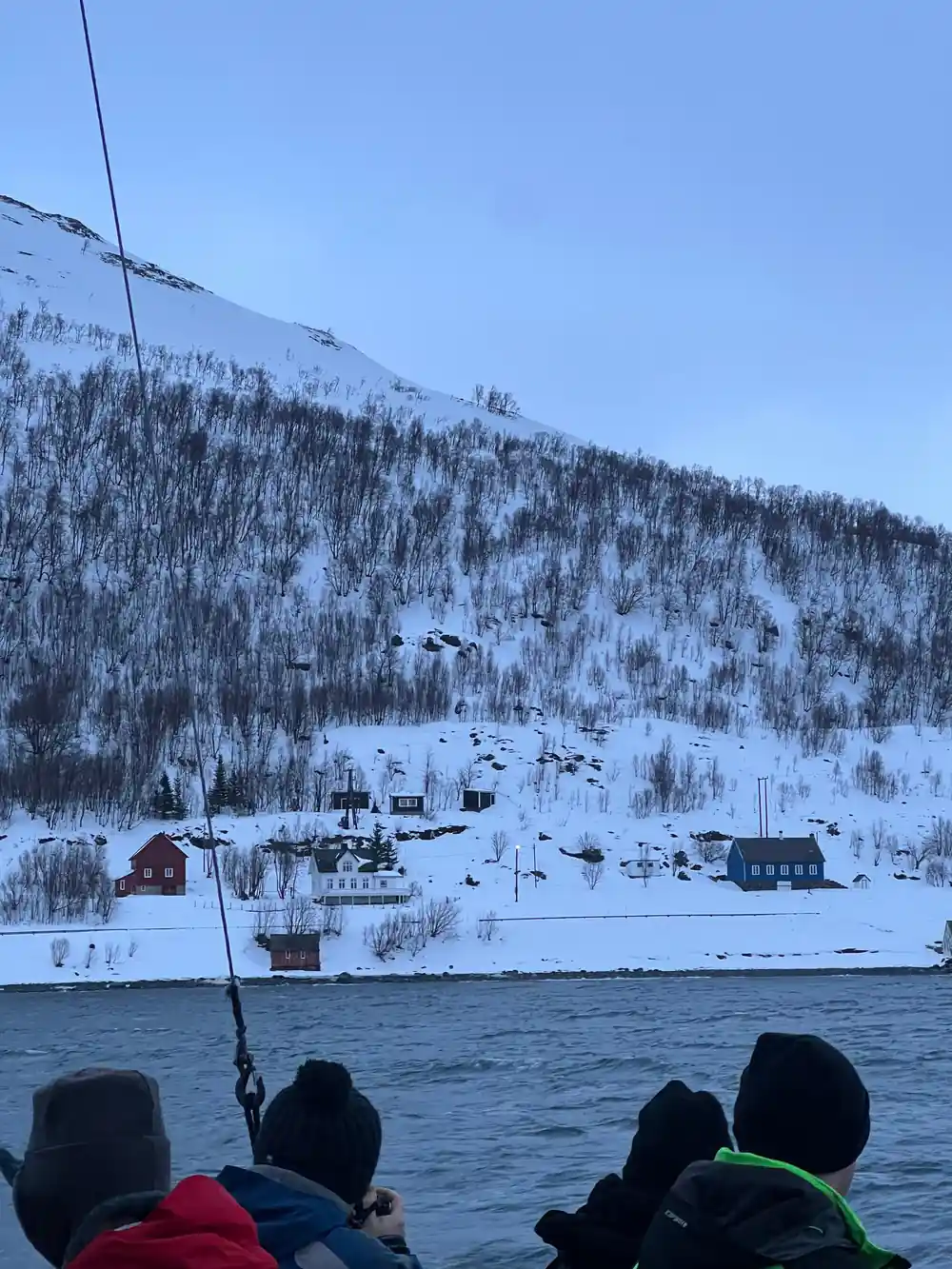
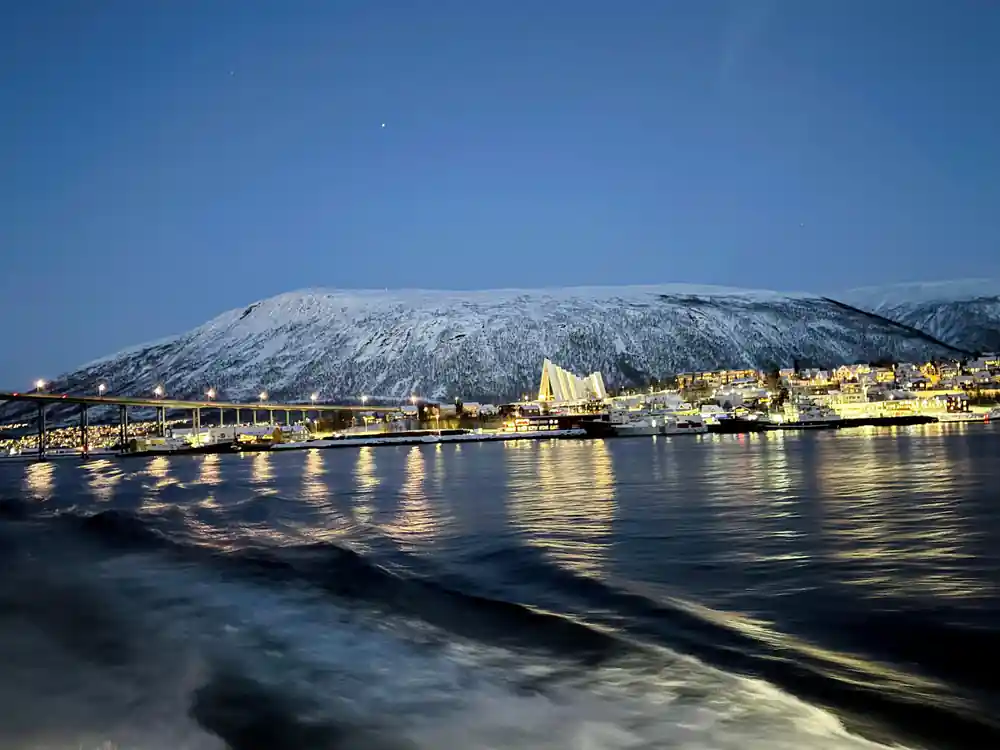
The 9-hour trip is as much about the coast as the whales. From Tromsø the route passes the Lyngen Alps, the lighthouse at Lyngstuva, Kagsundet and Skjervøy, with the Arctic Cathedral visible on the return.[3] Each stretch has a different mood: steep dark cliffs, low skerries, then the fishing village of Skjervøy.
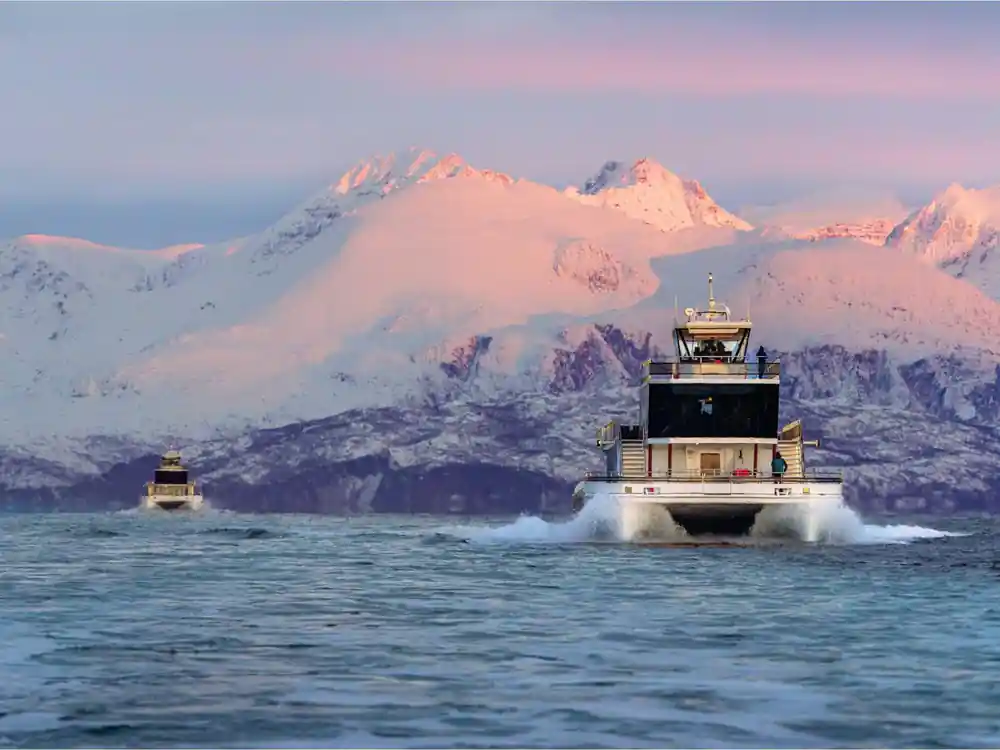
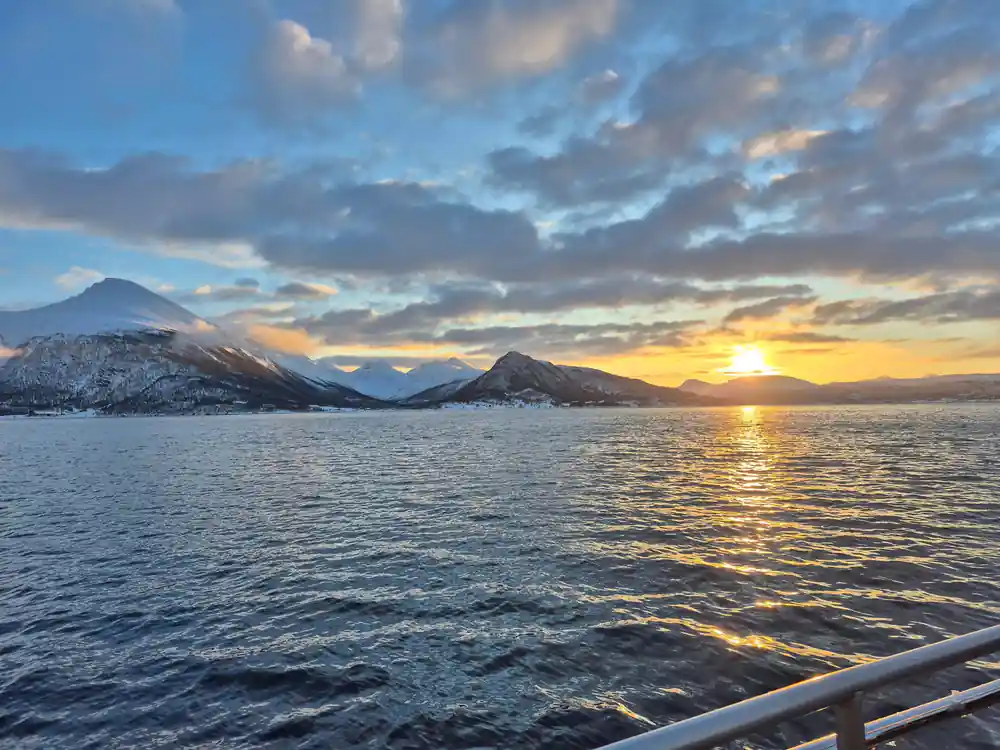
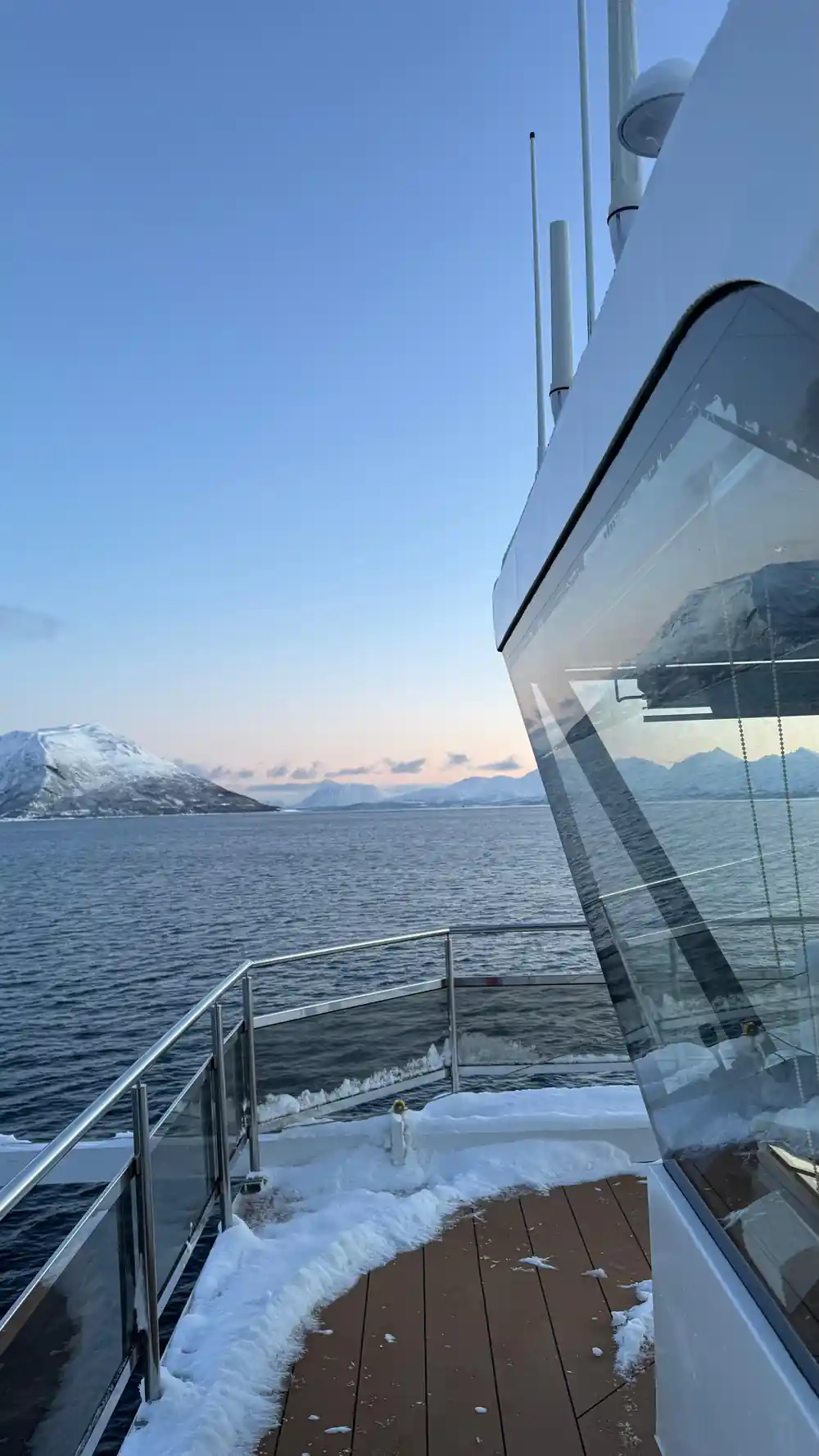
On a clear winter day the light is low and pink, and the snow line comes right down to the water. Winter in Tromsø averages around -4°C, so the deck feels cold, but inside the boat it's warm and you can watch through large windows.[10] Keep a thermos of something hot within reach.
Look for the small things too: eider ducks rafting in the lee of an island, cormorants drying their wings on a buoy. The guide is live and in English, so you can ask questions as the landscape changes.[3] Many travellers say the journey between whale sights ends up being as memorable as the whales themselves.
What to Watch for During Your Visit
Beyond the named stops, every winter day is different. A pod of orcas may pass close to the beam, or a humpback may breach in front of the Lyngen Alps. The water temperature is cold, but the wildlife is active, and the herring are the engine that drives it all.[9] Give yourself time on deck, because the most interesting moments often arrive without warning.
Before you go, understand the season. The polar night lasts approximately from 27 November to 15 January, which means you may leave in daylight and return in darkness.[7] Northern lights may be visible from late August to early April whenever the sky is dark and sufficiently clear.[8]
Book the tour from US$209, plan for 9 hours on the water, and arrive in Tromsø the night before if you can. From airport to city centre takes about 10-20 minutes, leaving time to settle in before the whales wake.[3][11] The day is long, but so is the list of things you might see.
Whale-watching trip durations
Durations from GetYourGuide listings: hybrid-electric boat 9h[3], catamaran 6h[14], RIB safari 3-12h[15], high-speed catamaran 8h[16].
Whale-watching tours compared
From-prices in USD from GetYourGuide: hybrid-electric from US$209[3], catamaran from US$209[14], RIB from US$251[15], high-speed from US$220[16], premium from US$681[17]. Child pricing is set by each operator.
When to book and go
Plan your wildlife tour
Pick your date
Winter is prime time: orcas and humpbacks gather to feed on herring.[5] Check availability for the 9-hour tour from US$209.[3]
Dress warmly
Temperatures average around -4°C in winter.[10] Wear layers, a hat and waterproof boots.
Reach the harbour
Airport transfers take about 10-20 minutes, so plan to arrive the night before.[11]
Step aboard
The hybrid-electric boat is wheelchair accessible with a live English-speaking guide.[3]
Scan the water
Look for sea eagles, seals and seabirds; whales surface where herring school.[5][9]
Stay for the dark
If skies are clear, northern lights may appear from late August to early April.[8]
Ready to watch whales, sea eagles and seals from a quiet hybrid-electric deck?
from US$209Reserve now & pay later