Resumen rápido
- 9 horas desde Tromsø hasta las Montañas Lyngen, Kagsundet y Skjervøy.[16]
- En invierno, orcas y ballenas jorobadas se reúnen para alimentarse de arenque en los fiordos al norte de Tromsø.[17]
- Moderno barco híbrido-eléctrico diseñado para turismo, accesible en silla de ruedas.[16][18]
- Conozca la historia del estrecho y las ballenas con un guía en vivo en inglés.[16]
- Reserve ahora y pague después, con cancelación gratuita hasta 24 horas antes.[16]
- Opción principal Barco híbrido-eléctrico desde 209 USD Duración9 horas[16]Valoración4,48[16]Reseñas6.644[16]GuíaInglés en vivo[16]CancelaciónGratis hasta 24 horas[16] Ver disponibilidad
- Crucero Combinado Premium desde 681 USD Duración1 día[19]Valoración4,90[19]Reseñas47[19]GuíaInglés en vivo[19]CancelaciónCancelación gratuita hasta 24 horas[19] Ver este tour
- Safari en RIB para ver ballenas desde 257 USD Duraciónde 4 a 12 horas[20]Valoración4,95[20]Reseñas113[20]GuíaInglés en vivo[20]CancelaciónCancelación gratuita hasta 24 horas[20] Ver este tour
La temperatura media invernal en Tromsø es de alrededor de −4°C.
Por qué funciona este tour
A bordo del barco
Kagsundet: un estrecho protegido en la ruta de avistamiento de ballenas
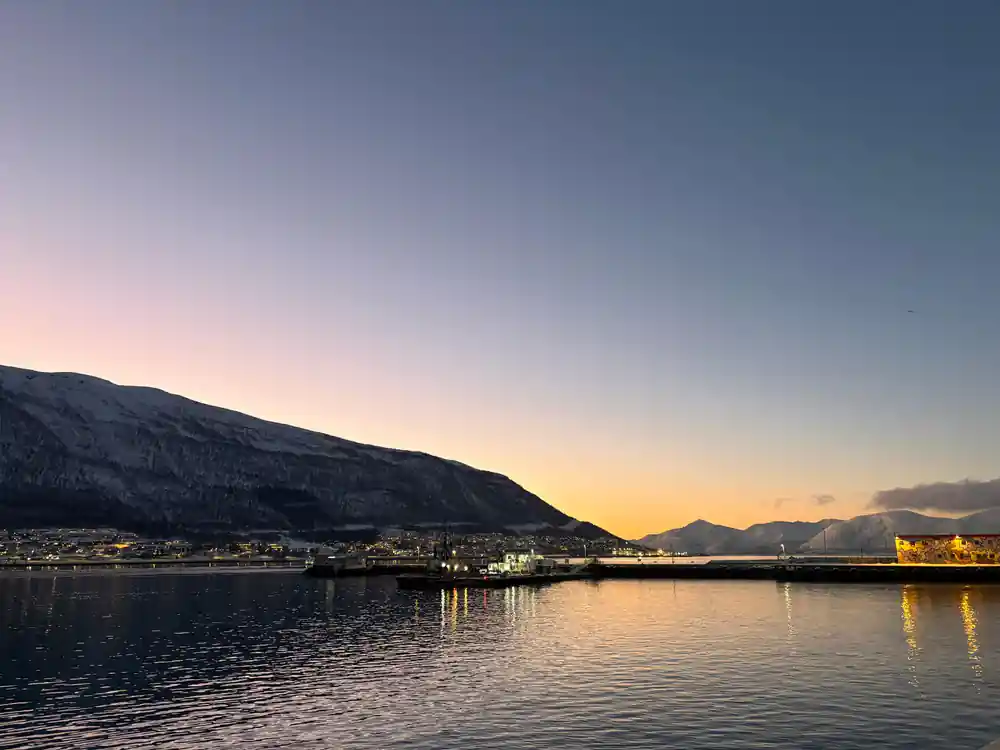
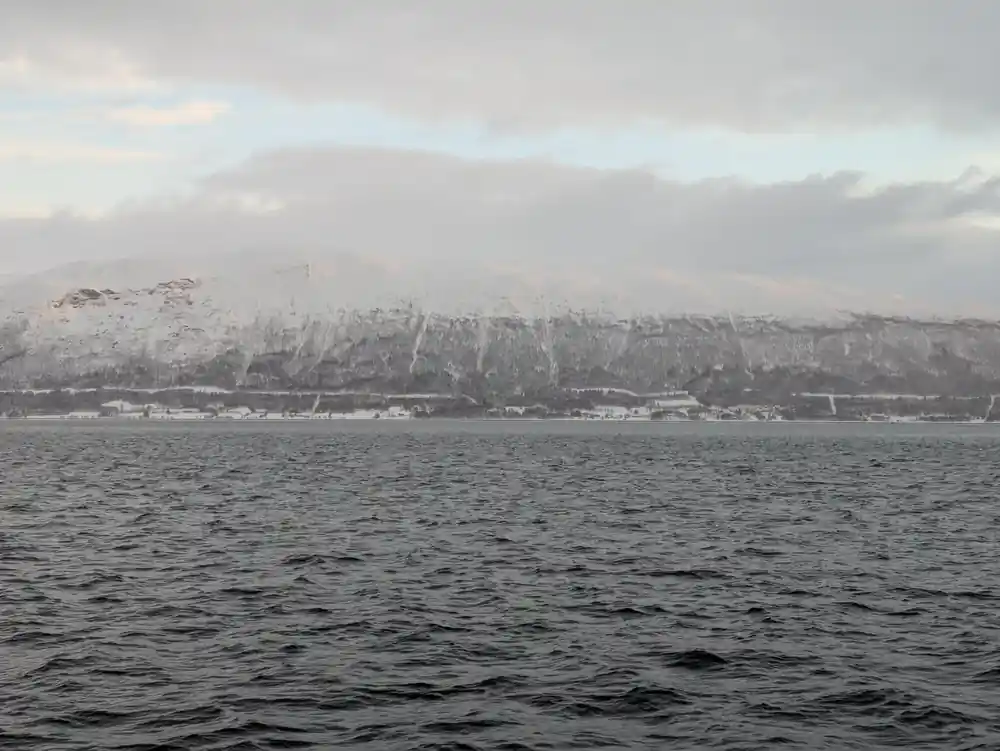
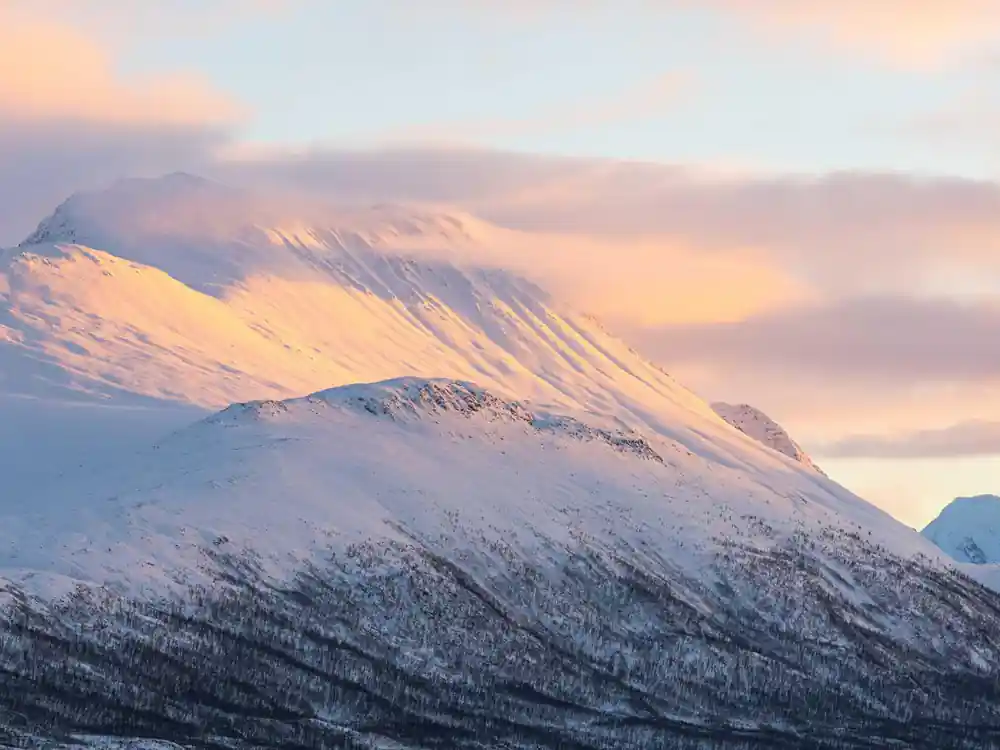
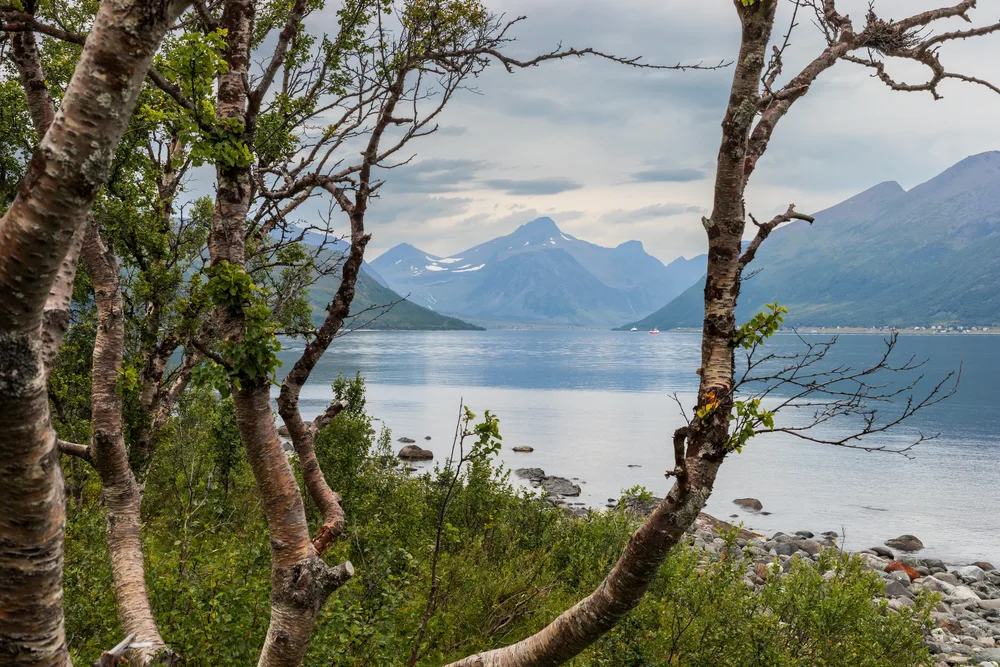
Kagsundet es un tramo estrecho de agua entre las islas y los skerries al norte de Tromsø, parte del enfoque hacia Skjervøy. Este estrecho de Skjervøy cerca de Tromsø ofrece a las embarcaciones un refugio natural del mar abierto, y es una de las paradas incluidas en el tour completo de avistamiento de ballenas.[16] Las montañas se elevan directamente desde el agua, a menudo la nieve cubre las laderas y el horizonte se abre hacia el amplio sistema de fiordos que conduce hacia Skjervøy. En una mañana invernal clara, la luz convierte la nieve en un azul pálido, y las aguas protegidas pueden estar tan quietas como un lago.
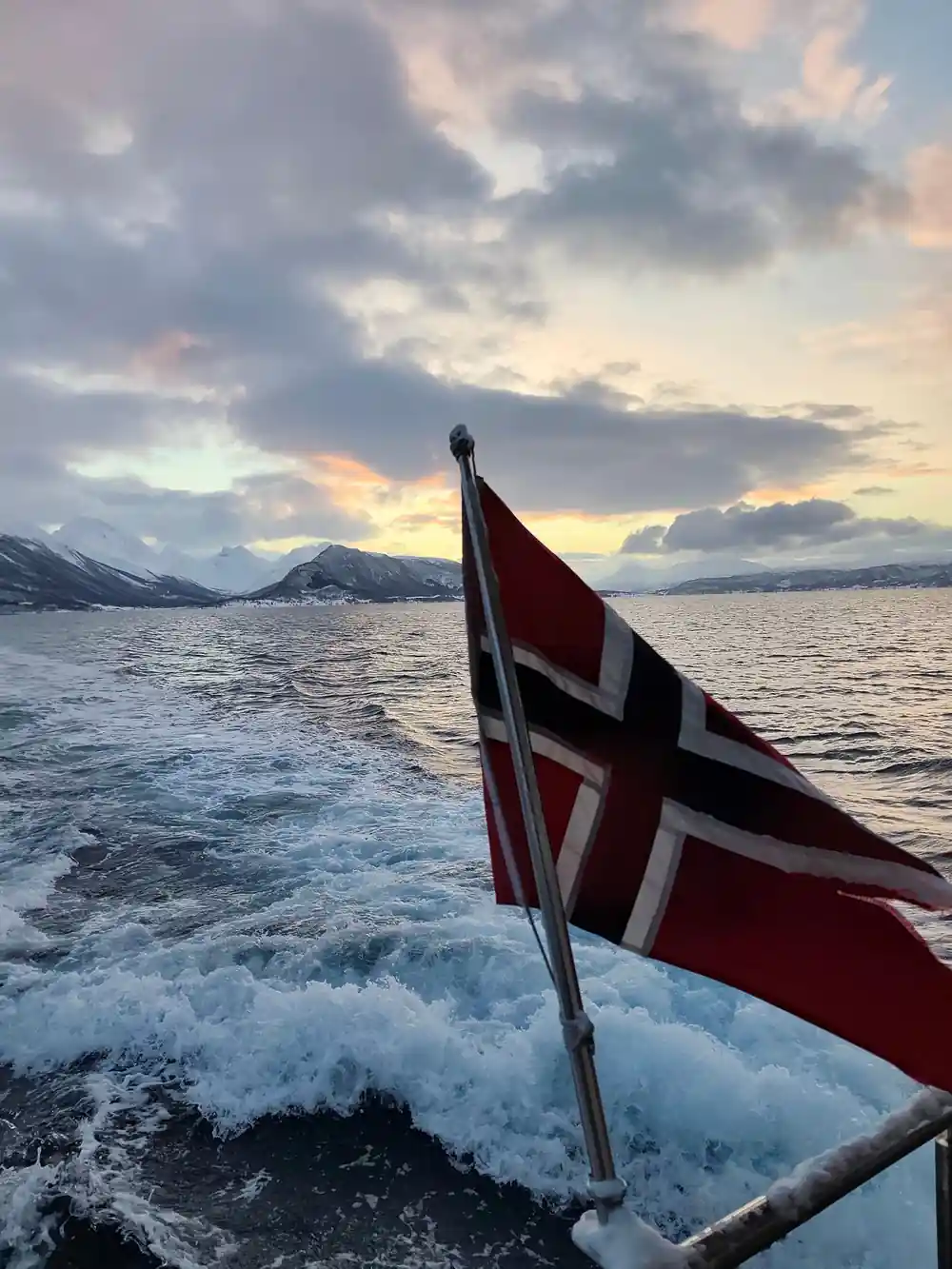
Para los navegantes, el estrecho siempre ha sido un lugar para hacer una pausa. El nombre Kagsundet aparece a veces en historias antiguas sobre naufragios, pero hoy el enfoque está en el refugio y la vida silvestre. En el tour, el barco pasa por los Alpes Lyngen y el faro de Lyngstuva antes de llegar a Kagsundet.[16] Este es un buen momento para estar en cubierta, donde a menudo el viento está bloqueado y el agua puede estar lo suficientemente tranquila como para reflejar las cumbres. También le da una idea de las antiguas rutas de navegación, donde las tripulaciones esperaban a que el clima mejorara antes de continuar.
La ruta continúa hacia Skjervøy y regresa pasando por la Catedral Ártica en Tromsø.[16] Para entender por qué las ballenas pasan por aquí, ayuda saber dónde están las arenques. Mantener la vista en el estrecho cuando el barco reduce la velocidad le da una verdadera sensación de cómo el paisaje canaliza el mar. Si tiene tiempo antes de la salida, camine por el paseo marítimo de Tromsø y estudie las montañas que cruzará después; el tour las hace parecer cercanas, pero la escala es enorme.
El tour de avistamiento de ballenas híbrido-eléctrico desde Tromsø
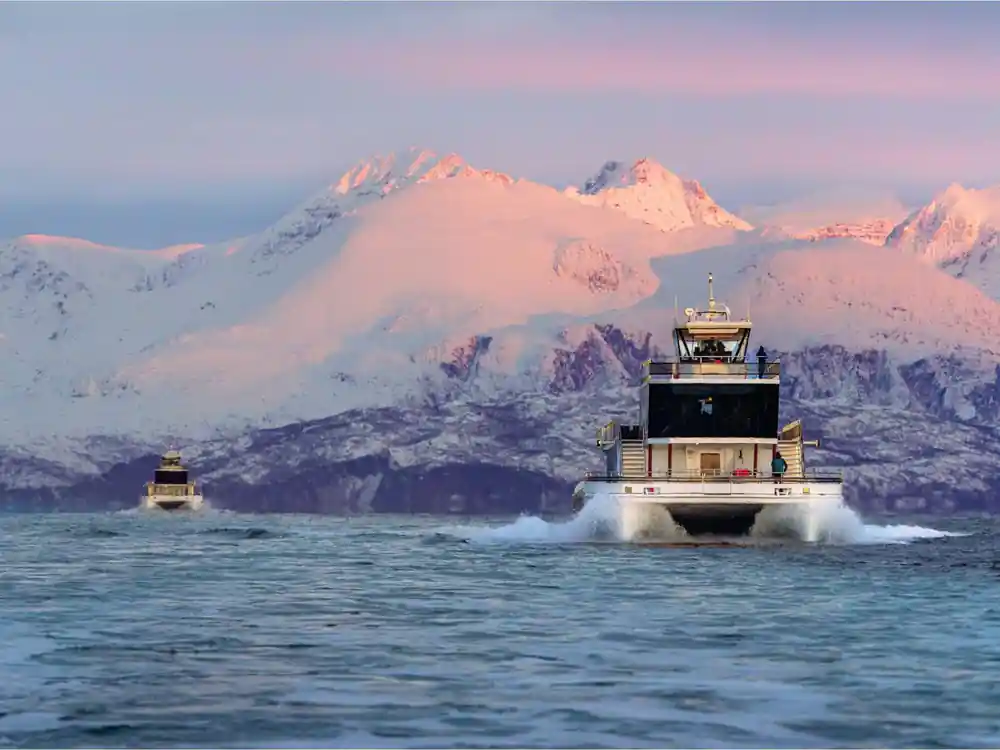
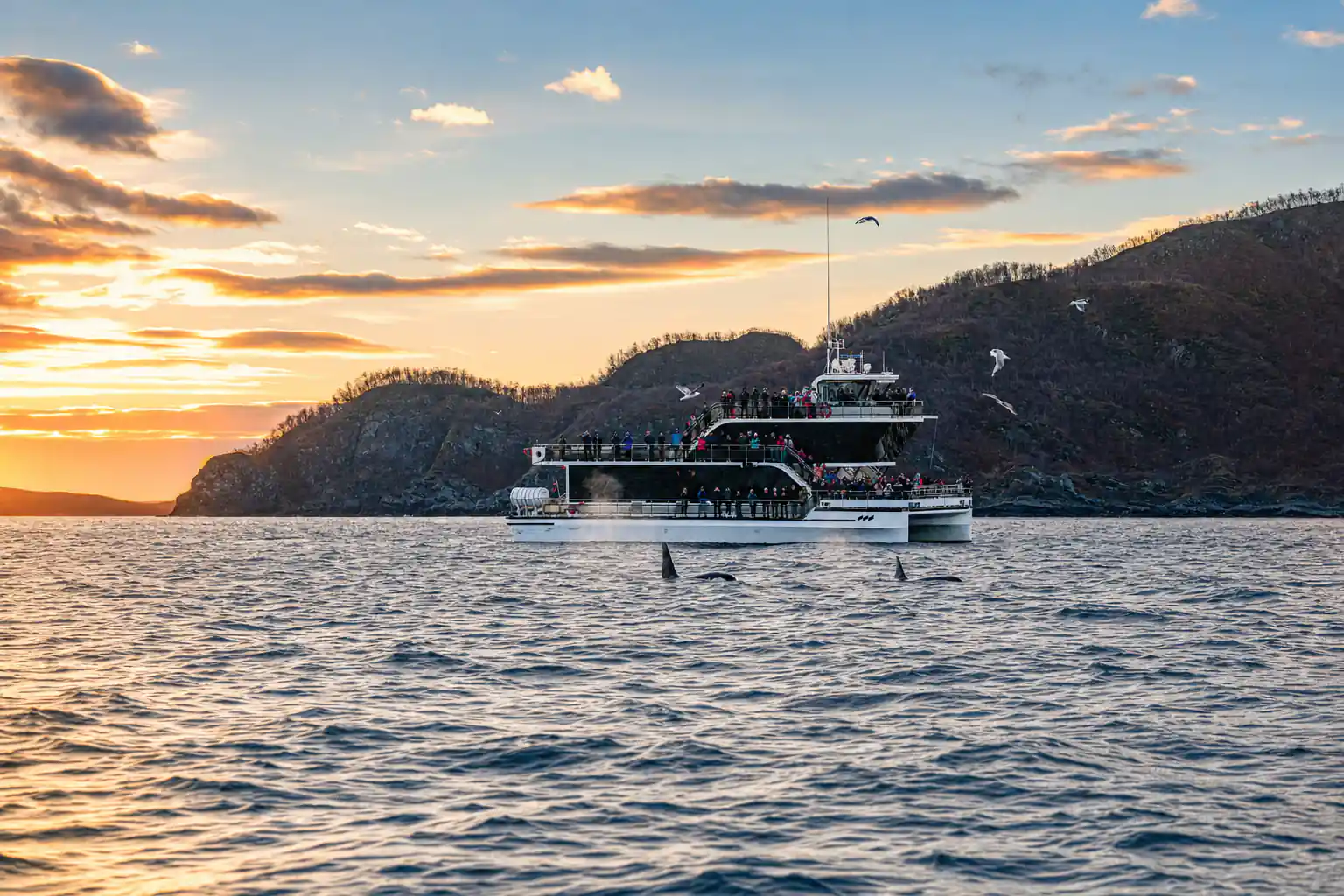
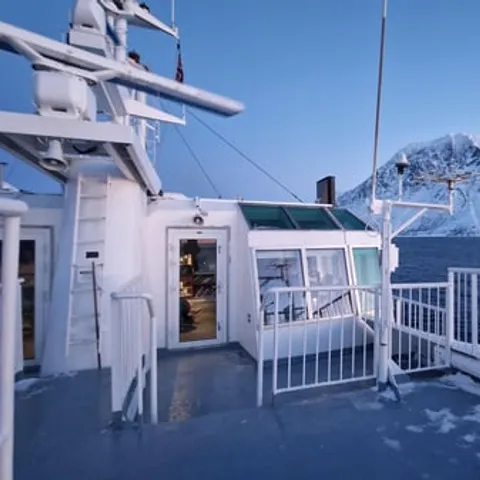
Este es un tour de 9 horas desde Tromsø con un guía en vivo en inglés.[16] El barco es una embarcación moderna híbrido-eléctrica diseñada para observar paisajes, y se desplaza silenciosamente por las zonas de alimentación.[18] Ese silencio marca una gran diferencia cuando las ballenas están en la superficie; usted escucha el agua antes de ver el chorro. En el interior, las grandes ventanas mantienen la vista cerca incluso cuando desea abrigarse.
El tour es adaptado para sillas de ruedas, y puede reservar ahora y pagar después.[16] Hay cancelación gratuita disponible hasta 24 horas antes con reembolso completo.[16] Esa flexibilidad es útil en el Ártico, donde el clima puede cambiar sus planes, y le permite reservar con confianza antes de un largo viaje. Si se acerca una tormenta, no queda atrapado. Aun así, un tour invernal opera en la mayoría de las condiciones climáticas, así que esté preparado para el viento y la nieve en cubierta.
El área de salida es fácil de alcanzar. El viaje entre el Aeropuerto de Tromsø y el centro de la ciudad toma alrededor de 10-20 minutos.[22] Si se hospeda en la ciudad, puede unirse al tour incluso si llega esa mañana, y luego usar el viaje de regreso para calentarse y revivir las observaciones del día. El punto de encuentro está cerca del paseo marítimo, donde el horario de barcos se anuncia el día del tour. Llegue un poco temprano para conseguir un buen asiento junto a la ventana para el primer tramo.
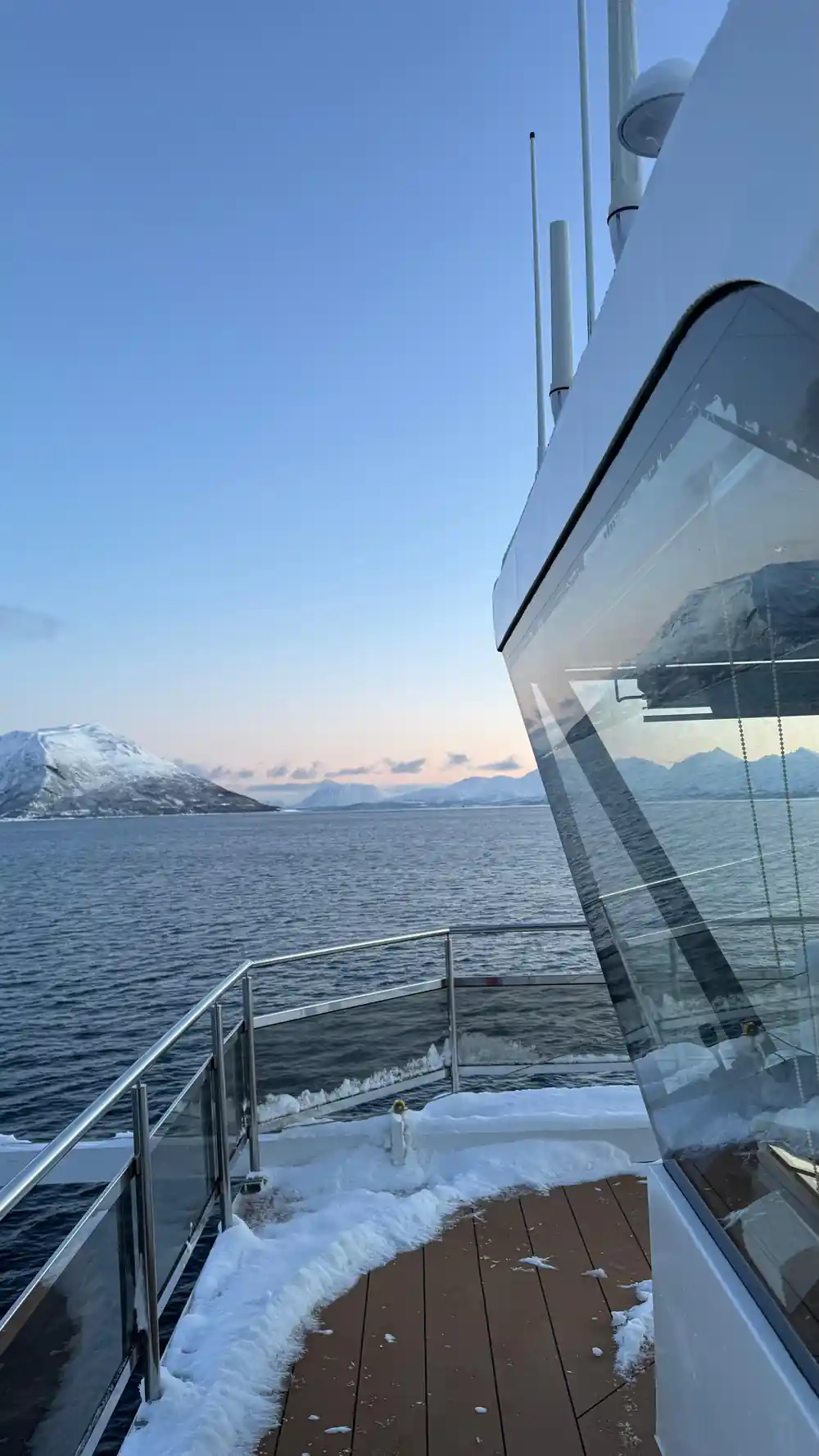
Un catamarán híbrido-eléctrico desliza por los fiordos enmarcados en nieve cerca de Kagsundet.
Ballenas, arenques y las zonas de alimentación invernal
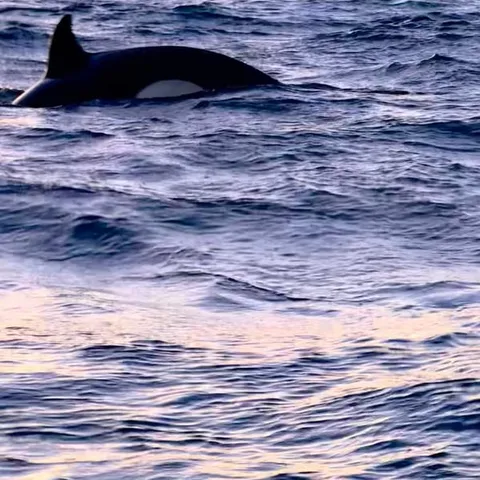
En septiembre/octubre, el arenque noruego de desove de primavera migra hacia el noreste hasta sus principales zonas de invernada frente a la costa y en los fiordos del norte de Noruega.[24] Durante el invierno, las orcas y las ballenas jorobadas se reúnen en la zona para alimentarse de arenques.[17] Estas son las dos piezas del rompecabezas que hacen de Kagsundet y las aguas alrededor de Skjervøy un lugar tan gratificante. El ritmo anual del fiordo está ligado al pescado, y las ballenas son parte de ese ritmo.
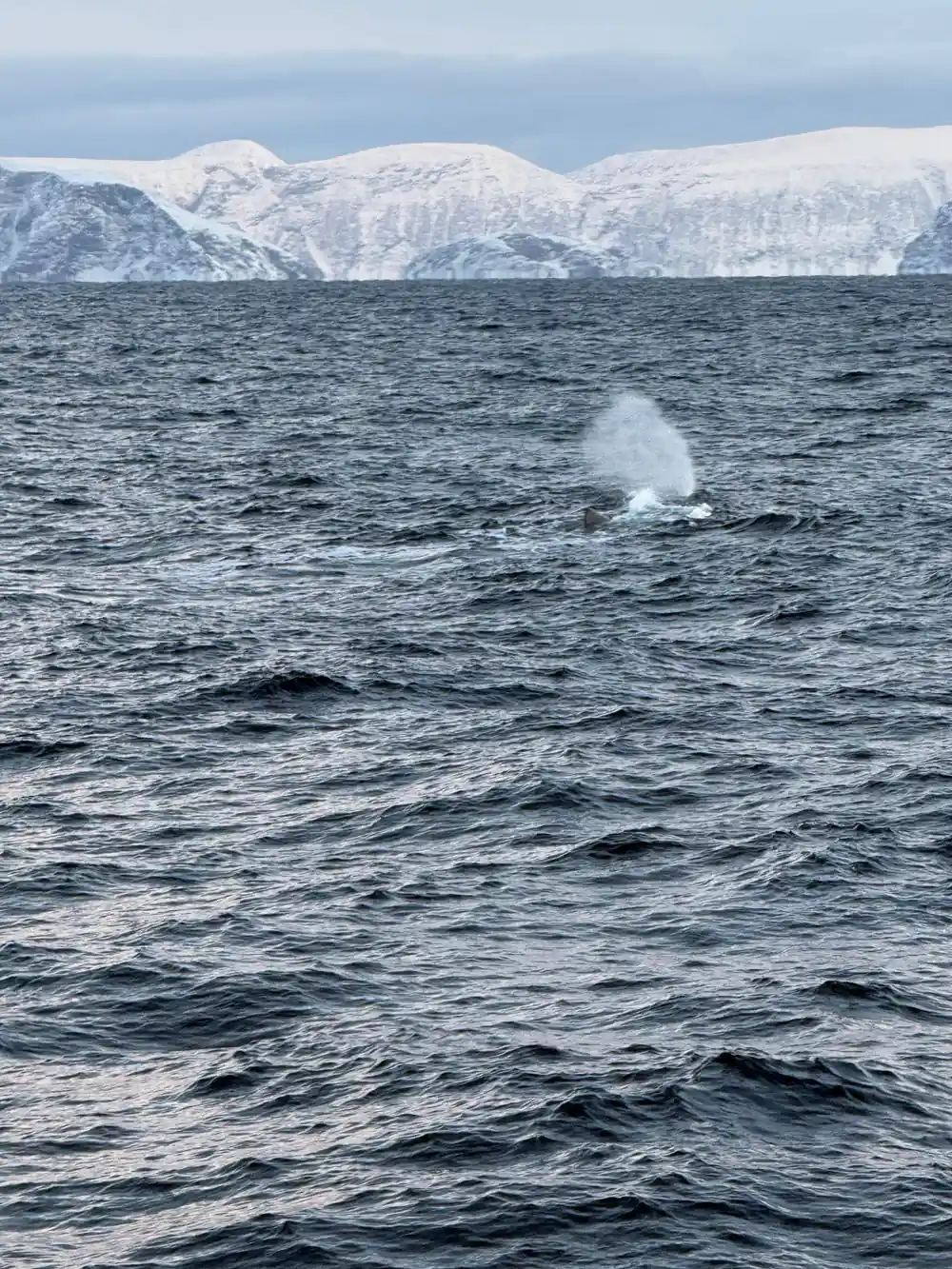
Las ballenas jorobadas miden de 15 a 17 metros de largo, con hemanas 1-1.5 metros más largas que los machos.[25] Las orcas macho pueden medir de 6 a 9 metros y pesar alrededor de 6 toneladas, mientras que las hembras pueden medir de 5 a 7 metros y pesar alrededor de 4 toneladas.[26] Cuando una ballena emerge junto al barco, esas cifras dejan de ser abstractas. Entiende por qué la tripulación pide a todos que permanezcan sentados y mantengan la voz baja.
Kagsundet ofrece un punto de observación protegido dentro del sistema de fiordos más amplio. La parada de la ruta en Kagsundet le permite observar el estrecho a un ritmo más pausado.[16] También es una oportunidad para ver cómo funciona el paisaje: laderas empinadas, agua estrecha y un canal que atrae peces y a los animales que los persiguen. Incluso cuando las ballenas están más lejos, el paisaje mantiene su atención. Lleve binoculares si los tiene; le ayudarán a escanear el estrecho en busca de chorros y salpicaduras.
Cómo es el día
El tour comienza en Tromsø y sigue una ruta que incluye los Alpes Lyngen, el Faro Lyngstuva, Kagsundet, Skjervøy y la Catedral Ártica.[16] Es un día completo en el agua, así que vístase para condiciones cambiantes. Las grandes ventanas del barco y las cubiertas abiertas le ofrecen diferentes formas de observar, y la tripulación suele hacer anuncios cuando aparece algo adelante. Planee pasar la mayor parte del día en cubierta, pero sepa que puede bajar al interior para calentarse.
Lleve capas, un gorro cálido y guantes. La temperatura media invernal en Tromsø es alrededor de −4°C.[21] Añada una capa exterior impermeable al viento, y guarde un par de guantes de repuesto en su bolsa para cuando el primer par se humedezca. Un pasamontañas y calcetines cálidos también son muy útiles en un largo crucero invernal.
Mantenga su cámara lista cerca de Kagsundet. Las ballenas pueden emerger cerca del estrecho, y el barco silencioso le da tiempo para encontrar el encuadre. Un lente teleobjetivo ayuda, pero incluso un teléfono puede capturar la cola de una jorobada si tiene paciencia. Observe las gaviotas y las ondulaciones; a menudo indican dónde están a punto de aparecer las ballenas. Tenga la cámara configurada en una velocidad de obturación rápida antes de salir.
from US$209
Excursión en barco híbrido-eléctrico de 9 horas con guía en vivo de inglés, acceso para sillas de ruedas y cancelación gratuita hasta 24 horas antes.[16]
Consejos prácticos para su día en el Ártico
Comience con los detalles de la reserva. Reserve ahora y pague después, y cancele hasta 24 horas antes con reembolso completo si cambian sus planes.[16] Esto es especialmente útil si está elaborando un itinerario ártico más amplio y necesita mantener sus opciones abiertas. Vale la pena reservar su fecha tan pronto como conozca sus planes de viaje, y la ventana de cancelación gratuita le da margen para ajustar.
El tour es adaptado para sillas de ruedas, y el guía en vivo habla inglés.[16] Informe a la tripulación si necesita un poco más de tiempo para subir y bajar del barco. El área de embarque en Tromsø es compacta, y el equipo está acostumbrado a ayudar a huéspedes de todas las capacidades. Si tiene preguntas específicas de movilidad, contacte al operador antes de reservar.
Respete las normas del agua: los barcos de avistamiento de ballenas en Noruega deben mantenerse al menos a 0.2 millas náuticas (370 m) de distancia de los barcos pesqueros, esteng o aparejos fijos.[27] Esto es parte del avistamiento responsable de ballenas, y mantiene las zonas de alimentación seguras tanto para las ballenas como para los pescadores locales.
Cuándo ir para ver ballenas y auroras boreales
La noche polar en Tromsø dura aproximadamente del 27 de noviembre al 15 de enero.[28] La luz del día es limitada, pero la ruta de ballenas aún lo lleva a través de los fiordos. La temperatura media invernal es alrededor de −4°C.[21] En medio de la noche polar, la luz del mediodía es más como un crepúsculo prolongado, lo que puede hacer que la nieve y el mar brillen en suaves tonos azules y rosas.
Las auroras boreales pueden ser visibles en la región de Tromsø desde finales de agosto hasta principios de abril, siempre que el cielo esté oscuro y suficientemente despejado.[23] Un día de ballenas invernal se puede combinar con una velada de aurora si las condiciones lo permiten, ofreciéndole dos experiencias árticas muy diferentes en un solo viaje. Después de un día en el barco, una persecución nocturna es una doble función natural.
Tromsø se encuentra a unos 350 km al norte del Círculo Ártico.[29] El sol de medianoche suele durar desde finales de mayo hasta finales de julio.[30] Es un recordatorio de que esta región oscila entre inviernos oscuros y veranos luminosos, y cada estación tiene su propio ritmo. Para avistamiento de ballenas, el invierno es la temporada, pero el resto del año tiene su propio atractivo.
Comprender las normas de avistamiento de ballenas
El avistamiento responsable de ballenas está integrado en la jornada. La tripulación mantiene una distancia segura de las embarcaciones de pesca, redes y aparejos fijos según lo requerido: al menos 0,2 millas náuticas (370 m).[27] Esa norma de distancia forma parte del respeto general por el fiordo de trabajo. También significa que el barco a veces reduce la velocidad o cambia el rumbo, por lo que entenderá por qué la excursión es un día completo y no un rápido recorrido circular.
El diseño híbrido-eléctrico ayuda a reducir el ruido y las emisiones, lo que importa en un lugar donde los animales se alimentan.[18] Un enfoque más silencioso también le da una mejor oportunidad de ver a la fauna silvestre comportarse de forma natural en lugar de simplemente reaccionar al barco. Puede notar que el motor se apaga cuando el capitán se coloca en posición frente a una ballena.
Con un guía en vivo de inglés a bordo, se irá con una comprensión más clara del estrecho, las arenques y las ballenas que acuden a alimentarse.[16][17] También puede desarrollar una nueva apreciación de cómo un canal protegido puede moldear un día ártico entero. Esa es la clase de conocimiento que le acompañará después de que el barco regrese al puerto.
Longitudes de las ballenas en las zonas de alimentación
Compare los precios de los tours de avistamiento de ballenas
Precios desde en USD para las identificaciones de la excursión.[16][19][20].
Cuándo reservar el avistamiento de ballenas en Kagsundet
Planifique su viaje
Elija su fecha
Consulte la disponibilidad de las horas de inicio en la excursión de 9 horas.[16]
Reserve ahora, pague después
Reserve ahora y pague después, y cancele gratis hasta 24 horas antes.[16]
Vístase para el Ártico
La temperatura media invernal es de alrededor de −4 °C, por lo que las capas, los botines cálidos y un gorro son esenciales.[21]
Conozca el barco
La excursión sale de Tromsø y se dirige hacia las Montañas Lyngen y Kagsundet.[16]
Aviste ballenas
Esté atento a las orcas y los jorobados alimentándose de arenques en los fiordos protegidos.[17][24]
Reserve su día de avistamiento de ballenas en Kagsundet desde Tromsø
desde 209 US$Reserva ahora y paga después