Résumé express
- 9 heures de Tromsø aux Alpes du Lyngen, Kagsundet et Skjervøy.[16]
- Les orques et les rorquals à bosse d'hiver se rassemblent pour se nourrir de harengs dans les fjords au nord de Tromsø.[17]
- Navire moderne hybride-électrique conçu pour les excursions, accessible aux fauteuils roulants.[16][18]
- Découvrez l'histoire du détroit et des baleines avec un guide anglophone en direct.[16]
- Réservez maintenant et payez plus tard, avec annulation gratuite jusqu'à 24 heures à l'avance.[16]
- Meilleur choix Bateau hybride-électrique à partir de 209 $US Durée9 heures[16]Note4,48[16]Avis6 644[16]GuideAnglais en direct[16]AnnulationGratuit jusqu'à 24 heures[16] Vérifier la disponibilité
- Croisière Combo Premium à partir de 681 $US Durée1 jour[19]Note4,90[19]Avis47[19]GuideAnglais en direct[19]AnnulationGratuit jusqu'à 24 heures[19] Voir cette excursion
- Safari en baleines en RIB à partir de 257 $US Durée4 à 12 heures[20]Note4,95[20]Avis113[20]GuideAnglais en direct[20]AnnulationGratuit jusqu'à 24 heures[20] Voir cette excursion
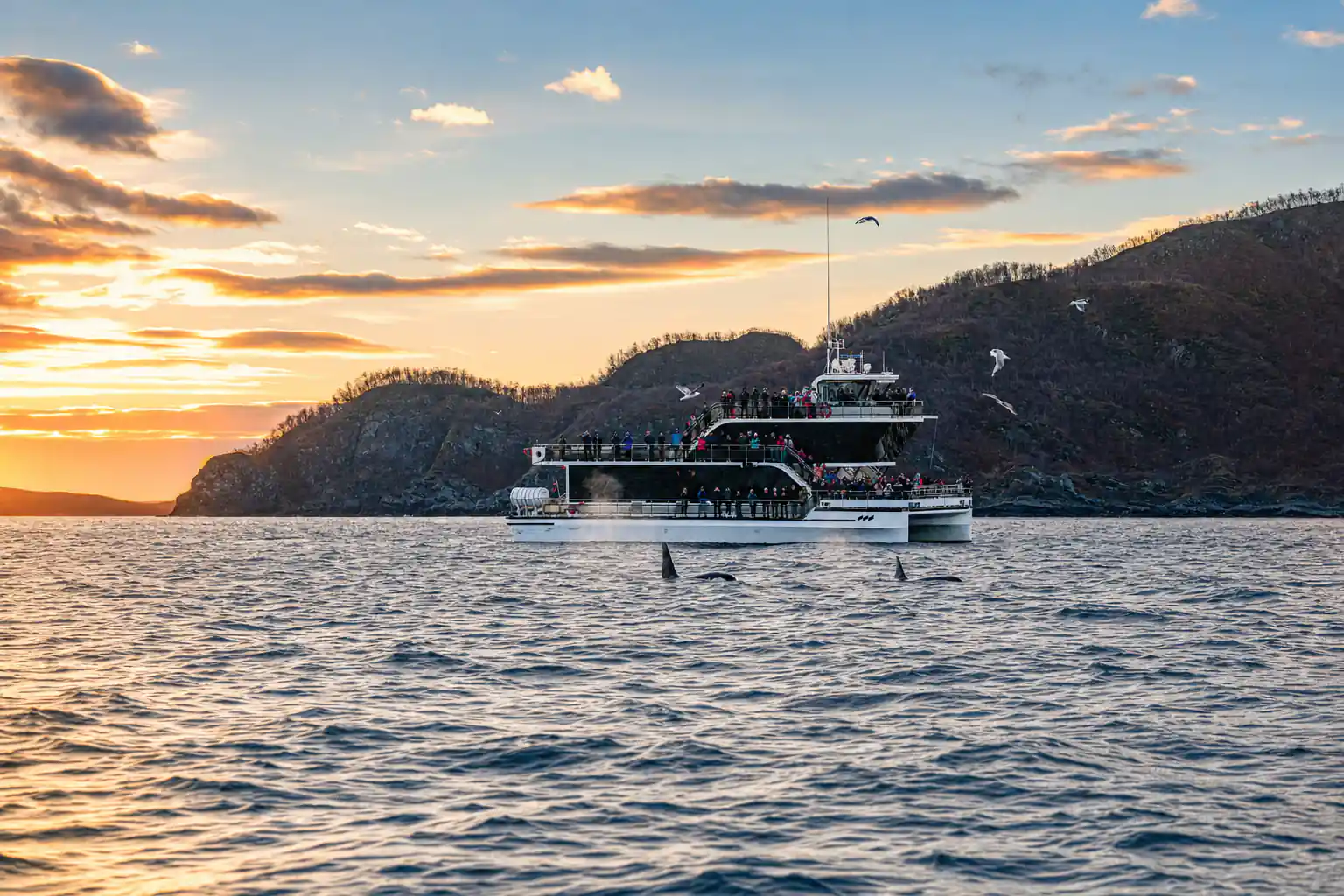
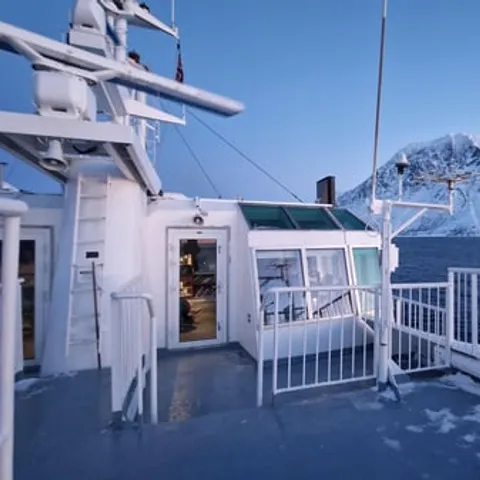
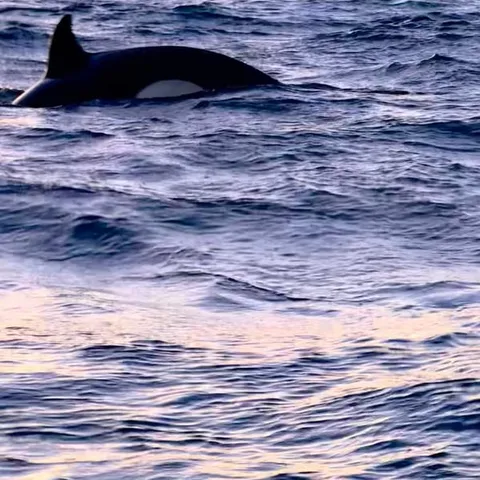
La température hivernale moyenne à Tromsø est d'environ −4 °C.
Pourquoi cette excursion fonctionne
À bord du bateau
Kagsundet : un détroit abrité sur la route des baleines
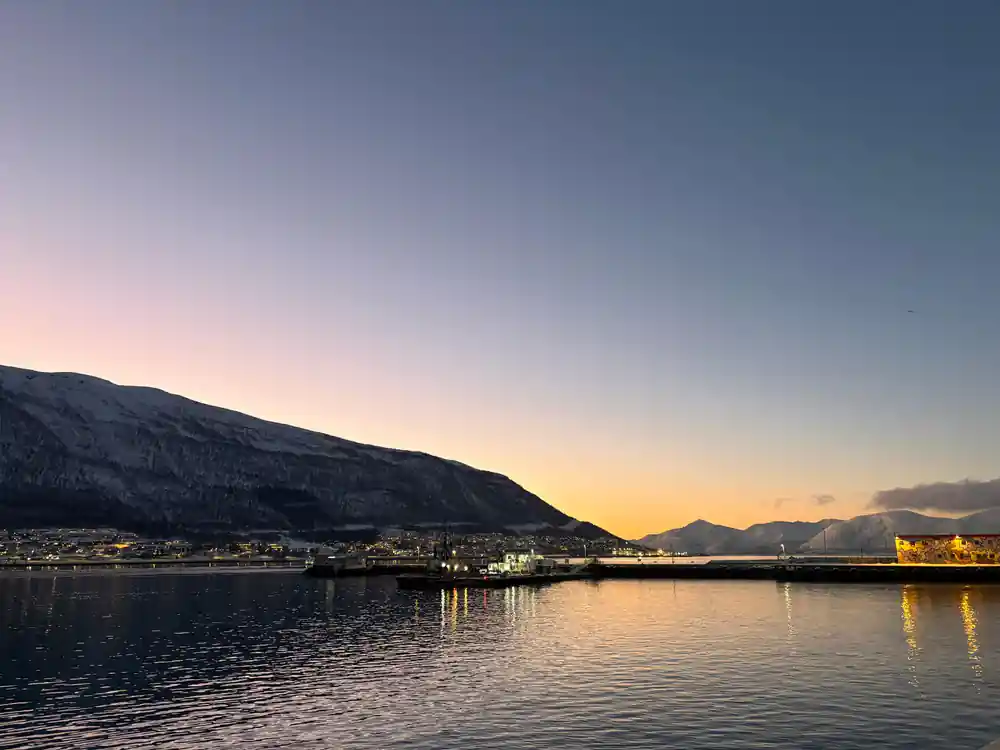
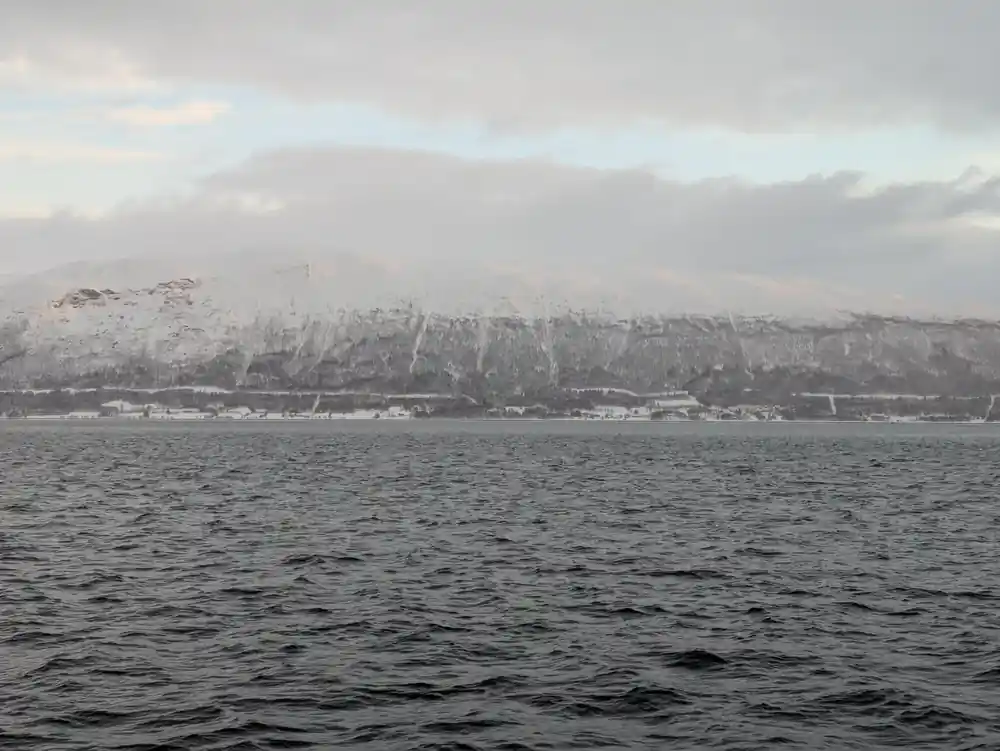
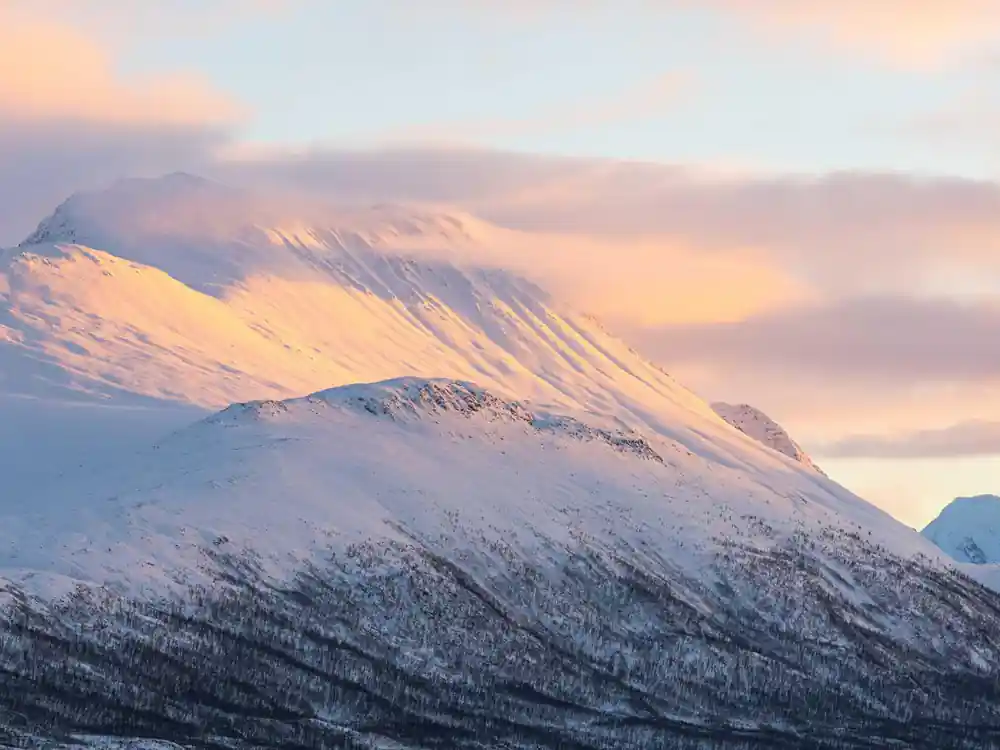
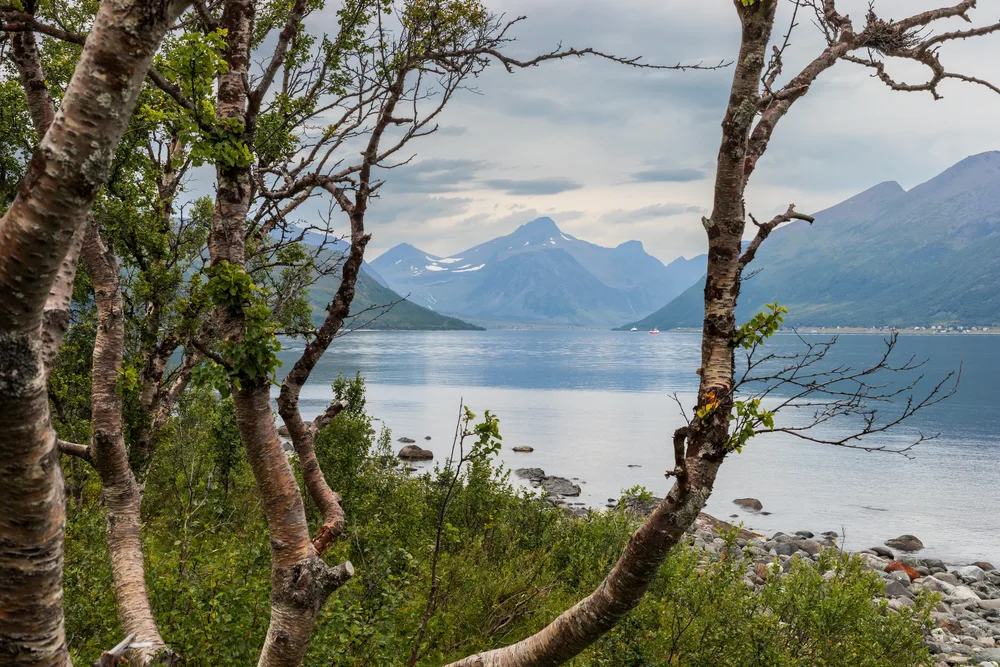
Kagsundet est un étroit plan d'eau situé entre les îles et les écueils au nord de Tromsø, faisant partie de l'approche de Skjervøy. Ce détroit de Skjervøy près de Tromsø offre aux bateaux un abri naturel face à la mer déchaînée, et il constitue l'un des arrêts programmés de la visite guidée d'observation des baleines en journée complète.[16] Les montagnes s'élèvent directement depuis l'eau, la neige couvre souvent les pentes, et l'horizon s'ouvre sur le vaste système de fjords qui mène vers Skjervøy. Par une claire matinée d'hiver, la lumière teinte la neige d'un bleu pâle, et les eaux abritées peuvent être aussi calmes qu'un lac.
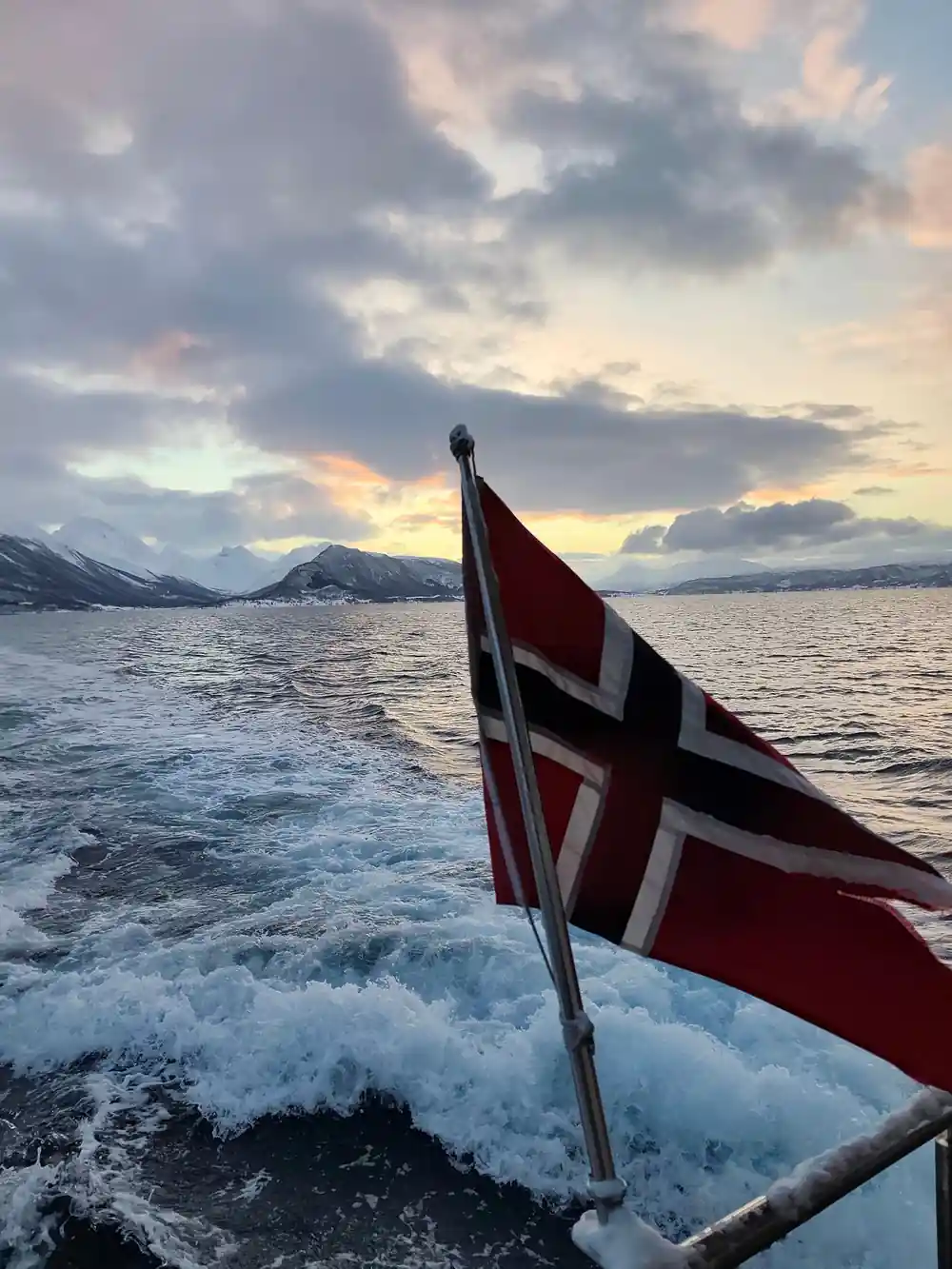
Pour les navigateurs, le détroit a toujours été un lieu de pause. Le nom Kagsundet apparaît parfois dans de vieilles anecdotes de naufrages, mais aujourd'hui l'attention se porte sur l'abri et la faune. Lors de la visite, le bateau longe les Alpes de Lyngen et le phare de Lyngstuva avant d'atteindre Kagsundet.[16] C'est un moment privilégié pour se trouver sur le pont, où le vent est souvent bloqué et où l'eau peut être assez calme pour refléter les sommets. Cela donne également le sentiment des anciennes routes maritimes, où les équipages attendaient que le temps se dégage avant de poursuivre leur route.
L'itinéraire se poursuit jusqu'à Skjervøy et revient en passant par la Cathédrale arctique de Tromsø.[16] Pour comprendre le passage des baleines à cet endroit, il est utile de savoir où se trouve le hareng. Observer le détroit lorsque le bateau ralentit permet de se rendre compte de la manière dont le paysage canalise la mer. Si vous avez le temps avant le départ, promenez-vous le long du front de mer de Tromsø et étudiez les montagnes que vous traverserez plus tard ; la visite les fait paraître proches, mais leur envergure est considérable.
La visite d'observation des baleines hybride-électrique au départ de Tromsø
Il s'agit d'une visite de 9 heures au départ de Tromsø avec un guide anglais en direct.[16] Le bateau est un navire moderne hybride-électrique conçu pour l'observation touristique, et il se déplace silencieusement dans les zones de nourrissage.[18] Ce silence fait une réelle différence lorsque les baleines sont à la surface ; on entend l'eau avant de voir le souffle. À l'intérieur, de grandes vitres maintiennent l'observation à proximité, même lorsque vous souhaitez vous réchauffer.
La visite est accessible en fauteuil roulant, et vous pouvez réserver maintenant et payer plus tard.[16] L'annulation gratuite est possible jusqu'à 24 heures à l'avance pour un remboursement intégral.[16] Cette souplesse est précieuse dans l'Arctique, où la météo peut bouleverser vos projets, et elle vous permet de réserver en toute confiance avant un long voyage. Si une tempête survient, vous n'êtes pas bloqué. Cela dit, une visite hivernale a lieu par presque tous les temps, alors préparez-vous au vent et à la neige sur le pont.
Le lieu de départ est facile d'accès. Le trajet entre l'aéroport de Tromsø et le centre-ville prend environ 10-20 minutes.[22] Si vous séjournez en ville, vous pouvez rejoindre la visite même si vous arrivez le matin même, puis profiter du retour pour vous réchauffer et revoir les observations de la journée. Le point de rendez-vous se trouve à proximité du front de mer, où l'horaire des bateaux est annoncé le jour même. Arrivez un peu en avance pour trouver une bonne place côté fenêtre pour la première partie du trajet.
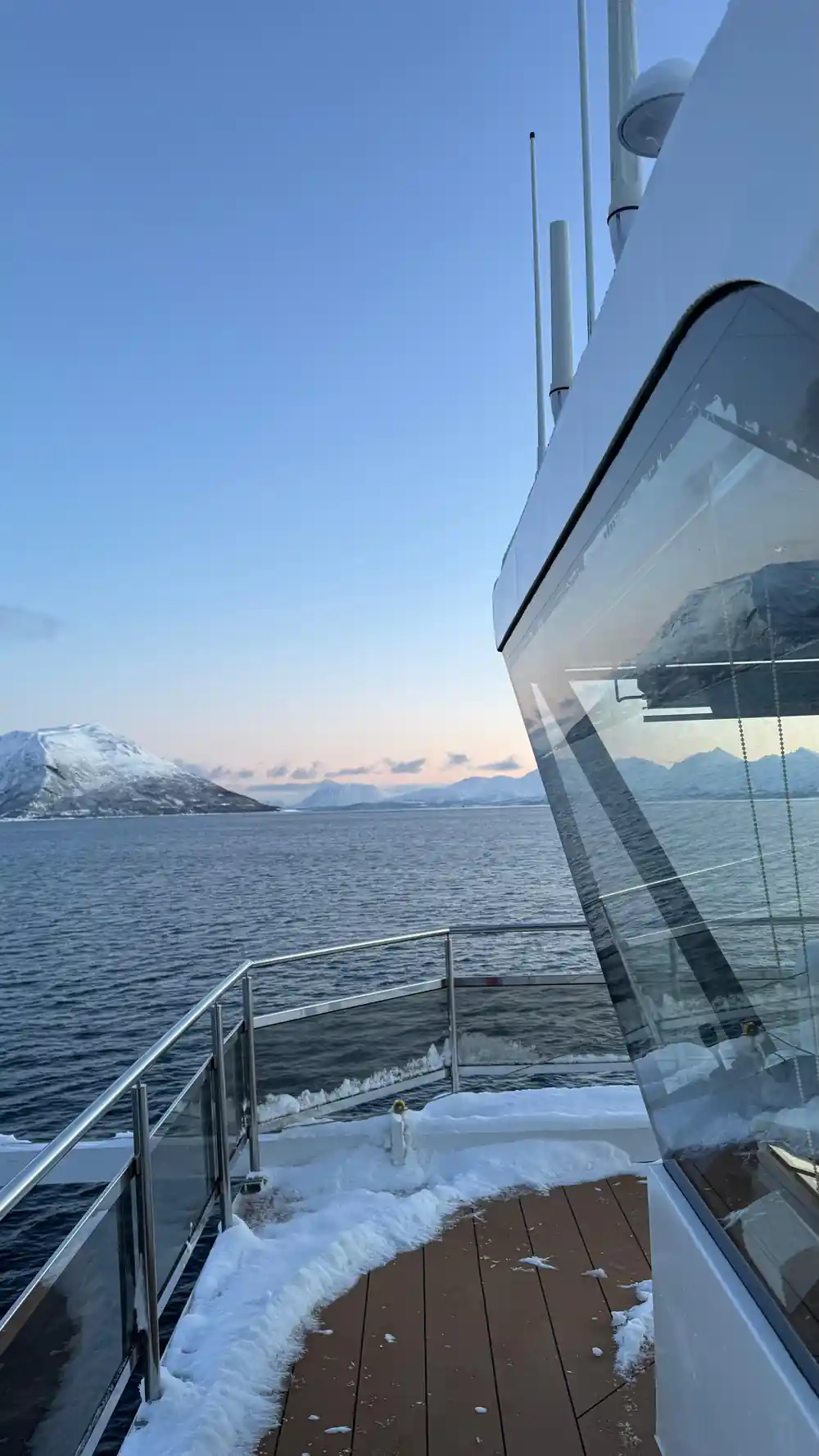
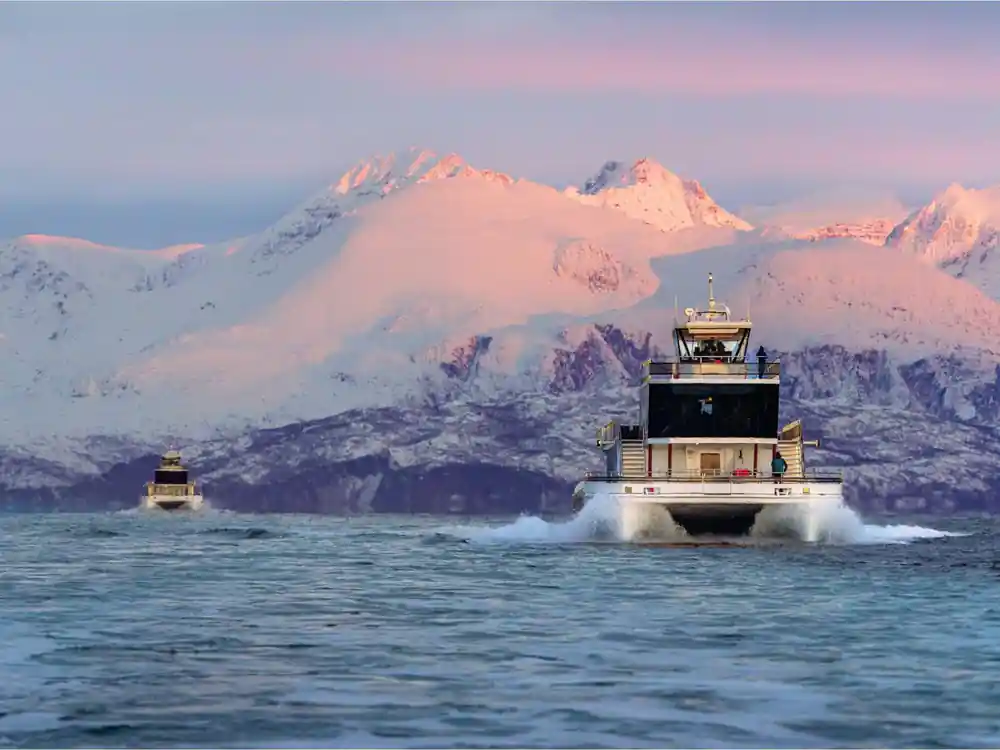
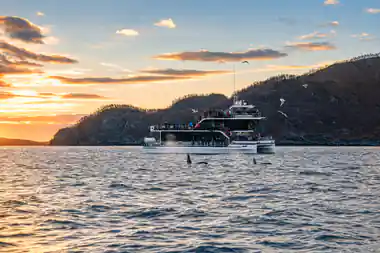
Un catamaran hybride électrique glisse le long des fjords bordés de neige près de Kagsundet.
Baleines, hareng et zones de nourrissage hivernales
En septembre/octobre, le hareng de printemps norvégien migre vers le nord-est jusqu'à ses principales zones d'hivernage au large des côtes et dans les fjords du nord de la Norvège.[24] Pendant l'hiver, les orques et les baleines à bosse se rassemblent dans la zone pour se nourrir de hareng.[17] Ce sont les deux pièces du puzzle qui rendent Kagsundet et les eaux autour de Skjervøy si enrichissantes. Le rythme annuel du fjord est lié au poisson, et les baleines en font partie intégrante.
Les baleines à bosse mesurent 15 à 17 mètres de long, les femelles étant 1 à 1,5 mètre plus longues que les mâles.[25] Les mâles orques peuvent atteindre 6 à 9 mètres de long et peser environ 6 tonnes, tandis que les femelles peuvent mesurer 5 à 7 mètres et peser environ 4 tonnes.[26] Lorsqu'une baleine fait surface à côté du bateau, ces chiffres cessent d'être abstraits. On comprend pourquoi l'équipage demande à tous de rester assis et de parler à voix basse.
Kagsundet offre un point d'observation abrité dans le système de fjords plus vaste. L'arrêt du parcours à Kagsundet vous permet d'observer le détroit à un rythme plus lent.[16] C'est également l'occasion de voir comment fonctionne le paysage : des pentes raides, un plan d'eau étroit et un chenal qui attire les poissons et les animaux qui les poursuivent. Même lorsque les baleines se trouvent plus loin, le paysage retient l'attention. Apportez des jumelles si vous en avez ; elles aident à balayer le détroit à la recherche de souffles et d'éclaboussures.
À quoi ressemble la journée
La visite débute à Tromsø et suit un parcours comprenant les Alpes de Lyngen, le phare de Lyngstuva, Kagsundet, Skjervøy et la Cathédrale arctique.[16] C'est une journée complète sur l'eau, alors habillez-vous en fonction des conditions changeantes. Les grandes vitres et les ponts ouverts du bateau offrent différentes manières d'observer, et l'équipage fait généralement des annonces lorsque quelque chose apparaît à l'avant. Prévoyez de passer la majeure partie de la journée sur le pont, mais sachez que vous pouvez monter à l'intérieur pour vous réchauffer.
Portez des couches superposées, un bonnet chaud et des gants. La température hivernale moyenne à Tromsø est aux alentours de −4 °C.[21] Ajoutez une couche coupe-vent, et gardez une paire de gants de rechange dans votre sac pour lorsque la première paire se mouille. Un tour de cou et des chaussettes chaudes sont également précieux lors d'une longue croisière hivernale.
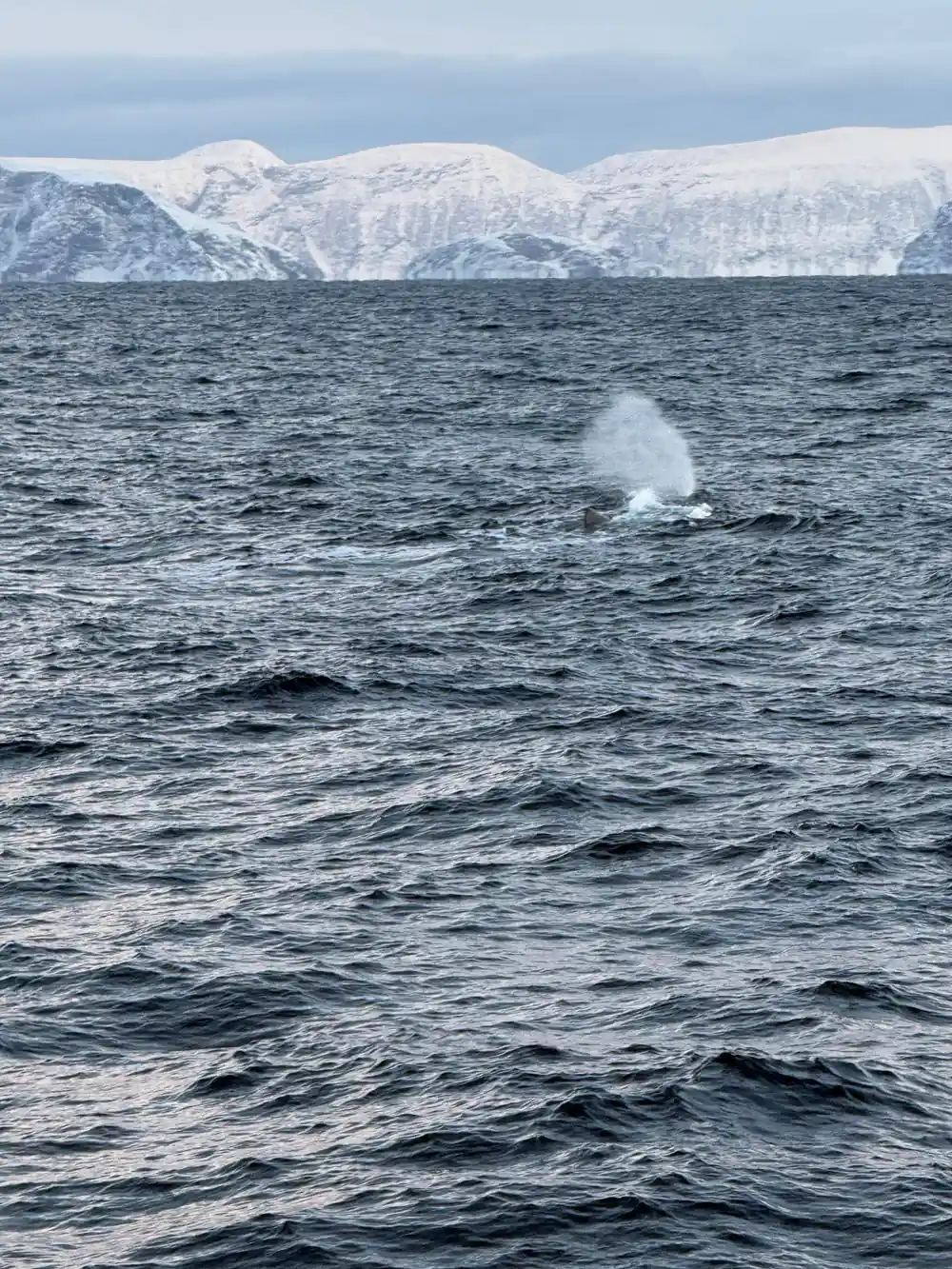
Gardez votre appareil photo à portée de main près de Kagsundet. Les baleines peuvent faire surface à proximité du détroit, et le bateau silencieux vous donne le temps de trouver votre cadrage. Un téléobjectif est utile, mais même un téléphone peut saisir la queue d'une baleine à bosse si vous êtes patient. Observez les mouettes et les ondulations ; elles indiquent souvent l'endroit où les baleines sont sur le point d'apparaître. Réglez votre appareil sur une vitesse d'obturation rapide avant de sortir.
from US$209
Excursion en bateau hybride électrique de 9 heures avec guide anglophone en direct, accès pour fauteuil roulant et annulation gratuite jusqu'à 24 heures.[16]
Conseils pratiques pour votre journée arctique
Commencez par les détails de réservation. Réservez maintenant et payez plus tard, et annulez jusqu'à 24 heures à l'avance pour un remboursement intégral si vos plans changent.[16] Cela est particulièrement utile si vous construisez un itinéraire arctique plus large et souhaitez garder vos options ouvertes. Il est judicieux de fixer votre date dès que vous connaissez vos projets de voyage, et la fenêtre d'annulation gratuite vous laisse une marge d'ajustement.
La visite est accessible en fauteuil roulant, et le guide en direct parle anglais.[16] Informez l'équipage si vous avez besoin d'un peu plus de temps pour monter et descendre du bateau. La zone d'embarquement à Tromsø est compacte, et l'équipe est habituée à aider les visiteurs de toutes capacités. Si vous avez des questions spécifiques de mobilité, contactez l'opérateur avant la réservation.
Respectez les règles de la mer : les bateaux d'observation des baleines en Norvège doivent maintenir une distance d'au moins 0,2 mille nautiques (370 m) des bateaux de pêche, de l'engin de pêche au maillage ou des installations fixes.[27] Cela fait partie de l'observation responsable des baleines, et cela protège les zones de nourrissage tant pour les baleines que pour les pêcheurs locaux.
Quand partir pour les baleines et les aurores boréales
La nuit polaire à Tromsø dure approximativement du 27 novembre au 15 janvier.[28] La lumière du jour est limitée, mais la route des baleines vous emmène tout de même à travers les fjords. La température hivernale moyenne est aux alentours de −4 °C.[21] Au cœur de la nuit polaire, la lumière du midi ressemble davantage à un crépuscule prolongé, ce qui peut faire briller la neige et la mer dans des teintes douces de bleu et de rose.
Les aurores boréales peuvent être visibles dans la région de Tromsø de fin août à début avril, lorsque le ciel est sombre et suffisamment dégagé.[23] Une journée hivernale d'observation des baleines peut être associée à une soirée d'aurores si les conditions le permettent, vous offrant deux expériences arctiques très différentes en un seul voyage. Après une journée sur l'eau, une soirée d'observation des aurores constitue un programme naturel en deux parties.
Tromsø se trouve à environ 350 km au nord du cercle arctique.[29] Le soleil de minuit dure généralement d'environ le 20 mai au 22 juillet.[30] C'est un rappel du fait que cette région oscille entre des hivers sombres et des étés lumineux, et chaque saison a son propre rythme. Pour l'observation des baleines, l'hiver est la saison, mais le reste de l'année possède également son attrait.
Comprendre les règles d'observation des baleines
L'observation responsable des baleines est intégrée à la journée. L'équipage maintient une distance de sécurité avec les bateaux de pêche, l'engin de pêche au maillage et les installations fixes conformément aux exigences : au moins 0,2 mille nautiques (370 m).[27] Cette règle de distance fait partie du respect plus large envers le fjord d'exploitation. Elle implique également que le bateau ralentit parfois ou change d'itinéraire, vous comprendrez donc pourquoi la visite dure toute la journée plutôt qu'une simple boucle rapide.
La conception hybride-électrique contribue à réduire le bruit et les émissions, ce qui est essentiel dans un lieu où les animaux se nourrissent.[18] Une approche plus silencieuse vous donne également de meilleures chances d'observer la faune se comporter naturellement plutôt que de simplement réagir au bateau. Vous pourrez remarquer que le moteur s'éteint lorsque le capitaine se positionne face à une baleine.
Avec un guide anglais en direct à bord, vous repartirez avec une meilleure compréhension du détroit, du hareng et des baleines qui viennent s'y nourrir.[16][17] Vous pourrez également apprécier davantage la manière dont un chenal abrité peut façonner une journée entière dans l'Arctique. C'est le genre de savoir qui vous accompagne après le retour du bateau au port.
Longueurs des baleines dans les zones de nourrissage
Comparer les prix des excursions d'observation des baleines
USD - prix pour les identifiants d'excursion.[16][19][20]
Quand réserver l'observation des baleines à Kagsundet
Planifiez votre voyage
Choisissez votre date
Vérifiez la disponibilité des horaires de départ pour l'excursion de 9 heures.[16]
Réserver maintenant, payer plus tard
Réservez avec la possibilité de payer plus tard et annulez gratuitement jusqu'à 24 heures à l'avance.[16]
Habillez-vous pour l'Arctique
La température hivernale moyenne est d'environ −4 °C, donc les couches, les bottes chaudes et un chapeau sont indispensables.[21]
Retrouvez le bateau
L'excursion part de Tromsø en direction des Alpes de Lyngen et de Kagsundet.[16]
Repérez les baleines
Observez les orques et les baleines à bosse se nourrissant de harengs dans les fjords abrités.[17][24]
Réservez votre journée d'observation des baleines à Kagsundet depuis Tromsø
à partir de 209 US$Réservez maintenant, payez plus tard