Quick summary
- Tromsø: Whale Watching Tour by Hybrid-Electric Boat lasts 9 hours and has an English-speaking live guide on board.[1]
- Hybrid-electric ships are designed with the best sightseeing experience in mind, which helps when you are trying to hold a long lens steady.[2]
- During the winter, orcas and humpback whales gather in the fjords north of Tromsø to feed on herring.[3]
- The polar night in Tromsø lasts approximately from 27 November to 15 January, so expect low, moody light on midwinter departures.[4]
- Book now and pay later; no fee to cancel up to 24 hours before, and you get a full refund.[1]
- Top choice Hybrid-Electric Whale Watching from US$209 Duration9 hours[1]Rated4.48 from 6,644 reviews[1]Live guideEnglish[1] Check availability
- Premium 24hr Cruise from US$681 Duration1 day[5]Rated4.90 from 47 reviews[5]Live guideEnglish[5] See this tour
- RIB Whale Safari from US$257 Duration4-12 hours[6]Rated4.95 from 113 reviews[6]Live guideEnglish[6] See this tour
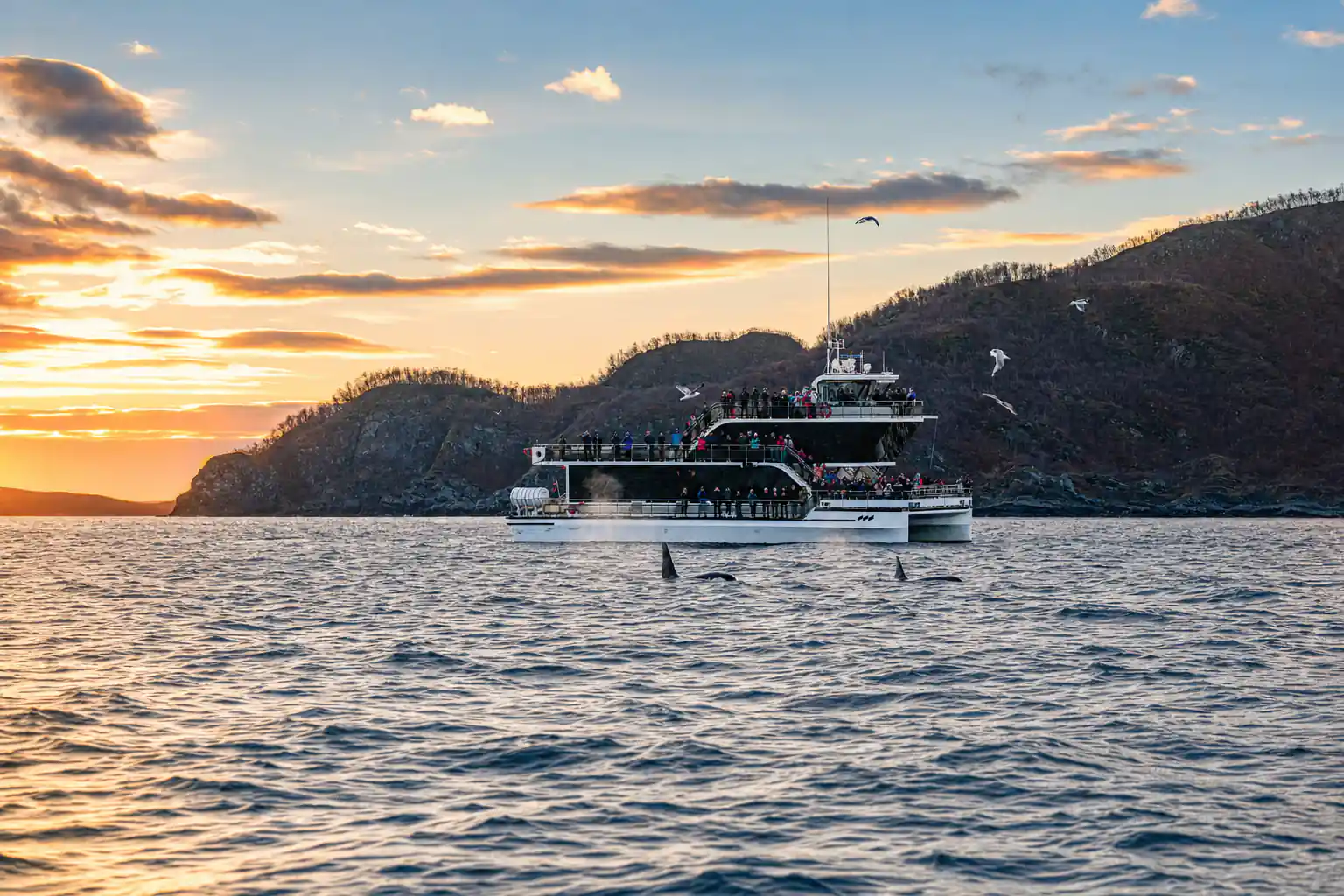
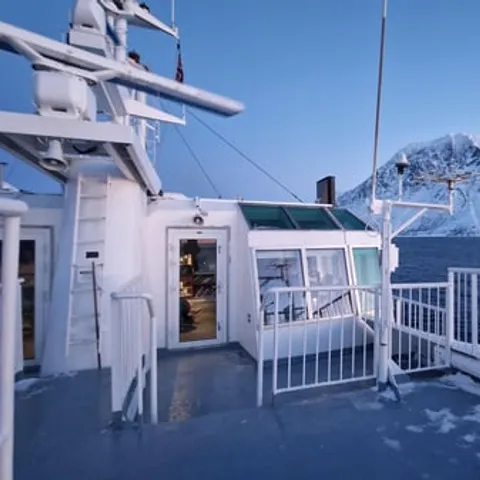
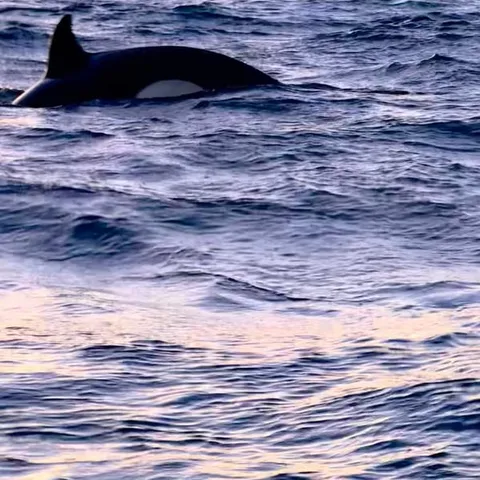
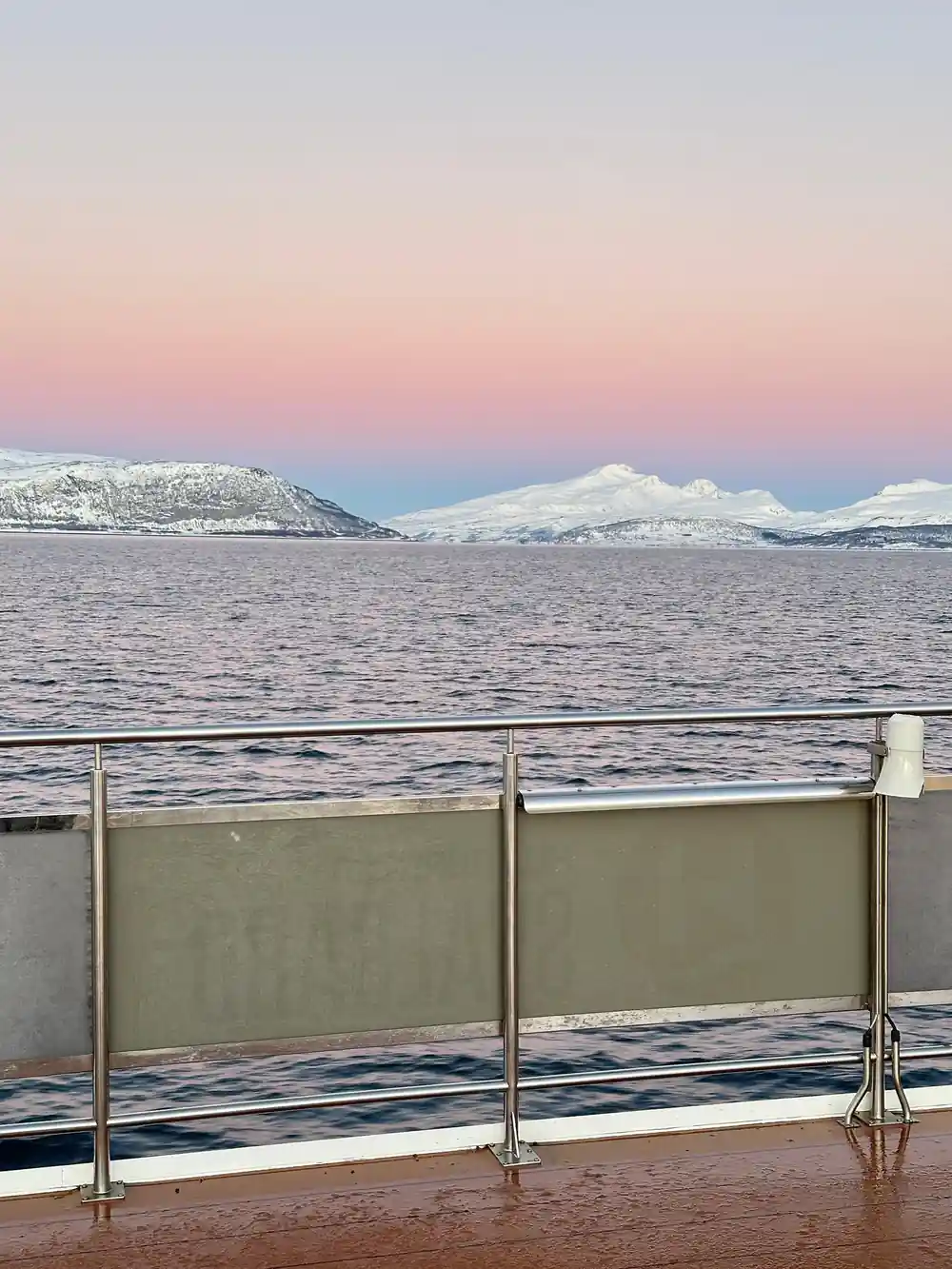
In September/October, the herring migrates northeastward to the main wintering areas off the coast and in fjords in northern Norway.
A calm, photo-friendly way to meet Arctic whales
On the day
Photo kit
- Pack a zoom lens long enough to frame distant surfacings.
- Keep a rain cover or dry bag for salt spray and snow.
- The tour is wheelchair accessible, so you can set up at deck level.[1]
- Use a strap or wrist loop so your camera stays secure when the boat moves.
Focal Length for Distant Arctic Surfacings
Whales rarely pose right next to the boat. From the deck of the hybrid-electric catamaran, you may spot a blow, a tail, or a dark back breaking the surface beyond comfortable reach. A modest zoom lens is your best friend. A zoom with enough reach helps you fill the frame when a humpback lifts its tail or an orca surfaces in a channel of dark water.[1]
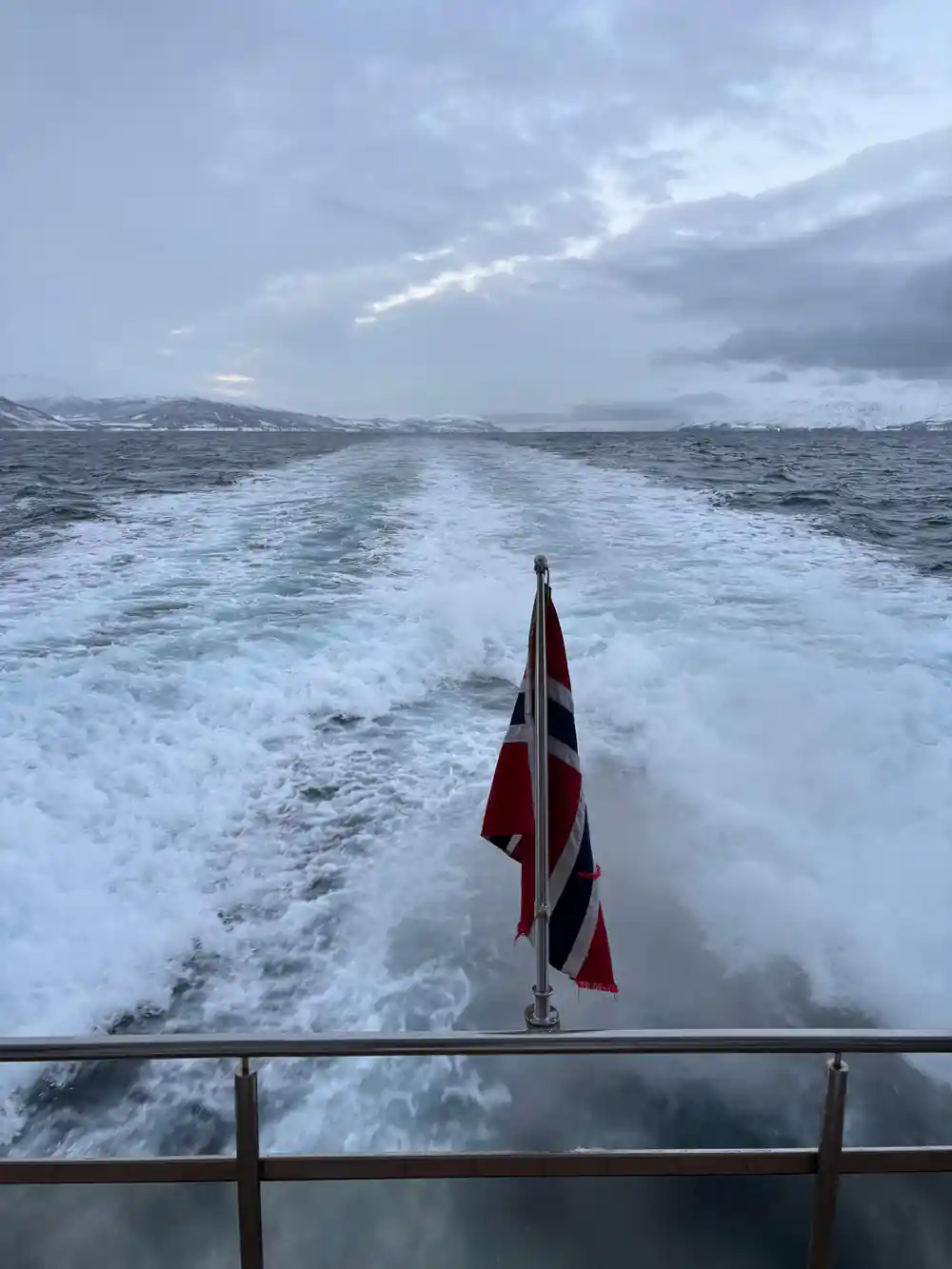
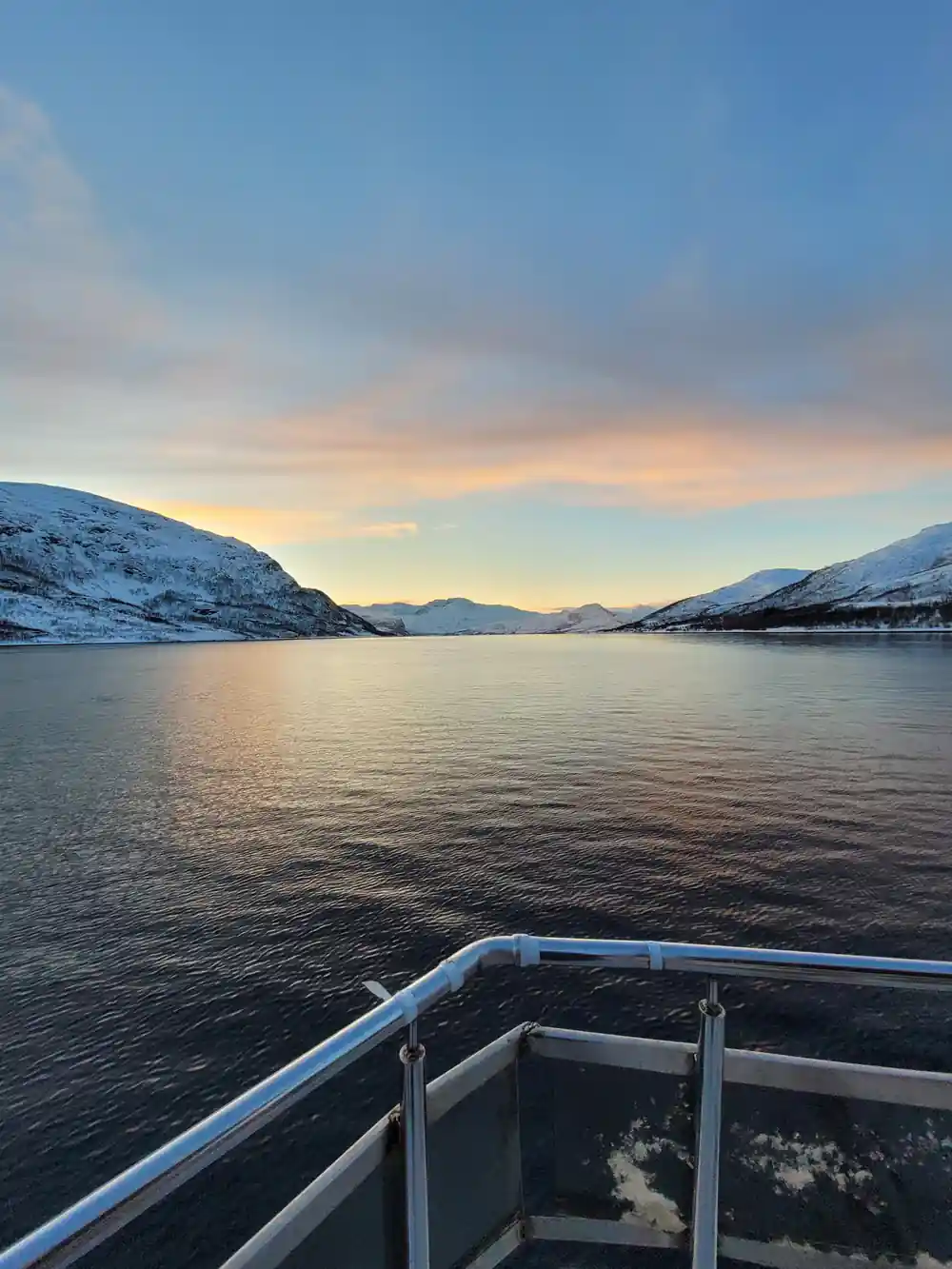
On the shorter end, a wide-angle zoom is useful for shooting the snowy peaks, the catamaran's wake, and wide scenes that include the whole fjord. The route passes sights such as the Lyngen Alps and the lighthouse at Lyngstuva, so a wide lens helps you capture the sense of place before the whale action starts.[1]
If you are travelling light, a high-quality bridge camera or a smartphone with a telephoto lens can still work. You will simply have less room to crop, so spend more time tracking the horizon and let the guide's announcements tell you where to look.
Exposing in Low Arctic Light and Bright Water Reflections
Winter light in Tromsø is rarely harsh. The sun stays low, and during the polar night from 27 November to 15 January it may not rise above the terrain at all.[4] That soft, cool light is lovely for moody whale portraits, but it tests your camera's autofocus. Use a fast shutter speed and raise the ISO rather than letting the shutter drop too low.
Bright reflections on open water can fool your meter. If you let the camera average the exposure, dark whale backs can turn into grey silhouettes. Use exposure compensation when the scene is mostly dark water, then check the histogram. You want detail in the black back without blowing out the white splash of a blow.
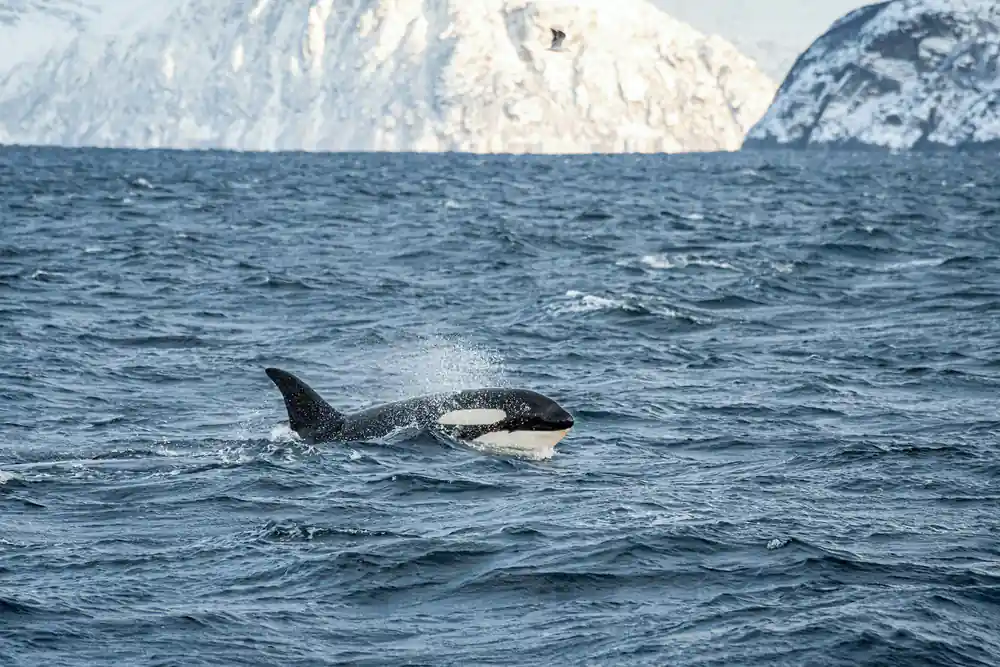
For the best chance of a sharp shot, shoot in burst mode and keep your focus point on the whale's back or the blowhole area. Orcas and humpbacks surface in a rhythm; after an initial breath, they often take several more before a deeper dive, so tracking through a burst gives you a series of frames to choose from.
A humpback whale tail rises above dark Arctic water on a winter tour.
Finding Clear Sightlines on the Catamaran Deck
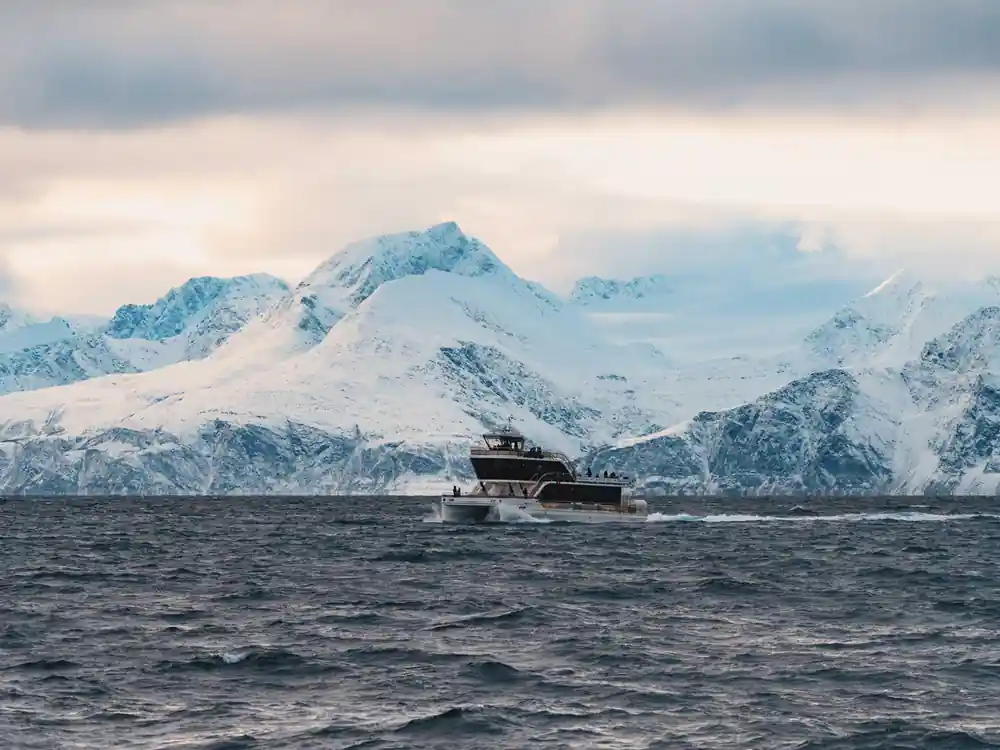
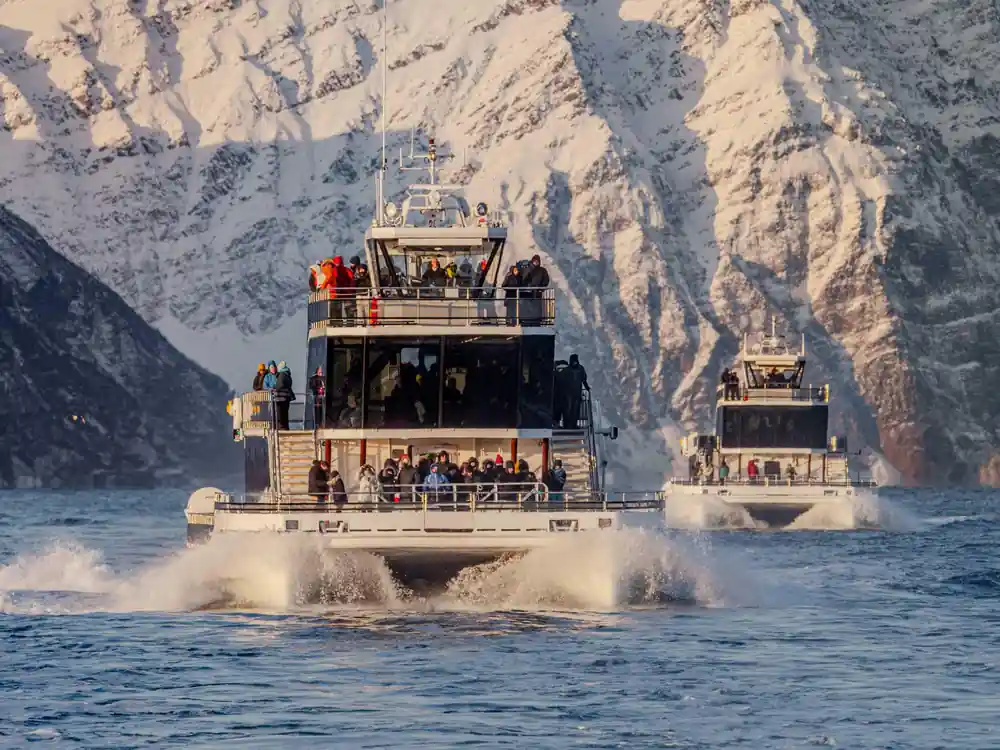
A catamaran has wider deck space than many monohulls, which helps when many photographers all move to the same rail. Hybrid-electric ships are designed for sightseeing, with passenger comfort and viewing in mind.[2] Find a spot near the bow or along the side where you are not shooting over someone else's shoulder, and brace your elbows on the rail.
On the 9-hour tour, there will be time to move around.[1] When the guide slows the boat near Skjervøy or in Kågsundet, choose a side that gives you the best angle on the whales.[1] Look for clear sightlines between other photographers: a gap at the rail, a raised deck step, or an area where you can stand slightly above the crowd.
Be patient and polite. Whales can be scattered, and the best sightline is not always the one closest to the boat. A slightly elevated position with a clean view of the water is often better than being right at the rail with spray in your lens.
Protecting Your Camera from Salt Spray and Cold
Arctic boat trips combine salt spray, snow, and cold air, which is a tough combination for camera gear. In winter, Tromsø's average temperature is around -4°C, and wind on the open deck adds to the chill.[7] Bring a rain cover or a plastic bag with a rubber band around the lens, and keep a dry cloth in your pocket for wiping spray.
Condensation is another enemy. If your camera is cold and you bring it inside a warm cabin, moisture can form on the sensor and lens. Seal your camera in a zip-lock dry bag before going indoors, and let it warm up slowly. Spare batteries drain faster in cold weather, so keep extra ones in an inner pocket close to your body.
Salt spray can leave fine deposits on glass. Use a blower brush and a microfibre cloth, but avoid wiping sand-like salt particles across the lens. If you wear glasses or sunglasses, pack an extra microfibre cloth for them as well.
from US$209
Whale watching tour by hybrid-electric boat from Tromsø: 9 hours, English-speaking live guide, wheelchair accessible.[1]
Bracing for Boat Motion While Keeping Your Shots Sharp
Even a big catamaran moves in winter seas. The hybrid-electric design makes the experience smoother, but you still need a solid stance.[2] Stand with your feet shoulder-width apart, knees soft, and keep your elbows tucked against your body. Hold the camera with your left hand under the lens and your right hand on the body, then press the camera gently against your forehead or cheek.
Use image stabilisation if your lens has it, and consider a fast shutter speed for wildlife. A rule of thumb is to use a shutter speed at least as fast as the reciprocal of the focal length, but on a moving boat you may need to go faster. Increasing the ISO is usually better than losing the shot to motion blur.
If you are prone to seasickness, take medication before departure and stay outside in fresh air rather than below deck. A calm photographer takes sharper photos, and the 9-hour day is long enough to enjoy multiple viewing stops without rushing.[1]
Phone Photography and Its Real Limitations
A modern smartphone can capture beautiful Arctic scenery, and for video, it is often the easiest tool on a moving boat. But when it comes to whale photography, the phone's wide-angle lens makes distant animals look tiny. You can still shoot great photos by focusing on the environment, the boat, and the spray, then crop or zoom only if your phone has a good telephoto lens.
For a phone, hold it steady with both hands and tap on the whale to lock focus. Use burst mode or continuous video to capture several frames as the animal surfaces. If your phone has a telephoto lens, switch to that rather than digital zoom, which softens detail.
The easiest phone shots are of the moment after a whale dives: a tail fluke above the water, a ripple spreading across the fjord, or an orca swimming past a snowy mountain. These images are more about composition than raw focal length, and they tell the story of a Tromsø killer whale swimming trip very well.
Drones and Equipment Considerations
Drones can capture stunning overhead footage of whales, but they are not practical on a passenger boat. You need space to launch and land, and many tour operators restrict drone use for safety and animal welfare. It is better to leave the drone at home and concentrate on long-lens shots from the deck.
If you bring extra equipment, keep it simple. A lightweight tripod or monopod can help for stable shots, but on a crowded deck it may get in the way. A small beanbag is easier to rest on the rail. A circular polariser can cut glare from the water and enrich the dark tones of a whale's back.
The most valuable equipment is warm clothing and spare batteries. If you are comfortable and your camera can keep working, you will be ready when an orca or humpback appears. And since the tour route takes you to the feeding grounds north of Tromsø, each moment on deck is part of the experience, not just a wait for the next sighting.[3]
How big are the whales you may see?
Compare whale tour prices
From-prices in US dollars from GetYourGuide listings.[1][5][6][10]
When to book
Plan your whale photo trip
Choose your date
Whales are most reliably seen in winter, when orcas and humpbacks feed on herring in the fjords.[3]
Book the hybrid-electric tour
The 9-hour tour departs from Tromsø and includes an English-speaking guide.[1]
Pack your camera kit
Bring a zoom lens, spare batteries, dry bags, and warm layers for -4°C average winter temperatures.[7]
Arrive early at the dock
Give yourself time to find a good spot on deck and set your camera before departure.
Watch for the guide's calls
The route passes Lyngen Alps, Lyngstuva lighthouse, and Kågsundet before Skjervøy.[1]
Ready to photograph whales in the Arctic?
from US$209Reserve now & pay later