Quick summary
- The hybrid-electric tour from Tromsø lasts 9 hours and costs from US$209[1]. It has a live English guide[1], wheelchair access[1] and free cancellation up to 24 hours in advance[1].
- Modern hybrid-electric ships are designed with sightseeing in mind[2]. Big windows and a stable catamaran hull make it easy to watch whales without feeling rushed.
- A RIB safari from Tromsø or Skjervøy costs from US$257[3], is limited to 12 participants[3] and has a 4-12 hour duration[3].
- During the winter, orcas and humpback whales gather north of Tromsø to feed on herring[4]. The herring move into northern Norway's fjords from September/October[5].
- The polar night lasts approximately from 27 November to 15 January[6]. Northern lights may be visible from late August to early April whenever the sky is dark and clear[7].
- Top choice Hybrid-electric whale watching from US$209 Duration9 hours[1]Rating4.48 from 6,644 reviews[1]Live guideEnglish[1] Check availability
- Catamaran whale watching from US$209 Duration6 hours[8]Rating4.23 from 250 reviews[8]Live guideEnglish[8] See this tour
- RIB safari from US$257 Duration4-12 hours[3]Rating4.95 from 113 reviews[3]Live guideEnglish[3] See this tour
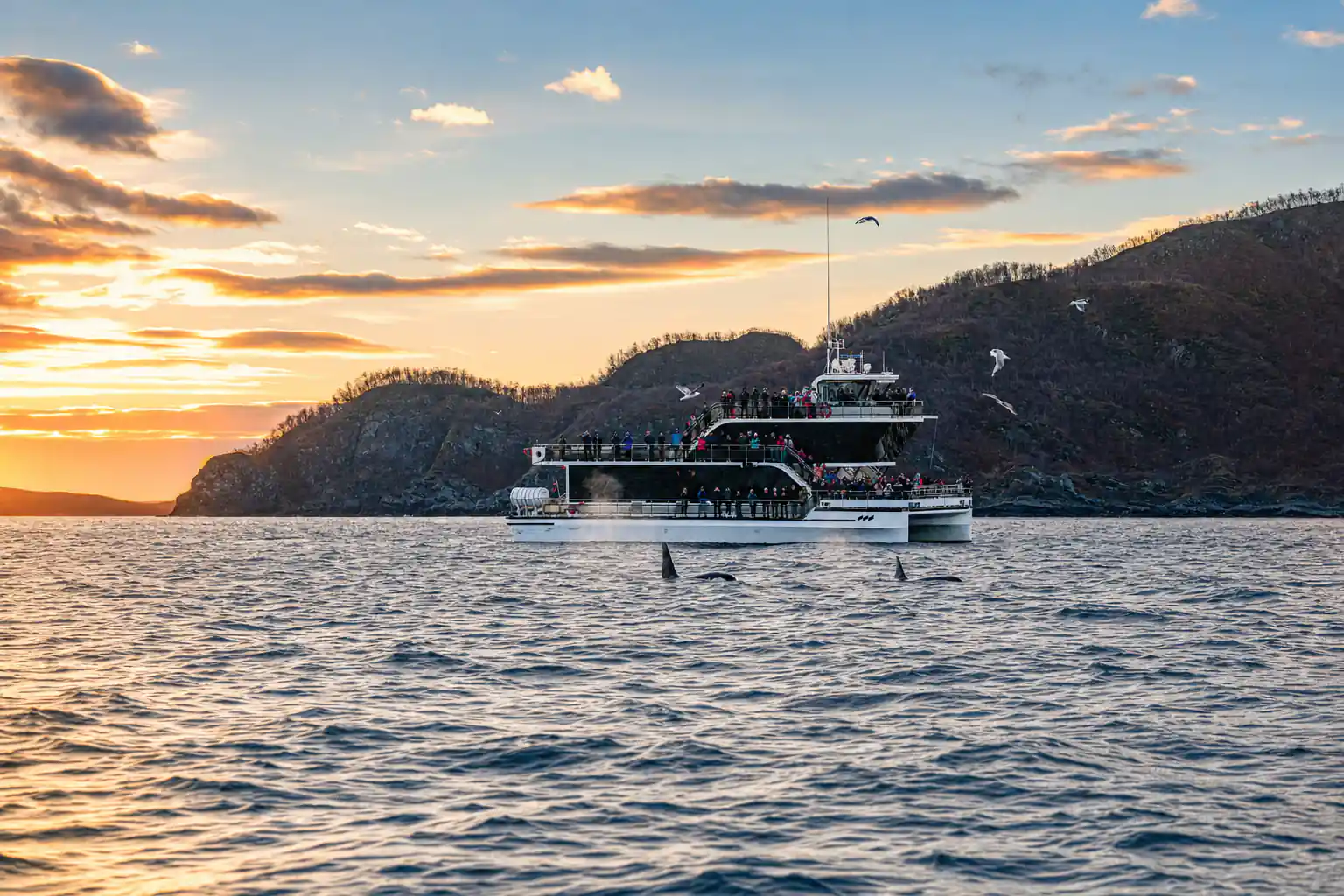
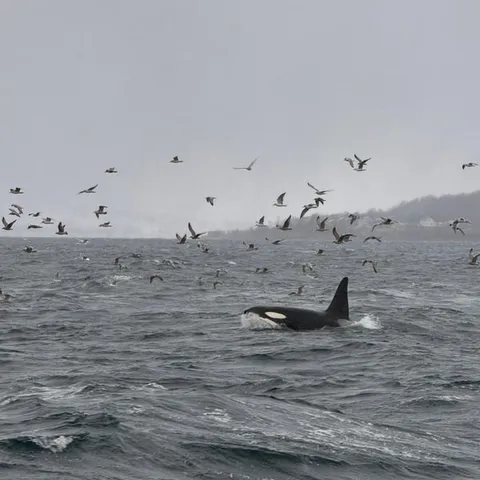
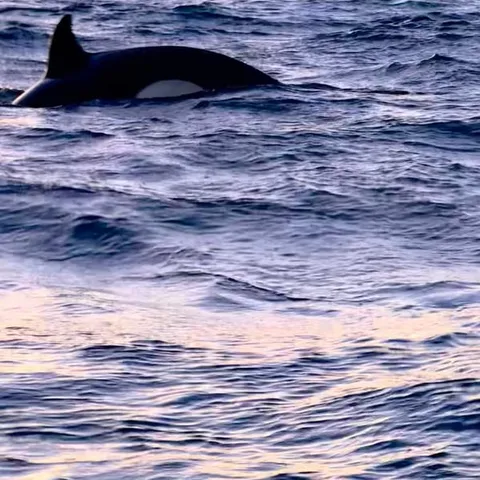
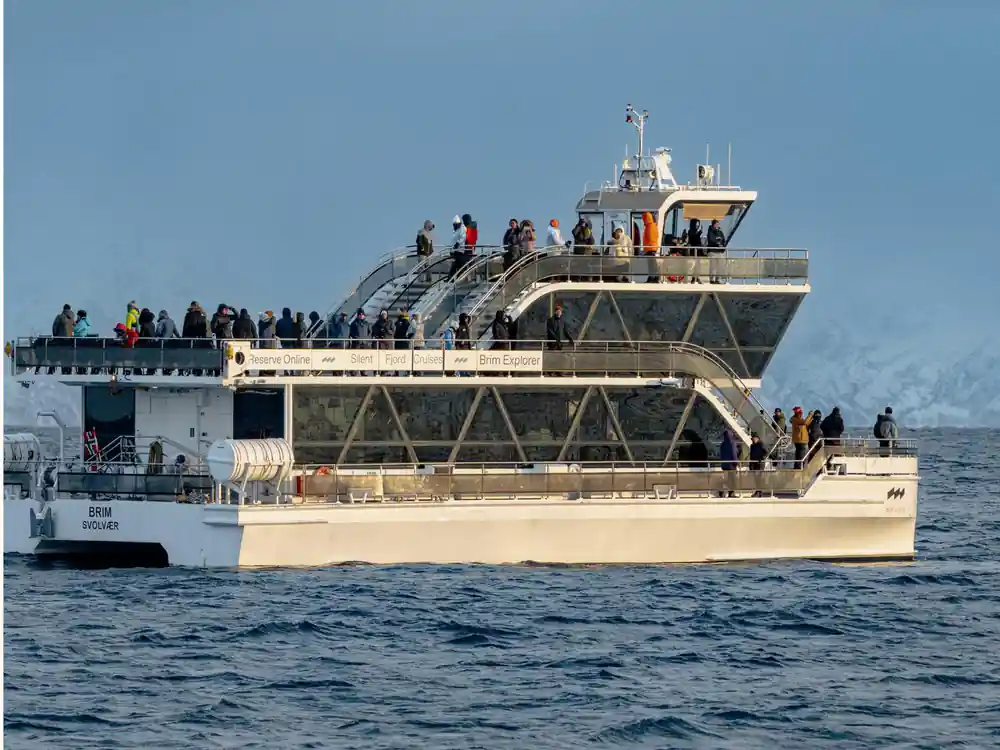
Our modern hybrid-electric ships are designed with the best sightseeing experience in mind.
A calm, clever way to meet Arctic whales
Good to know
Why whale watching in Tromsø
Tromsø sits about 350 km north of the Arctic Circle[11], which puts it right in the path of the winter herring run. Each autumn, Norwegian spring-spawning herring migrates northeastward into the fjords of northern Norway[5]. That bounty draws orcas and humpback whales close to shore, and during winter these animals gather in the area to feed[4].
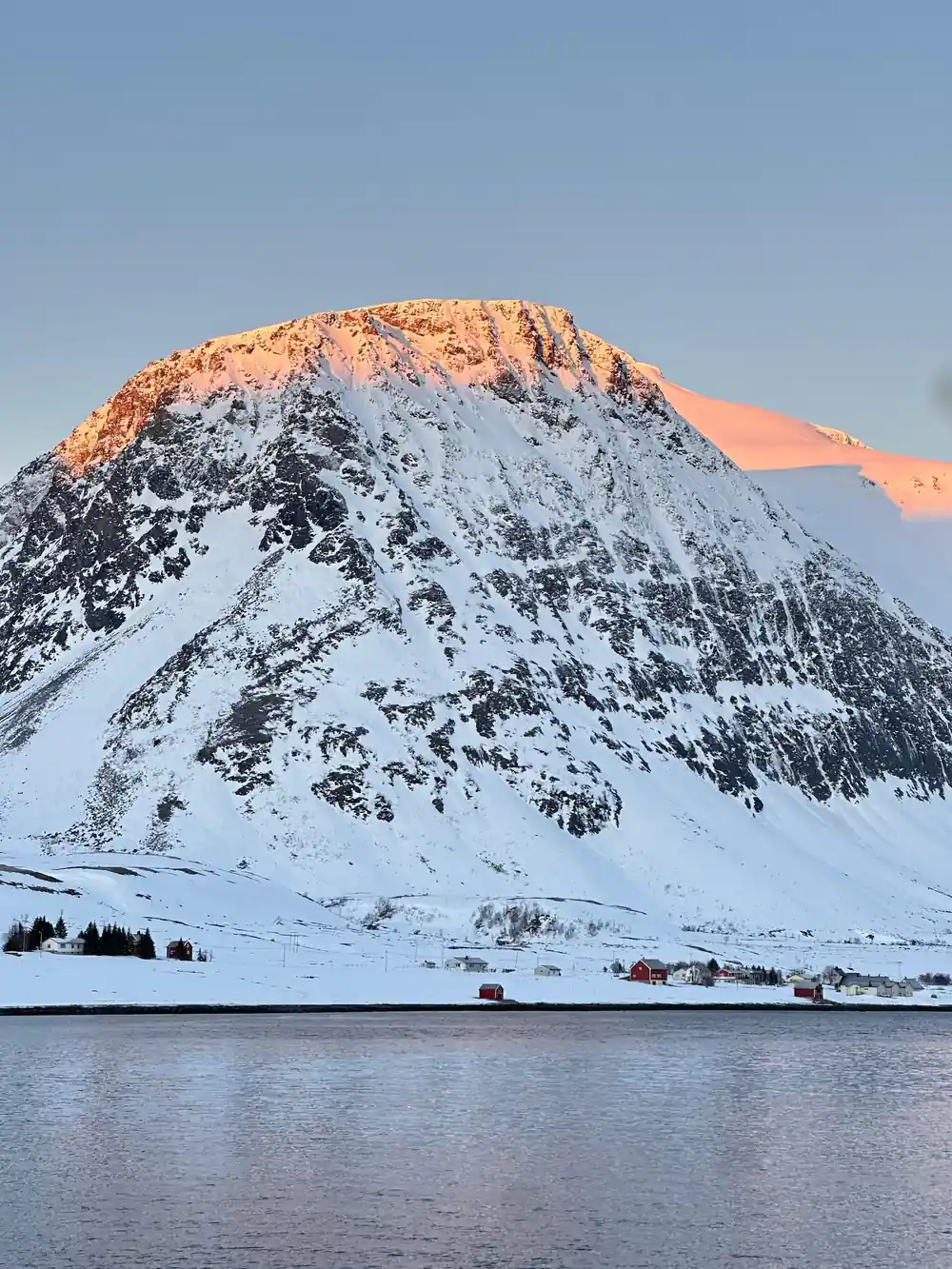
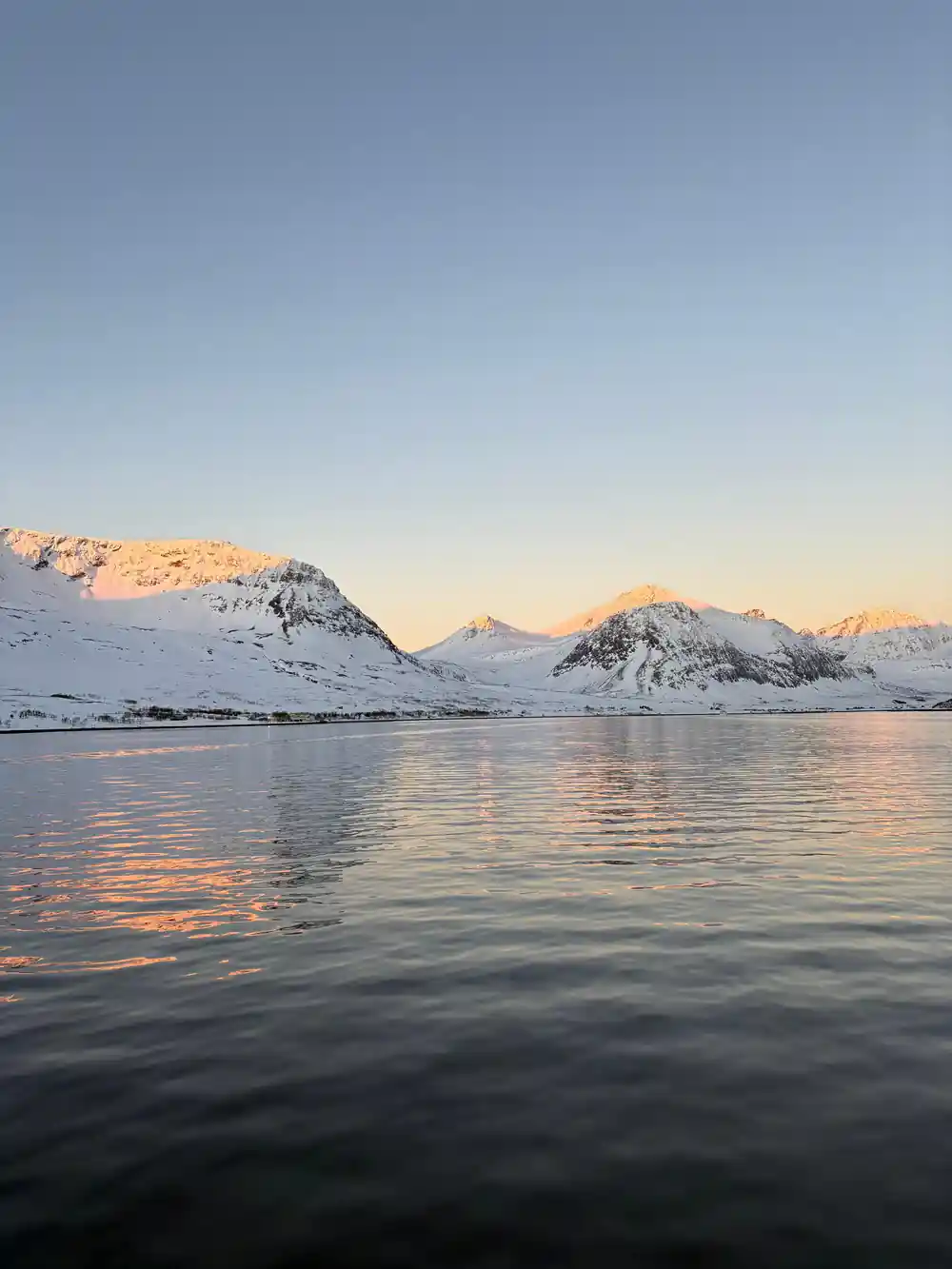
For visitors, this means you do not need to cross the open ocean to find whales. The route taken by the hybrid-electric tour heads from Tromsø toward the Lyngen Alps, passes Lighthouse Lyngstuva and Kagsundet, then reaches Skjervøy before returning past the Arctic Cathedral[1]. Along the way, snow-covered peaks drop straight into dark water, and the light never quite goes to normal in the depths of winter.
Whale watching is also a good match for the Arctic sky. Northern lights may be visible in the Tromsø region from late August to early April, whenever the sky is dark and sufficiently clear[7]. A winter cruise can therefore deliver both whale tails and green curtains overhead, though dark skies matter most for aurora. Whale watching tours in this region tend to be sociable, multi-hour outings, and the crew's knowledge of local feeding behaviour makes a big difference.
The hybrid-electric boat
The tour booked from this site uses a hybrid-electric boat, a design that keeps engine noise low and fumes modest. Modern hybrid-electric ships are designed with sightseeing in mind[2]. For whale watching, quieter vessels can make the experience more relaxed, though no fact promises that whales always come closer.
The boat has enough indoor space for a 9-hour trip[1], and the itinerary is structured around comfort. You will have a live English guide[1] and wheelchair access[1], which helps if movement is tricky. Big viewing decks and a stable hull mean you can move around rather than being stuck in one seat.
If you are deciding on the best whale watching tour Tromsø, this hybrid-electric cruise is a strong all-rounder. It is not the cheapest at from US$209[1], but the price includes a long route, guide, and booking flexibility. Many travellers find the trade-off worth it for the quieter ride. You could also pair it with a relaxed evening in town, or with the campfire stories and hot drinks that many northern lights tours include. The choice really depends on how you want to spend the daylight hours.
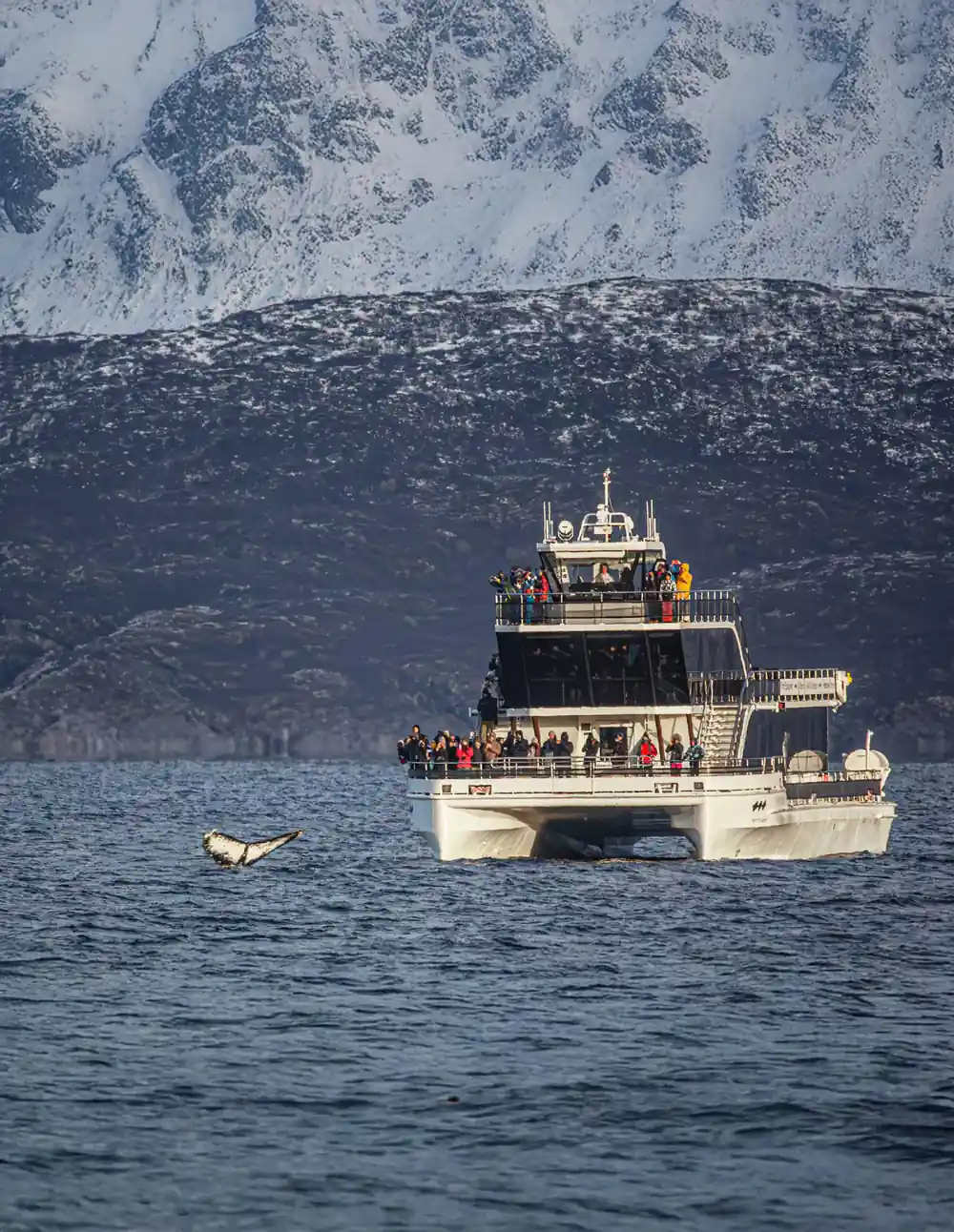
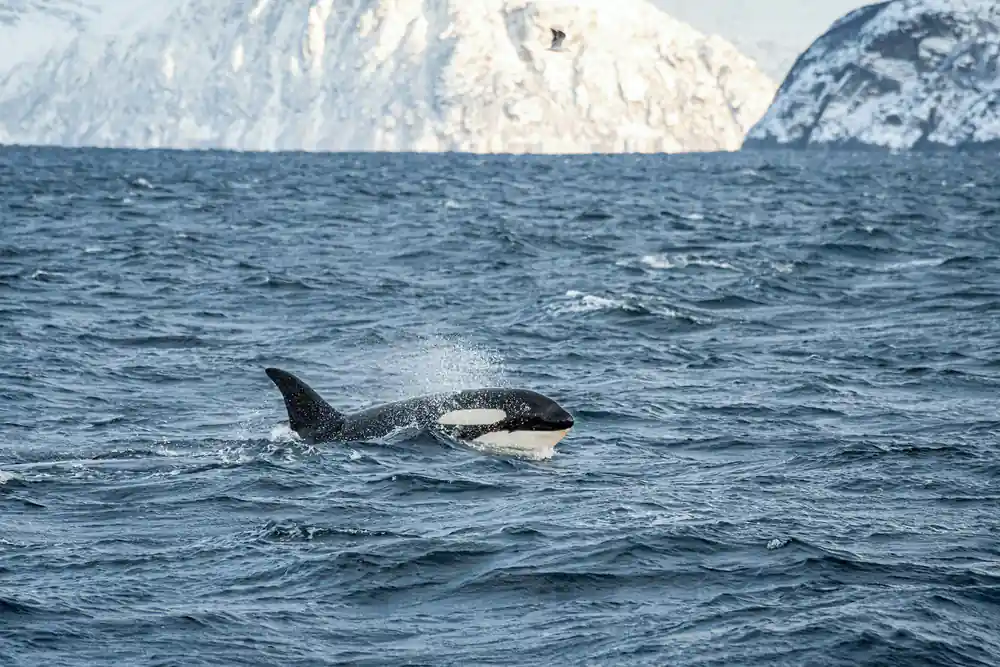
A humpback tail flukes against dark Arctic water as the catamaran slows near the feeding grounds.
What you will see
Orcas and humpback whales are the stars of the winter fjords. Male orcas can be 6-9 meters long and weigh about 6 tonnes, while females can be 5-7 meters long and weigh about 4 tonnes[12]. Humpbacks are larger still, reaching 15-17 meters long, with females 1-1.5 meters longer than males[13].
You may see whale blows, tail flukes or even breaching behaviour, depending on the day. The boat keeps a respectful distance, and Norwegian rules require whale watching boats to stay at least 0.2 nautical miles, or 370 m, away from fishing vessels, steng or fixed gear[14]. That rule is about fishing gear, not whales, but it shows how carefully this industry is managed.
The route toward Skjervøy is known for feeding aggregations. Skjervøy is listed as one of the stops on the tour[1], and it is here that the herring-rich waters often concentrate both species. Bring binoculars if you have them, though the crew will point out blows and splashes as they appear. Whale behaviour changes with wind and tide, and a patient crew with a steady boat is worth as much as a pair of binoculars.
Planning your day
The tour lasts 9 hours[1] and starts from Tromsø. Dress in layers, with a warm hat, gloves and a windproof outer layer; standing still on deck gets cold even if the air temperature is only around −4°C[10]. The boat has shelter, but you will want to step outside for the best views.
Arrive easily ahead of departure. Travel between Tromsø Airport and the city centre takes about 10-20 minutes[9], so connecting for a morning departure is straightforward. If you are staying in the city, many hotels are central to us. Free cancellation up to 24 hours in advance[1] gives you room to adjust plans. A thermos of something hot is a simple pleasure on a cold deck, and many travellers wish they had brought a spare glove, battery pack or camera lens cloth. Moist air can freeze; keep electronics close to your body when you head outside.
Because the tour is wheelchair accessible[1], it suits travellers who cannot manage steep ladders on smaller boats. It also works well for families, though younger children should be comfortable with a long day at sea. Snow along the coast can be dazzling, so sunglasses help in any weak winter sunlight.
from US$209
Sail from Tromsø on a hybrid-electric boat, spot whales near Skjervøy, and ride home past the Arctic Cathedral.
When to go
Whale watching season in Tromsø tracks the herring. The herring migrate northeastward in September/October to wintering areas off the coast and in fjords in northern Norway[5], and whales gather through the winter months[4]. Most trips run when darkness also gives a chance of northern lights, which may appear from late August to early April[7].
Midwinter has the polar night, lasting approximately from 27 November to 15 January[6]. That means the sun stays below the horizon, but the light at midday can still be beautiful. In late winter, days grow longer quickly, and when late spring arrives, Tromsø's midnight sun typically runs from about 20 May to 22 July[15].
For whales, the peak herring feeding period is generally mid-winter, though no fact names a single best month. The RIB season at Andenes runs June to September at a different part of Norway[16], so summer visitors should look north to Andenes rather than expecting the same whale show near Tromsø. If you travel in early autumn, you may find quieter harbours and softer light, while late winter gives more daylight for photography. Either way, the whales remain the main draw.
Practical tips
Book with the flexibility you need. This tour lets you reserve now and pay later, with free cancellation until 24 hours before.[1] That gives you freedom to watch the weather forecast and aurora odds before committing.
Think about the return journey. The itinerary finishes past the Arctic Cathedral[1], which sits on the eastern side of Tromsø island. From there it is easy to continue into the city centre by public transport or taxi, depending on the time. The exact drop-off point is not specified, so ask the operator when booking if you need precise details. The café or bar on board can be a welcome refuge between sightings, and moving around the boat helps you stay warm without missing the action. Ask the crew where they expect to encounter feeding pods; routes adapt to weather and wildlife reports.
If you want a faster, more exposed option, compare with a RIB safari. A small group RIB boat from Tromsø or Skjervøy costs from US$257, lasts 4-12 hours and is limited to 12 participants[3]. Those boats get closer to the water but are colder and bumpier, so choose based on your comfort level.
Is this tour right for you?
This best Tromso whale watching guide would recommend the hybrid-electric cruise for travellers who value comfort, accessibility and a stable platform. It is a long day at 9 hours[1], but the time at sea increases your chances of finding whales and gives room for scenic cruising through the Lyngen Alps. No tour can guarantee a whale, but the odds here are helped by the herring, the sheltered fjords and the experience of the operators. The calm, quiet platform also makes it easier to hear the commentary and to watch the horizon without strain.
If you have limited mobility, wheelchair access[1] makes this a standout choice among whale watching boats. If you prefer high-speed adventure, however, a RIB safari might feel more exciting. The hybrid-electric boat is quieter, which many wildlife lovers appreciate.
In short, think about what kind of Arctic day you want. If you are after a relaxed, well-supported expedition with a live English guide, this tour fits beautifully. And if the aurora appears as well, you will have had one of those days you remember for years.
Whale watching tour durations
Compare whale watching prices
Amounts are US dollar from-prices from GetYourGuide listings[1],[8],[3],[19],[20].
Season by season
Plan your whale watching trip
Pick your season
Whales gather north of Tromsø during winter[4], and herring move into northern fjords from September/October[5].
Compare boat styles
Choose a stable catamaran for comfort or a RIB for speed. Tour prices start from US$209 for the hybrid-electric option[1].
Book with flexibility
Book now, pay later, and you can cancel for free until 24 hours ahead[1].
Pack for the Arctic
Dress warmly. Tromsø’s winter temperatures average around −4°C[10].
Enjoy the route
Watch for whales as you pass the Lyngen Alps, Lighthouse Lyngstuva, Kagsundet and Skjervøy[1].
Ready to meet the whales?
from US$209Reserve now & pay later