Quick summary
- The captain decides if it is safe to sail. Norwegian rules require whale watching boats to stay at least 0.2 nautical miles (370 m) from fishing vessels, steng or fixed gear.[7]
- The polar night in Tromsø lasts approximately from 27 November to 15 January.[8] The average winter temperature is around −4°C.[9] Daylight is scarce, so sailing happens in twilight or darkness.
- During the winter, orcas and humpback whales gather in the area north of Tromsø to feed on herring.[10] This is the time when the whale tour route heads towards Skjervøy.[11]
- This wheelchair accessible tour has a live English guide and lasts 9 hours.[11] It runs from Tromsø to Skjervøy, Norway, with the Lyngen Alps and Lighthouse Lyngstuva on the way.[11]
- You can reserve immediately and pay later, with full refund for cancellations made at least 24 hours ahead.[11] Keep an eye on the forecast before committing.
- Top choice Hybrid-Electric Whale Tour from US$209 Duration9 hours[11]Rating4.48 from 6,644 reviews[11]GuideLive English guide[11]Access and group sizeWheelchair accessible[11] Check availability
- Premium 24hr Cruise from US$681 Duration1 day[12]Rating4.90 from 47 reviews[12]GuideLive English guide[12]Access and group sizeSmall group available[12] See this tour
- RIB Boat Safari from US$257 Duration4 - 12 hours[13]Rating4.95 from 113 reviews[13]GuideLive English guide[13]Access and group sizeLimited to 12 participants[13] See this tour
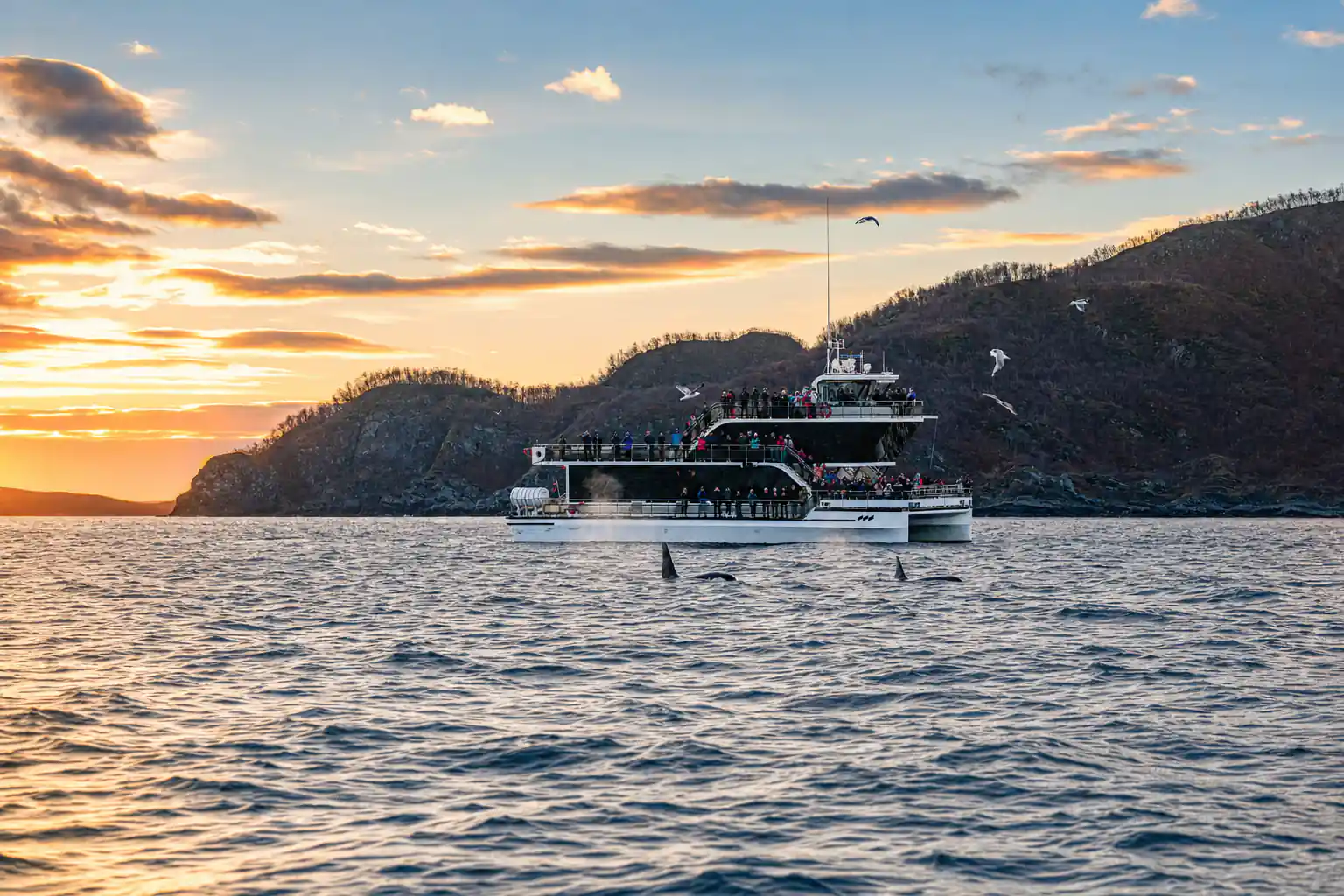
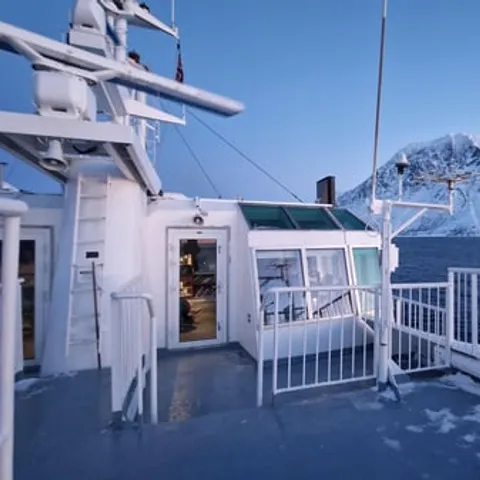
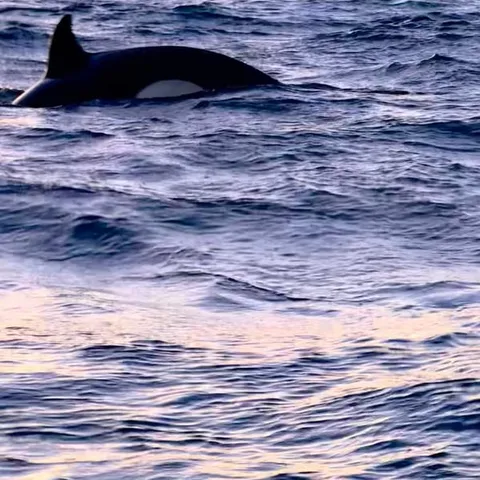
The Polar Night lasts approximately from 27 November to 15 January, while the exact date when the returning sun becomes visible depends on your location and the surrounding terrain.
A practical, calm way to meet the whales
At the harbour
Who decides if it's safe to sail
Tromsø is about 350 km north of the Arctic Circle.[14] Before any departure, the captain looks at wind, sea state and forecast. A forecast can look fine from a hotel window and still be too rough out in the sound. You may have booked a 9-hour day, but the exact route and timing can change if conditions demand it.[11] The captain has the final word, and Norwegian rules set a clear minimum distance from fishing vessels, steng or fixed gear: at least 0.2 nautical miles (370 m).[7]
In practice, this means you should treat the first announcement as your guide. If the crew shortens a stop or changes direction, it is for the safety of everyone on board. There is no point arguing with the sea. A well-run boat will explain what is happening and why, and passengers who stay flexible get a smoother day. The sea around Tromsø earns respect in every season, and it is always better to return a little early than to push a safe window too far.
If safety rules mean a day cannot run, your booking is protected by the free cancellation window up to 24 hours in advance.[11] After that, your travel insurance is the backstop. Check the wording before you travel, and keep it simple: know what you need to do if a departure is cancelled by weather. The Arctic will not wait for a perfect forecast, and a calm plan makes the experience much better.
How rough the Lyngen fjords actually get
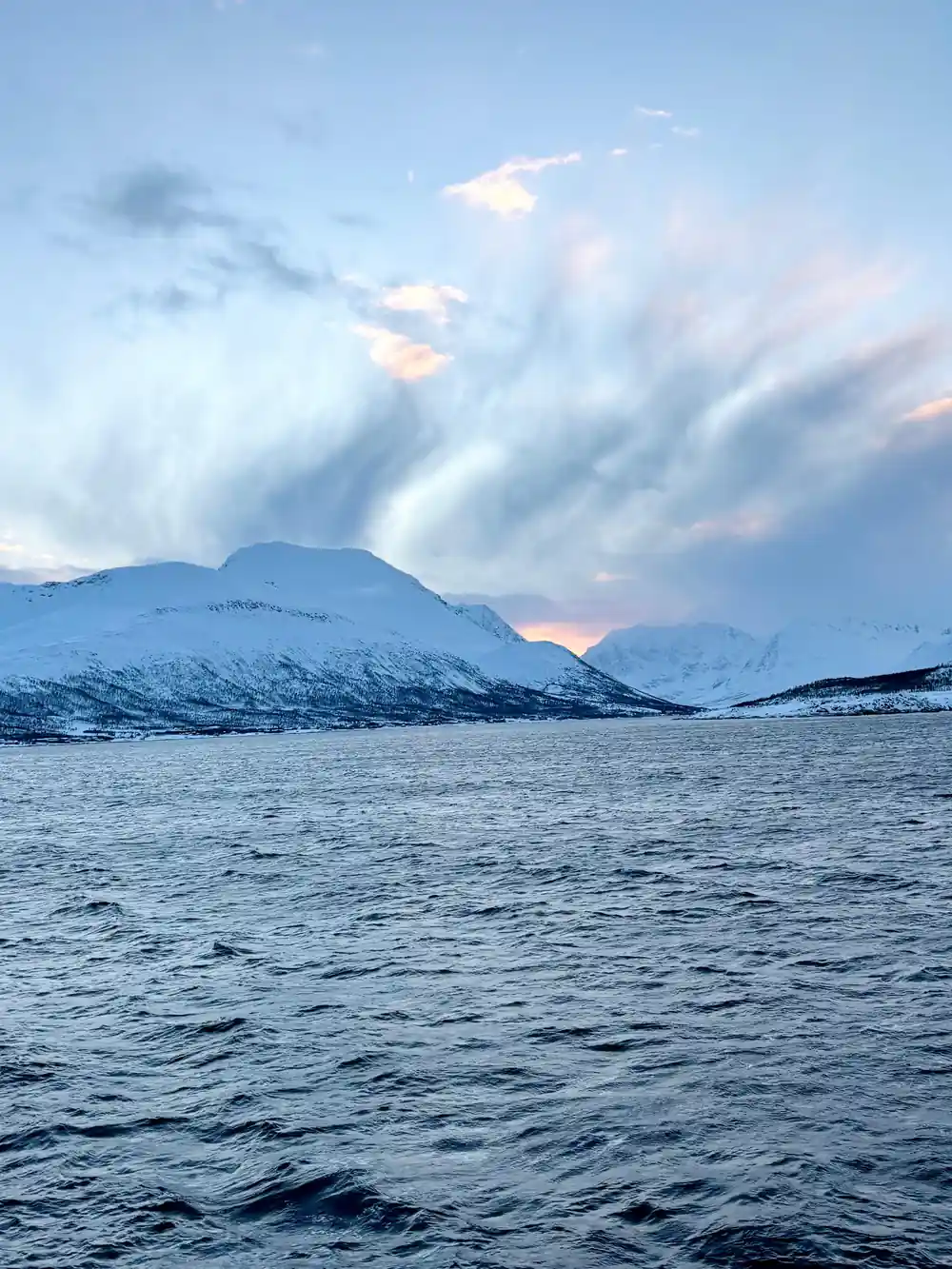
The route runs from Tromsø to the Lyngen Alps, Lighthouse Lyngstuva, Kagsundet and Skjervøy, Norway.[11] The Lyngen area is beautiful in a raw way: steep mountains, open water and weather that can change quickly. This is not an open-ocean crossing, but it is also not a sheltered harbour. The mountains funnel the wind, and a calm morning can turn into a lively afternoon. When the forecast mentions wind, expect it to be stronger on the water than it feels in town.
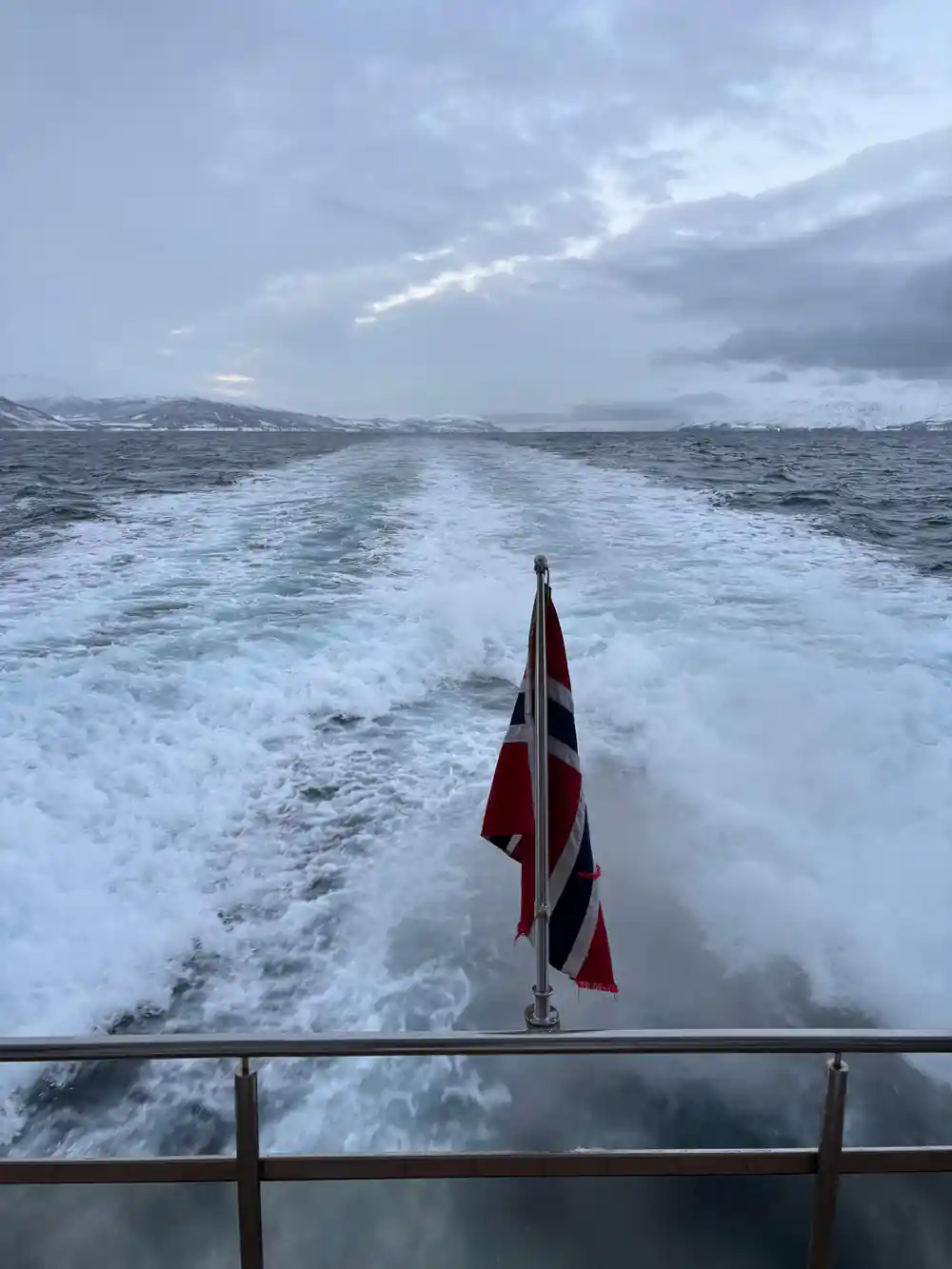
Expect some movement. In winter, wind and current meet in the sound, and the boat will roll a little, especially when slowing down to watch whales. The boat is hybrid-electric, which makes the ride a little easier to take, but the sea will still make its presence known. A little movement is normal and not dangerous. Watch how the crew moves around the deck, use the handrails and keep a hand free.
If you are worried, pick a seat low and central, keep your eyes on the horizon, and dress in layers. The crew sees rough water regularly and will adjust the pace to keep passengers safe and comfortable. Ask for a quieter spot if you need one. There is no prize for being tough, and a comfortable passenger is a safer passenger.
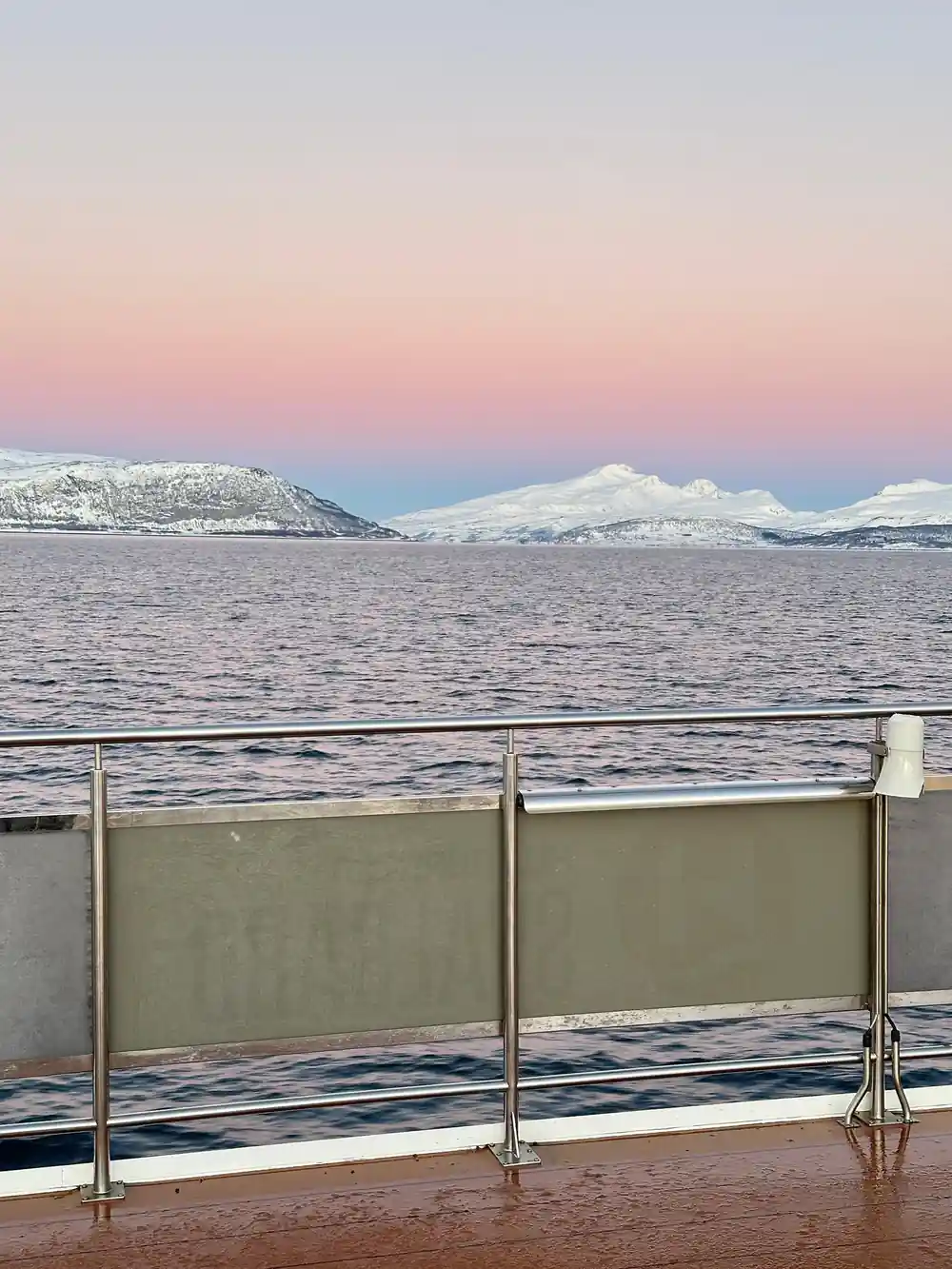
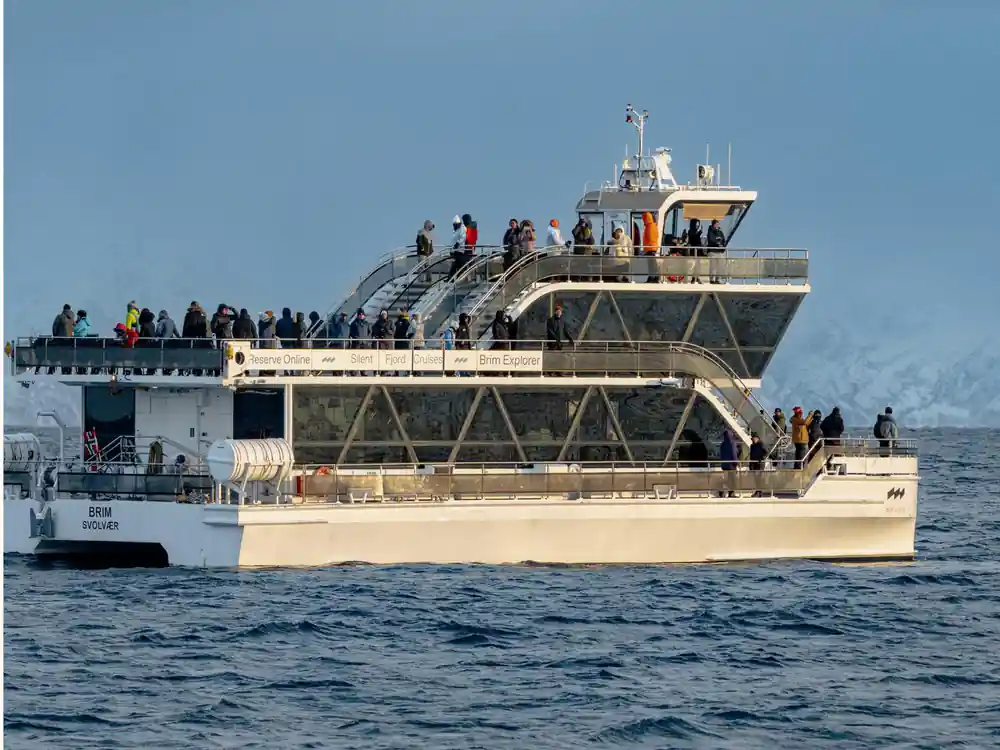
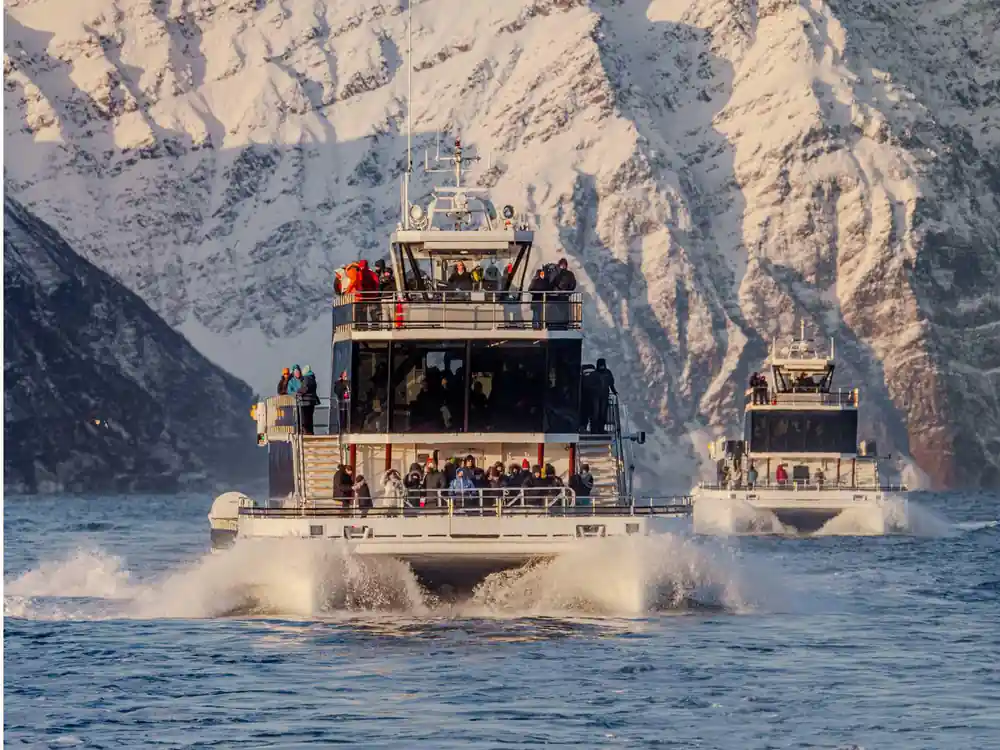
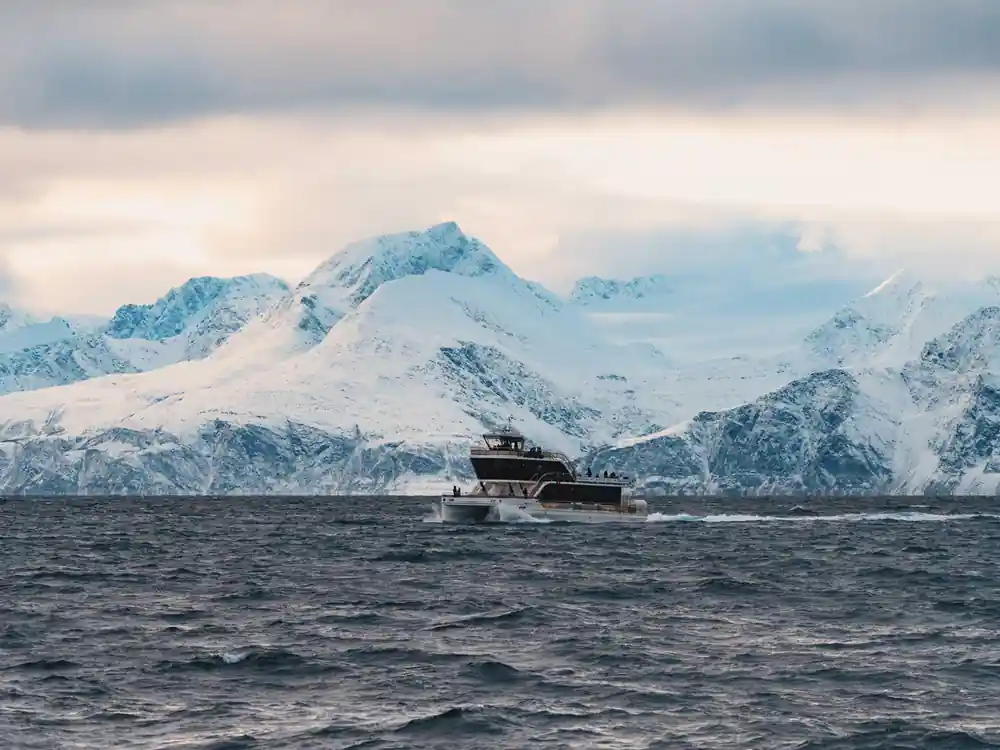
A hybrid-electric catamaran in the fjords north of Tromsø
Snow, wind and sailing in polar darkness
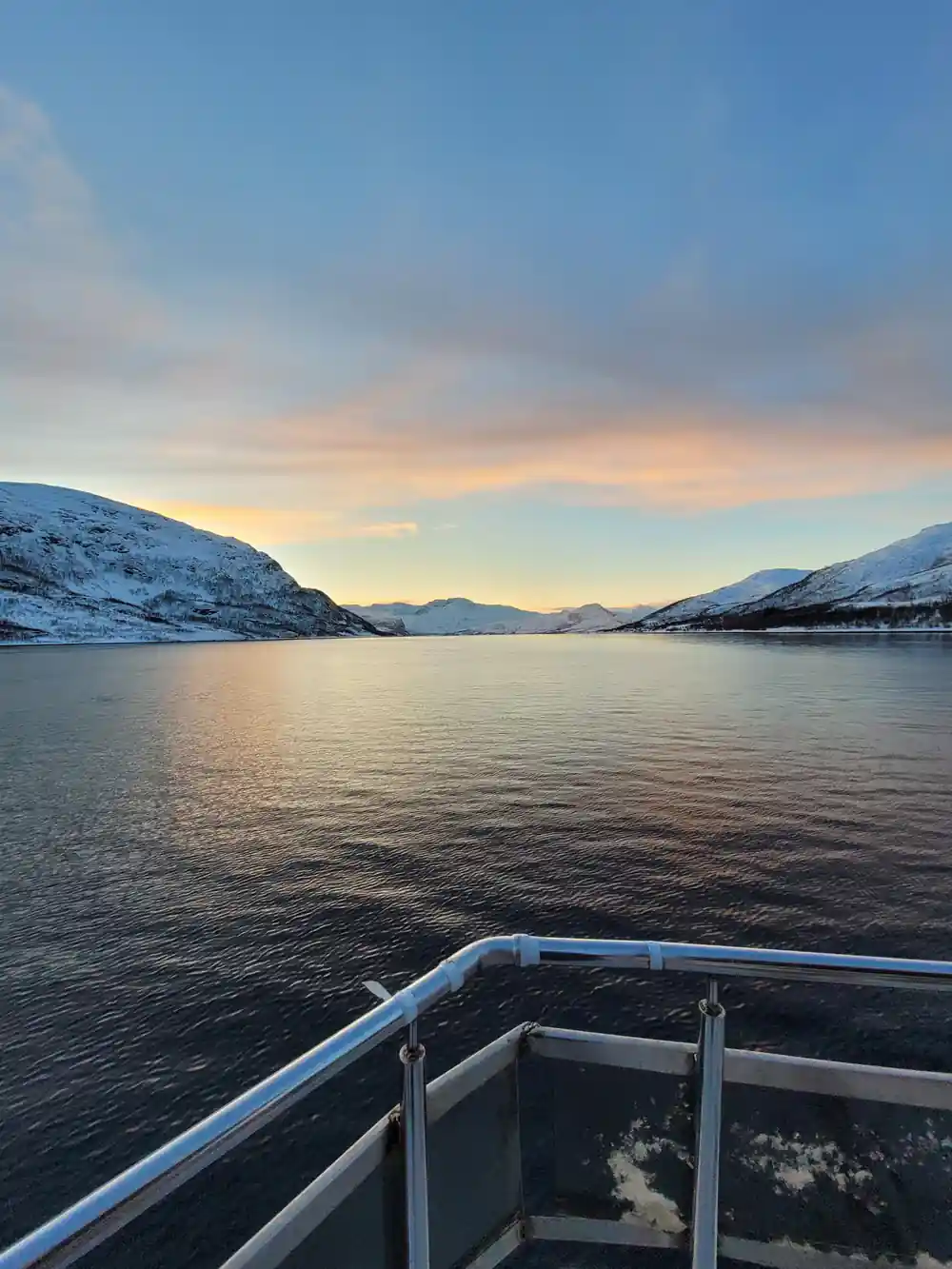
Winter in Tromsø means short days. The polar night lasts approximately from 27 November to 15 January.[8] On those days, the sun does not rise above the horizon, and the boat operates in blue twilight or full dark. The dark is not an empty blackness; snow on the mountains and lights from the boat create a clear, cold world. Shadows disappear in different ways in the Arctic, and the landscape reads differently through a camera lens than through your own eyes.
The average winter temperature is around −4°C.[9] Add wind and boat speed, and it feels considerably colder on deck. Warm boots, a hat, gloves and a windproof outer layer are not optional in this season. The crew will tell you if they want you to stay inside a certain area, and following that keeps everyone safe. On a moving boat, cold reaches the hands and face first, and gloves and a scarf should be easy to reach.
The darkness is also the season for northern lights. They may be visible in the Tromsø region from late August to early April, whenever the sky is dark and sufficiently clear.[15] On a whale tour you are there for the whales, but the sky can put on a separate show on the way back. Give your eyes time to adapt to the dark, and keep camera lights off when the guide is pointing out the sky.
Safety equipment and the pre-departure briefing
If you have done boat trips before, the routine will feel familiar. Before leaving, the crew explains where the life jackets, exits and safety lines are, and how to behave on deck. Listen even if you have heard it before. Each boat has its own layout, and knowing where things are matters more in cold water than on a summer ferry. Safety briefings are short, but they are the part of the day nobody should skip.
Norwegian rules require whale watching boats to stay at least 0.2 nautical miles (370 m) from a vessel that is fishing, from a steng, or from fixed gear.[7] That keeps both the crew and local fishermen safe. It is also a reminder that whale watching here runs alongside a working fishing industry. You may see fishing boats working in the same waters, and part of the experience is watching how both industries share the fjord.
On board, the live English guide is there to answer questions and keep an eye on passengers.[11] If you are unsure about anything, ask early rather than waiting until you are cold or uncomfortable. There is no such thing as a silly question when it comes to safety equipment. The crew would rather repeat an instruction than have a passenger missing important information.
from US$209
The from-price for the 9-hour Tromsø Whale Watching Tour by Hybrid-Electric Boat, with free cancellation up to 24 hours before departure.[11]
Managing severe seasickness at sea
Seasickness can hit anyone, even experienced sailors. The best plan is to prepare before boarding. Pharmacists in Tromsø know the local conditions and can recommend something that matches your level of sensitivity. Mention that you are planning a full-day boat trip; the advice for a short harbour cruise is different. You want something that lasts, not a quick fix.
Your trip is a full 9-hour day, and motion sickness needs a strategy, not a hope.[11] Choose a place low in the middle of the boat, avoid heavy food before departure, and keep your eyes on the horizon when you feel queasy. Keep hydrated and do not spend the whole trip inside a warm cabin if you are prone to nausea.
If you do feel unwell, tell a crew member. Fresh air on the deck often helps, and the crew can suggest the calmest spot on board. There is no shame in feeling rough; the shame would be hiding it until you are properly ill. A good day out on the water depends on looking after yourself from the start.
The hybrid-electric boat and passenger comfort
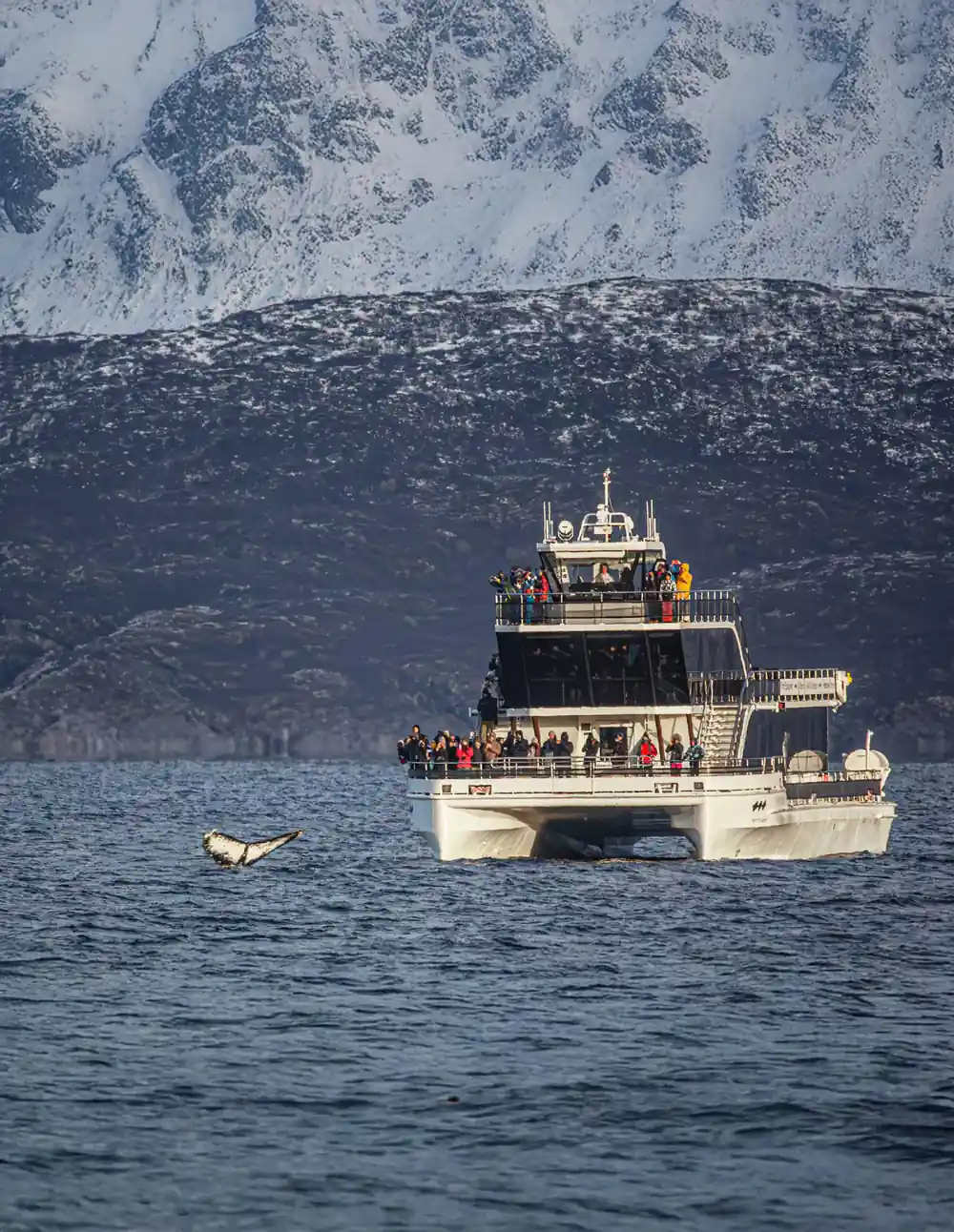
The tour runs on a hybrid-electric boat. Modern hybrid-electric ships are designed with the best sightseeing experience in mind.[16] For passengers, the practical result is a calmer, cleaner ride than an older diesel vessel, which makes a long whale tour easier to enjoy. It also means less vibration underfoot, which helps if you are trying to balance while watching whales.
This tour is wheelchair accessible and has a live English guide.[11] It lasts 9 hours, and being able to move around and take breaks makes a real difference during the day.[11] There is a rhythm to a long trip: watch the sea, listen to the guide, go inside to warm up, then come back out. That rhythm is part of the pleasure.
A quieter boat is also a better whale watching boat. Wildlife is less likely to be startled by noise, and you are more likely to hear the guide's commentary and the sound of a whale breathing on the surface. When the engines cut to electric mode near wildlife, the fjord feels even more remote and calm.
Travel insurance and weather cancellations
From the beginning, this booking is flexible: you can reserve now but pay later, and a full refund is available if you cancel no later than 24 hours beforehand.[11] That means you can watch the forecast before committing, and change your plans without losing money if the weather looks unsuitable. The booking process is designed for travellers who are planning around an unpredictable season.
After the 24-hour cancellation window[11], a weather cancellation is a different matter. Travel insurance is the right place to cover that risk, especially for a winter trip to the Arctic. Check your policy for cancellation cover and for medical cover in Norway. Keep a copy of the policy on your phone; a digital copy is easier to access than a folded paper one.
Weather in Tromsø can be changeable, but the infrastructure is built for it. If a forecast looks bad, use the free-cancellation period wisely and rebook for a calmer day. The fjords will still be there tomorrow, and the whales will still be feeding in the area through the winter.
Whale lengths you may meet
Compare whale tour options
When to go
Plan an arctic sea boat day
Check the weather
Check the forecast before booking, and remember that Tromsø's average winter temperature is about −4°C.[9]
Dress warmly
Wear several layers and a windproof outer shell. You will spend time on deck looking for whales, and the boat's speed adds chill.
Know the safety rules
Norwegian rules require whale watching boats to stay at least 0.2 nautical miles (370 m) from fishing vessels, steng or fixed gear.[7]
Plan for seasickness
The full trip lasts 9 hours, so if you are prone to motion sickness, take advice from a pharmacist before you board.[11]
Keep flexibility
Pay later by reserving now, and you're entitled to a full refund if you cancel at least 24 hours ahead.[11]
Plan your arctic sea boat day with a calm, experienced crew
from US$209Reserve now & pay later